

Pori Urundai Recipe
Malayalam പൊരി ഉരുണ്ടTamil பொரி உருண்டைKannada ಪುರಿ ಉಂಡೆTelugu పొరి ఉండలు
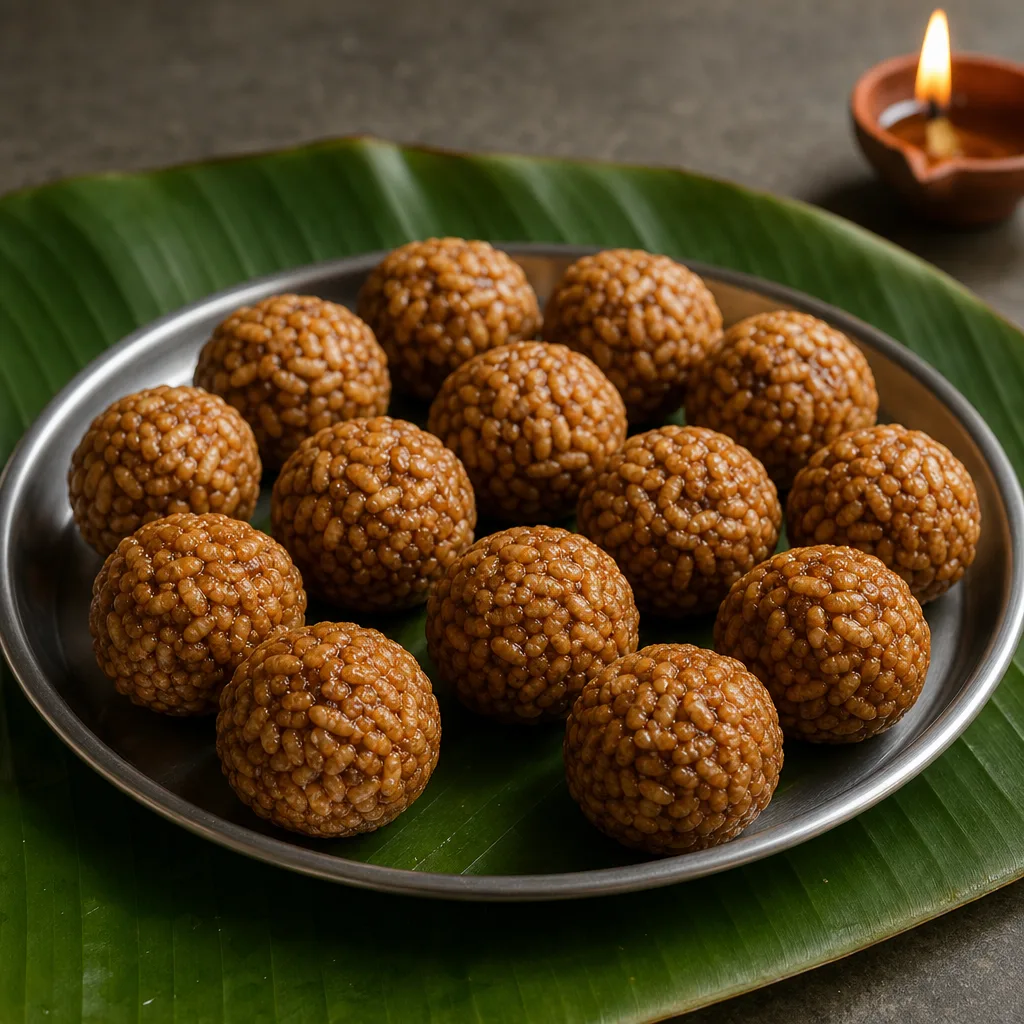
- Prep10 min
- Cook20 min
- Serves20 to 22 balls
- DifficultyEasy
- DietVegan
Pori Urundai is one of the oldest sweets in Tamil home cooking, made for Karthigai Deepam and for ordinary afternoons when children come home hungry. It needs only two main things — puffed rice and jaggery — and a careful hand on the syrup. The whole point is the moment when the syrup reaches the right stage and you have to move fast.
It is a Karthigai Deepam staple across Tamil Nadu, offered as neivedhyam alongside vella seedai and other festival sweets. Outside the festival, it is an everyday snack. In Kongunad households a pinch of dry ginger powder goes in; in many Chennai homes cardamom alone is used. Some families add a small amount of roasted peanuts or roasted sesame seeds, but the plain version with only pori and jaggery is the most common and the one given here.
The sweet is unforgiving of a syrup that has gone too far or not far enough. Undercooked syrup makes the balls sticky and they collapse; overcooked syrup makes them hard and the pori tastes burnt. Once you have made it two or three times you will know the syrup by its colour and the way it falls from the ladle, and the rest is quick work.
Ingredients (serves 20 to 22 balls)
For the balls
Method
Prepare the pori
Measure the pori into a large wide vessel — a heavy-bottomed uruli or a wide steel basin works well. Pick out any unpopped grains. The vessel needs to be big enough that you can toss the pori with the syrup without it spilling over.
Dissolve the jaggery
Put the grated jaggery and 80 ml water into a heavy-bottomed kadai over medium heat. Stir until the jaggery dissolves completely, then bring to a boil. Once it boils, stop stirring and let it cook. Skim off any foam or grit that rises.
Cook the syrup to soft-ball stage
Keep the syrup on a steady medium flame. After about 8 to 10 minutes it will thicken and deepen in colour to a dark amber. Test it: drop a small amount into a bowl of cold water. If it gathers into a soft ball that holds its shape but flattens when you press it, the syrup is ready. This is the soft-ball stage. If the drop dissolves in the water, cook a little longer. If it forms a hard brittle thread, you have gone too far and the balls will be rock hard — start again.
Add cardamom and dry ginger
The moment the syrup reaches soft-ball stage, take the kadai off the heat. Add the cardamom powder and dry ginger powder if using. Stir once.
Coat the pori
Pour the hot syrup over the pori in the wide vessel immediately. Work quickly with a large spoon or spatula, turning and folding until every grain of pori is coated with the syrup. The syrup cools fast, so do not pause here.
Shape the balls
Grease your palms with a little coconut oil or gingelly oil. Take a fistful of the coated pori while it is still warm — it must be warm or it will not bind. Press firmly and roll into a ball roughly the size of a lime. Set on a plate. Regrease your palms every few balls. If the mixture cools and stops binding, warm the vessel gently for a few seconds over low heat, folding quickly, then continue shaping.
Cool and set
Leave the shaped balls undisturbed for 15 to 20 minutes. They will firm up as the jaggery sets. Do not stack them until they are fully cool or they will stick to each other.
How to serve
Eaten on their own as a snack or festival offering. At Karthigai Deepam they are placed on the neivedhyam plate alongside vella seedai and other sweets. No accompaniment is needed.
Served with: Eaten on their own as a snack or festival offering. At Karthigai Deepam they are placed on the neivedhyam plate alongside vella seedai and other sweets. No accompaniment is needed.
Cook's tips
The syrup is everything
Keep a bowl of cold water next to the stove and test the syrup every minute or so once it thickens. The window between underdone and overdone is narrow, perhaps two minutes. Do not leave the stove during this stage.
Soft pori ruins the texture
Pori that has absorbed moisture will make dense, chewy balls rather than light crisp ones. If your pori has been sitting open, dry it in a low oven (around 100°C) for five minutes and cool it completely before using.
Work fast once the syrup goes in
Have the pori ready in the vessel, your oil nearby, and a helper if possible — one person pours and folds, the other shapes. Once the syrup cools past a certain point the mixture crumbles instead of binding.
Storage
Store in an airtight tin once fully cool. They keep well for four to five days at room temperature in dry weather. In humid conditions they soften faster; a piece of food-safe silica sachet in the tin helps.
Jaggery quality matters
Dark, slightly moist block jaggery from Tamil Nadu gives the best flavour and colour. Pale or over-refined jaggery produces a lighter, blander ball. If your jaggery has sand or grit, dissolve it in water, strain through a fine cloth, and then cook the strained liquid.
Regional variations
In Karnataka the same sweet is made as Mandakki Unde using puffed rice and jaggery with a little dry coconut; in Andhra it appears as Maramarala Laddu with roasted puffed rice and sometimes groundnuts added.
Glossary
- Pori பொரி
- Puffed rice; rice grains that have been heat-expanded until light and crisp.
- Urundai உருண்டை
- Ball; the Tamil word for any sweet or savoury preparation shaped into a round.
- Vellam வெல்லம்
- Jaggery; unrefined cane sugar sold in dark blocks; the Tamil term for it.
- Sukku சுக்கு
- Dry ginger powder; used in small amounts in Kongunad sweets and in digestive preparations.
- Neivedhyam நைவேத்தியம்
- Food offered to the deity during a puja or festival before it is distributed and eaten.
Two things decide whether pori urundai works: the syrup must hit soft-ball stage precisely, and the shaping must happen while the mixture is still warm. Get those two right and the balls will be light, crisp, and hold together cleanly. Rush the syrup or let the mixture cool in the vessel and you will have either a sticky mass or a pile of crumbs.
More Sweets & Payasam recipes
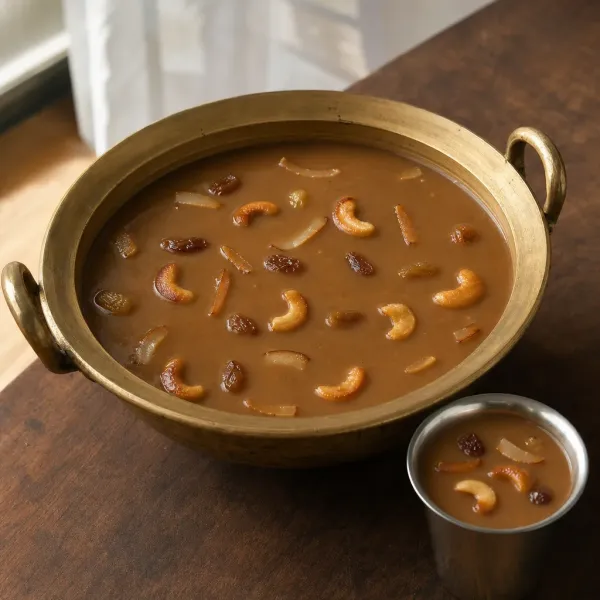
Parippu Pradhaman (Moong Dal Payasam)
Traditional Kerala sadya pradhaman made with roasted moong dal, dark jaggery and fresh coconut milk. Step-by-step household recipe with cook's notes.
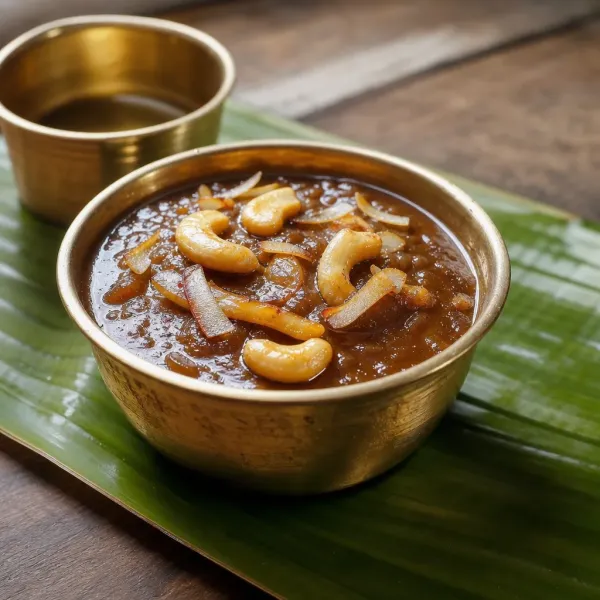
Pazham Pradhaman
Traditional Kerala pazham pradhaman made with ripe nendran banana, dark jaggery and fresh coconut milk. Step-by-step sadya recipe with household tips.
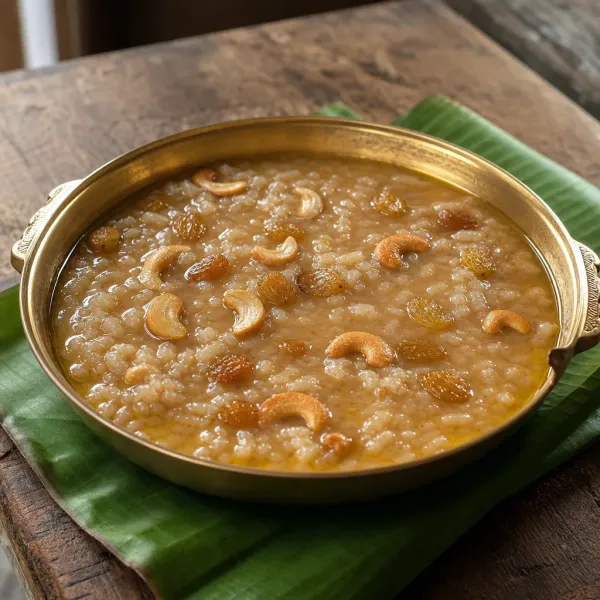
Aval Payasam
Traditional Kerala aval payasam made with thick beaten rice, full-fat milk, jaggery and ghee-fried cashews. A classic sadya sweet, ready in 40 minute…
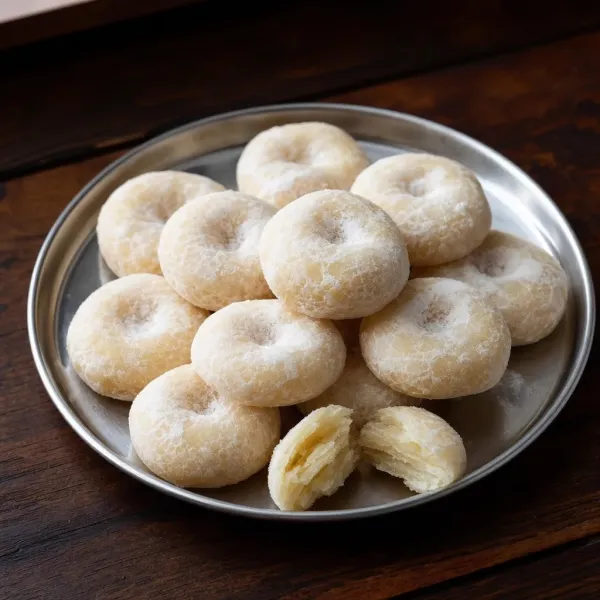
Badusha
Traditional badusha recipe: flaky maida dough fried low and slow, soaked in one-string sugar syrup. Step-by-step method with tips for the perfect gla…
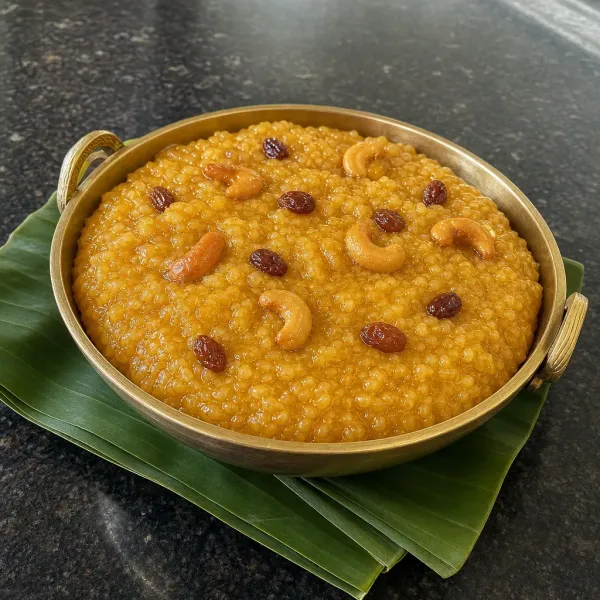
Sakkarai Pongal
Authentic Tamil Brahmin sakkarai pongal with jaggery, ghee and cardamom. Temple-style method with roasted moong dal and strained jaggery syrup.
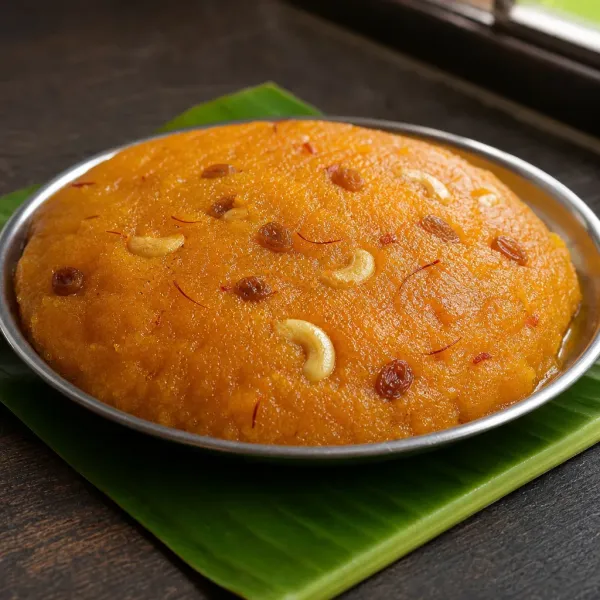
Rava Kesari
Classic Tamil Brahmin rava kesari made with semolina, saffron, and ghee. Soft, glossy, and cooked the traditional way with the correct water ratio.