

Aval Payasam Recipe
Malayalam അവൽ പായസംTamil அவல் பாயசம்Kannada ಅವಲಕ್ಕಿ ಪಾಯಸTelugu అవల పాయసం
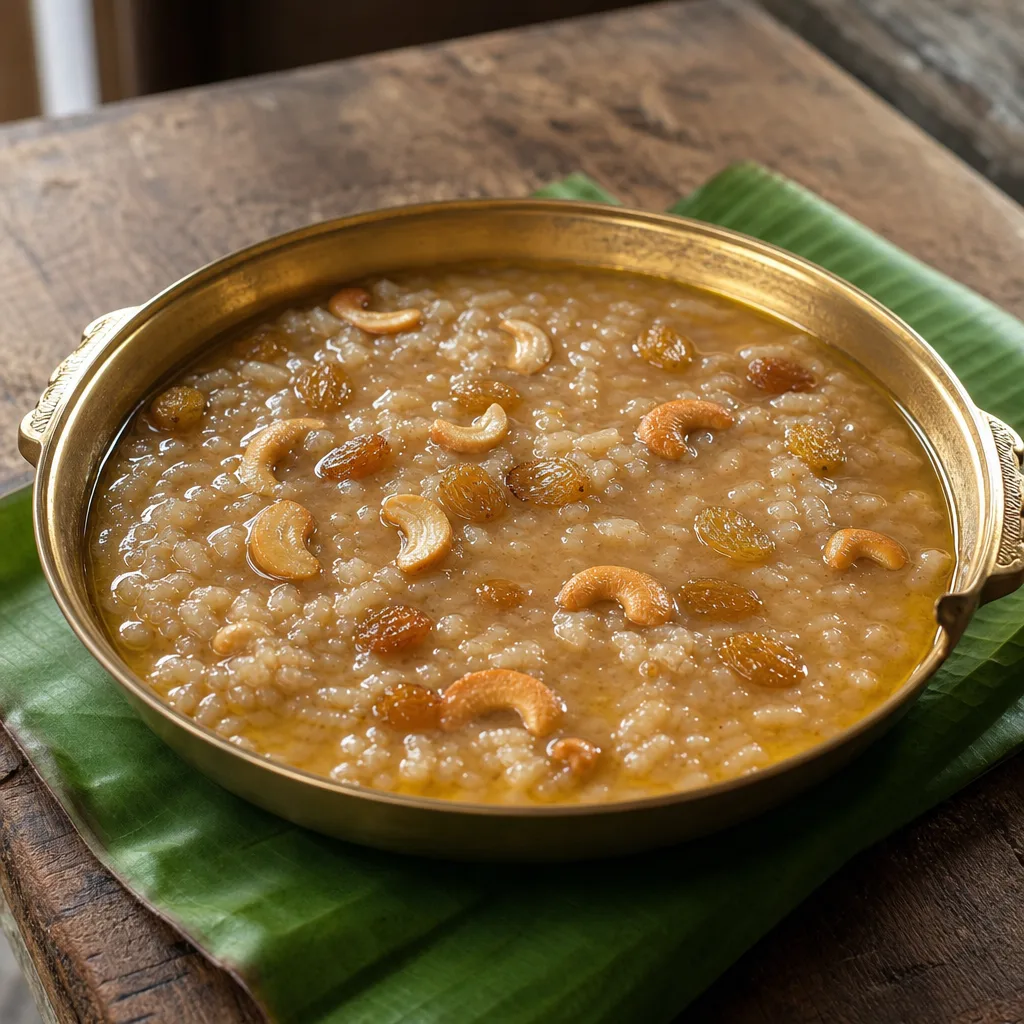
- Prep10 min
- Cook30 min
- Serves4
- DifficultyEasy
- DietVegetarian
This is a Kerala sadya payasam, made in almost every Hindu household across the state for Vishu, Onam and family occasions. It belongs to the milk-and-jaggery family of payasams rather than the coconut-milk family, which makes it lighter and quicker than a parippu payasam. Thick beaten rice softens in simmering milk, absorbs jaggery, and the whole thing is finished with ghee-fried cashews and raisins.
The aval used here is the thick variety, called kallu aval or the medium-thick red aval made from matta rice. Thin aval dissolves too quickly and gives the payasam a starchy, gluey body rather than the soft, slightly textured spoonful that is correct. Red matta aval gives a warm, earthy colour and a faint nuttiness; white thick aval is also used and produces a paler, more delicate result. Both are correct; the choice is the cook's.
Households differ on the ratio of jaggery to milk. Some families like it quite sweet, others restrained. The cardamom is non-negotiable. A few cooks add a pinch of dried ginger powder, which is traditional in some Travancore homes, though not universal.
Ingredients (serves 4)
For the payasam
Method
Dissolve the jaggery
Combine the jaggery and 100 ml water in a small saucepan over medium heat. Stir until the jaggery melts completely, then let it come to a gentle boil for two minutes. Take it off the heat and strain through a fine sieve to remove any grit. Set aside.
Rinse the aval
Place the thick aval in a sieve and rinse briefly under cold running water, turning it once or twice. Shake off the excess water. Do not soak it; thick aval needs only a rinse. It will begin to soften as soon as it meets the hot milk.
Boil and reduce the milk
Pour the milk into a heavy-bottomed vessel, preferably an uruli or a wide, thick-bottomed pan. Bring it to a full boil over medium heat, stirring frequently so it does not scorch on the base. Once it boils, lower the heat and let it simmer for eight to ten minutes, stirring regularly, until it thickens slightly and reduces by about a fifth. This step deepens the flavour of the finished payasam.
Cook the aval in the milk
Add the rinsed aval to the simmering milk. Stir well to combine. Cook on low to medium heat, stirring every two minutes, for ten to twelve minutes. The aval will swell and soften; the milk will thicken further. When a spoonful holds together and the aval grains are completely tender with no hard centre, it is ready for the jaggery.
Add the jaggery syrup
Take the pan off the heat before adding the jaggery syrup. This is important: if you pour jaggery into boiling milk while it is still on the flame, the milk can split. Pour the strained syrup into the aval-milk mixture off the heat, stirring continuously. Once fully combined, return the pan to low heat and stir gently for two to three minutes until the payasam is uniform and smooth.
Add cardamom
Stir in the freshly powdered cardamom. Taste for sweetness at this point. If you want it sweeter, dissolve a little more jaggery in a spoonful of warm water and add it now. The payasam will thicken as it cools, so leave it slightly looser than you want the final result.
Fry the cashews and raisins
Heat the ghee in a small frying pan over medium heat. Add the cashew halves and fry, stirring, until they are golden. Add the raisins and fry for thirty seconds until they puff and swell. Watch the heat; raisins can burn in seconds. Pour the entire contents of the pan, ghee included, over the payasam.
Finish and serve
Stir the fried cashews and raisins gently through the payasam. Serve warm or at room temperature. The payasam thickens considerably as it sits; if it becomes too thick before serving, stir in a little warm milk to loosen it to the consistency you prefer.
How to serve
Served as part of a sadya on banana leaf, after the main rice courses. Also eaten on its own as a festive dessert.
Served with: Served as part of a sadya on banana leaf, after the main rice courses. Also eaten on its own as a festive dessert.
Cook's tips
Why milk splits with jaggery
Jaggery is acidic enough to curdle hot milk if added directly over high heat. Always take the pan off the flame first, pour the syrup in slowly while stirring, and return to low heat only after everything is combined.
Red aval versus white aval
Red matta aval gives a warm pinkish-brown colour and a slightly nutty flavour. White thick aval produces a paler, more delicate payasam. Either is correct; do not use thin aval of any kind as it dissolves and makes the payasam starchy.
Consistency when cooling
Aval payasam thickens significantly as it cools because the beaten rice continues to absorb liquid. If you are making it ahead, finish it slightly thinner than you want and stir in warm milk just before serving.
Dried ginger
Some Travancore households add a small pinch of dried ginger powder (chukku) along with the cardamom. It is a traditional addition in certain families and works well, but is not universal.
Jaggery quality
Use good-quality, clean-tasting jaggery. Palm jaggery (karupatti) can be substituted and gives a deeper, more complex sweetness, though it changes the colour to a darker brown.
Regional variations
Tamil Nadu households make a similar payasam with thin aval in cow's milk, sometimes adding condensed milk; Karnataka versions use jaggery and thin coconut milk.
Glossary
- Aval അവൽ
- Flattened or beaten rice, sold in thin, medium and thick varieties.
- Payasam പായസം
- A sweetened milk or coconut-milk dessert, the standard festive sweet in Kerala.
- Sharkkara ശർക്കര
- Jaggery, usually palm or cane; the standard sweetener in traditional Kerala sweets.
- Uruli ഉരുളി
- A wide, shallow, heavy bronze or brass cooking vessel traditional to Kerala kitchens.
- Unakka munthiri ഉണക്ക മുന്തിരി
- Dried grapes; raisins used in payasam and other sweets.
- Chukku ചുക്ക്
- Dried ginger; used in small quantities in certain payasam and medicinal preparations.
- Kallu aval കല്ലവൽ
- Thick beaten rice, the variety used in payasam and certain breakfast dishes.
Two things decide this payasam: adding the jaggery syrup off the heat so the milk does not split, and using thick aval rather than thin. Get those right and the rest is straightforward.
More Sweets & Payasam recipes
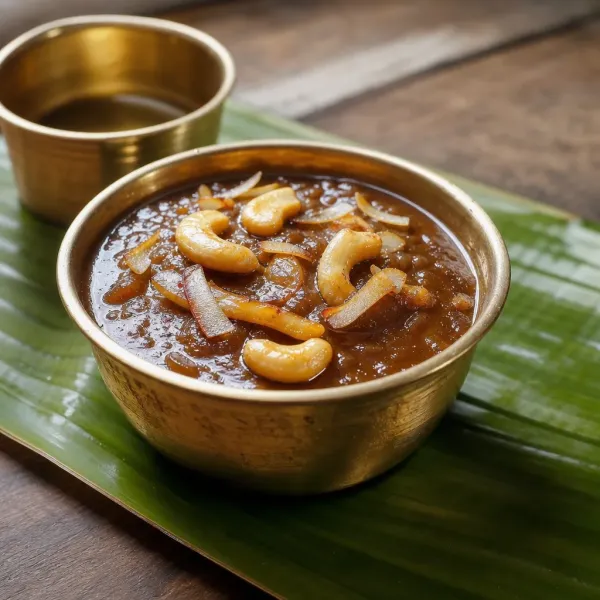
Pazham Pradhaman
Traditional Kerala pazham pradhaman made with ripe nendran banana, dark jaggery and fresh coconut milk. Step-by-step sadya recipe with household tips.
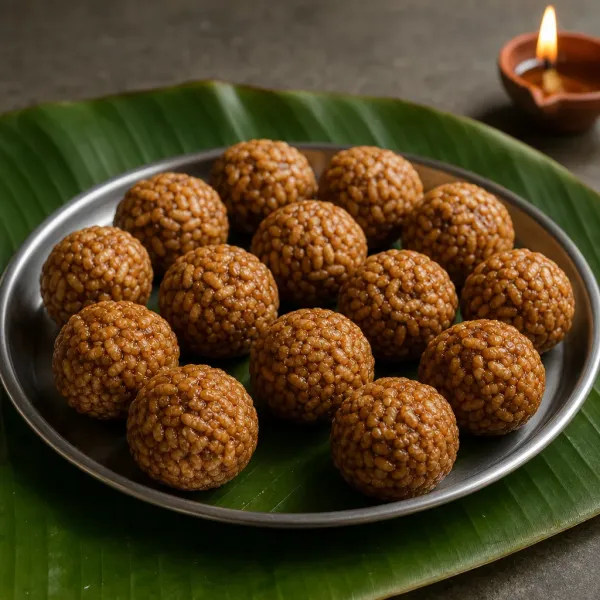
Pori Urundai
Traditional Tamil pori urundai made with puffed rice and dark jaggery syrup. Step-by-step method with soft-ball stage syrup test. A Karthigai Deepam…
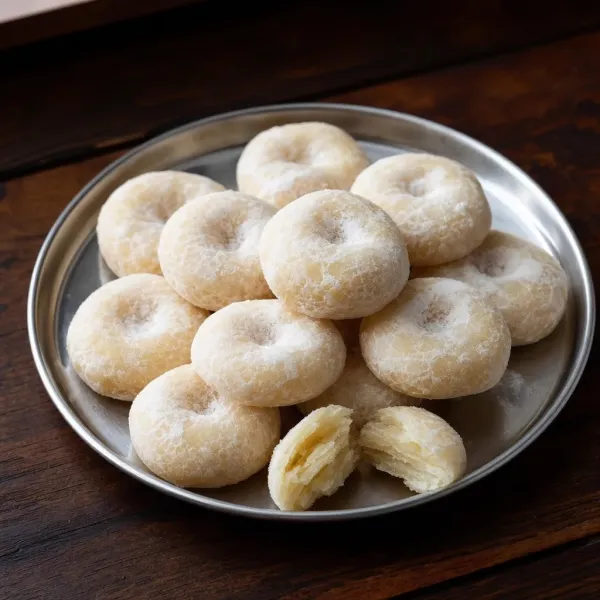
Badusha
Traditional badusha recipe: flaky maida dough fried low and slow, soaked in one-string sugar syrup. Step-by-step method with tips for the perfect gla…
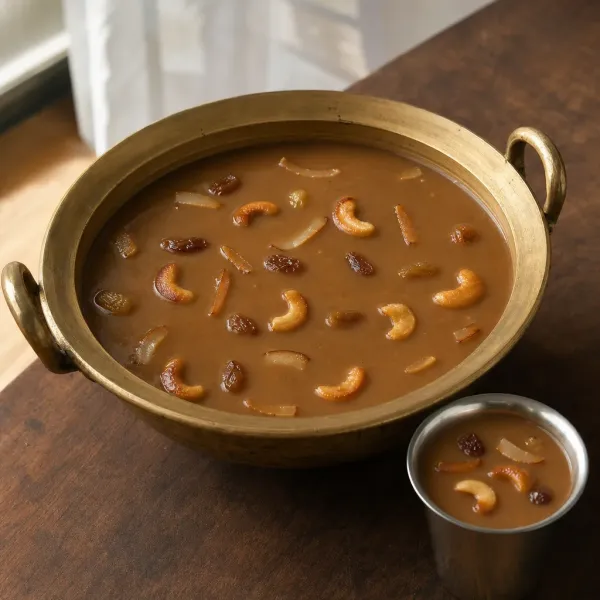
Parippu Pradhaman (Moong Dal Payasam)
Traditional Kerala sadya pradhaman made with roasted moong dal, dark jaggery and fresh coconut milk. Step-by-step household recipe with cook's notes.
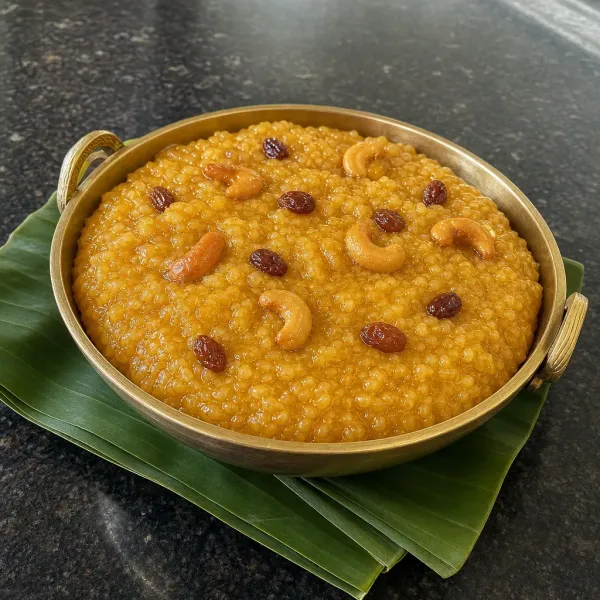
Sakkarai Pongal
Authentic Tamil Brahmin sakkarai pongal with jaggery, ghee and cardamom. Temple-style method with roasted moong dal and strained jaggery syrup.
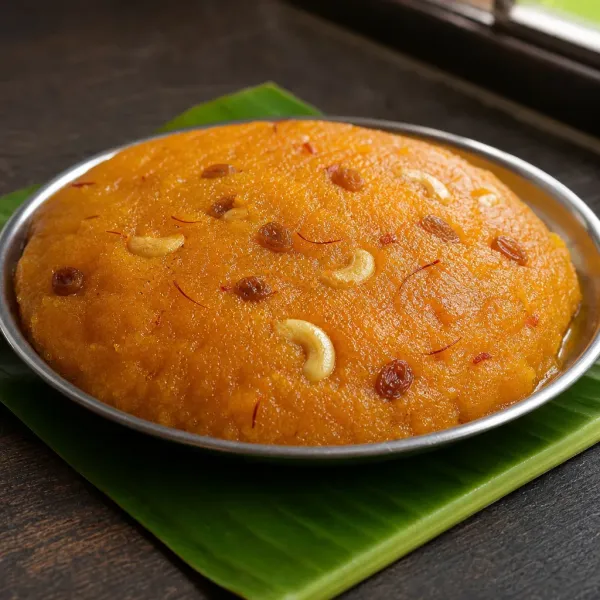
Rava Kesari
Classic Tamil Brahmin rava kesari made with semolina, saffron, and ghee. Soft, glossy, and cooked the traditional way with the correct water ratio.