

Sakkarai Pongal Recipe
Malayalam ശർക്കര പൊങ്കൽTamil சக்கரை பொங்கல்Kannada ಸಕ್ಕರೆ ಪೊಂಗಲ್Telugu సక్కర పొంగలి
- Prep10 min
- Cook45 min
- Serves4
- DifficultyEasy
- DietVegetarian
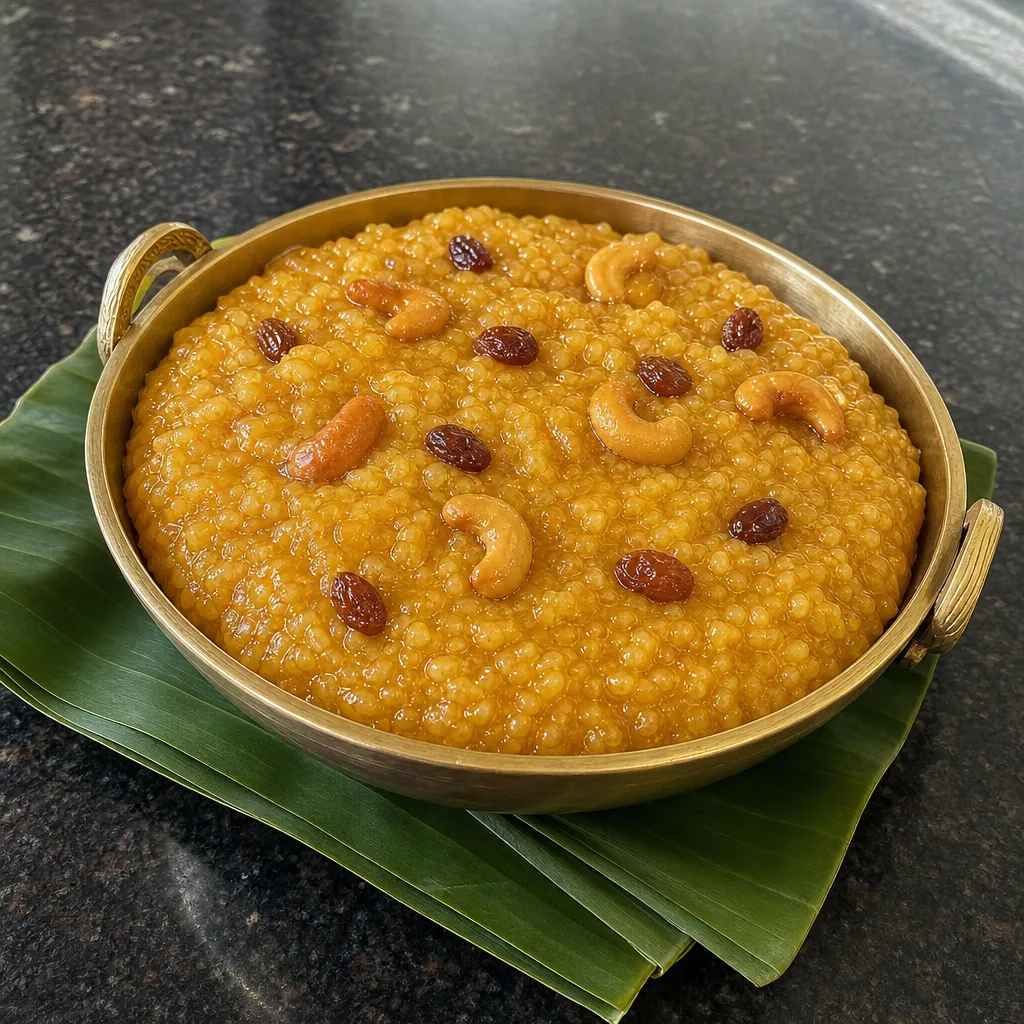
Sakkarai Pongal is a Tamil dish, made in Brahmin homes and in temple kitchens across the state on Pongal festival day, on Karthigai Deepam, and as naivedyam on any auspicious occasion. The temple version is the benchmark most cooks carry in their heads: soft, yielding rice and moong dal cooked together until they are almost indistinguishable from each other, then stirred through with melted jaggery and finished with an extravagant pour of ghee, cashews, raisins and cardamom. Edible camphor appears in temple preparations and in traditional households that follow that practice.
At home, the dish is a little looser than what you get at the temple counter, because temple cooks set it in large vessels and it firms as it sits. Families differ on the jaggery quantity — some like it barely sweet, others want a deep molasses richness — and on whether raisins belong at all. The rice used is raw rice, pachai arisi, not boiled rice. Moong dal is dry-roasted before cooking; skipping that step gives the finished dish a raw, flat taste that is immediately noticeable.
This is eaten on its own as prasadam, or as the sweet component of a festival meal. It is not a breakfast dish in the way that ven pongal is; it occupies the naivedyam position and is served warm, never reheated to a simmer, because the jaggery turns grainy if you do.
Ingredients (serves 4)
For the pongal
Method
Roast the dal
Heat a dry kadai over medium flame. Add the washed and fully dried moong dal. Stir continuously for 3 to 4 minutes until the dal turns pale gold and gives off a nutty smell. Do not let it brown. Tip it out immediately onto a plate. If the dal is even slightly wet when it goes into the pan, it will steam rather than roast and the final dish will taste raw.
Cook rice and dal together
Put the washed rice and the roasted dal into a pressure cooker. Add 900 ml water. Close the lid and cook on medium-high heat for 4 to 5 whistles. You want the contents to be very soft and slightly mushy, well beyond what you would cook for plain rice. Let the pressure drop completely on its own before opening.
Mash while hot
Open the cooker and mash the cooked rice and dal together with the back of a ladle or a potato masher while everything is still hot. The mixture should look like a thick, cohesive mass with no separate grains visible. If it looks stiff, add a splash of hot water and stir it through.
Make the jaggery syrup
In a small saucepan, combine the grated jaggery and 120 ml water. Heat over medium flame, stirring until the jaggery dissolves completely. Let it come to a gentle boil for 2 minutes. Strain it through a fine sieve to remove any grit or impurities — temple kitchens never skip this step. Set the clean syrup aside.
Combine jaggery with the cooked rice
Transfer the mashed rice-dal mixture to a heavy-bottomed pan or keep it in the pressure cooker vessel over low heat. Pour the strained jaggery syrup over it and stir well. The mixture will loosen when the syrup goes in. Keep stirring over low heat for 5 to 6 minutes until it comes together again into a soft, thick mass that leaves the sides of the pan. Do not rush this step; if you take it off the heat too soon, the pongal will be wet and will not hold.
Add cardamom and edible camphor
Stir in the ground cardamom. If using edible camphor, crush the tiny pinch between your fingers and add it now. A pinch truly means a pinch — too much makes the dish medicinal. Stir through and take off the heat.
Fry the cashews and raisins in ghee
Heat 2 tablespoons of the ghee in a small pan over medium flame. Add the cashew halves and fry, stirring, until they are golden — about 2 minutes. Add the raisins and let them puff up for 30 seconds. Pour the entire contents of the pan, ghee and all, over the pongal.
Finish with remaining ghee
Pour the rest of the ghee directly over the pongal and fold it in gently. The dish should look glossy and rich. Taste for sweetness; if it needs more, you can stir in a little extra melted jaggery at this point. Serve immediately while warm.
How to serve
Served on its own as prasadam or naivedyam. In a festival meal it sits alongside ven pongal and vadai. At home it is sometimes accompanied by a small piece of banana.
Served with: Served on its own as prasadam or naivedyam. In a festival meal it sits alongside ven pongal and vadai. At home it is sometimes accompanied by a small piece of banana.
Cook's tips
Jaggery quality matters greatly
Use dark, slightly moist jaggery (karupatti or good vellam) rather than pale, refined blocks. Pale jaggery gives sweetness without the molasses depth that defines this dish. Always strain the syrup — grit from unwashed jaggery ruins the texture.
The ghee quantity is not a mistake
Temple sakkarai pongal is very generously ghee'd. Home cooks sometimes reduce it, which is their choice, but below about 60 g for this quantity of rice the dish loses its characteristic richness and the texture becomes sticky rather than soft.
Reheating
If you must reheat, add a tablespoon of water and warm gently over very low heat, stirring. Never bring it to a boil after the jaggery has gone in — the jaggery crystallises and the texture turns grainy.
Edible camphor caution
Edible camphor (pachha karpooram) is food-grade and very different from the camphor burned in lamps. Even so, the quantity is tiny. If you are unsure of your source, leave it out; the dish is complete without it.
Pressure cooker shortcut is already the standard
Traditional temple kitchens cook rice and dal in large open vessels over wood fire for a long time. At home, the pressure cooker is the accepted method and produces an identical result.
Regional variations
Andhra households make chakara pongali with a slightly different rice-to-dal ratio and sometimes add coconut pieces; Karnataka temple kitchens use a similar preparation called sihi pongal with less cardamom and no edible camphor.
Glossary
- Pachai arisi பச்சை அரிசி
- Raw (unboiled) white rice used in Tamil cooking, distinct from parboiled rice.
- Pasi paruppu பாசி பருப்பு
- Split yellow moong dal, the small yellow lentil used here.
- Vellam வெல்லம்
- Jaggery; unrefined cane sugar sold in blocks or cones.
- Pachha karpooram பச்சை கர்பூரம்
- Edible camphor; food-grade, used in very small quantities in temple sweets and naivedyam.
- Naivedyam நைவேத்யம்
- Food offered to a deity before being distributed as prasadam.
- Kadai கடாய்
- A deep, round-bottomed Indian cooking pan, used here for dry-roasting the dal.
Two things decide this dish. The first is cooking the rice and dal long enough — if there is any bite left in either, the pongal never comes together properly. The second is the jaggery syrup: strain it clean, add it to the hot mashed rice, and stir patiently over low heat until the mixture pulls away from the sides of the pan. Get those two right and the ghee and cardamom do the rest.
More Sweets & Payasam recipes
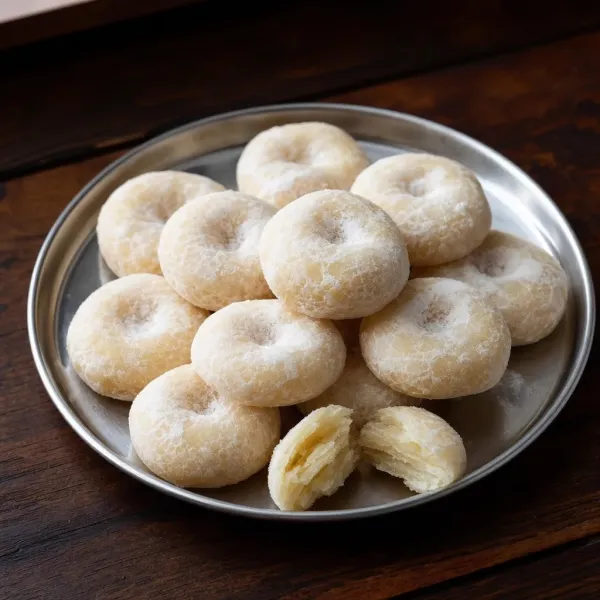
Badusha
Traditional badusha recipe: flaky maida dough fried low and slow, soaked in one-string sugar syrup. Step-by-step method with tips for the perfect gla…
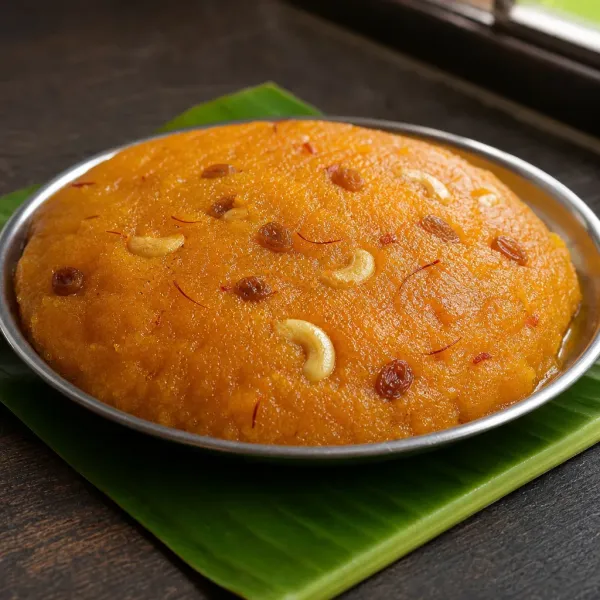
Rava Kesari
Classic Tamil Brahmin rava kesari made with semolina, saffron, and ghee. Soft, glossy, and cooked the traditional way with the correct water ratio.
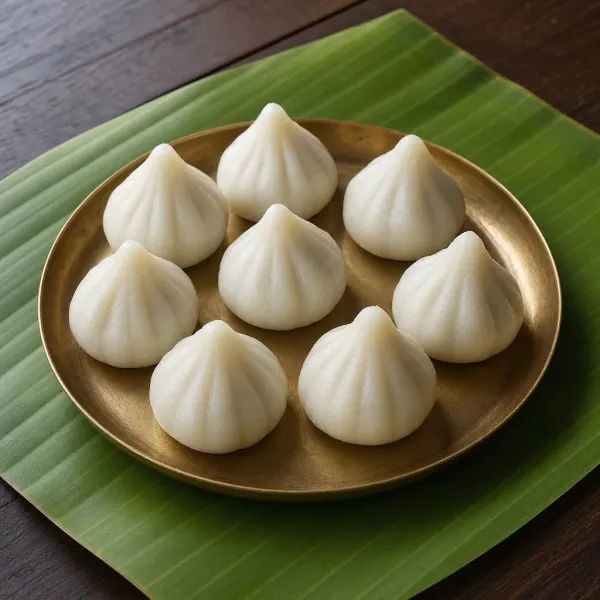
Kozhukattai with Coconut and Jaggery Filling
Traditional Tamil Brahmin kozhukattai with fresh coconut and jaggery poornam. Steamed rice flour dumplings shaped in the modak style for Ganesh Chatu…
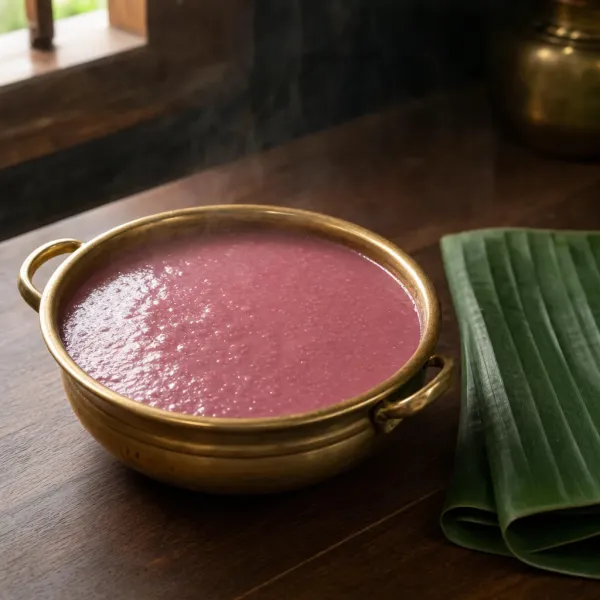
Ambalappuzha Paal Payasam
Authentic Ambalappuzha paal payasam with just milk, rice and sugar. The three-hour slow-cook method that gives the famous rose-pink colour.
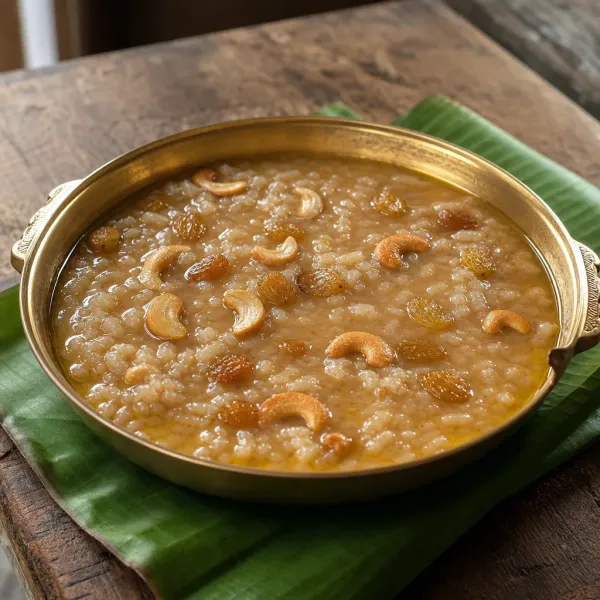
Aval Payasam
Traditional Kerala aval payasam made with thick beaten rice, full-fat milk, jaggery and ghee-fried cashews. A classic sadya sweet, ready in 40 minute…
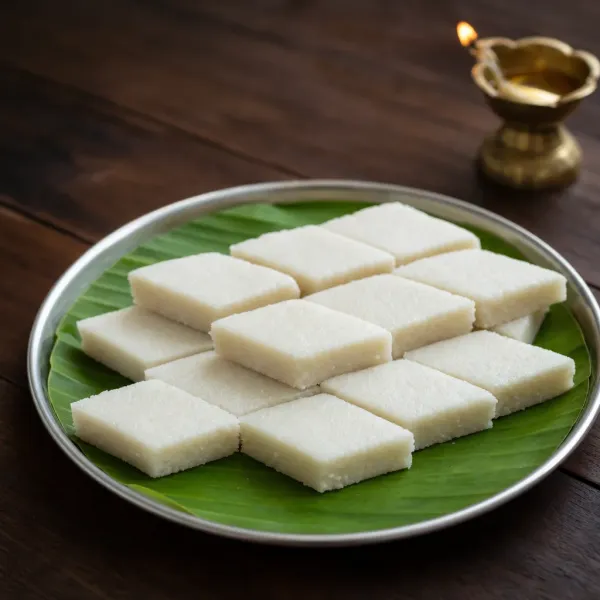
Thengai Burfi (Coconut Burfi)
Classic Tamil Iyer-style thengai burfi made with fresh coconut, sugar and cardamom. Firm, milk-white and festival-ready. Step-by-step traditional met…