

Andhra Pappu Recipe
Malayalam പപ്പു (ആന്ധ്ര ദാൽ)Tamil பப்பு (ஆந்திர பருப்பு)Kannada ಪಪ್ಪು (ಆಂಧ್ರ ದಾಲ್)Telugu పప్పు
- Prep15 min
- Cook35 min
- Serves4
- DifficultyEasy
- DietVegetarian
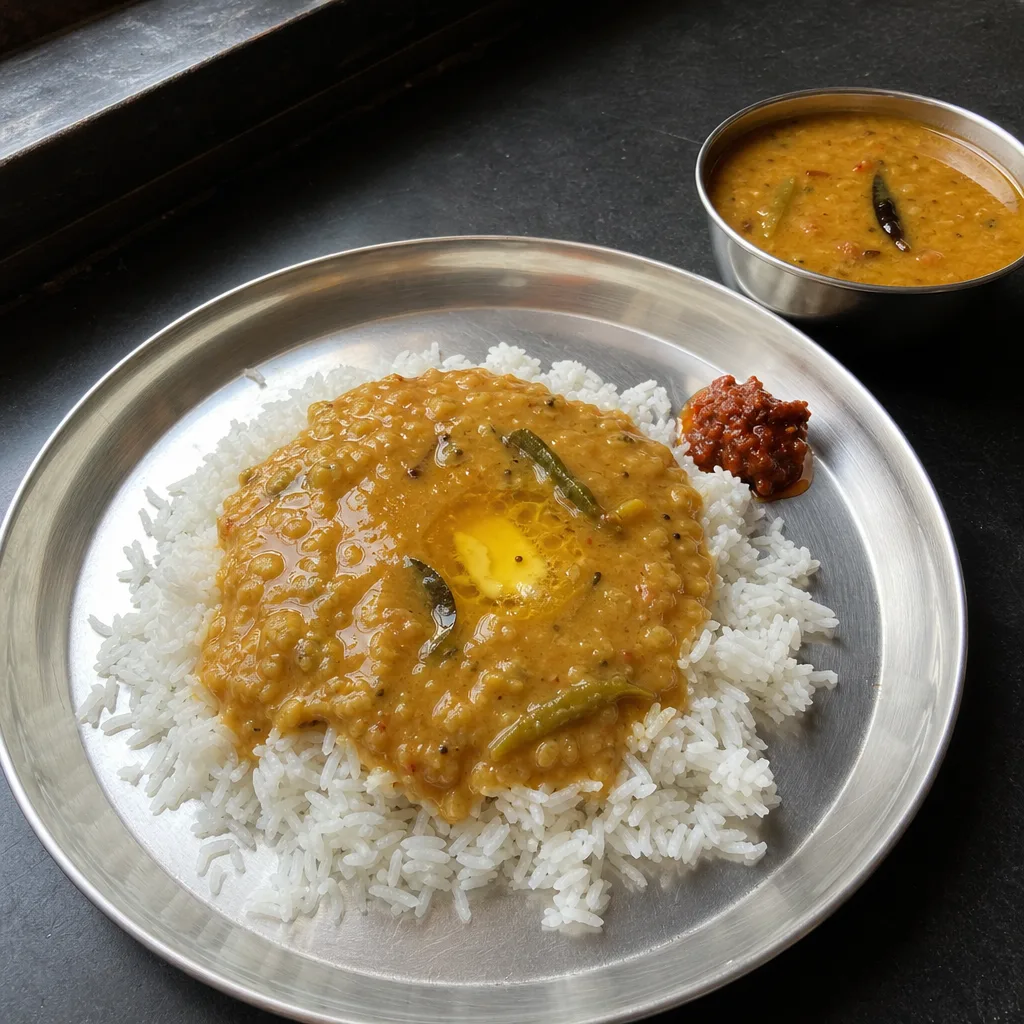
Pappu is not a side dish in an Andhra meal — it is the centre of it. A mound of hot rice, a ladle of pappu poured over, a spoonful of ghee on top, and a smear of raw mango pickle on the side: that is a full meal for most Andhra households on an ordinary day. The word simply means cooked lentils, but the dish has a specific character — sour from tamarind, sharp from green chillies, and finished with a ghee-based tempering that carries mustard, dried red chillies, and curry leaves.
The dal is pressure-cooked until completely soft, then simmered with tamarind water long enough for the raw sourness to cook out and the flavours to come together. The tempering goes in last, over high heat, and is stirred in immediately so the ghee and the spices run through the whole pot. Some households add a pinch of jaggery to balance the tamarind; others never do. Both are correct.
Toor dal is the default, though chana dal and moong dal pappu exist as separate preparations. The consistency is thicker than sambar but looser than a North Indian dal — it should flow slowly off a spoon, not pour like soup and not sit in a mound. Getting that consistency right, and cooking the tamarind long enough, are the two things that decide the dish.
Ingredients (serves 4)
For the dal
For the tempering (popu / tadka)
Method
Rinse and pressure-cook the dal
Rinse the toor dal in three changes of water until the water runs mostly clear. Put it in a pressure cooker with 500 ml water and the turmeric. Cook on medium heat for 4 to 5 whistles, then turn off the heat and let the pressure release on its own. The dal should be completely soft — press a grain between your fingers and it should dissolve with no resistance. If it is still grainy, cook for 2 more whistles.
Extract the tamarind pulp
While the dal cooks, soak the tamarind in 200 ml warm water for 10 minutes. Squeeze and work it with your fingers to dissolve the pulp, then strain through your fingers or a coarse strainer, pressing out all the liquid. Discard the fibres and seeds. The liquid should be a deep brown and noticeably sour.
Mash the cooked dal
Open the cooker once the pressure has fully dropped. Use a wooden spoon or a whisk to mash the dal well — Andhra pappu is smooth, not chunky. It does not need to be perfectly silky, but there should be no whole grains visible. If it looks very thick at this stage, that is fine; you will adjust the consistency later.
Add tamarind and green chillies, simmer together
Transfer the mashed dal to a wide, heavy-bottomed pot if you used a separate cooker, or cook directly in the cooker pot over medium heat. Pour in the strained tamarind water and add the slit green chillies. Stir well and bring to a gentle boil. This is the step people rush — do not. The tamarind needs to cook into the dal for at least 12 to 15 minutes on a steady medium simmer, stirring occasionally, or the raw sourness will not go away. The colour will deepen slightly and the mixture will thicken.
Adjust consistency and season
Add 100 to 150 ml water to bring the dal to a consistency that flows slowly off a spoon — thicker than sambar, thinner than a paste. Add salt and stir. Taste for sourness; the tamarind should be present but not aggressive. If it is too sour, a very small pinch of jaggery (optional, household choice) will soften it. Simmer for 3 more minutes after adding salt, then turn the heat to low.
Prepare the tempering
Heat ghee in a small tempering ladle or a small pan over high heat until it is hot and shimmering. Add the mustard seeds and wait for them to pop — this takes only 20 to 30 seconds. Add the cumin seeds immediately after; they will sizzle and colour in seconds. Do not let them burn.
Add the aromatics to the tempering
Add the dried red chillies, curry leaves, and asafoetida to the hot ghee. They will crackle and release their fragrance in about 15 seconds. Add the sliced shallots and crushed garlic. Fry on medium-high heat, stirring, until the shallots are lightly golden at the edges — about 2 minutes. The garlic should be pale gold, not brown.
Pour the tempering into the dal
Pour the entire contents of the tempering pan directly into the simmering dal. It will sizzle loudly. Stir it in immediately and thoroughly. Turn off the heat. The ghee carries the flavour of the spices through the whole pot, so stir well to distribute it. Taste once more for salt.
How to serve
Hot plain rice (sona masuri or raw rice), a spoonful of ghee poured directly over the rice and pappu, and avakaya (raw mango pickle). Papad and a dry vegetable curry (vepudu) are common alongside.
Served with: Hot plain rice (sona masuri or raw rice), a spoonful of ghee poured directly over the rice and pappu, and avakaya (raw mango pickle). Papad and a dry vegetable curry (vepudu) are common alongside.
Cook's tips
Do not skip the long tamarind simmer
Twelve to fifteen minutes is the minimum. If the tamarind cooks for less time, the pappu will taste raw and sharp at the back of the throat rather than pleasantly sour. You will know it is ready when the smell shifts from harsh to mellow.
Ghee, not oil
The tempering must be done in ghee for this dish. Oil gives a flat result. If the household is strictly vegan, refined coconut oil is a distant substitute, but it changes the character of the dish.
Toor dal can be soaked for 20 minutes before cooking
Not traditional, but it reduces pressure-cooking time to 3 whistles and gives a smoother mash. Rinse after soaking.
The dal thickens as it cools
Serve pappu immediately after tempering. If it sits, it will thicken considerably. Reheat with a splash of water and stir well.
Jaggery is optional and divisive
Some families always add a small piece; others consider it wrong. If your tamarind is very sour, a 5 g piece of jaggery dissolved into the simmering dal will balance it without making the pappu sweet.
Regional variations
Tomato pappu (tomato replaces tamarind); mamidikaya pappu (raw green mango as the souring agent, common in summer); senagapappu (chana dal version); Telangana pappu which is simpler and less sour; palakura pappu with spinach.
Glossary
- Pappu పప్పు
- Telugu word for cooked lentils; also the name of this category of dal dish.
- Popu పోపు
- The tempering of spices in hot fat, added at the end; equivalent to tadka in Hindi.
- Toor dal కంది పప్పు
- Split pigeon peas; the most common dal used in Andhra cooking.
- Inguva ఇంగువ
- Asafoetida in Telugu; used in a very small quantity in the tempering.
- Avakaya అవకాయ
- Raw mango pickle made with mustard powder and red chilli; the classic accompaniment to rice and pappu.
- Kudampuli കുടംപുളി
- Gamboge / Malabar tamarind used in Kerala cooking; NOT used here. Andhra pappu uses regular tamarind (Tamarindus indica).
Two things decide whether this pappu works: cooking the tamarind long enough for its raw edge to mellow into a clean sourness, and finishing with a generous ghee tempering that you stir in immediately and completely. Get those right and the rest follows.
More Vegetarian Gravies recipes
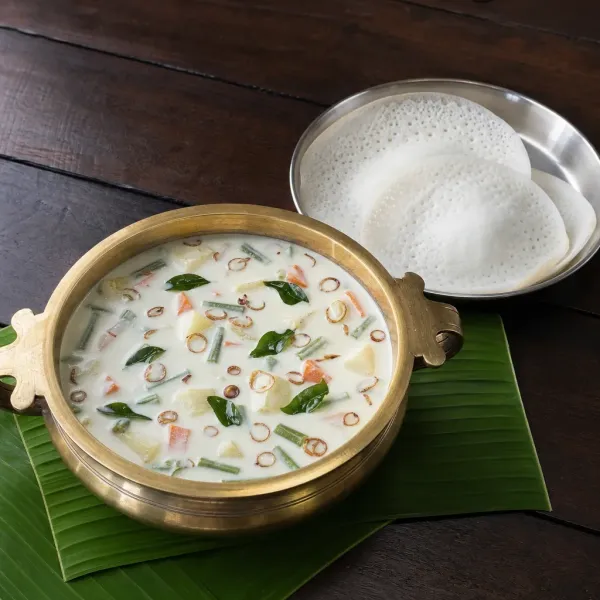
Kerala Vegetable Stew (Ishtu)
Traditional Nasrani vegetable ishtu from Travancore: potatoes, carrots and beans simmered in coconut milk with whole spices. Served with appam.
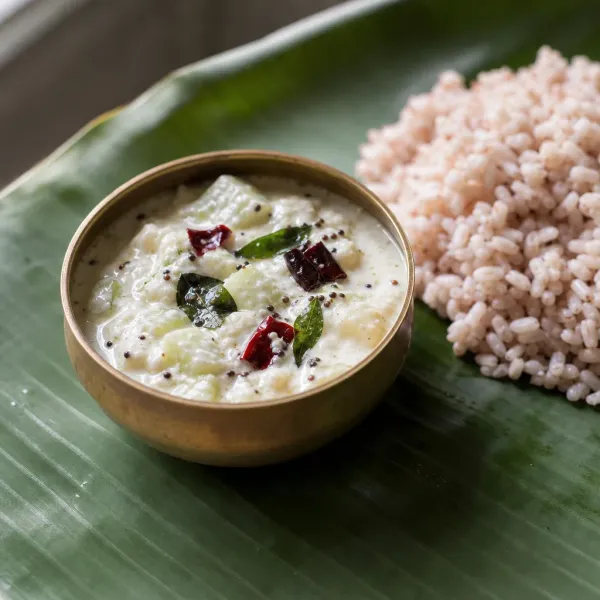
Vellarikka Pachadi
Traditional Kerala vellarikka pachadi with fresh coconut paste, green chilli and thick curd. A cooling sadya side dish ready in 25 minutes.
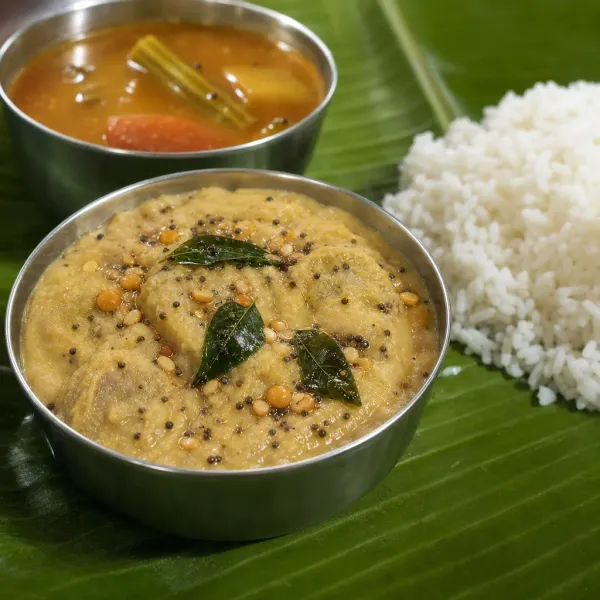
Kootu
Traditional Tamil Brahmin kootu with raw banana and toor dal, bound with a freshly ground coconut and cumin paste. A daily Iyer lunch dish.
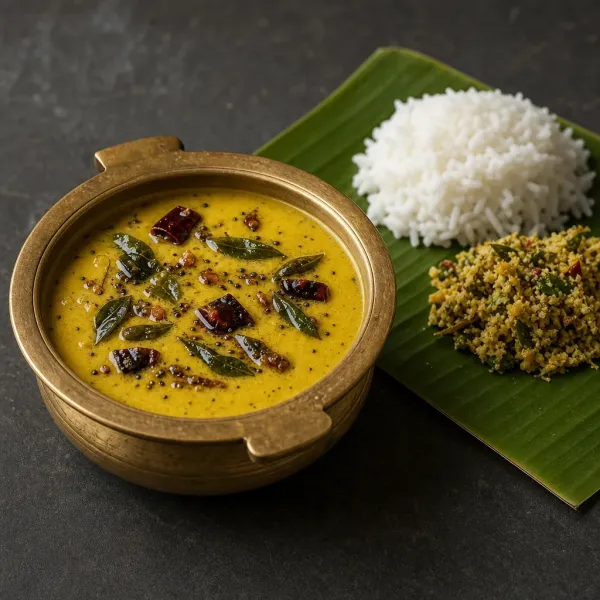
Poricha Kuzhambu
Traditional Tamil Brahmin poricha kuzhambu with roasted coconut paste, toor dal, and raw banana. No tamarind, no onion. Weekday lunch recipe.
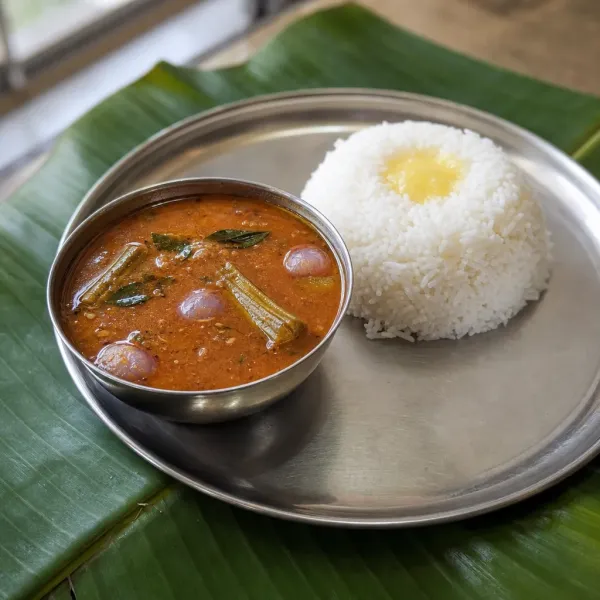
Arachuvitta Sambar (Tamil Brahmin Style, Freshly Ground Masala)
Traditional Tamil Brahmin arachuvitta sambar with freshly ground coconut masala, toor dal, drumstick, and tamarind. No sambar powder, no tomato.
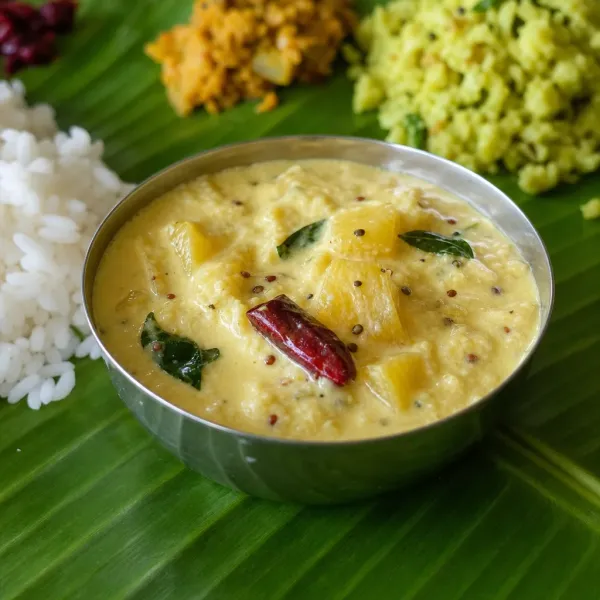
Pineapple Pachadi
Traditional Kerala pineapple pachadi for the sadya leaf: pineapple cooked with coconut paste, finished with sour curd and a coconut oil tempering.