

Vellarikka Pachadi Recipe
Malayalam വെള്ളരിക്ക പച്ചടിTamil வெள்ளரிக்காய் பச்சடிKannada ಸೌತೆಕಾಯಿ ಪಚ್ಚಡಿTelugu దోసకాయ పచ్చడి
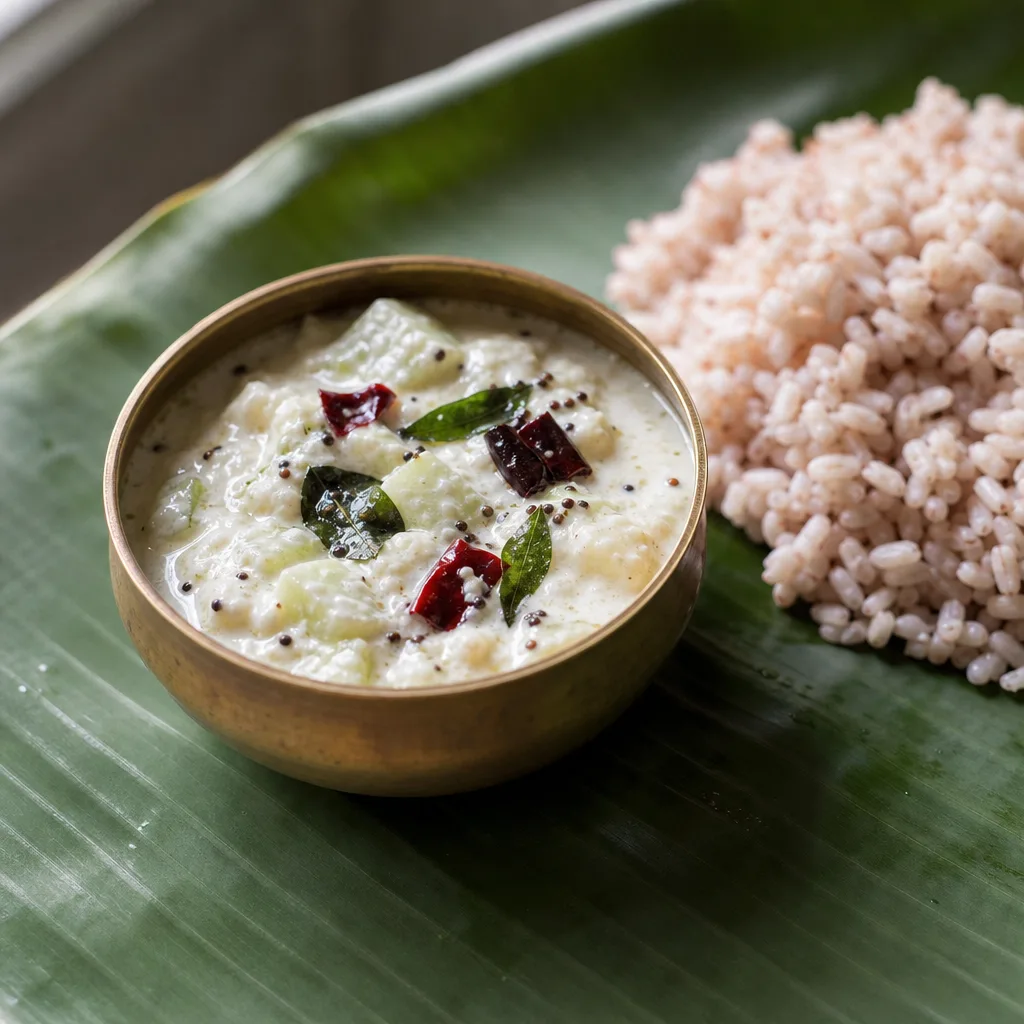
- Prep15 min
- Cook10 min
- Serves4
- DifficultyEasy
- DietVegetarian
Vellarikka pachadi is a cooling side dish made from the pale, thin-skinned Kerala cucumber called vellarikka. It sits on the sadya banana leaf in the row of yoghurt-based dishes, alongside kichadi and pulissery, and its job is to calm the meal down. The coconut paste is ground with green chilli and cumin, stirred through lightly cooked cucumber, and then the whole thing is folded into thick, fresh curd. The final tempering of mustard seeds, dried red chilli and curry leaves goes on at the very end so the sizzle is still audible when it reaches the table.
The cucumber is cooked only briefly, just enough to lose its raw edge while keeping its pale colour and slight bite. Overcooking turns it watery and the dish loses body. The curd must be thick and not sour; thin or sharp curd will make the pachadi runny and unpleasantly tart. In most Kerala households the curd is set overnight from full-fat milk and is at room temperature before it goes in.
Household variation is modest. Some cooks add a small piece of raw mango when the cucumber is out of season or needs brightening. A few add a tiny pinch of turmeric to the coconut paste, giving the finished dish a faint yellow tint. Both are genuine. This recipe is the plain, everyday version without mango.
Ingredients (serves 4)
For the cucumber
For the coconut paste
For the curd base
For the tempering
Method
Cook the cucumber
Put the cucumber cubes in a small pan with the salt and 3 tbsp water. Cover and cook on medium-low heat for 4 to 5 minutes, stirring once halfway. The cucumber should be just tender when pressed but still hold its shape and remain pale. Drain off any excess water and let it cool for a few minutes. If you skip the cooling step and add hot cucumber to the curd, the curd will split.
Grind the coconut paste
Grind the fresh coconut, green chilli and cumin seeds together with 2 to 3 tbsp water to a smooth, thick paste. It should not be watery. Taste it: the coconut fragrance should be forward and the chilli heat present but not dominant. Set aside.
Combine cucumber and coconut paste
Add the coconut paste to the cooled, drained cucumber in the pan. Stir well over the lowest possible heat for one minute, just enough to marry the two together. Do not let it boil. Remove from the heat and allow it to cool to room temperature.
Fold in the curd
Beat the thick curd smooth with a spoon, then fold it into the cucumber and coconut mixture. Stir gently. Check salt. The finished mix should be creamy and thick, not pourable. If it looks too loose, your curd was thin; there is no remedy at this stage, so start with good curd.
Temper and finish
Heat the coconut oil in a small tempering pan on medium heat. When the oil is hot, add the mustard seeds and wait for them to pop completely, about 30 seconds. Add the broken dried red chillies and curry leaves, stand back as the leaves will splutter, and let them crisp for 10 seconds. Pour the entire contents of the tempering pan immediately over the pachadi and stir once. Serve straight away.
How to serve
Steamed matta rice as part of a Kerala sadya, alongside olan, avial, sambar and rice papadam. Also served as a side with plain cooked rice on ordinary days.
Served with: Steamed matta rice as part of a Kerala sadya, alongside olan, avial, sambar and rice papadam. Also served as a side with plain cooked rice on ordinary days.
Cook's tips
Choosing the cucumber
Vellarikka has thin, pale yellow-green skin and very mild flesh. If you cannot find it, a young ash gourd (kumbalanga) is a closer substitute than a salad cucumber. Salad cucumber releases far more water and the pachadi becomes thin.
Curd temperature matters
Cold curd straight from the refrigerator can make the dish taste sharp and the fat separates unevenly. Bring it to room temperature before folding it in. Equally, the cucumber mixture must not be warm when the curd goes in.
Do not reheat
Pachadi with curd cannot be reheated. Make it fresh or make it no more than an hour before eating and keep it at room temperature. Refrigerating it firms the coconut paste and mutes the flavour.
Removing excess moisture
If the cucumber releases a lot of water during cooking, drain it through a colander and press lightly before adding the coconut paste. Watery cucumber dilutes both the paste and the curd.
Regional variations
A Palakkad Iyer version uses a thinner yoghurt base with less coconut and adds a pinch of asafoetida; some Malabar households skip the green chilli in the coconut paste and add it only in the tempering.
Glossary
- Vellarikka വെള്ളരിക്ക
- The pale-skinned Kerala cucumber, milder and less watery than the common salad cucumber.
- Pachadi പച്ചടി
- A Kerala yoghurt-based side dish, cooked and then cooled before the curd is added; distinct from raita.
- Jeerakam ജീരകം
- Cumin seeds; used here ground into the coconut paste to give the pachadi its characteristic base note.
- Kaduku കടുക്
- Mustard seeds, always the first ingredient into hot oil in a Kerala tempering.
- Sadya സദ്യ
- The traditional Kerala feast served on a banana leaf, typically for Onam, Vishu and weddings, at which pachadi is a standard item.
Two things decide this dish: the curd must be thick and fresh with no sourness, and the cucumber must be drained of its cooking water before anything else goes in. Get those two right and the rest follows easily.
More Vegetarian Gravies recipes
Poricha Kuzhambu
Traditional Tamil Brahmin poricha kuzhambu with roasted coconut paste, toor dal, and raw banana. No tamarind, no onion. Weekday lunch recipe.
Pineapple Pachadi
Traditional Kerala pineapple pachadi for the sadya leaf: pineapple cooked with coconut paste, finished with sour curd and a coconut oil tempering.
Andhra Pappu
Traditional Coastal Andhra toor dal with tamarind, green chillies, and a ghee tempering. The everyday rice-and-pappu meal made the right way.
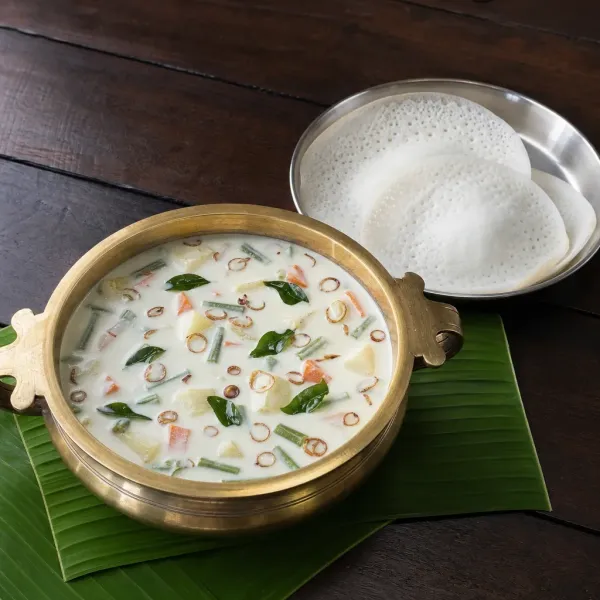
Kerala Vegetable Stew (Ishtu)
Traditional Nasrani vegetable ishtu from Travancore: potatoes, carrots and beans simmered in coconut milk with whole spices. Served with appam.
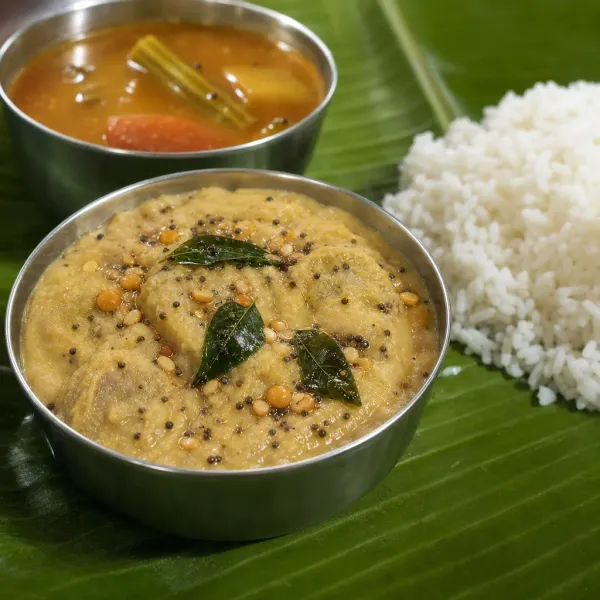
Kootu
Traditional Tamil Brahmin kootu with raw banana and toor dal, bound with a freshly ground coconut and cumin paste. A daily Iyer lunch dish.
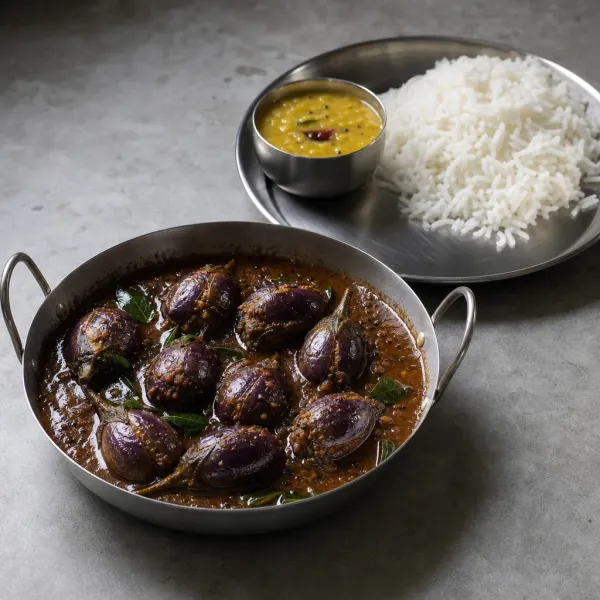
Gutti Vankaya Kura
Authentic Rayalaseema gutti vankaya kura: small brinjals stuffed with a peanut-sesame-coconut masala, slow-cooked in a tamarind gravy with gingelly o…