

Gutti Vankaya Kura Recipe
Malayalam ഗുട്ടി വంകായ കూരTamil குட்டி வாங்காய் குழம்புKannada ಗುಟ್ಟಿ ವಂಕಾಯ ಕೂರTelugu గుట్టి వంకాయ కూర
- Prep25 min
- Cook45 min
- Serves4
- DifficultyMedium
- DietVegan
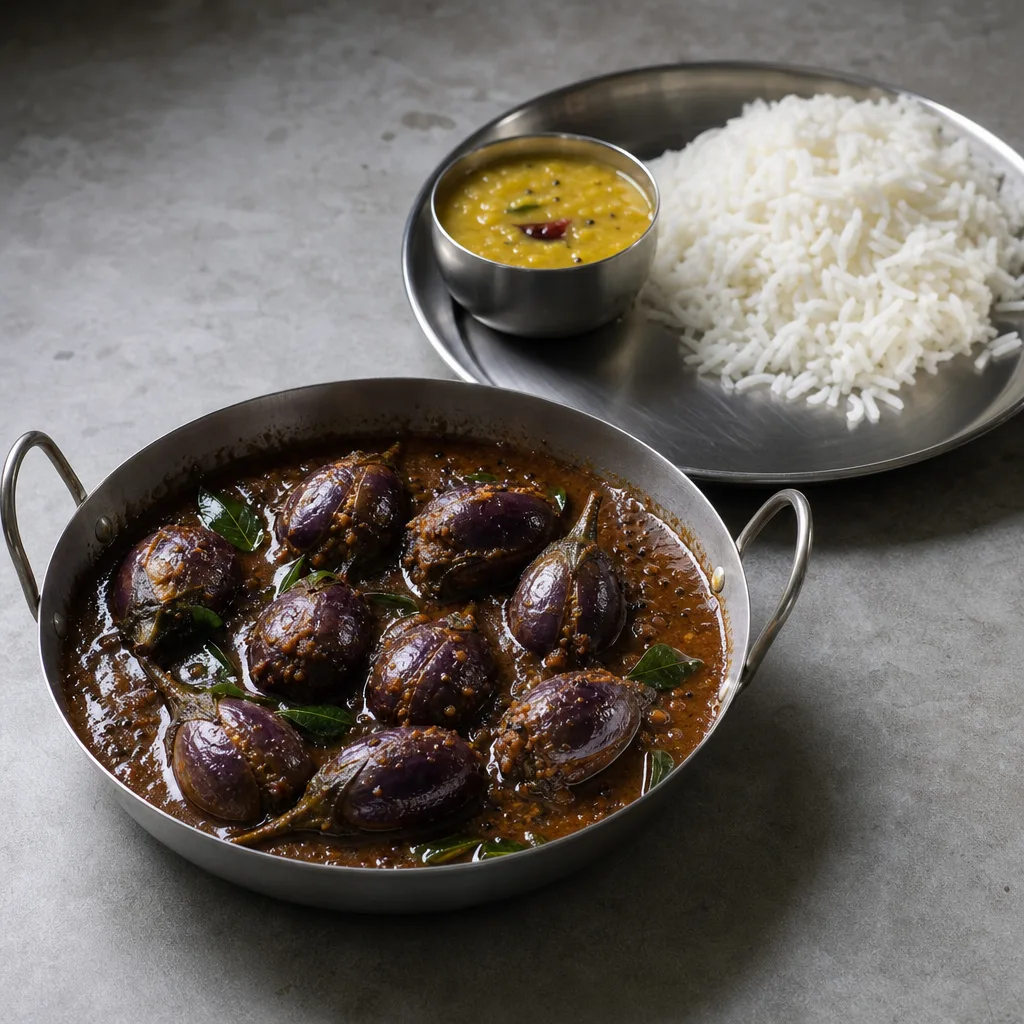
Gutti vankaya kura is a stuffed brinjal dish from Andhra kitchens, where small, tender brinjals are slit and packed with a dry-roasted masala of peanuts, sesame, coconut, and spices, then cooked slowly in a tamarind-based gravy until the brinjals are completely soft and the masala has merged with the sauce. The dish is deeply savoury, with the nuttiness of peanut and sesame underpinning the heat of dried red chilli. It is not a quick dish, and it should not be.
In Rayalaseema households, this appears at the main midday meal alongside rice and a dal. The brinjals used are the small, round or oblong purple variety, roughly the size of a large lime. Larger brinjals do not work well here because they take too long to cook through and the stuffing falls out. The masala is always dry-roasted and ground coarse, never fine, so there is texture in every bite.
Households differ on the proportion of peanut to coconut, and some add a small amount of dried fenugreek leaf to the stuffing. The tamarind quantity is a matter of family taste. What does not vary is the method: the stuffing goes in raw, the brinjals are sealed into the pan with the gravy, and everything finishes together on a low flame.
Ingredients (serves 4)
For the stuffing masala
For the brinjals
For the gravy
Method
Dry-roast the masala ingredients
Set a heavy pan over medium heat. Add the peanuts and roast, stirring constantly, for 4 to 5 minutes until the skins blister and the nuts smell nutty. Tip them out. In the same pan, roast the sesame seeds for 1 to 2 minutes until they begin to pop and turn pale gold. Tip out. Add the dried red chillies, coriander seeds, and cumin seeds together and roast for 1 minute until fragrant. Remove from heat. Finally, add the grated coconut to the dry pan and stir for 30 seconds just to take the raw edge off. Do not let it brown.
Grind the stuffing
Once everything is cool enough to handle, rub the skins off the peanuts with your palms and discard them. Combine the peanuts, sesame, roasted spices, coconut, garlic, and the tamarind soaked in 2 tbsp water in a mixer jar. Grind to a coarse, slightly damp paste, stopping before it becomes smooth. You want a texture like coarse wet sand, not a fine purée. Taste and add salt. The stuffing should be boldly seasoned because it carries the flavour of the whole dish.
Slit the brinjals
Wipe the brinjals dry. Keeping the stalk intact, make two deep cuts from the base upward in a cross, stopping about 1 cm from the stalk so the brinjal stays in one piece. Open each brinjal gently with your fingers and press a heaped teaspoon of stuffing firmly into the cavity. Close the brinjal around it. Set the stuffed brinjals aside. If you have leftover stuffing, it goes into the gravy.
Temper the oil
Heat the gingelly oil in a wide, heavy-bottomed pan, ideally one with a tight-fitting lid, over medium heat. Add the mustard seeds and wait for them to pop. Add the cumin seeds, broken dried red chillies, and curry leaves. Stand back when the curry leaves go in as the oil will spit. Let everything crackle for 30 seconds.
Cook the shallots
Add the sliced shallots and cook over medium heat, stirring often, for 8 to 10 minutes until they are soft and beginning to turn light golden at the edges. Do not rush this. Undercooked shallots leave a raw bite in the finished gravy.
Add tomatoes and spice powders
Add the chopped tomatoes, turmeric, red chilli powder, and coriander powder. Stir well and cook over medium heat for 6 to 8 minutes until the tomatoes break down completely and the oil begins to separate at the edges of the mixture. The paste should look thick and glossy, not watery.
Add tamarind water and any remaining stuffing
Pour in the extracted tamarind pulp. If there is leftover stuffing masala, add it now and stir it in. Add 150 ml of plain water, stir, and taste for salt. Bring to a gentle simmer.
Place the stuffed brinjals in the gravy
Gently lower the stuffed brinjals into the simmering gravy, arranging them in a single layer. Spoon some gravy over them. Cover the pan with a tight lid, reduce the heat to low, and cook for 20 to 25 minutes. Do not stir during this time. Instead, gently shake the pan every 7 to 8 minutes to prevent sticking and to turn the brinjals in the gravy.
Check for doneness
After 20 minutes, press the side of a brinjal gently with the back of a spoon. It should give without resistance. If there is any firmness, cover and cook for another 5 minutes. The gravy should be thick enough to coat the brinjals, not watery. If it looks thin, remove the lid and cook uncovered for 3 to 4 minutes on low heat.
Rest before serving
Turn off the heat and leave the pan covered for 5 minutes. This resting time allows the stuffing inside the brinjals to firm up slightly and the flavours to settle. Serve directly from the pan.
How to serve
Steamed white rice, a dal such as pappu (cooked toor dal with turmeric and tempered with mustard and dried chilli), and a raw onion and green chilli side salad. Papad alongside is common in Rayalaseema households.
Served with: Steamed white rice, a dal such as pappu (cooked toor dal with turmeric and tempered with mustard and dried chilli), and a raw onion and green chilli side salad. Papad alongside is common in Rayalaseema households.
Cook's tips
Choosing the brinjals
Look for brinjals that are firm with no soft spots and roughly uniform in size so they cook evenly. If one is much larger than the others, it will still be firm when the rest are done. Round purple brinjals are ideal; long thin ones are harder to stuff and fall apart.
Gingelly oil is not optional
The nutty depth of gingelly oil is part of the dish's character. Substituting refined sunflower oil produces a noticeably blander result. If you cannot find cold-pressed gingelly oil, use a smaller quantity of the best sesame oil you have.
The stuffing must be coarse
If you grind the stuffing too fine, it turns to paste inside the brinjal and has no texture. Stop the mixer early and check with your fingers. You want distinct pieces of peanut and sesame visible.
Do not stir once the brinjals are in
Stirring will break the stuffed brinjals open. Shaking the pan gently is the correct way to move them. If one splits, the stuffing falls into the gravy, which thickens it but the brinjal loses its character.
Tamarind balance
The dish should be sour but not aggressively so. Taste the gravy before adding the brinjals and adjust. The stuffing also contains a little tamarind, so the combined effect is stronger than either element alone.
Regional variations
Coastal Andhra version uses more fresh coconut and less peanut; Telangana gutti vankaya uses a different spice balance and is often drier; some households add dried fenugreek leaves to the stuffing.
Glossary
- Gutti vankaya గుట్టి వంకాయ
- Stuffed brinjal in Telugu; gutti means stuffed or filled, vankaya is brinjal.
- Kura కూర
- Telugu word for a cooked vegetable dish or curry, typically served with rice.
- Gingelly oil నువ్వుల నూనె
- Cold-pressed sesame oil used widely in South Indian cooking, especially in Tamil Nadu and Andhra; distinct from the lighter toasted sesame oil used in East Asian cooking.
- Kudampuli കുടംപുളി
- Gamboge or Malabar tamarind, a souring agent used in Kerala; not used in this dish, which uses regular tamarind (chintapandu in Telugu).
- Pappu పప్పు
- Telugu term for cooked lentils or dal, the standard accompaniment to rice in Andhra and Telangana households.
The two things that decide this dish are the texture of the stuffing and the patience to cook the brinjals on a low flame without disturbing them. Grind the masala too fine and the filling becomes a paste with no presence. Rush the brinjals on high heat and the outside scorches while the inside stays raw. Get both right and the dish takes care of itself.
More Vegetarian Gravies recipes
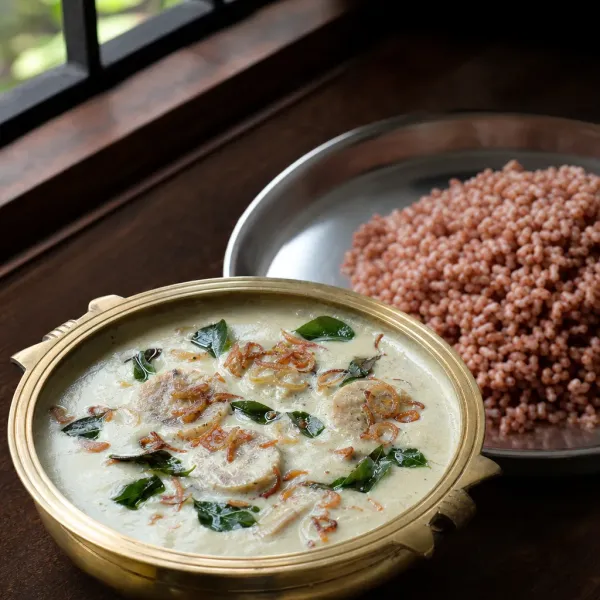
Vazhakka Curry (Raw Banana in Coconut Gravy)
Traditional Nasrani Kerala vazhakka curry with fresh coconut paste and kudampuli. Step-by-step household recipe with exact quantities and cook's note…
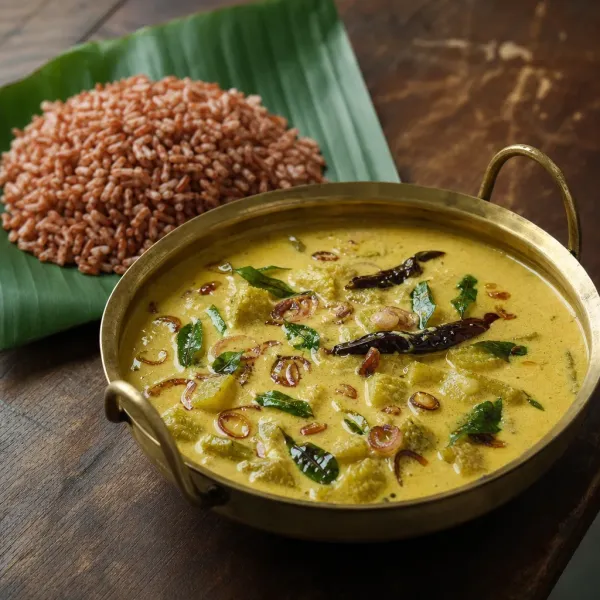
Manga Curry
Traditional Kerala manga curry with fresh coconut paste, shallots and curry leaves. A quick, sour, everyday side dish for matta rice. Ready in 40 min…
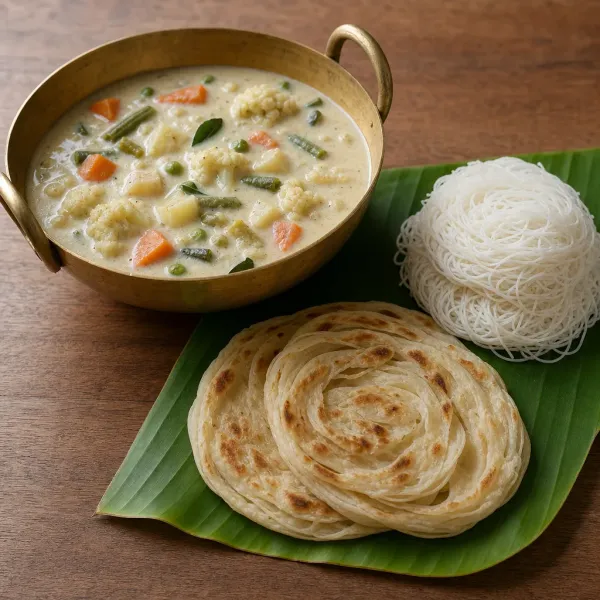
Kerala Muslim Vegetable Kurma
Traditional Malabar Mappila vegetable kurma with fresh coconut, kus kus and cashew paste. Pale, mildly spiced, perfect with parotta and idiyappam.
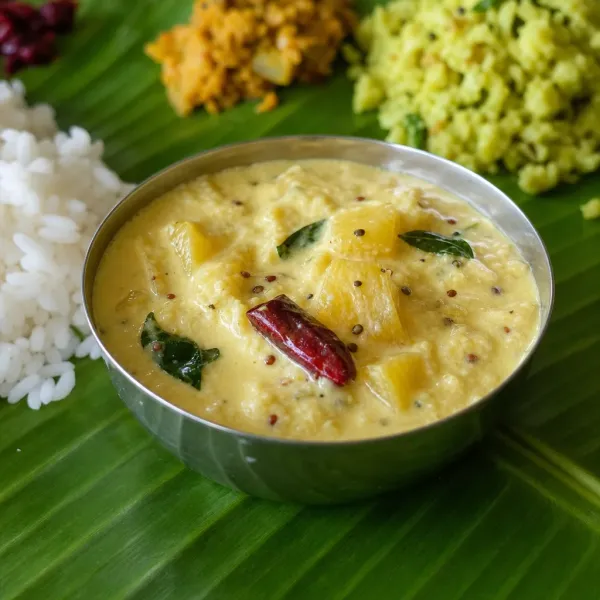
Pineapple Pachadi
Traditional Kerala pineapple pachadi for the sadya leaf: pineapple cooked with coconut paste, finished with sour curd and a coconut oil tempering.
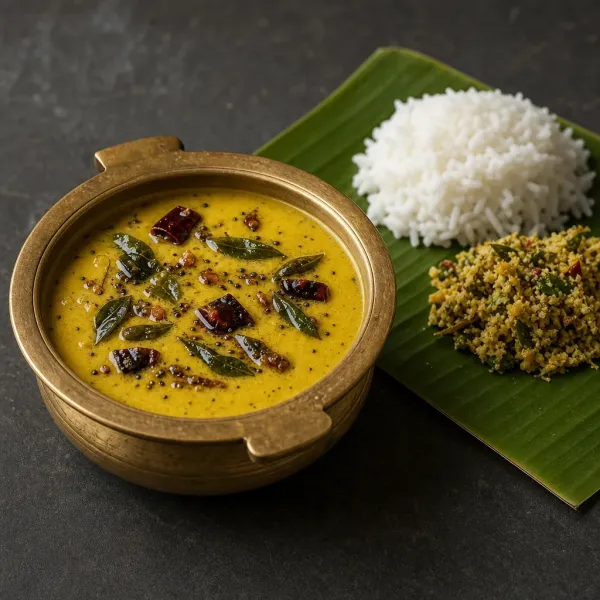
Poricha Kuzhambu
Traditional Tamil Brahmin poricha kuzhambu with roasted coconut paste, toor dal, and raw banana. No tamarind, no onion. Weekday lunch recipe.
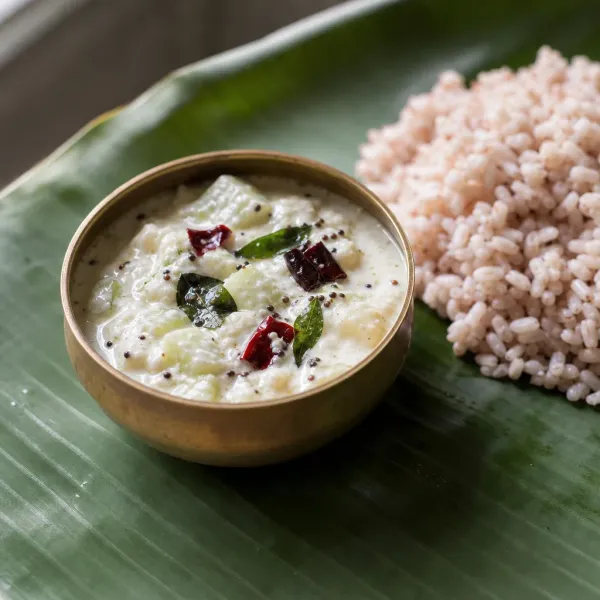
Vellarikka Pachadi
Traditional Kerala vellarikka pachadi with fresh coconut paste, green chilli and thick curd. A cooling sadya side dish ready in 25 minutes.