

Kerala Puttu Recipe
Malayalam പുട്ട്Tamil புட்டுKannada ಪುಟ್ಟುTelugu పుట్టు
- Prep15 min
- Cook20 min
- Serves3
- DifficultyEasy
- DietVegan
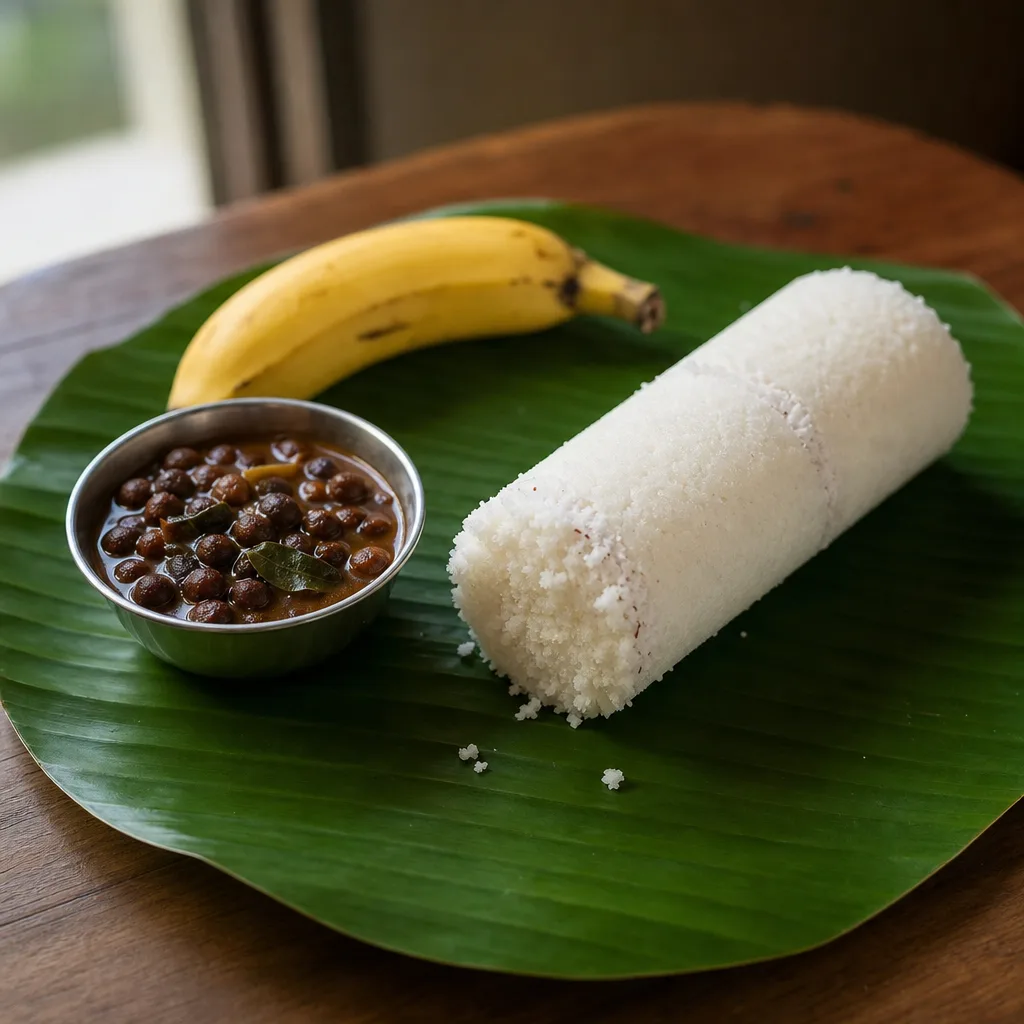
Puttu is the morning dish of Kerala households. It appears on the table before school and before work, made quickly once the rice flour is ready. The cylinder of pale steamed rice comes out dense but not heavy, crumbly when you press it, with the fresh coconut running in white seams through it. There is no browning anywhere, no crisp edge. It is entirely white and soft.
Every household has its own proportion of coconut to flour. Some people use a generous hand with the coconut so that every bite has a visible layer; others use just enough to keep the flour from clumping into a solid mass. The water added to the flour is the step that needs attention. Too little and the puttu crumbles to dust on the plate; too much and it steams into a gummy block. The right texture before steaming is damp sand that just holds its shape when you press a fistful, then falls apart again when you let go.
The puttu kutti fits over a pressure cooker or a dedicated pot. Steam enters through the perforated disc at the bottom of the cylinder and travels up through the flour. The whole thing takes eight to ten minutes once the steam is running. Families across Kerala eat it with kadala curry, ripe banana, or both together; in Malabar, fish curry alongside is common.
Ingredients (serves 3)
For the puttu
Method
Set the water to boil
Fill your pressure cooker or puttu pot with about 500 ml of water and bring it to a full boil over high heat. The steam must be running steadily before you load the cylinder. Fit the perforated disc into the base of the puttu kutti and set the cylinder aside while you prepare the flour.
Salt the flour
Put the puttu podi into a wide bowl. Add the salt and mix it through evenly with your fingers. This is the moment to taste the dry flour and adjust; once it is steamed you cannot add salt.
Add water gradually and work the flour
Sprinkle water over the flour a little at a time, rubbing it in with your fingertips after each addition. You are not kneading; you are coating the flour particles so they clump loosely. Stop adding water when a pressed fistful holds its shape for a second and then crumbles when you open your hand. If it holds a solid lump without crumbling, it is too wet and the puttu will be dense. If it falls away immediately as dry powder, add a few more drops.
Rest the moistened flour
Leave the flour in the bowl for five minutes. The moisture distributes itself more evenly during this rest, and you will often find the texture is slightly better after it than before.
Layer flour and coconut into the cylinder
Place the perforated disc inside the base of the puttu kutti. Add a small handful of grated coconut first, about two tablespoons, to form the bottom layer. Then add a layer of the moistened flour, roughly four to five tablespoons deep. Add another layer of coconut, then more flour, continuing until the cylinder is full. Finish with a layer of coconut on top. Do not pack the layers down. The flour should sit loose; compressing it blocks the steam.
Fit the cylinder onto the pot
Fix the filled cylinder onto the boiling pot or pressure cooker. The steam should begin entering immediately. If steam is escaping from the sides of the joint rather than rising up through the cylinder, press the cylinder down more firmly or wrap a damp cloth around the join.
Steam until done
Steam over medium-high heat for eight to ten minutes. You will see steam rising from the open top of the cylinder; that is your signal that the steam has travelled all the way through. The puttu is ready when the steam comes out freely from the top and the flour no longer smells raw. Do not steam beyond twelve minutes or the texture becomes tight.
Push out and serve immediately
Remove the cylinder from the heat. Use the wooden pusher or the back of a long spoon to push the puttu out from the bottom onto a plate or banana leaf. It will come out as a single pale cylinder with the coconut layers visible as white seams. Serve at once. Puttu does not hold; it tightens as it cools.
How to serve
Kadala curry (black chickpea curry); ripe nendran banana; or fish curry in Malabar households. Sugar and banana together is a common children's plate.
Served with: Kadala curry (black chickpea curry); ripe nendran banana; or fish curry in Malabar households. Sugar and banana together is a common children's plate.
Cook's tips
Making puttu podi at home
Soak raw rice (pachari) for two hours, drain completely, spread on a clean cloth until surface-dry but not bone-dry, then grind to a fine powder. Dry-roast in a heavy pan over low heat, stirring continuously, until the flour is just lightly toasted and smells faintly nutty but has not coloured. Cool before using. Store-bought puttu podi is a genuine and very common shortcut in Kerala households.
The water test is everything
The single most common mistake is adding too much water at once. Add it in four or five small additions, rubbing well between each. If you have over-moistened the flour, spread it on a plate for a few minutes to dry slightly, then try again.
No puttu kutti
A bamboo section sealed at one end with a banana leaf and perforated at the other is the older vessel. Some households use a coconut shell with holes drilled in it set over a vessel of boiling water. These are traditional, not improvised.
Red rice flour
Many Kerala households use matta rice (red parboiled rice) to make puttu podi. The method is identical but the flour is pinker and the flavour is earthier. Both versions are traditional; the white rice version is more common in urban households today.
Do not reheat
Puttu is made fresh for each meal. Reheating makes it rubbery. If you have leftover puttu, crumble it and stir-fry with a little coconut oil and shallots for a quick snack.
Regional variations
Wheat puttu (gothambu puttu) uses roasted wheat flour; ragi puttu uses finger-millet flour; some Tamil Nadu households make a sweeter version with jaggery layered in; Kodava families make a similar steamed cylinder called puttari puttu with their own red rice.
Glossary
- Puttu podi പുട്ടുപൊടി
- Rice flour prepared specifically for puttu; raw rice ground fine and lightly dry-roasted.
- Puttu kutti പുട്ടുകുറ്റി
- The cylindrical metal steamer used to make puttu; fits over a pot or pressure cooker.
- Pachari പച്ചരി
- Raw (unparboiled) white rice, as distinct from parboiled matta rice.
- Matta rice മട്ട അരി
- Kerala red parboiled rice; has a distinctive earthy flavour and pinkish-red bran layer.
- Nendran നേന്ത്രൻ
- A large starchy Kerala banana variety, eaten ripe alongside puttu or used for chips and halwa.
- Kadala കടല
- Black chickpeas (kala chana); the basis of kadala curry, the most common puttu accompaniment.
Two things decide whether puttu works: the moisture level of the flour before it goes into the cylinder, and keeping the steam strong and uninterrupted once the cylinder is on the pot. Get the damp-sand texture right and keep the heat up, and the rest follows.
More Breakfast & Tiffin recipes
Plain Dosa
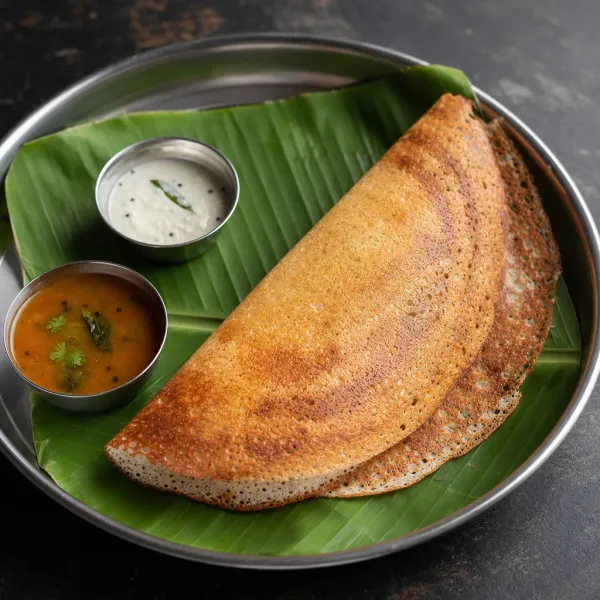
Traditional Tamil Iyer plain dosa: fermented rice and urad dal batter, spread thin on a cast-iron tawa with gingelly oil. Crisp, golden, and sour.
Godhuma Dosa
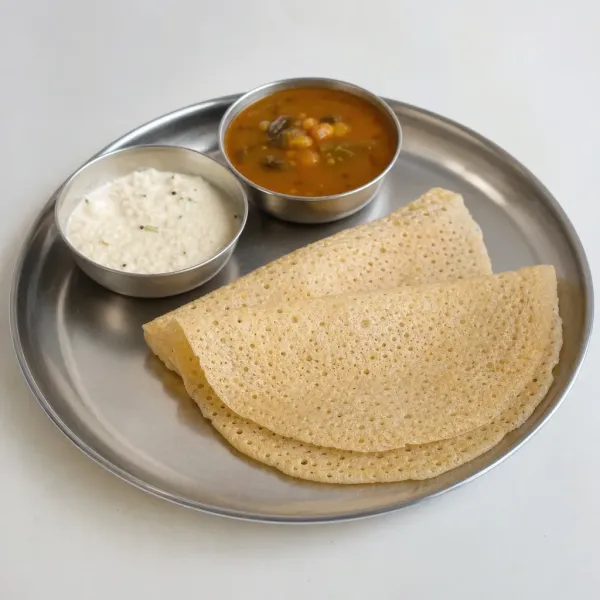
Quick Tamil Nadu-style godhuma dosa made with wheat flour and rice flour, no fermentation needed. Ready in under an hour, soft and lacy.
Sannas
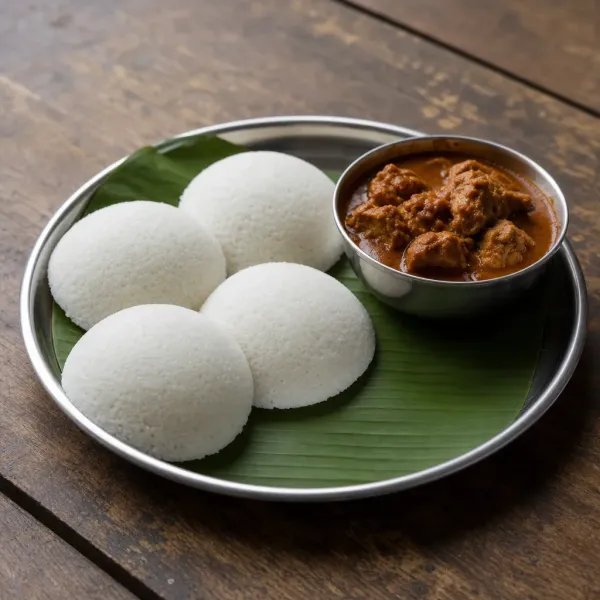
Traditional Mangalorean Konkani Catholic sannas: soft, white steamed rice cakes leavened with yeast, made with raw rice and fresh coconut. Step-by-st…
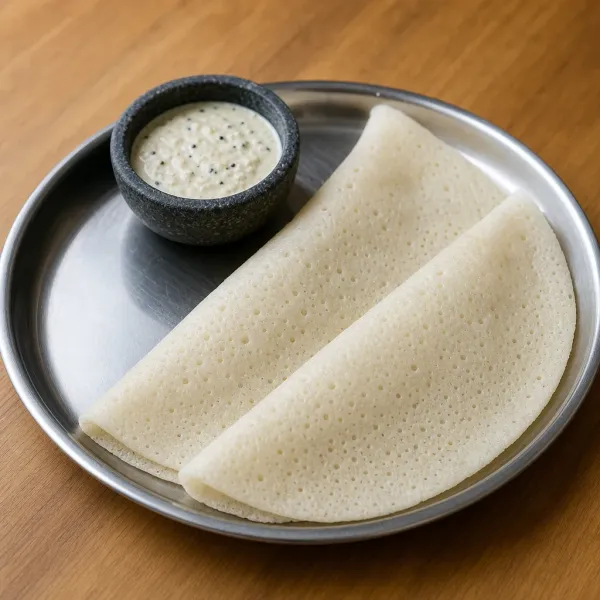
Aval Dosa (Soft Poha Dosa)
Soft, spongy aval dosa made with thick poha and raw rice. A quick-soak batter, no overnight ferment needed. Traditional Udupi home recipe.
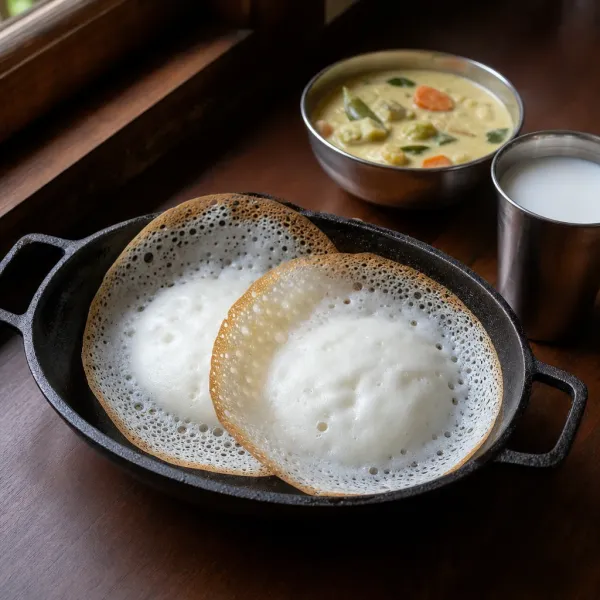
Appam
Traditional Kerala appam with toddy or yeast fermentation, ground fresh coconut, and cooked rice for a soft centre and lacy browned rim. Nasrani hous…
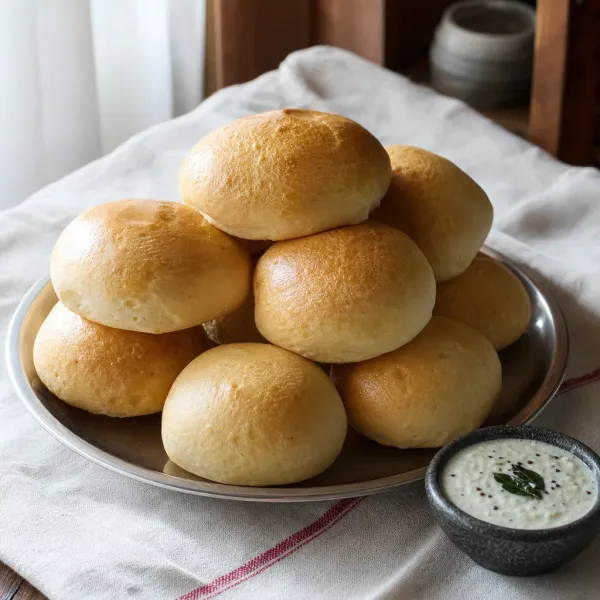
Mangalore Buns
Traditional Mangalore Buns from Konkani Catholic kitchens: ripe banana and curd dough rested overnight, rolled thick and fried until soft and golden.