

Sannas Recipe
Malayalam സന്നാസ്Tamil சன்னாஸ்Kannada ಸನ್ನಾಸ್Telugu సన్నాస్
- Prep20 min
- Soak / ferment10 hr
- Cook40 min
- Serves4
- DifficultyMedium
- DietVegetarian
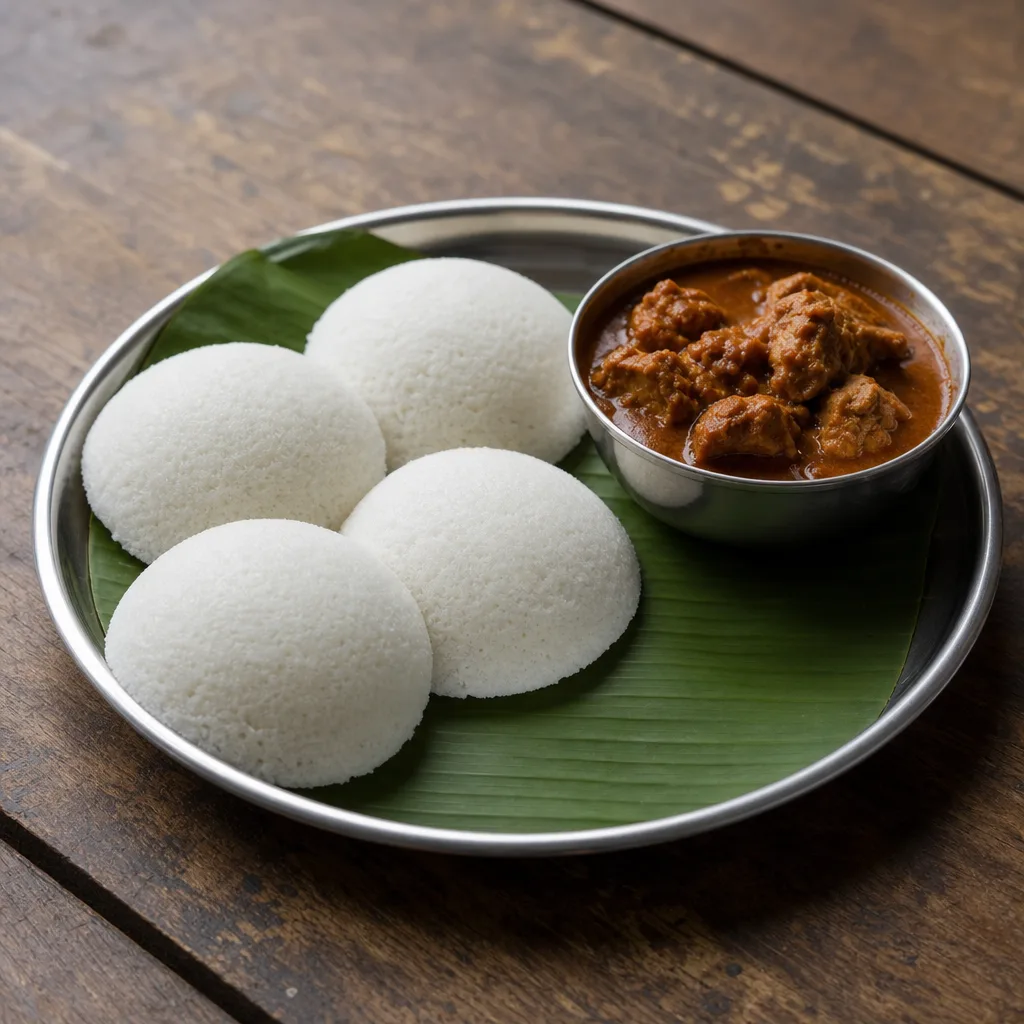
Sannas are the Konkani Catholic household's answer to idli: soft, white, slightly sweet steamed rice cakes that rise gently in small round moulds. They are eaten at breakfast and at Sunday lunch, and they appear without fail at weddings and feast-day tables along the Mangaluru and Udupi coast. The texture is altogether different from idli — closer to a steamed sponge, with a tender, almost custardy centre and no grainy edge.
The batter is built on raw rice and freshly grated coconut, sweetened with a little sugar, and leavened either with fresh toddy or, in most modern kitchens, a small quantity of active dry yeast dissolved in warm water. Fermentation happens overnight or for eight to ten hours, and the batter should smell faintly yeasty and look visibly puffed before you steam it. Rushing the ferment gives flat, dense cakes.
Households differ mainly on sweetness and the rice-to-coconut ratio. Some families use a small amount of cooked rice alongside the raw rice to give a softer crumb; others use only raw rice. The amount of sugar ranges from a whisper to something noticeably sweet. This recipe follows the version that is most common in Mangaluru Catholic homes: moderately sweet, with a good proportion of coconut, and leavened with yeast.
Ingredients (serves 4)
For the batter
Method
Proof the yeast
Combine the warm water, 1 tsp sugar and the active dry yeast in a small bowl. Stir once and leave undisturbed for 10 minutes. The mixture should become frothy and smell yeasty. If nothing happens after 10 minutes, the yeast is dead — discard it and start with a fresh sachet. Do not proceed with flat yeast; the sannas will not rise.
Grind the batter
Put the drained soaked rice, cooked rice and grated coconut into a wet grinder or a powerful blender. Grind, adding water a little at a time, until the batter is very smooth — smoother than idli batter, with no graininess when you rub a little between your fingers. This takes 15 to 20 minutes in a wet grinder. The batter should be thick and fall in a slow ribbon from a spoon.
Add sugar, salt and yeast
Transfer the ground batter to a large vessel — it will expand during fermentation, so choose a vessel with room to spare. Add the 3 tbsp sugar, salt and the proofed yeast mixture. Mix well with your hand or a spoon. The batter should feel slightly warm from the grinding.
Ferment overnight
Cover the vessel loosely with a lid or a plate — not airtight — and leave it in a warm corner of the kitchen for 8 to 10 hours, or overnight. In a warm coastal kitchen (28–32 °C) this is usually enough. The batter is ready when it has risen visibly, looks slightly bubbly on the surface and smells pleasantly yeasty. In a cooler kitchen, it may need up to 12 hours. Do not stir it down once it has risen.
Prepare the moulds and steamer
Grease small round idli moulds or steel katoris (approximately 8 cm diameter, 3 cm deep) lightly with coconut oil. Fill a large steamer or a wide vessel with enough water to steam for 15 to 20 minutes without running dry. Bring the water to a rolling boil before you pour the batter.
Pour the batter
Gently ladle the fermented batter into the greased moulds, filling each about two-thirds full. The batter is airy; do not press or stir it. It will rise further during steaming, so leave headroom.
Steam until set
Place the filled moulds in the steamer, cover with a tight lid and steam on medium-high heat for 12 to 15 minutes. The sannas are done when a toothpick or thin skewer inserted in the centre comes out clean and the surface looks set and opaque — pale white throughout, not glossy or wet. Do not lift the lid in the first 10 minutes or they will collapse.
Rest and unmould
Turn off the heat and let the sannas rest in the covered steamer for 2 minutes. Then open the lid, allow the steam to clear for another minute, and run a thin spatula or knife around the edge of each mould. They should slip out cleanly. If they stick, the moulds were not greased enough or they needed another minute of steaming.
How to serve
Chicken curry (kori gassi) or mutton curry are the classic pairings at a Konkani Catholic table. At breakfast they are eaten with coconut milk sweetened with jaggery, or with a simple dal. During Lent and on fasting days, they are paired with a vegetable or egg curry.
Served with: Chicken curry (kori gassi) or mutton curry are the classic pairings at a Konkani Catholic table. At breakfast they are eaten with coconut milk sweetened with jaggery, or with a simple dal. During Lent and on fasting days, they are paired with a vegetable or egg curry.
Cook's tips
Using fresh toddy instead of yeast
If you have access to fresh, active toddy (tadi), replace the yeast and its proofing water with 3 to 4 tbsp of fresh toddy stirred into the ground batter. The fermentation time and signs of readiness are the same. The flavour will be slightly more complex and faintly sour.
Wet grinder versus blender
A wet grinder gives a noticeably smoother batter and a softer sanna. A high-speed blender works but grind in two batches and run it for longer than you think necessary. A standard mixer-grinder is the hardest to get smooth enough; add a little extra water and grind for at least 15 minutes total.
The batter must be thick
If the batter is too thin, the sannas spread flat and turn dense rather than spongy. Add water very gradually during grinding. The finished batter should hold its shape briefly when dropped from a spoon before settling.
Storing leftover batter
Once fermented, the batter can be refrigerated and used the next day. Bring it to room temperature for 30 minutes before steaming. Do not re-ferment; it will over-sour.
Reheating
Leftover sannas dry out quickly. Steam them again for 3 to 4 minutes to restore softness. Do not microwave without covering with a damp cloth.
Regional variations
Hindu Konkani (GSB) households make a plainer, less sweet version; some Goan Catholic households use a greater proportion of urad dal and a longer ferment; toddy-risen sannas from Mangaluru have a distinct sourness absent in yeast-risen versions.
Glossary
- Pachari പച്ചരി
- Raw (uncooked, unparboiled) rice, as distinct from parboiled or matta rice. Used in Kerala and Konkan cooking for batters requiring a fine, white grind.
- Tadi ತಾಡಿ
- Fresh toddy, the naturally fermenting sap tapped from a coconut or palm tree. Used as a leavening agent in traditional Konkani and Goan Catholic baking and steamed cakes.
- Kori gassi ಕೋರಿ ಗಸ್ಸಿ
- Mangalorean Konkani chicken curry made with a roasted coconut and dried red chilli masala. The canonical accompaniment to sannas at a Konkani Catholic table.
- Katori कटोरी
- A small, round steel bowl used in Indian kitchens for serving and, here, as a steaming mould for sannas.
Two things decide whether sannas come out right: the smoothness of the grind and the completeness of the ferment. Batter that is even slightly grainy gives a coarse, heavy cake, and batter that has not risen fully gives one that is dense and pale in the wrong way — tight rather than spongy. Everything else — the ratio of sugar, the size of the mould — can be adjusted to taste, but those two steps cannot be hurried.
More Breakfast & Tiffin recipes
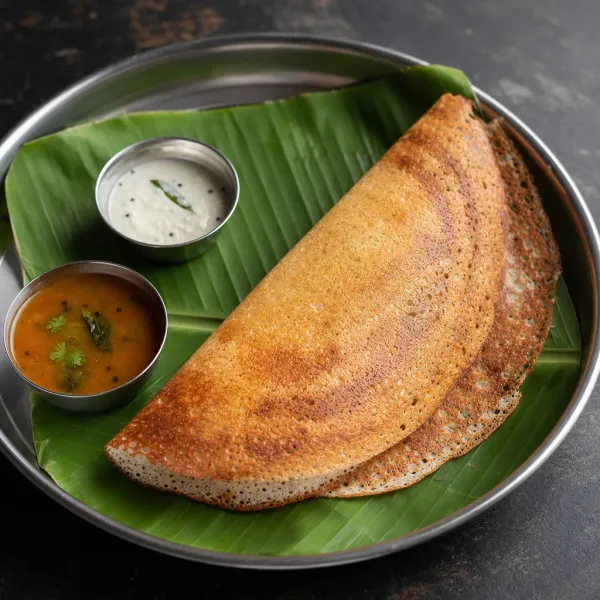
Plain Dosa
Traditional Tamil Iyer plain dosa: fermented rice and urad dal batter, spread thin on a cast-iron tawa with gingelly oil. Crisp, golden, and sour.
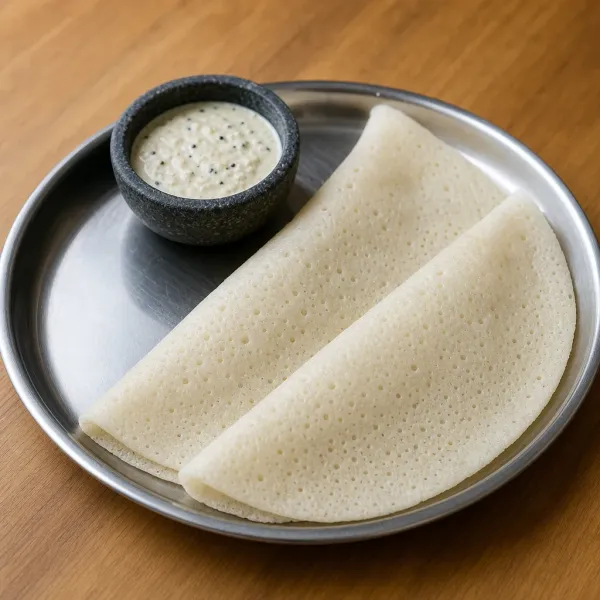
Aval Dosa (Soft Poha Dosa)
Soft, spongy aval dosa made with thick poha and raw rice. A quick-soak batter, no overnight ferment needed. Traditional Udupi home recipe.
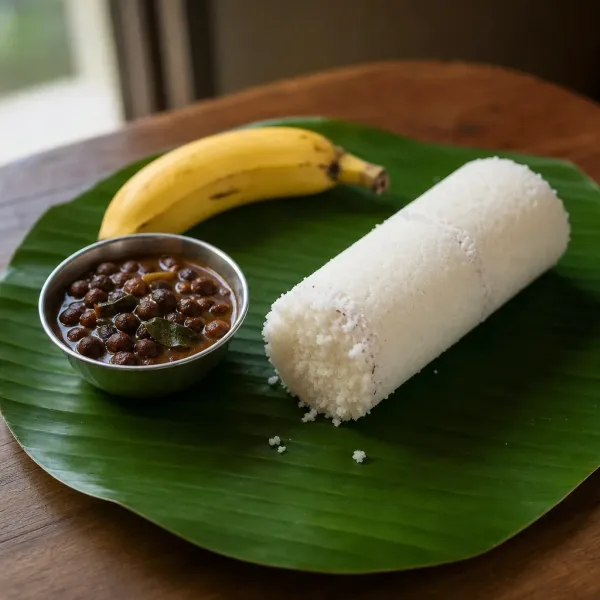
Kerala Puttu
Traditional Kerala puttu made with rice flour and fresh coconut, steamed in a puttu kutti. Step-by-step method with the correct flour texture explain…
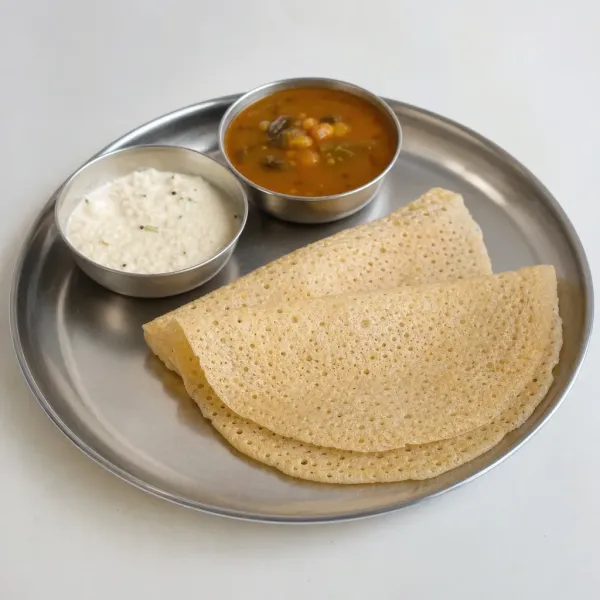
Godhuma Dosa
Quick Tamil Nadu-style godhuma dosa made with wheat flour and rice flour, no fermentation needed. Ready in under an hour, soft and lacy.
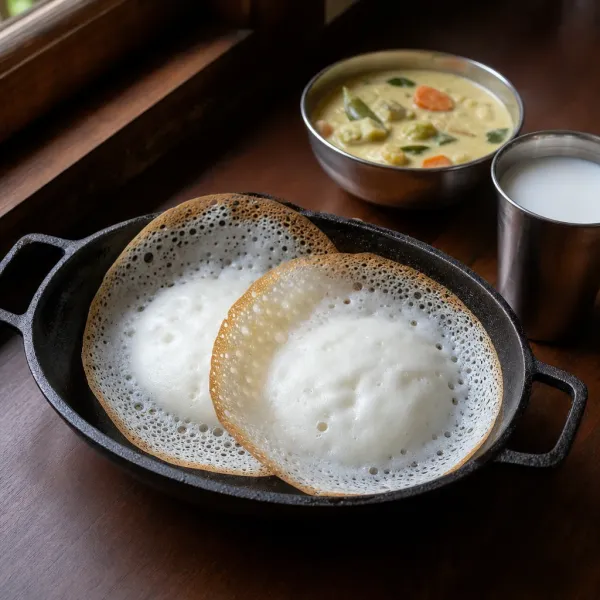
Appam
Traditional Kerala appam with toddy or yeast fermentation, ground fresh coconut, and cooked rice for a soft centre and lacy browned rim. Nasrani hous…
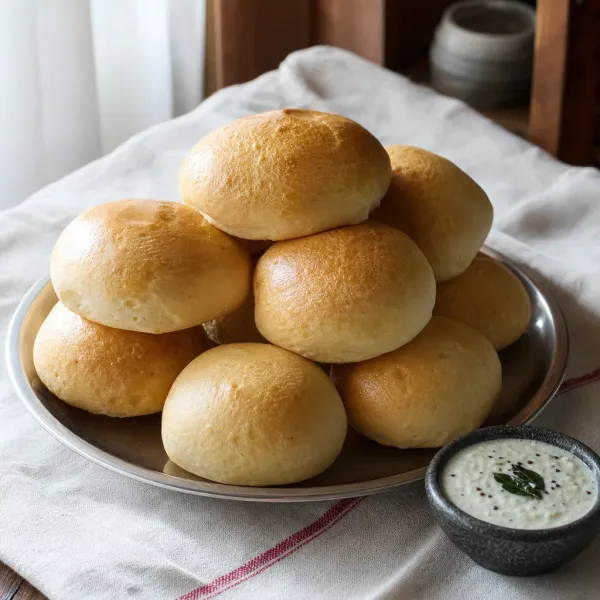
Mangalore Buns
Traditional Mangalore Buns from Konkani Catholic kitchens: ripe banana and curd dough rested overnight, rolled thick and fried until soft and golden.