

Aval Dosa (Soft Poha Dosa) Recipe
Malayalam അവൽ ദോശTamil அவல் தோசைKannada ಅವಲಕ್ಕಿ ದೋಸೆTelugu అవలక్కి దోసె
- Prep20 min
- Soak / ferment4 hr
- Cook40 min
- Serves4
- DifficultyEasy
- DietVegetarian
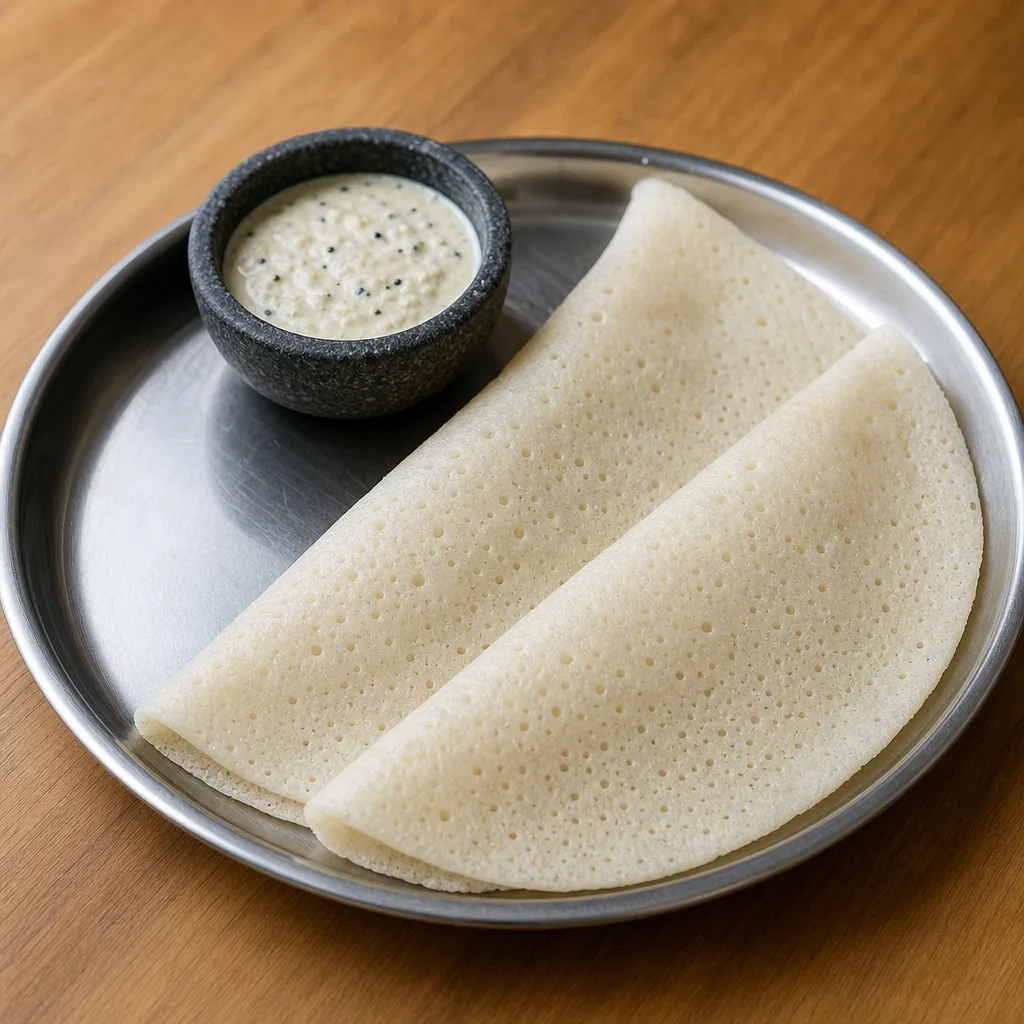
This is a weekday breakfast dosa, the kind made when there is no fermented batter ready from the night before. Thick poha soaks quickly, blends smoothly, and gives the dosa a soft, slightly spongy texture that is quite different from the crisp rice dosa. The batter needs only three or four hours of rest, not an overnight ferment, which is why it suits mornings when you have planned a little ahead.
In Udupi and coastal Karnataka homes, this dosa is spread thicker than a regular dosa and cooked covered on one side, so the top steams through without needing to be flipped. It comes off the pan pale and soft with small bubbles across the surface. It is not crisp, and it is not meant to be. Trying to make it crisp by pressing it or leaving it longer on the pan will only make it rubbery at the edges and dry in the centre.
Households differ on the rice-to-poha ratio. Some use equal parts; others go heavier on the poha for a softer result. A small amount of cooked rice or puffed rice is added in some kitchens to help with spreading, but the two-ingredient batter of raw rice and thick poha is the most common starting point.
Ingredients (serves 4)
For the batter
Method
Soak the rice
Rinse the raw rice twice in cold water until the water runs mostly clear. Cover with fresh cold water and leave to soak for 4 hours at room temperature. The grains will have swelled and a few will split at the tip when they are ready. Drain before grinding.
Soak the poha
About 20 minutes before you grind, put the thick poha in a bowl and add just enough water to cover it. It will absorb the water and soften fully within 15 to 20 minutes. Do not leave it longer or it turns waterlogged and the batter becomes thin. Drain off any water that has not been absorbed.
Grind the batter
Add the drained rice to a wet grinder or a powerful blender. Grind for 5 minutes with a little water, then add the soaked poha. Continue grinding, adding water in small additions, until the batter is very smooth and slightly thick — it should fall from a spoon in a slow, heavy ribbon, not pour freely. The total water used is around 300 ml, but this depends on how much the poha absorbed. Poha grinds faster than rice, so do not over-blend once it is added or the batter heats up.
Rest the batter
Stir in salt, then transfer the batter to a vessel with room to expand slightly. Cover loosely and leave at room temperature for 3 to 4 hours. In a warm kitchen above 28°C the batter will develop a faint sour smell and a few bubbles on the surface; this is enough. It does not need to double in volume like an idli batter. In a cool kitchen it may need an extra hour.
Heat the pan
Set a cast-iron or heavy non-stick tawa over medium heat. Let it heat for 2 minutes. Sprinkle a few drops of water — they should skitter and evaporate in under a second. Rub the surface lightly with a cut shallot dipped in a drop of coconut oil, or wipe with a cloth barely dampened with oil. The pan should be hot but not smoking.
Pour and spread
Pour a ladleful of batter (about 80 ml) onto the centre of the pan. Using the back of the ladle, spread it in slow outward circles to a round of about 18 cm across. Spread gently — this batter is softer than a regular dosa batter and will tear if you press hard. Aim for an even thickness of about 4 to 5 mm; thinner than this and it will dry out rather than stay soft.
Drizzle oil and cover
Drizzle about half a teaspoon of coconut oil around the edge of the dosa. Place a lid or a large plate over the pan immediately. The steam trapped inside cooks the top surface through. Cook covered on medium heat for about 2 minutes.
Check and remove
Lift the lid. The surface of the dosa should be fully set — no wet or shiny patches in the centre. The underside should be a very pale golden, not deeply browned. Slide a thin spatula underneath and lift it off in one piece. This dosa is not flipped. If the centre is still wet, cover for another 30 to 40 seconds.
Continue with the rest
Stack the finished dosas on a plate. They stay soft if stacked; do not spread them out on a rack or they dry quickly. Between each dosa, wipe the pan with the oiled shallot or cloth and let it return to temperature for about 30 seconds before pouring the next one. If the pan gets too hot, the batter spreads unevenly and the edges dry before the centre sets.
How to serve
Coconut chutney; sambar. In many homes it is also eaten with a small bowl of jaggery or a ripe banana alongside.
Served with: Coconut chutney; sambar. In many homes it is also eaten with a small bowl of jaggery or a ripe banana alongside.
Cook's tips
Thick poha, not thin
Use only thick beaten rice (kallu aval). Thin poha dissolves too fast, makes the batter watery, and the dosa will not hold together on the pan.
Batter consistency is everything
If the batter is too thin, the dosa spreads too wide and cooks to a dry, papery sheet. If it is too thick, the centre stays raw under the lid. It should pour slowly, not drip freely.
No ferment in a hurry
You can cook the dosa after just 1 hour of rest if you are short on time. It will be a little less soft and will have no sour note, but it works. The 3-to-4-hour rest gives a noticeably better texture.
Storing leftover batter
Refrigerate leftover batter and use within 24 hours. Beyond that it turns too sour and the texture of the dosa changes. Bring it back to room temperature before using.
Cast iron versus non-stick
A well-seasoned cast-iron tawa gives the best result because it holds heat evenly. On non-stick, the dosa will not stick but the underside colours less and the texture can be slightly gummy. Either works.
Regional variations
Tamil Nadu households ferment the batter overnight and spread it thinner for a slightly lacier dosa; Kerala home cooks sometimes add a small amount of grated coconut to the batter.
Glossary
- Aval അവൽ
- Beaten rice, also called poha; the rice is parboiled, flattened, and dried. Thick aval is used here.
- Pachari പച്ചരി
- Raw, unparboiled rice used in Kerala and coastal Karnataka batters; gives a lighter texture than parboiled rice.
- Kallu aval കല്ലവൽ
- Thick beaten rice; the thicker grade of poha that holds its shape when soaked and does not dissolve.
- Tawa தவா
- A flat or slightly concave iron griddle used for cooking dosas and rotis.
- Kudampuli കുടംപുളി
- Gamboge or Malabar tamarind; not used in this recipe but included for reference as it is the souring agent specific to Kerala fish curries, distinct from regular tamarind.
Two things decide this dosa: the consistency of the batter and the heat of the pan. Get the batter to a slow, heavy pour and keep the pan at a steady medium heat, and the dosa will come off pale, soft, and whole. Rush either of those and you will have something that sticks, tears, or dries out before the centre is cooked.
More Breakfast & Tiffin recipes
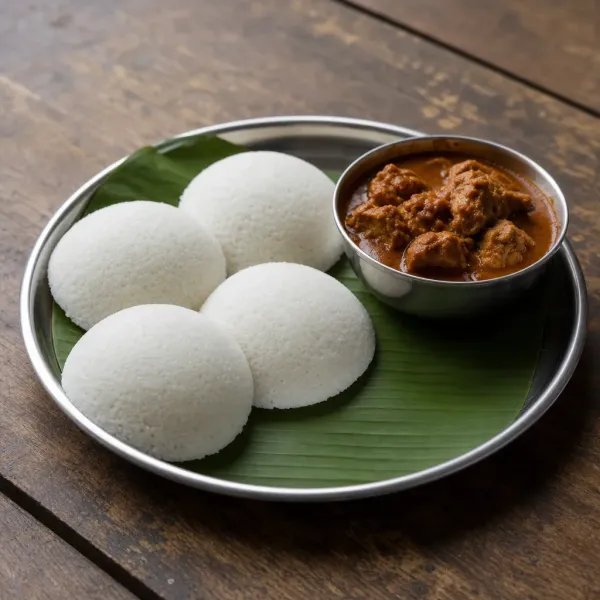
Sannas
Traditional Mangalorean Konkani Catholic sannas: soft, white steamed rice cakes leavened with yeast, made with raw rice and fresh coconut. Step-by-st…
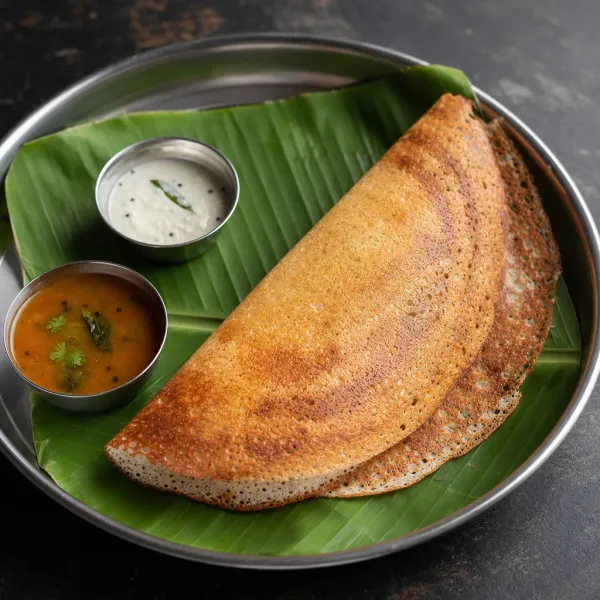
Plain Dosa
Traditional Tamil Iyer plain dosa: fermented rice and urad dal batter, spread thin on a cast-iron tawa with gingelly oil. Crisp, golden, and sour.
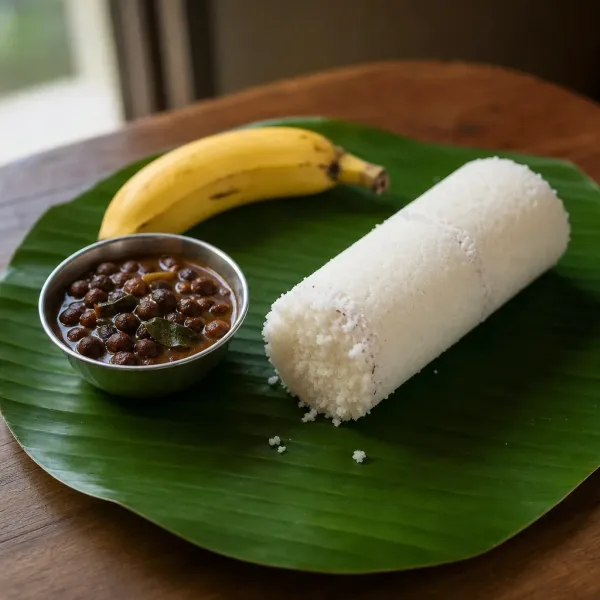
Kerala Puttu
Traditional Kerala puttu made with rice flour and fresh coconut, steamed in a puttu kutti. Step-by-step method with the correct flour texture explain…
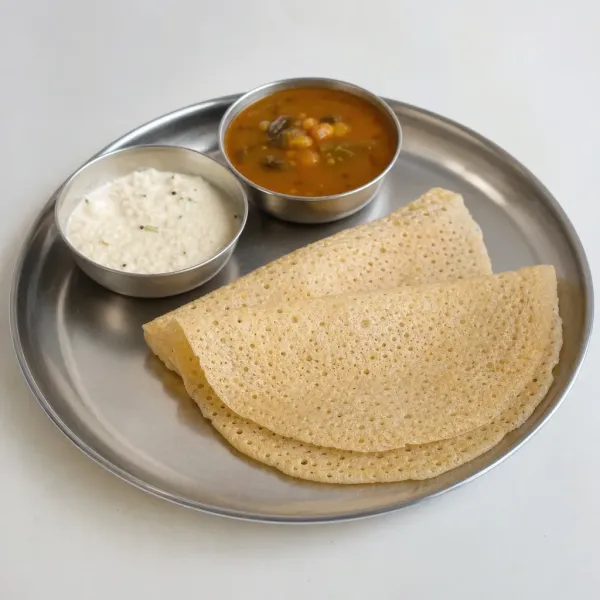
Godhuma Dosa
Quick Tamil Nadu-style godhuma dosa made with wheat flour and rice flour, no fermentation needed. Ready in under an hour, soft and lacy.
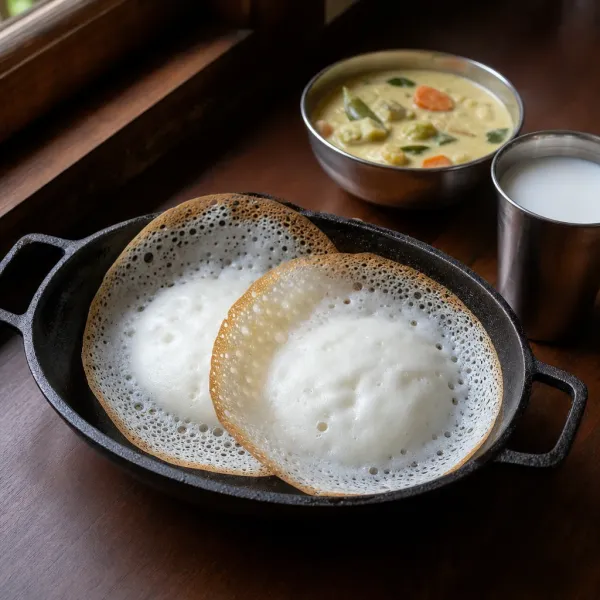
Appam
Traditional Kerala appam with toddy or yeast fermentation, ground fresh coconut, and cooked rice for a soft centre and lacy browned rim. Nasrani hous…
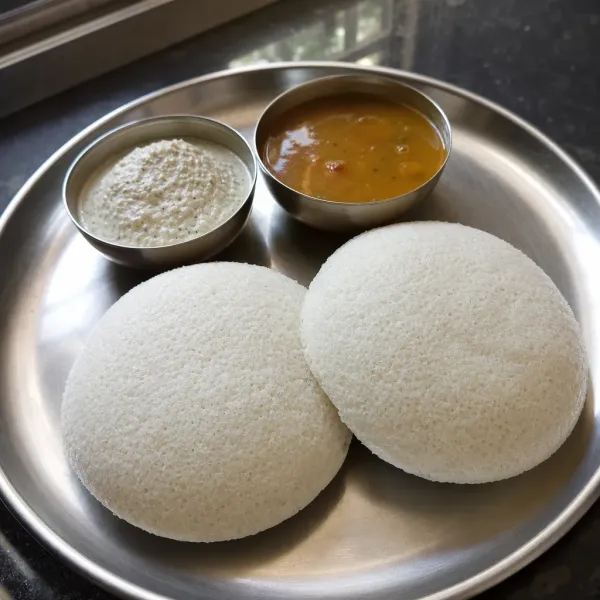
Thatte Idli
Soft, wide Karnataka-style thatte idli made with idli rice, urad dal and avalakki. Traditional household recipe with fermentation tips and steaming m…