

Akki Roti Recipe
Malayalam അക്കി റൊട്ടിTamil அக்கி ரொட்டிKannada ಅಕ್ಕಿ ರೊಟ್ಟಿTelugu అక్కి రొట్టి
- Prep20 min
- Cook30 min
- Serves4
- DifficultyMedium
- DietVegan
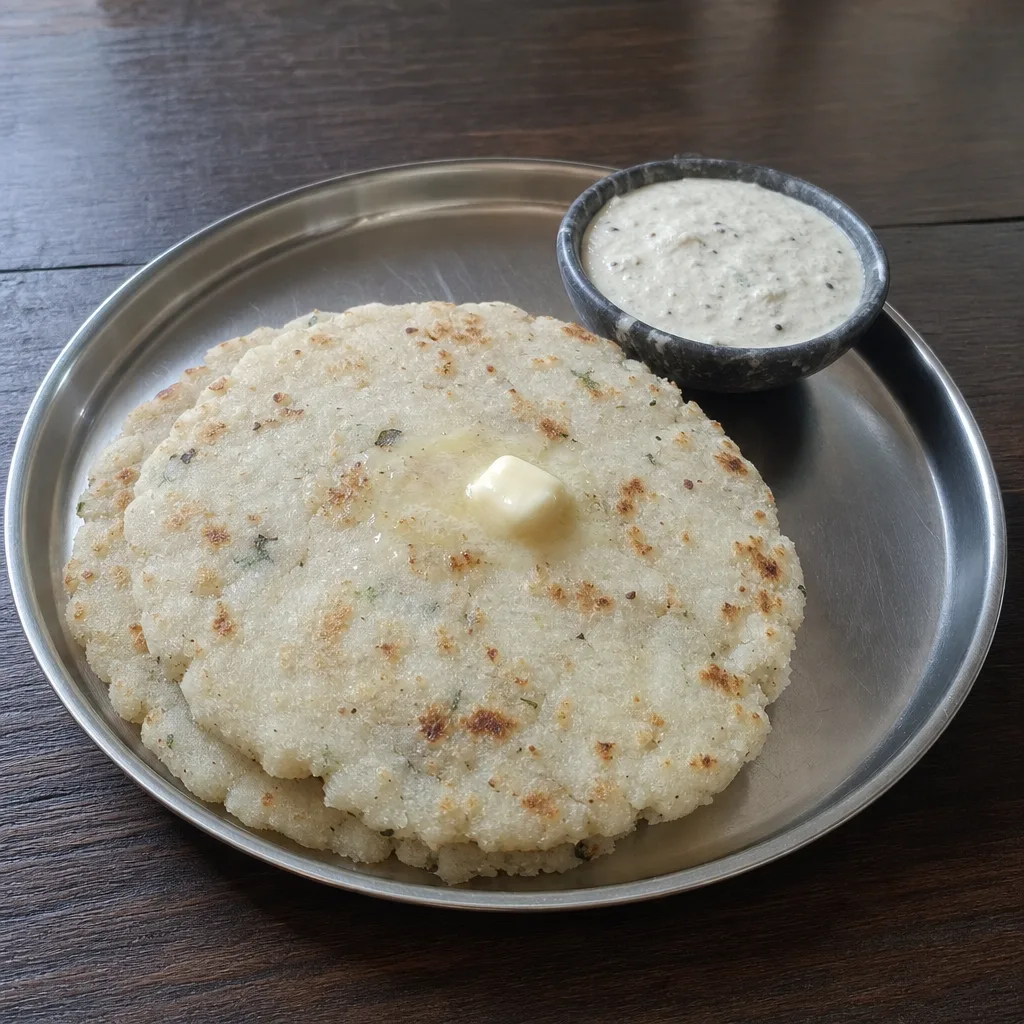
Akki roti is a daily breakfast in most Kannada households. The name is plain: akki means rice and roti means flatbread. It is made from rice flour, mixed with finely chopped aromatics and enough hot water to bring everything together into a soft, pliable dough. The roti is patted out directly on the tawa by hand, cooked until the underside is spotted and firm, then flipped once. It is thicker than a neer dosa and thinner than a wheat chapati, with a slightly chewy texture and a faint char where it touched the iron.
Every household has its own combination of vegetables worked into the dough. Dill leaves are the most distinctive addition in the older Bangalore and Mysuru kitchen; some cooks use only onion and green chilli. Grated carrot, grated coconut, and finely cut coriander all appear. The mix should be finely chopped so the roti pats out without tearing. Cumin is almost always there.
The skill is in the patting. The dough is pressed onto a lightly oiled or water-dampened tawa while the tawa is cold or just barely warm. Once you have spread it thin enough, the tawa goes on the flame. This is the grandmother's method and it is the right one: trying to pat wet dough onto a hot tawa burns your fingers and the roti tears.
Ingredients (serves 4)
For the dough
To mix into the dough
For cooking
Method
Combine the dry ingredients
Put the rice flour and salt into a wide mixing bowl. Add the chopped shallots, green chillies, dill, coriander, cumin, and grated coconut if using. Mix everything together with your fingers so the aromatics are distributed evenly through the flour. Do this before adding any water.
Add hot water and bring the dough together
Pour about 200 ml of the hot water over the flour mixture all at once and mix quickly with a spoon or the back of a ladle. Once it has cooled enough to handle, begin kneading with your hand, adding the remaining water a little at a time. The dough should be soft and smooth, not sticky, and should not crack at the edges when you press a ball of it flat. Rice flour dough dries out fast; keep a small bowl of water nearby to wet your palm as you work.
Divide into portions
Divide the dough into 8 equal balls, each roughly the size of a large lime, about 70–75 g each. Keep the unused portions covered with a damp cloth. Rice flour dough does not rest like wheat dough; you can begin cooking immediately.
Pat the roti onto a cold tawa
Take a heavy iron tawa off the heat or keep it on the lowest possible flame. Wet your palm lightly with water or rub a few drops of oil on the tawa surface. Place one ball of dough in the centre and begin pressing it outward with your palm and fingers in a circular motion, rotating the tawa as you go. Aim for an even round about 20–22 cm across and 3–4 mm thick. Thin patches will crisp and break; thick patches will stay doughy inside. Patch any tears by pressing a pinch of dough over them.
Make holes and start the flame
Use your fingertip to poke 5 or 6 small holes through the roti, spaced evenly. These let steam escape and help the centre cook through. Now place the tawa on a medium flame.
Cook the first side
Let the roti cook undisturbed for 2–3 minutes. Drizzle about 1 tsp of oil around the edge so it seeps under the roti. The underside is ready to flip when the edges have turned opaque and white and the surface has lost its raw, wet sheen. You will see steam rising through the holes. Lift one edge with a flat spatula to check: it should be lightly spotted and come away cleanly from the tawa.
Flip and finish
Flip the roti carefully with a wide spatula. The second side needs only 1–1.5 minutes. Drizzle a little more oil if the tawa looks dry. The roti is done when both sides have pale brown spots and the centre, when pressed, feels firm rather than soft and yielding. Do not press hard or the roti will flatten and toughen.
Cook the remaining rotis
Transfer to a plate and keep loosely covered with a clean cloth. Pat and cook the remaining portions one at a time. Wipe the tawa with a folded cloth between rotis if flour residue is building up and beginning to burn. Serve as soon as possible; akki roti softens as it sits.
How to serve
Fresh coconut chutney and a knob of white butter (benne) placed on top while the roti is still hot. Many households also serve with a thin, slightly sour yoghurt or with saarina (a light Karnataka rasam). Groundnut chutney powder (chutney pudi) mixed with coconut oil is another common accompaniment.
Served with: Fresh coconut chutney and a knob of white butter (benne) placed on top while the roti is still hot. Many households also serve with a thin, slightly sour yoghurt or with saarina (a light Karnataka rasam). Groundnut chutney powder (chutney pudi) mixed with coconut oil is another common accompaniment.
Cook's tips
The right rice flour matters
Supermarket idli rice flour is too coarse and too wet-ground for akki roti; it makes a gummy, sticky dough. Look for akki hittu or dry-ground rice flour sold in Karnataka stores. If you cannot find it, dry-roast regular rice flour in a dry pan on low heat for 3–4 minutes, stirring constantly, until it smells faintly nutty and feels completely dry to the touch.
Why the tawa must be cold or barely warm
Patting onto a hot surface is nearly impossible: the dough sticks, tears, and burns your fingers before you can spread it. The cold-tawa method is traditional and practical. Once you have patted the roti, the tawa heats up with the roti on it, giving you a few extra seconds to fix any tears.
Dill is not optional in the traditional version
In Bangalore and Mysuru households, sabbasige soppu (dill) is what gives akki roti its characteristic flavour. If you leave it out, the roti is still edible but it tastes different. Fresh dill is available in most South Indian markets. Do not use dried dill; the flavour is wrong and the texture will be off.
Leftover roti
Akki roti does not keep well. It turns hard within a couple of hours. If you have leftover dough, refrigerate it covered and use within a day; re-wet your palm generously when patting it out the next morning as the dough will have stiffened.
Regional variations
Kodava households sometimes add coarsely pounded pepper and omit the green chilli; some Udupi homes keep the dough plain without vegetables and serve with a more elaborate chutney.
Glossary
- Akki hittu ಅಕ್ಕಿ ಹಿಟ್ಟು
- Dry-ground rice flour used specifically for akki roti and other Karnataka flatbreads.
- Sabbasige soppu ಸಬ್ಬಸಿಗೆ ಸೊಪ್ಪು
- Fresh dill leaves; a signature flavouring in Karnataka cooking, especially in akki roti and dal palya.
- Benne ಬೆಣ್ಣೆ
- Fresh white butter, unsalted, the traditional accompaniment placed on hot akki roti at the table.
- Saarina ಸಾರಿನ
- Karnataka-style rasam, thinner and lighter than Tamil rasam, often served alongside breakfast items.
- Chutney pudi ಚಟ್ನಿ ಪುಡಿ
- Dry chutney powder, usually made from roasted groundnuts, dried chillies, and garlic; mixed with oil and eaten as a condiment.
Two things decide whether akki roti works: the flour and the patting. If the flour is wrong, the dough will be gummy or crumbly and no amount of technique will save it. If the patting is uneven, the thin patches will crisp to a cracker while the thick parts stay raw inside. Get those two right and the rest follows.
More Breads & Staples recipes
Coin Parotta
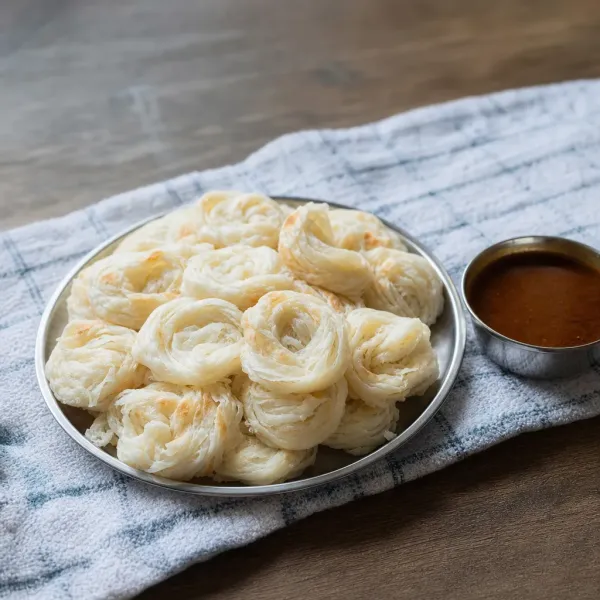
Traditional Tamil Nadu coin parotta: maida dough coiled for flaky layers, cooked on a tawa, sliced into rounds, beaten and tossed. Step-by-step home…
Kothu Parotta with Egg and Masala
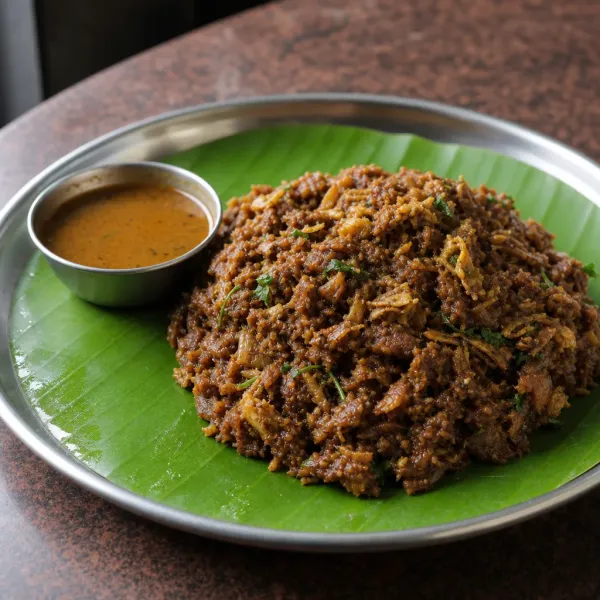
Authentic Tamil Nadu kothu parotta with egg and shallot masala. Traditional tawa method, gingelly oil, step-by-step for home cooks.
Chapati
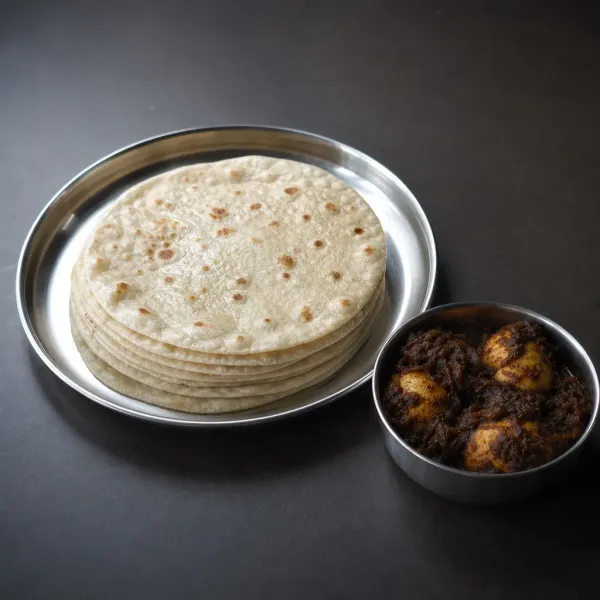
Traditional Mappila chapati from Malabar Kerala: soft whole wheat flatbread cooked on a hot tawa with coconut oil, eaten with egg roast or beef curry.
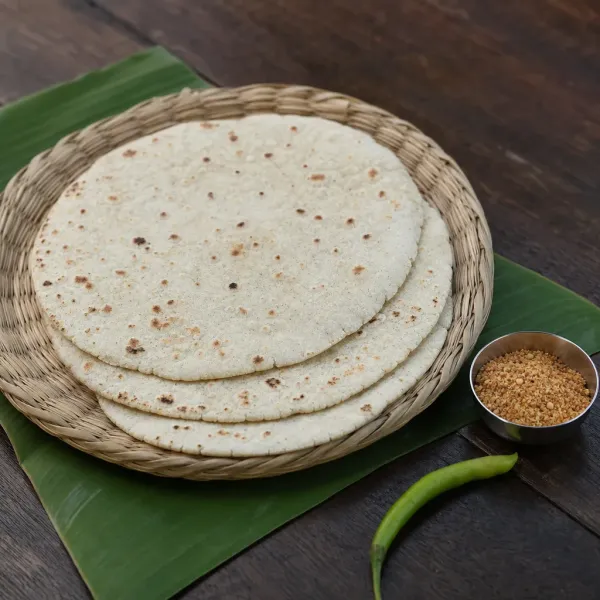
Jolada Rotti
Authentic North Karnataka jolada rotti made with jowar flour and boiling water, shaped by hand on a damp cloth and finished over an open flame. Vegan…
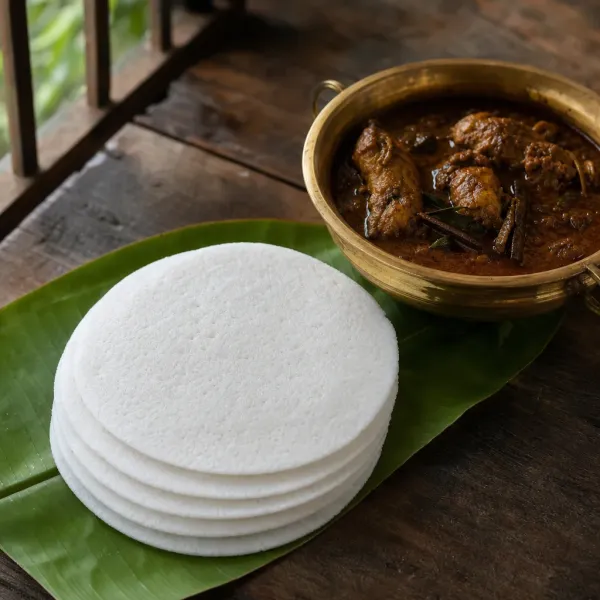
Pathiri
Traditional Mappila pathiri from Malabar: thin, soft, white rice flour flatbread cooked dry on a tawa. Step-by-step Kerala home recipe.
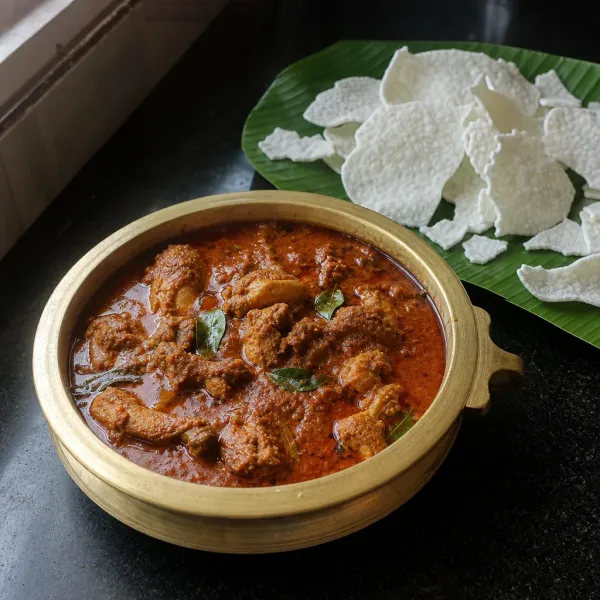
Kori Rotti: Mangalorean Crisp Rice Wafers with Chicken Gassi
Traditional Tulu-style kori rotti from coastal Karnataka: crisp dried rice wafers served with deep red coconut chicken gassi. Home recipe with fresh-…