

Pathiri Recipe
Malayalam പത്തിരിTamil பத்திரிKannada ಪತ್ತಿರಿTelugu పత్తిరి
- Prep20 min
- Soak / ferment4 hr
- Cook40 min
- Serves4
- DifficultyMedium
- DietVegan
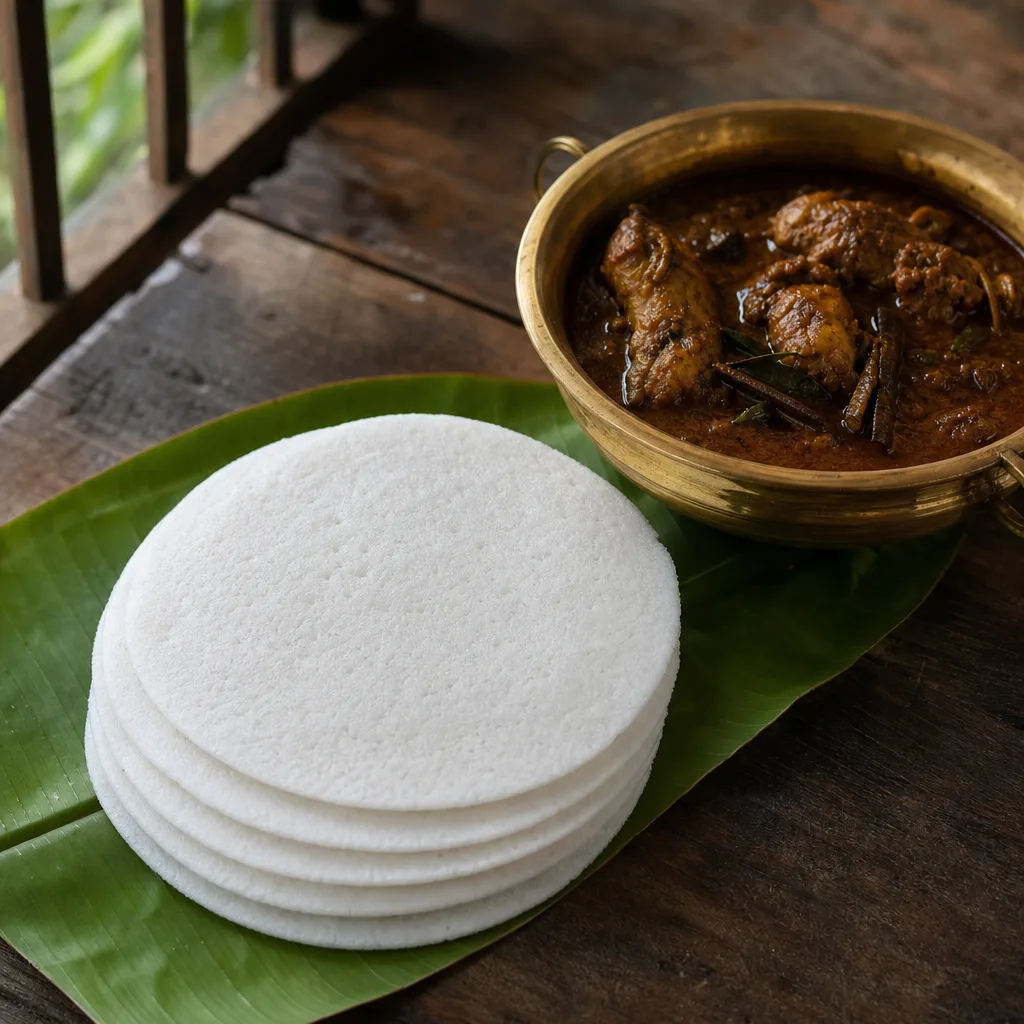
Pathiri is the everyday bread of Mappila Muslim households across Malabar, from Kozhikode to Kasaragod. It is made from raw rice flour, rolled thin, and cooked dry on a cast-iron tawa without any fat. The result is a pale, soft, slightly chewy disc with a faint rice fragrance and no browning at all. It is not crisp, not golden, not toasted.
In most homes it is the bread of the night meal, eaten with a meat or fish curry that has enough gravy to soften each piece as you tear it. Chicken curry, mutton curry, fish molee, or a thick egg curry are all natural partners. The pathiri absorbs the gravy without falling apart, which is why the dough must be neither too stiff nor too slack.
Households differ mainly on the water temperature used to cook the flour. Some grandmothers bring the water to a full boil and pour it over the flour all at once, stirring quickly; others heat the water and flour together in the pot, stirring constantly until a soft mass forms. Both methods work. What matters is that the dough is cooked through before you roll it, and that it is rolled while it is still warm.
Ingredients (serves 4)
For the dough
Method
Soak and grind the rice
Wash the raw rice twice and soak it in cold water for 4 hours. Drain it well and spread it on a clean cloth for 15 minutes so the surface moisture leaves. Grind it in a wet grinder or powerful blender with just enough water to keep it moving, aiming for a very fine, smooth flour paste. The batter should feel like thick cream with no grit when you rub it between your fingers. If you are using store-bought rice flour, skip to step 2.
Dry-roast the fresh-ground flour
If you ground the rice wet, spread the paste thinly on a wide plate and let it dry at room temperature for an hour, then crumble it into a powder, or dry-roast it in a heavy pan over low heat, stirring constantly, until it is just dry and powdery but not coloured at all. The flour should be completely white. Store-bought flour needs no roasting.
Cook the flour in boiling water
Measure 350 ml of water into a heavy-bottomed pan, add the salt, and bring it to a rolling boil. Take the pan off the heat. Add the rice flour all at once and stir vigorously with a wooden spoon or spatula until everything comes together into a smooth, soft dough with no dry patches. If the dough looks too stiff and is cracking at the edges, add a tablespoon of hot water at a time and work it in. The dough should be soft enough to press without effort but firm enough to hold a shape.
Rest the dough briefly
Cover the pan with a lid or a damp cloth and leave the dough for 5 minutes. This rest lets the steam finish cooking any remaining raw patches and makes the dough more pliable. Do not let it cool completely before rolling; it becomes stiff and will crack.
Divide and roll
Lightly dust your rolling surface with dry rice flour. Divide the warm dough into balls roughly the size of a lime, about 40 to 45 g each. Keep the rest covered while you work. Flatten one ball gently with your palm, then roll it out with a rolling pin into a thin, even circle about 15 to 16 cm across and roughly 2 mm thick. Dust lightly underneath if it sticks, but do not use so much flour that the surface becomes powdery. The edge should be smooth, not ragged.
Heat the tawa
Place a cast-iron or heavy aluminium tawa over medium heat and let it get hot enough that a few drops of water flicked on it skitter and evaporate within two seconds. Use no oil, no ghee, nothing. The tawa must be dry.
Cook the first side
Lay a rolled pathiri on the hot tawa. Within 30 to 40 seconds you will see the surface begin to look dry and opaque rather than raw and shiny. Small, faint bubbles may appear. The underside should be cooked but still completely white, with no browning whatsoever. If it is browning, lower the heat immediately.
Turn and finish
Flip the pathiri and cook the second side for another 30 to 40 seconds. Press gently with a folded cloth to encourage even cooking. The pathiri is done when both sides look fully opaque and dry, the surface is soft to the touch, and it puffs very slightly in one or two places. It should be entirely white or very faintly cream, never golden, never spotted brown.
Stack and keep warm
Stack the cooked pathiris on a plate and cover them with a clean cloth. The steam trapped between them keeps them soft. Do not leave them uncovered or they will dry out and become brittle within minutes. Cook the remaining balls in the same way, adjusting the heat between batches as needed.
How to serve
Chicken curry (kozhi curry) or mutton curry with a thin, spiced gravy; fish molee; egg curry. In some homes, a small dish of sweetened coconut milk is placed alongside for those who want it.
Served with: Chicken curry (kozhi curry) or mutton curry with a thin, spiced gravy; fish molee; egg curry. In some homes, a small dish of sweetened coconut milk is placed alongside for those who want it.
Cook's tips
Store-bought flour
Fine raw rice flour from a shop works and is how most households make pathiri today. Dry-roast it lightly in a pan for 3 to 4 minutes over low heat, stirring, until it smells faintly of warm rice but takes on no colour. This removes any raw, chalky taste. Let it cool before adding the boiling water.
Water temperature is not negotiable
The water must be at a full boil when it meets the flour. Warm or hot-but-not-boiling water will not cook the starch properly and the dough will be grainy and will crack when rolled. If the dough cools too much before you finish rolling, set the bowl over a pot of hot water for a minute.
Thickness matters
Roll too thick and the centre stays slightly raw and dense. Roll too thin and it tears on the tawa and dries out quickly. 2 mm is the right target. After a few pieces you will feel what is correct without measuring.
The tawa must be dry
Any oil on the tawa will fry the pathiri rather than dry-cook it, changing the texture entirely. Wipe the tawa clean between batches if flour dust accumulates and begins to scorch.
Keeping them soft
Pathiri stales quickly once uncovered. If making ahead, stack them, wrap the whole stack in a clean cloth, and then in a container with a lid. They keep soft for a couple of hours this way. Reheat briefly on the tawa or wrapped in a damp cloth in a steamer.
Regional variations
Nei pathiri (deep-fried in coconut oil); porinju pathiri (layered with a spiced coconut filling and pan-roasted); some households use a mix of raw rice and parboiled rice for a slightly sturdier disc.
Glossary
- Pathiri പത്തിരി
- Thin unleavened rice flour flatbread from the Mappila Muslim kitchen of Malabar.
- Pachari പച്ചരി
- Raw (unparboiled) white rice, the standard rice for making rice flour in Kerala.
- Tawa തവ
- Flat or slightly concave cast-iron or heavy aluminium griddle used for cooking flatbreads.
- Mappila മാപ്പിള
- The Muslim community of Malabar, Kerala, whose cuisine is one of the distinct regional cooking traditions of the state.
Two things decide whether pathiri works: the water must be at a hard boil when it hits the flour, so the starch cooks through and the dough becomes pliable rather than gritty, and the rolled discs must go on the tawa while the dough is still warm. Get those two things right and the rest follows.
More Breads & Staples recipes
Chapati
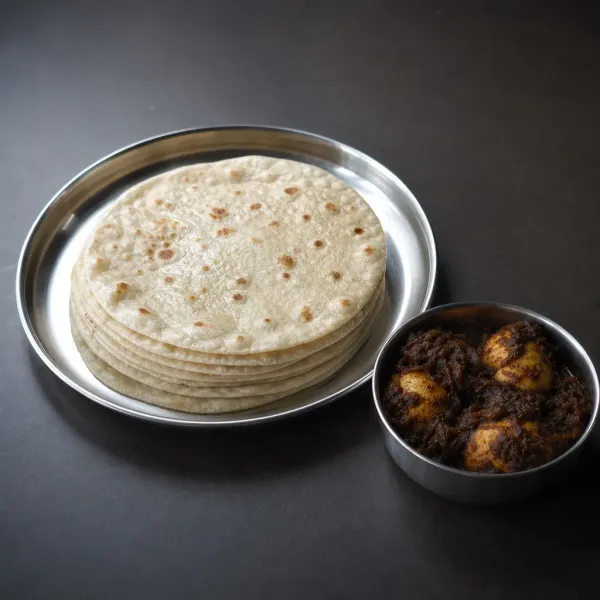
Traditional Mappila chapati from Malabar Kerala: soft whole wheat flatbread cooked on a hot tawa with coconut oil, eaten with egg roast or beef curry.
Akki Roti
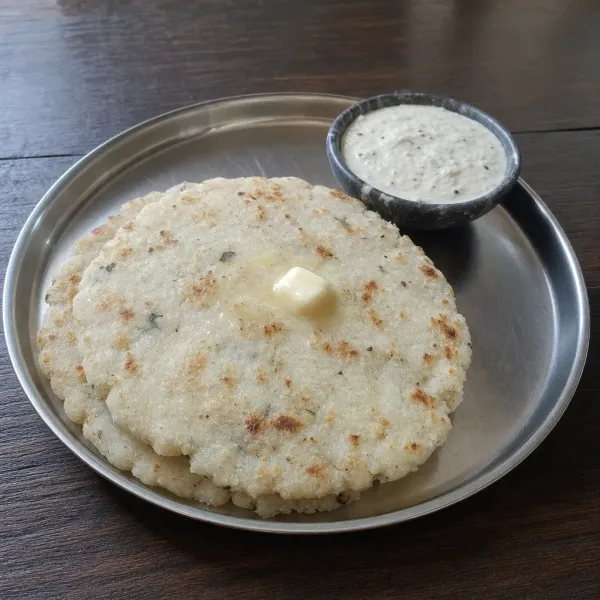
Authentic Karnataka akki roti with dill, shallots and cumin, patted by hand on a cold tawa. Traditional household method with step-by-step instructio…
Coin Parotta
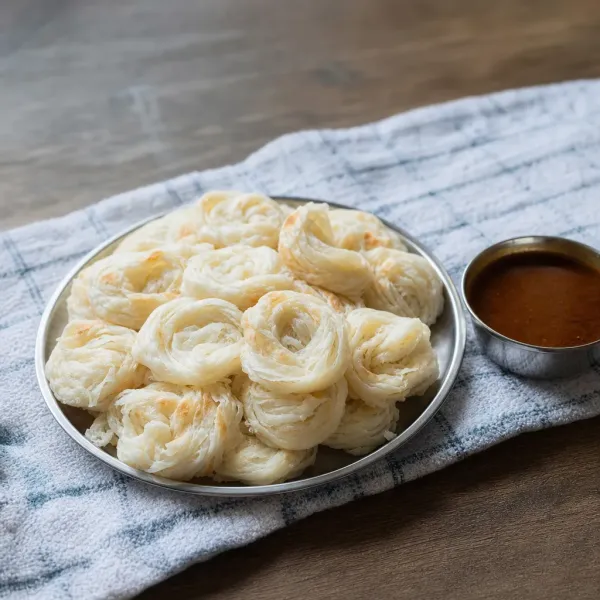
Traditional Tamil Nadu coin parotta: maida dough coiled for flaky layers, cooked on a tawa, sliced into rounds, beaten and tossed. Step-by-step home…
Kothu Parotta with Egg and Masala
Authentic Tamil Nadu kothu parotta with egg and shallot masala. Traditional tawa method, gingelly oil, step-by-step for home cooks.
Jolada Rotti
Authentic North Karnataka jolada rotti made with jowar flour and boiling water, shaped by hand on a damp cloth and finished over an open flame. Vegan…
Kori Rotti: Mangalorean Crisp Rice Wafers with Chicken Gassi
Traditional Tulu-style kori rotti from coastal Karnataka: crisp dried rice wafers served with deep red coconut chicken gassi. Home recipe with fresh-…