

Kothu Parotta with Egg and Masala Recipe
Malayalam കൊത്തു പരോട്ടTamil கொத்து பரோட்டாKannada ಕೊತ್ತು ಪರೋಟಾTelugu కొత్తు పరోటా
- Prep20 min
- Cook40 min
- Serves3
- DifficultyMedium
- DietEgg
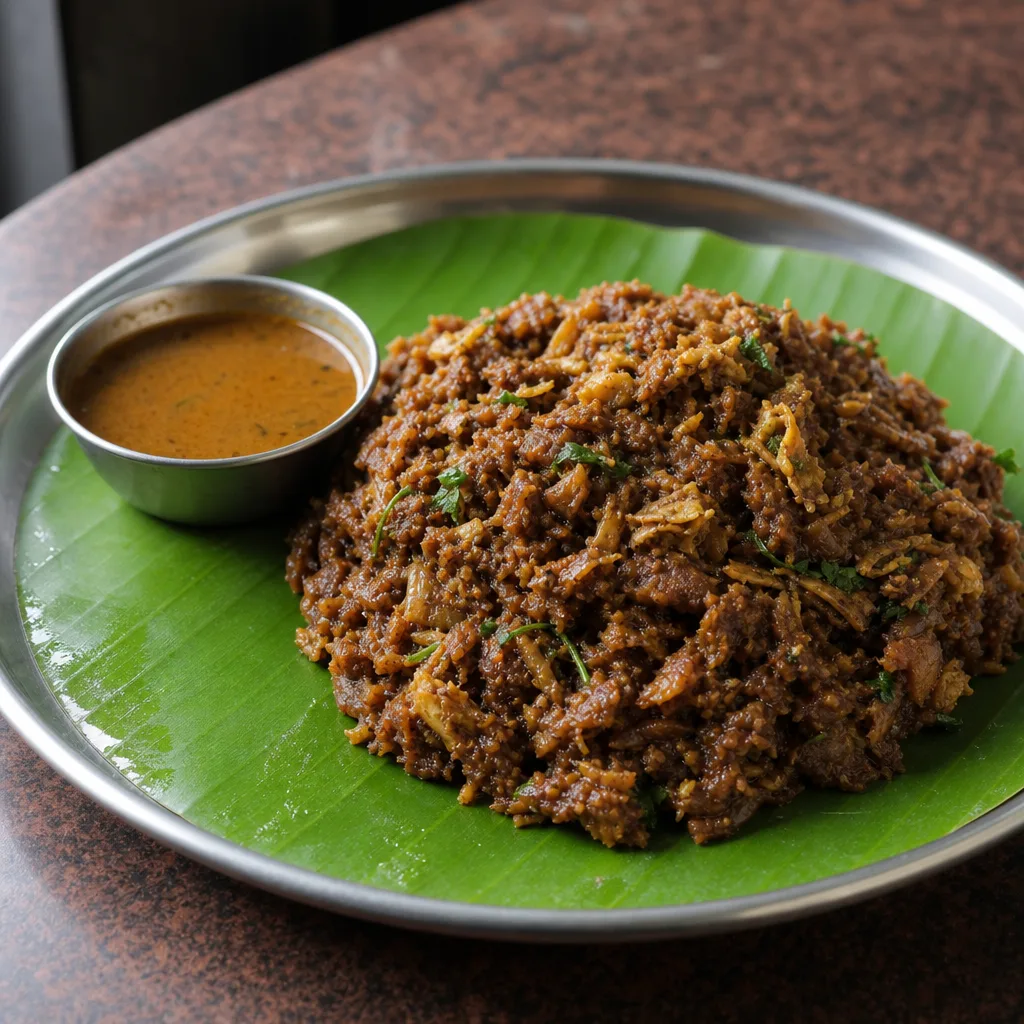
Kothu parotta is a Tamil Nadu street-food dish, born on the tawa of roadside kadais and carried into home kitchens. The word kothu means to chop or mince, and the technique is everything: cooked parotta is shredded and beaten on a flat iron griddle with eggs and a spiced onion-tomato masala until the whole thing comes together in a tangle of soft, fragrant pieces. The sound of two flat blades chopping against the tawa is how you know the kadai is busy.
At home it is made the morning after a parotta dinner, when leftover parottas sit in the kitchen and the cook decides not to waste them. The masala is built in the same pan before the parotta goes in, so there is only one vessel to wash. Families differ on the heat: some keep it gentle with one or two green chillies and a modest amount of red chilli powder, others push it hard. The tomato must cook down completely before the egg goes in or the whole thing turns watery.
It is eaten on its own or with a thin, peppery salna on the side. At a kadai it arrives on a banana leaf; at home it usually comes straight from the pan to the plate.
Ingredients (serves 3)
For the kothu
Method
Tear the parotta
Pull each parotta apart by hand into rough pieces about 2–3 cm across. Do not cut them with a knife; the ragged edges hold the masala better. Day-old parotta tears more cleanly and holds up to the chopping without turning to paste. Set aside.
Heat the tawa or heavy pan
Place a wide, heavy iron tawa or a thick-bottomed kadai over high heat. Pour in the gingelly oil and let it heat until it shimmers, about 90 seconds. A flat iron tawa is traditional; a kadai works at home. The pan must be genuinely hot before anything goes in.
Fry the fennel and shallots
Add the fennel seeds and let them sizzle for 20 seconds. Tip in the sliced shallots and curry leaves. Cook on high heat, stirring constantly, until the shallots are soft and beginning to colour at the edges, about 5–6 minutes. Shallots should be translucent and fragrant, not brown.
Add ginger, garlic and green chilli
Add the grated ginger, grated garlic and slit green chillies. Stir and cook for 2 minutes until the raw smell of the ginger and garlic disappears completely. Do not rush this step; undercooked garlic will taste sharp in the finished dish.
Cook the tomato down
Add the chopped tomatoes and salt. Cook on high heat, pressing and stirring the tomatoes frequently, until they completely break down and the oil separates and pools at the edges of the masala, about 8–10 minutes. The masala should look thick and jammy, not wet. If there is any liquid left, the kothu will be soggy.
Add the spice powders
Lower the heat to medium. Add the red chilli powder, coriander powder, turmeric and garam masala. Stir briskly for 60 seconds so the powders cook in the oil and masala. They should smell toasted, not raw. If the pan looks dry, add a tablespoon of water to prevent burning.
Add the parotta pieces
Tip all the torn parotta pieces into the pan. Raise the heat to high. Using two flat spatulas or a single flat blade, chop and press the parotta into the masala repeatedly, turning the whole mixture over as you go. Work quickly and continuously for 2–3 minutes until every piece is coated in the dark masala. The parotta should soften and absorb the colour evenly.
Break in the eggs
Push the parotta mixture to the sides of the pan to clear a space in the centre. Crack all three eggs into that space. Let them sit for 20 seconds until the whites just begin to set at the edges, then scramble them lightly with a spatula. Before they are fully cooked, fold the parotta back over the eggs and chop everything together vigorously. The eggs should coat the parotta in streaks rather than forming a separate scramble.
Kothu and finish
Continue chopping and pressing with the spatula for another 3–4 minutes on high heat. The mixture will reduce, the parotta pieces will break down further into a cohesive, slightly stringy tangle, and the whole pan will smell deeply of toasted spices and egg. Taste for salt. Scatter the fresh coriander over the top, give one final toss, and take off the heat.
How to serve
Thin peppery salna (a light, spiced gravy made with onion, tomato and coconut) poured alongside or in a small bowl for dipping. At home it is also eaten plain, straight from the pan.
Served with: Thin peppery salna (a light, spiced gravy made with onion, tomato and coconut) poured alongside or in a small bowl for dipping. At home it is also eaten plain, straight from the pan.
Cook's tips
Day-old parotta is not optional
Fresh parotta is too soft and will turn to mush the moment you start chopping. If you only have fresh parotta, spread the pieces on a tray and leave them uncovered for 2–3 hours so the surface dries slightly.
The tomato must be fully cooked
This is the step most home cooks rush. If the tomato is not completely broken down and the oil has not separated before the parotta goes in, the finished dish will be wet and the spices will taste raw. Give it the full 8–10 minutes.
Two spatulas are easier than one
At a kadai, two flat blades are used simultaneously, one in each hand, to chop and fold. At home, a single wide flat spatula works but takes a little longer. A wooden spoon will not do the job; you need something flat to press and chop.
Gingelly oil versus neutral oil
Gingelly oil gives the kothu its characteristic slightly nutty, warm background flavour. Neutral oil produces a perfectly edible result but a blander one. Do not use coconut oil here; it changes the character of the dish.
Scaling up
Do not try to make kothu parotta for more than 4 people in a single batch in a home pan. The pan will overcrowd, steam instead of fry, and the masala will not coat evenly. Cook in two batches if needed.
Regional variations
Vegetable kothu parotta (no egg, no meat); mutton or chicken kothu parotta found at roadside kadais across Tamil Nadu; Kerala hotel versions that use a slightly thicker parotta and sometimes add coconut milk to the salna.
Glossary
- Parotta பரோட்டா
- A layered flatbread made from maida, beaten and folded repeatedly to create flaky layers; distinct from Kerala paratha.
- Kothu கொத்து
- To mince or chop; the name describes the technique of repeatedly chopping the parotta on a hot griddle.
- Sombu சோம்பு
- Fennel seeds; used as a base spice in many Tamil Nadu meat and street-food dishes.
- Salna சால்னா
- A thin, spiced gravy served alongside parotta and kothu parotta at Tamil Nadu roadside kadais.
- Chinna vengayam சின்ன வெங்காயம்
- Small red shallots; standard in Tamil Nadu cooking, sharper and more fragrant than large onions.
- Nallennai நல்லெண்ணெய்
- Gingelly oil; cold-pressed sesame oil used as the cooking fat in Tamil Nadu street food and kuzhambu.
Two things decide whether this works: the tomato masala must be cooked until completely dry and the oil separates before any parotta goes in, and the heat must stay high throughout the chopping stage so the parotta fries against the pan rather than steaming in its own moisture. Get those two right and the rest follows.
More Breads & Staples recipes
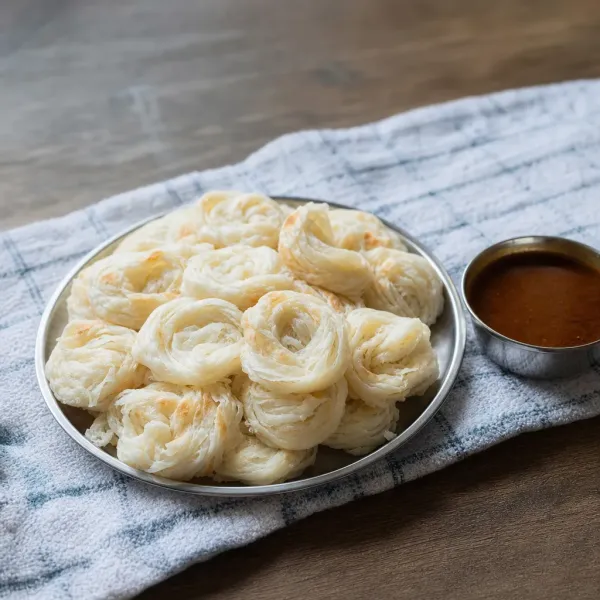
Coin Parotta
Traditional Tamil Nadu coin parotta: maida dough coiled for flaky layers, cooked on a tawa, sliced into rounds, beaten and tossed. Step-by-step home…
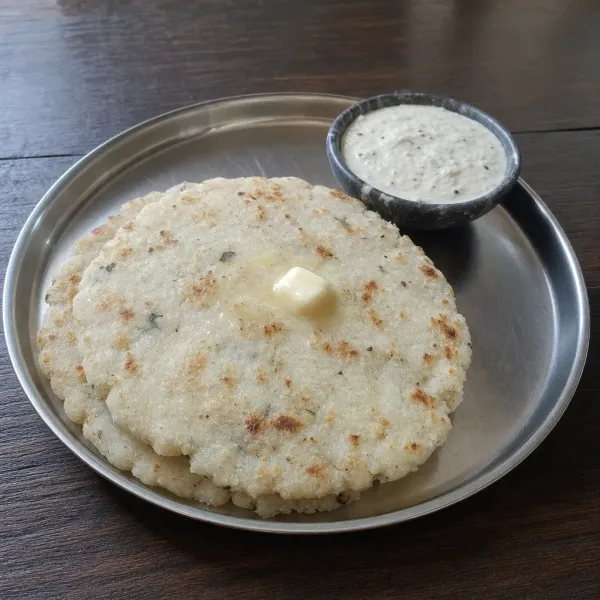
Akki Roti
Authentic Karnataka akki roti with dill, shallots and cumin, patted by hand on a cold tawa. Traditional household method with step-by-step instructio…
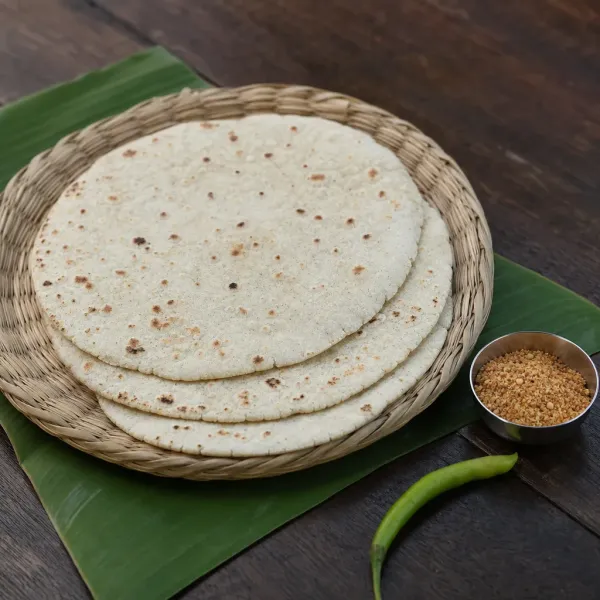
Jolada Rotti
Authentic North Karnataka jolada rotti made with jowar flour and boiling water, shaped by hand on a damp cloth and finished over an open flame. Vegan…
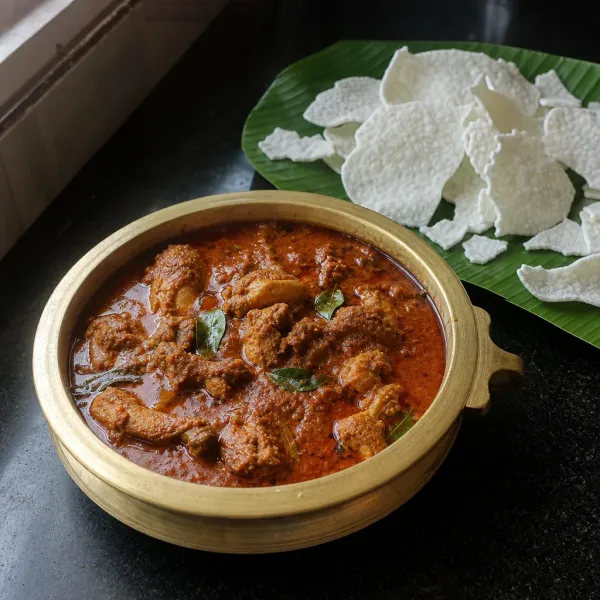
Kori Rotti: Mangalorean Crisp Rice Wafers with Chicken Gassi
Traditional Tulu-style kori rotti from coastal Karnataka: crisp dried rice wafers served with deep red coconut chicken gassi. Home recipe with fresh-…
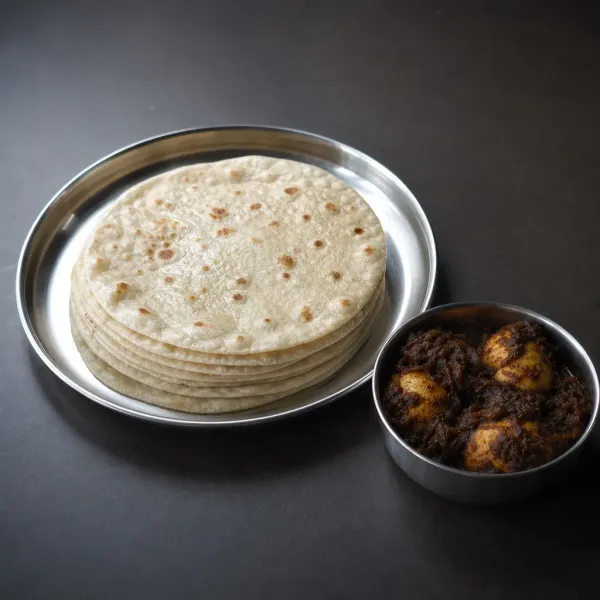
Chapati
Traditional Mappila chapati from Malabar Kerala: soft whole wheat flatbread cooked on a hot tawa with coconut oil, eaten with egg roast or beef curry.
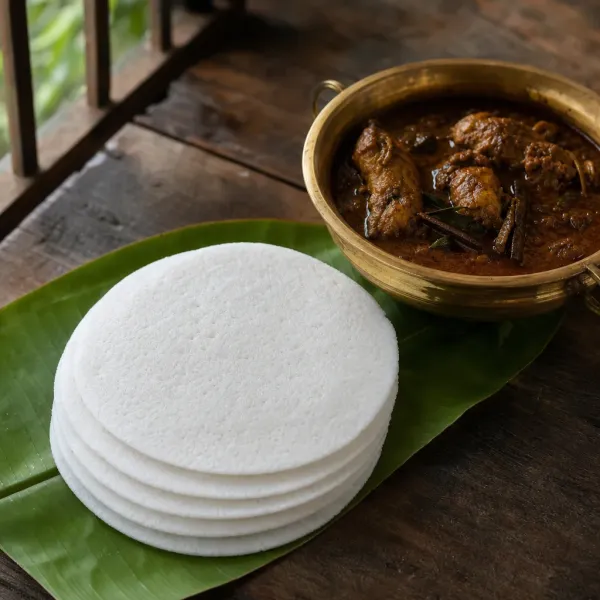
Pathiri
Traditional Mappila pathiri from Malabar: thin, soft, white rice flour flatbread cooked dry on a tawa. Step-by-step Kerala home recipe.