

Chapati Recipe
Malayalam ചപ്പാത്തിTamil சப்பாத்திKannada ಚಪಾತಿTelugu చపాతీ
- Prep35 min
- Cook20 min
- Serves4
- DifficultyEasy
- DietVegan
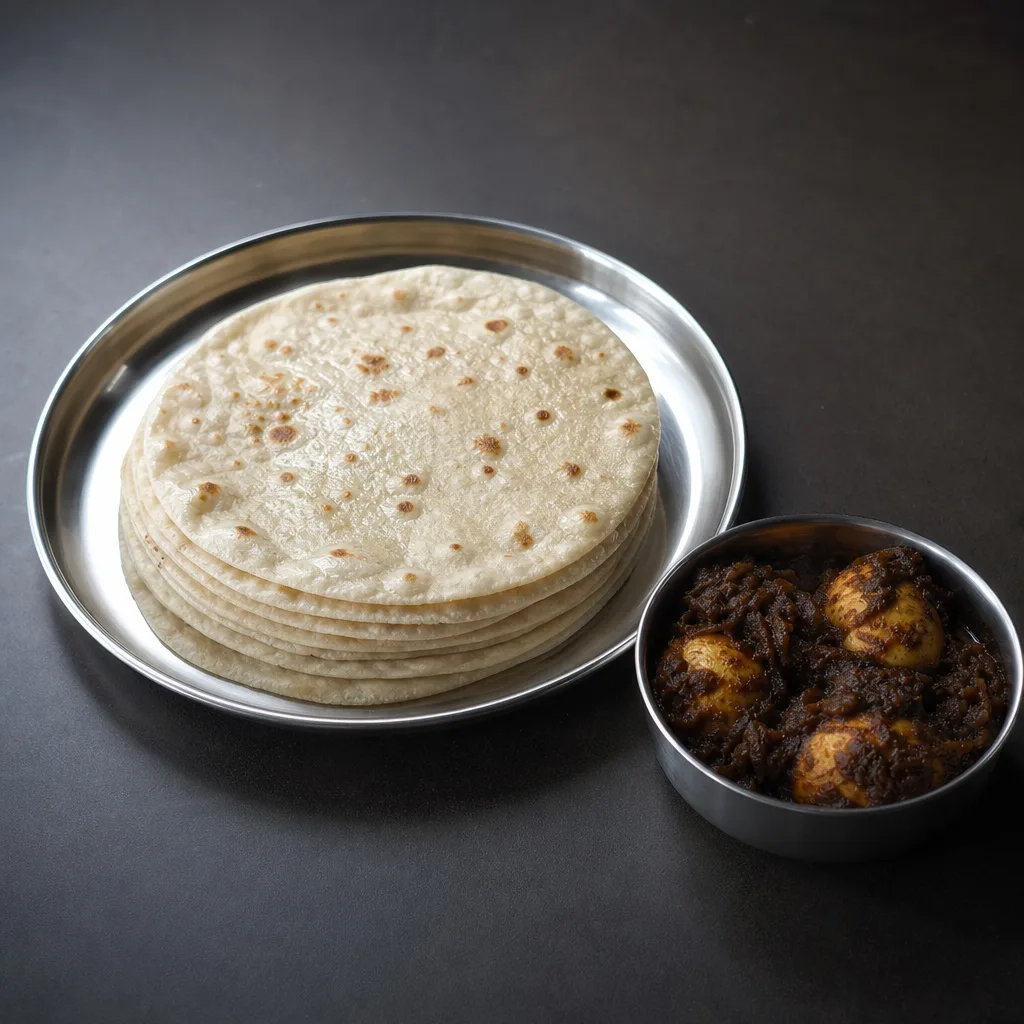
In Mappila homes along the Malabar coast, chapati is the everyday dinner bread, eaten most nights alongside egg roast, beef ularthiyathu, or a thin chicken curry. It is not a special-occasion bread. Children grow up watching their mothers press the dough quickly between their palms, roll it thin on a worn wooden board, and slap it onto a hot tawa. The whole operation takes less than half an hour once you know the dough.
The Mappila chapati is soft and pliable, not flaky. There is no fat in the dough itself. The tawa gets a tiny wipe of coconut oil between rounds, which gives the surface a faint sheen and a very slight chew at the edges. It is not layered, not puffed into a balloon, and not smeared with ghee after cooking. It is simply a soft, thin wheat bread that holds a spoonful of curry without tearing.
Households differ mostly in how much water they use and how long they rest the dough. Some cooks add a pinch of salt, some do not. The rest time matters: too short and the dough fights back when you roll it; twenty minutes is the minimum, and thirty is better. In humid Malabar weather the dough comes together quickly and stays soft; in a dry kitchen you may need a tablespoon more water.
Ingredients (serves 4)
For the dough
Method
Mix the flour and salt
Put the atta and salt in a wide bowl and stir them together with your fingers. Make a well in the centre. This takes thirty seconds but do it properly so the salt is evenly distributed before any water goes in.
Add water gradually and bring the dough together
Pour about 150 ml of the lukewarm water into the well and begin mixing with one hand, drawing the flour in from the sides. Add the remaining water a tablespoon at a time until the dough comes together into a rough, shaggy mass. You want a dough that is soft but not sticky. Malabar humidity means you may need slightly less water on a wet day.
Knead until smooth
Turn the dough out onto a clean surface and knead firmly for eight to ten minutes, pushing the heel of your hand forward and folding the dough back. It is ready when the surface is smooth and springs back slowly when you press a finger into it. If it tears when you stretch it, knead for two more minutes.
Rest the dough
Shape the dough into a ball, place it back in the bowl, and cover with a damp cloth or an inverted plate. Leave it to rest for at least twenty minutes at room temperature. Do not skip this: the gluten needs to relax or the chapatis will shrink back as you roll them.
Divide into portions
After resting, divide the dough into ten to twelve equal portions, each roughly the size of a large marble, about 40 to 45 g each. Roll each piece between your palms into a smooth ball. Cover the balls you are not working with so they do not dry out.
Heat the tawa
Place a cast-iron or heavy aluminium tawa over medium-high heat and let it heat for two to three minutes. It is ready when a pinch of flour dropped on the surface browns in about five seconds. The tawa must be properly hot before the first chapati goes on.
Roll each chapati
Dust the board lightly with atta. Press a dough ball into a flat disc with your palm, then roll it out into a round roughly 20 to 22 cm across and about 2 mm thick. Roll from the centre outward, turning the round a quarter after each stroke. It need not be a perfect circle; slightly uneven edges are fine. Use flour sparingly on the board, just enough to prevent sticking.
Cook the first side
Lay the rolled chapati on the hot tawa. Cook for about forty-five to sixty seconds on the first side. You will see the surface begin to look dry and small bubbles will form underneath. When the underside has pale brown spots and the top looks mostly set, it is time to flip.
Cook the second side
Flip the chapati and cook the second side for thirty to forty-five seconds. Press gently around the edges with a folded cloth if you want it to puff; it will not always puff fully and that is fine. The second side will have slightly darker spots than the first. Do not overcook; a chapati that sits too long on the tawa becomes stiff.
Wipe the tawa and continue
Remove the chapati and stack it in a container lined with a cloth to keep it soft. Dip a folded piece of cloth or a piece of plantain stem in the coconut oil and wipe the tawa lightly before the next chapati goes on. This thin film of coconut oil is what gives the Mappila chapati its slight surface sheen. Roll the next ball while the previous chapati is cooking to keep the work moving.
Stack and cover immediately
Always stack the finished chapatis and keep them covered. The steam from the stack keeps them soft. A chapati left uncovered for even five minutes in a Malabar kitchen will stiffen at the edges. Serve them warm, straight from the stack.
How to serve
Egg roast (mutta roast), beef ularthiyathu, chicken curry, or vegetable kuruma. In many homes a thin dhal is also set on the table.
Served with: Egg roast (mutta roast), beef ularthiyathu, chicken curry, or vegetable kuruma. In many homes a thin dhal is also set on the table.
Cook's tips
Water quantity is not fixed
Different brands of atta absorb water differently, and humidity changes the amount you need. Always hold back a little water and add it only if the dough feels stiff. A dough that is too wet is harder to fix than one that is slightly firm.
The tawa temperature matters most
A tawa that is not hot enough gives you a pale, doughy chapati that dries out rather than cooks through. If the first chapati comes out pale and stiff, let the tawa heat for another minute before continuing.
Resting the dough is not optional
Twenty minutes is the minimum. If you roll the dough immediately after kneading, it will spring back constantly and you will end up with thick, uneven rounds. Thirty minutes gives noticeably better results.
Keeping chapatis soft
Stack them in a steel container with a lid, or wrap in a cloth. In Malabar homes a steel dabba with a tight lid is standard. Chapatis made an hour ahead and kept covered this way are still soft at the table.
No ghee in this version
The Mappila kitchen uses coconut oil on the tawa, not ghee in the dough or brushed on top. Adding ghee is not wrong, but it belongs to a different tradition and changes the flavour noticeably.
Regional variations
Nasrani Kerala households make a nearly identical soft chapati; some Tamil Brahmin (Iyer) households make a thinner, slightly drier version with a light smear of ghee after cooking.
Glossary
- atta آٹا
- Whole wheat flour milled from hard wheat, finer than the chakki-ground flour used in North India but the same grain; sold in every Kerala grocery.
- tawa توا
- A flat or very slightly concave griddle, usually cast iron or heavy aluminium, used for cooking flatbreads directly over flame.
- mutta roast മുട്ട റോസ്റ്റ്
- Mappila-style egg roast: hard-boiled eggs cooked in a dark, deeply spiced onion and tomato masala; the classic pairing with chapati in Malabar homes.
- ularthiyathu ഉലർത്തിയത്
- A dry-roasted preparation, most famously beef, where the meat is cooked down until almost all moisture is gone and the pieces are dark and slightly crisp at the edges.
Two things decide whether the chapati works: the dough must be genuinely soft and well-rested, and the tawa must be properly hot before the first one goes on. Get those right and the rest follows naturally.
More Breads & Staples recipes
Pathiri
Traditional Mappila pathiri from Malabar: thin, soft, white rice flour flatbread cooked dry on a tawa. Step-by-step Kerala home recipe.
Akki Roti
Authentic Karnataka akki roti with dill, shallots and cumin, patted by hand on a cold tawa. Traditional household method with step-by-step instructio…
Coin Parotta
Traditional Tamil Nadu coin parotta: maida dough coiled for flaky layers, cooked on a tawa, sliced into rounds, beaten and tossed. Step-by-step home…
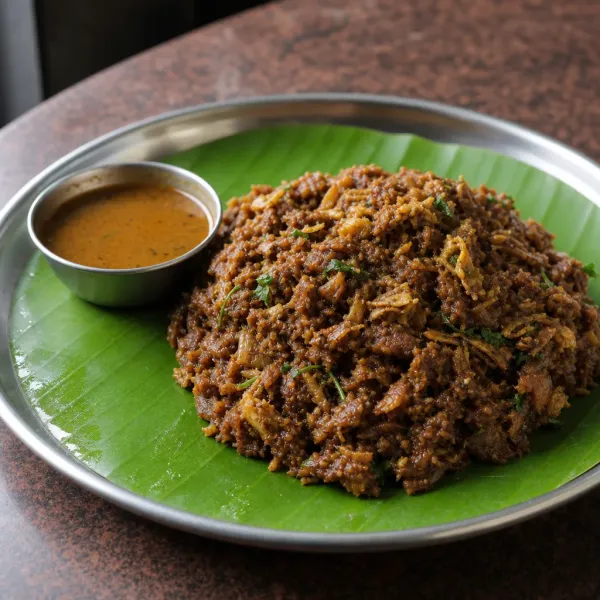
Kothu Parotta with Egg and Masala
Authentic Tamil Nadu kothu parotta with egg and shallot masala. Traditional tawa method, gingelly oil, step-by-step for home cooks.
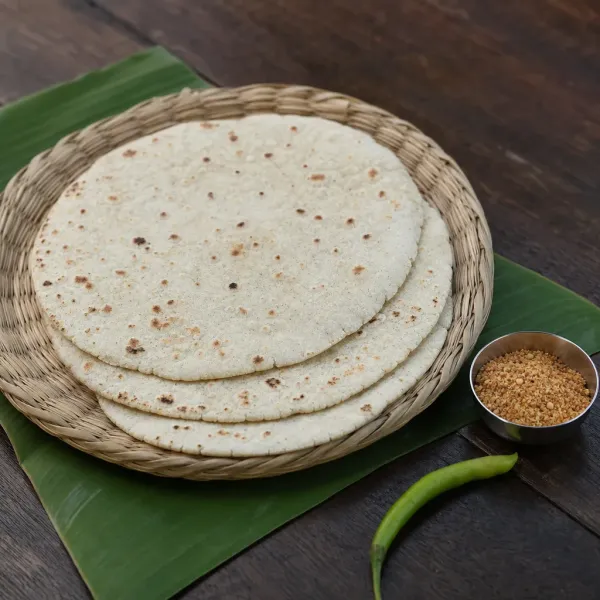
Jolada Rotti
Authentic North Karnataka jolada rotti made with jowar flour and boiling water, shaped by hand on a damp cloth and finished over an open flame. Vegan…
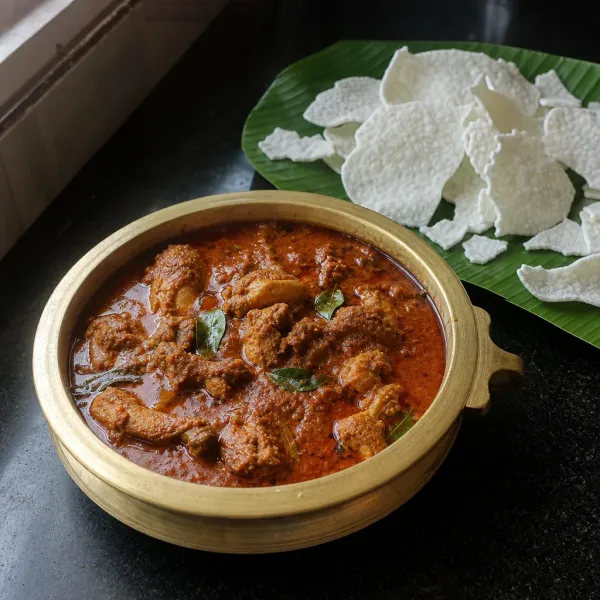
Kori Rotti: Mangalorean Crisp Rice Wafers with Chicken Gassi
Traditional Tulu-style kori rotti from coastal Karnataka: crisp dried rice wafers served with deep red coconut chicken gassi. Home recipe with fresh-…