

Poricha Kuzhambu Recipe
Malayalam പൊരിച്ച കുഴമ്പ്Tamil பொரிச்ச குழம்புKannada ಪೊರಿಚ್ಚ ಕುಳಂಬುTelugu పొరిచ్చ కుళంబు
- Prep20 min
- Cook40 min
- Serves4
- DifficultyMedium
- DietVegetarian
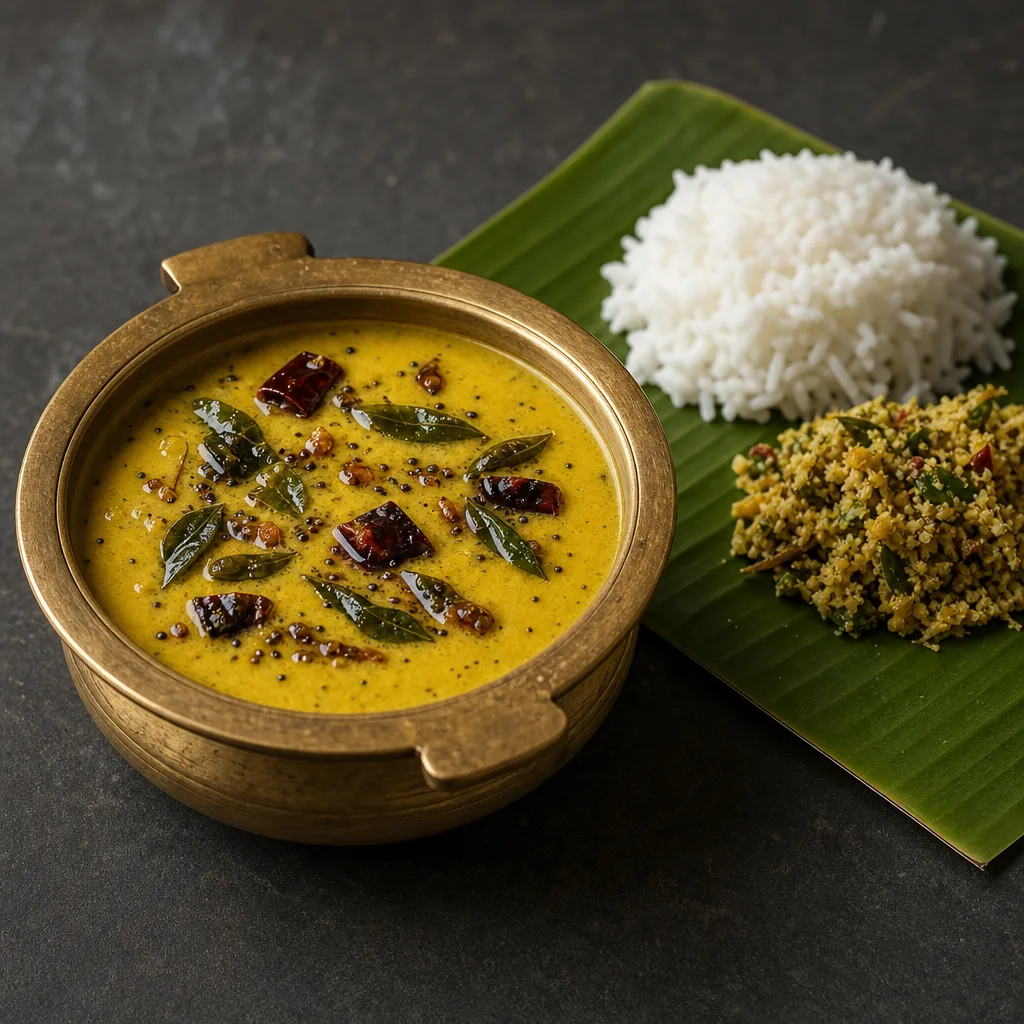
Poricha Kuzhambu is a Brahmin Tamil dish, cooked without tamarind and without onion or garlic. The body of the kuzhambu comes from a freshly roasted and ground paste of coconut, cumin, peppercorns and chana dal. That roasting step is what the name describes: poricha means roasted. The paste thickens the broth and gives it a warm, slightly nutty depth that no tamarind-based kuzhambu has.
It is made with a single vegetable or a combination, most often raw banana, drumstick, yam, ash gourd, or raw jackfruit. The vegetable cooks directly in a thin dal water, and the ground paste goes in only at the end so the coconut does not split from long cooking. The finishing tempering in gingelly oil with mustard, dried red chilli and curry leaves is brief and hot.
In Iyer homes this is a regular weekday lunch dish, ladled generously over rice and eaten alongside a simple thoran and papad. Some households add a small piece of jaggery to round the flavour; others do not. The consistency should be thicker than rasam but thinner than a Kerala curry, coating the back of a spoon lightly.
Ingredients (serves 4)
For the dal and vegetable base
For the roasted coconut paste
For the tempering
Method
Cook the toor dal
Pressure-cook the toor dal with 300 ml water and the turmeric for 3 whistles, or simmer covered in a pot for 30 to 35 minutes until completely soft. Mash it smooth with the back of a ladle. It should look like a loose, pale yellow purée with no whole grains remaining. Set aside.
Prepare the vegetable
Peel the raw banana and cut into 4 cm chunks. Drop the pieces into a bowl of water immediately or they will darken. If using drumstick, scrape the ridges lightly and cut into 5 cm lengths. Yam must be peeled under running water and cut with oiled hands to avoid itching.
Cook the vegetable in dal water
Put the vegetable pieces into a wide pot with 250 ml water, a pinch of salt, and a pinch of turmeric. Bring to a gentle boil and cook until the vegetable is just tender, about 10 to 12 minutes for raw banana or drumstick. Do not let it go mushy; it will cook a little more once the dal goes in.
Dry-roast the spices for the paste
Set a small heavy pan over medium-low heat. Add the chana dal first and stir constantly for about 90 seconds until it turns pale gold and smells nutty. Add the cumin, peppercorns, and dried red chillies and roast together for another 45 to 60 seconds, stirring without stopping. The chillies will darken slightly and the cumin will pop. Tip everything onto a plate to cool. Do not let them sit in the hot pan or they will burn.
Roast the coconut
In the same pan, heat 1 tsp gingelly oil over medium-low heat. Add the grated coconut and stir continuously for 3 to 4 minutes until it turns a pale golden brown and smells toasted. The coconut should be dry-looking and lightly coloured, not dark brown. Tip it onto the plate with the spices and let everything cool completely before grinding.
Grind the paste
Grind the cooled coconut, roasted dal, cumin, peppercorns, and dried red chillies together in a stone grinder or mixer jar with 4 to 5 tbsp water. Grind to a smooth, thick paste. There should be no gritty bits of coconut remaining. Add water a teaspoon at a time only if the grinder stalls.
Combine dal, vegetable, and paste
Add the mashed toor dal to the pot with the cooked vegetable and its cooking water. Stir well and bring to a gentle simmer over medium heat. Add the ground paste and stir it in thoroughly. Let the kuzhambu simmer for 5 to 6 minutes, stirring occasionally so the paste does not settle and scorch at the bottom. The consistency should be like a medium-thick soup. Add salt now and taste.
Check the consistency
If it looks too thick, add 50 to 100 ml warm water and stir. If it looks too thin, let it simmer uncovered for another 3 to 4 minutes. The finished kuzhambu should coat a spoon lightly but still pour. Take it off the heat once the consistency is right.
Make the tempering
Heat 2 tbsp gingelly oil in a small tempering pan over high heat until it shimmers. Add the mustard seeds and keep the pan covered with a lid or splatter screen. When the spluttering subsides, add the broken dried red chilli and the curry leaves. They will crackle loudly for about 10 seconds. Pour the entire tempering immediately over the kuzhambu.
Rest and serve
Cover the pot and leave for 2 minutes so the tempering aromas settle into the kuzhambu. Taste once more for salt. Serve hot. The colour is a warm pale gold from the roasted coconut and turmeric, with the dark specks of the tempering oil floating on top.
How to serve
Steamed rice (preferably parboiled or raw Sona Masuri), a simple thoran or kootu, and appalam (papad). A small portion of pickle is common. Some households serve it alongside a rice-based side like rice mixed with ghee.
Served with: Steamed rice (preferably parboiled or raw Sona Masuri), a simple thoran or kootu, and appalam (papad). A small portion of pickle is common. Some households serve it alongside a rice-based side like rice mixed with ghee.
Cook's tips
Do not add the paste too early
If the coconut paste simmers for more than 8 to 10 minutes, the coconut fat separates and the kuzhambu turns grainy and oily. Add the paste only after the dal and vegetable are fully cooked and the heat is at a gentle simmer.
Roasting the coconut is not optional
Raw coconut gives a pale, flat-tasting kuzhambu. The few minutes of roasting build the flavour that defines this dish. The coconut should smell like toasted grain, not like fresh coconut, before you grind it.
Vegetable choice changes the character
Raw banana gives a starchy, filling kuzhambu. Drumstick makes it lighter and more aromatic. Ash gourd produces the mildest version. Yam is the richest. Each is a legitimate household choice; do not mix more than two vegetables or the flavours crowd each other.
Gingelly oil is not a substitute
Coconut oil changes this dish into something else. The nutty bitterness of gingelly oil in the tempering is part of the taste. If you genuinely cannot find gingelly oil, refined groundnut oil is a lesser but more neutral substitute. Coconut oil is not.
Jaggery variation
Some Iyer households add a small piece of jaggery (about 5 g) along with the ground paste. This is a household preference, not a correction. Try it once you are comfortable with the base recipe.
Regional variations
Some Iyengar households use a slightly different spice ratio in the roasted coconut paste and include pepper more prominently; Mudaliar kitchens make a version with tamarind base which is a distinct dish.
Glossary
- Poricha பொரிச்ச
- Tamil word meaning roasted; refers here to the dry-roasting of the coconut and spices before grinding.
- Kuzhambu குழம்பு
- Tamil word for a category of South Indian gravies or broth-based dishes served over rice; distinct from rasam and sambar.
- Vazhakkai வாழைக்காய்
- Raw unripe banana used as a vegetable in South Indian cooking; starchy and firm, not sweet.
- Nallennai நல்லெண்ணெய்
- Gingelly oil, cold-pressed sesame oil used in Tamil cooking; has a distinctive nutty flavour quite different from Chinese toasted sesame oil.
- Jeeragam ஜீரகம்
- Cumin seeds; used whole for roasting and grinding into the paste in this dish.
Two things decide whether this kuzhambu works. The first is the roasting: both the spices and the coconut must be roasted separately and carefully over low heat until genuinely fragrant, not just warmed through. The second is timing the paste: it goes in at the very end, simmers briefly, and comes off the heat before the coconut fat has a chance to break. Get those two steps right and the rest follows.
More Vegetarian Gravies recipes
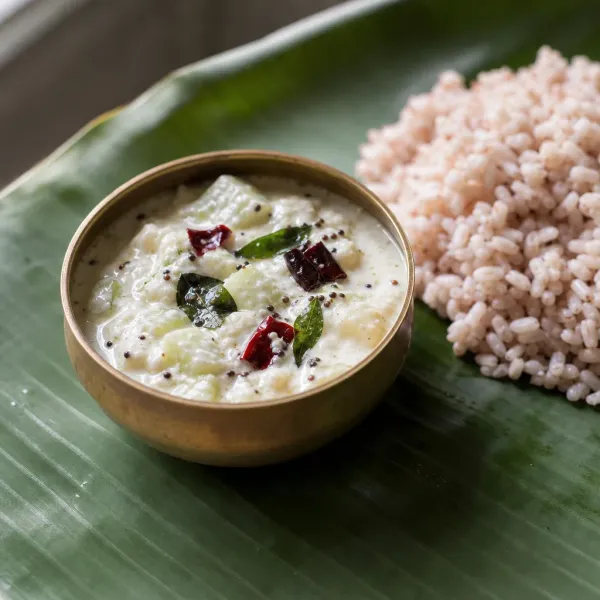
Vellarikka Pachadi
Traditional Kerala vellarikka pachadi with fresh coconut paste, green chilli and thick curd. A cooling sadya side dish ready in 25 minutes.
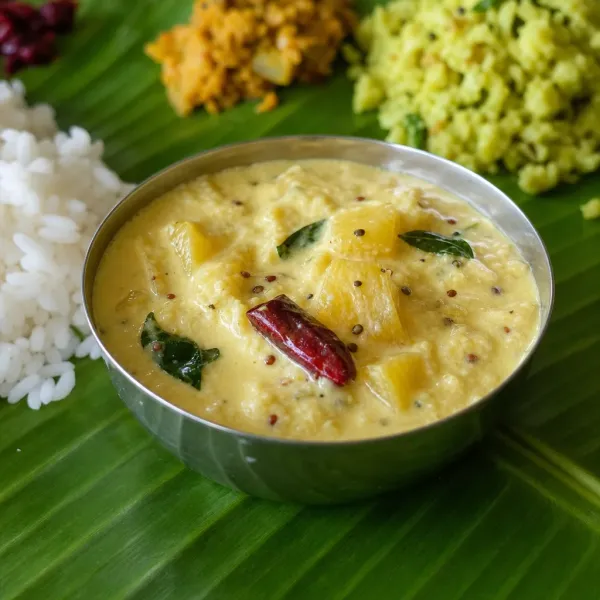
Pineapple Pachadi
Traditional Kerala pineapple pachadi for the sadya leaf: pineapple cooked with coconut paste, finished with sour curd and a coconut oil tempering.
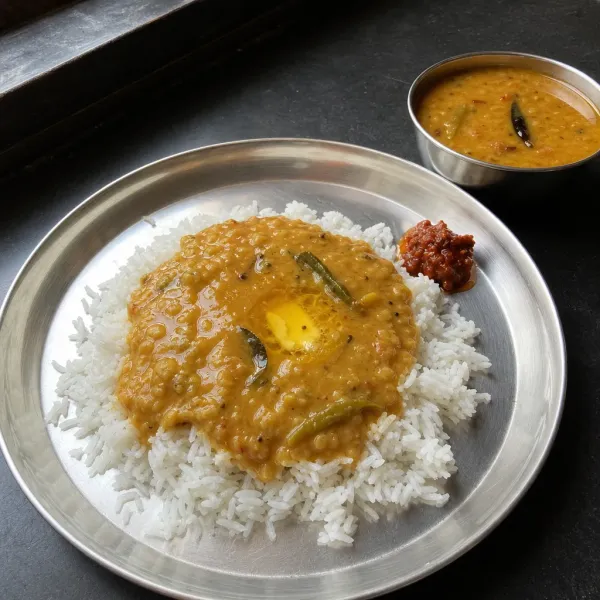
Andhra Pappu
Traditional Coastal Andhra toor dal with tamarind, green chillies, and a ghee tempering. The everyday rice-and-pappu meal made the right way.
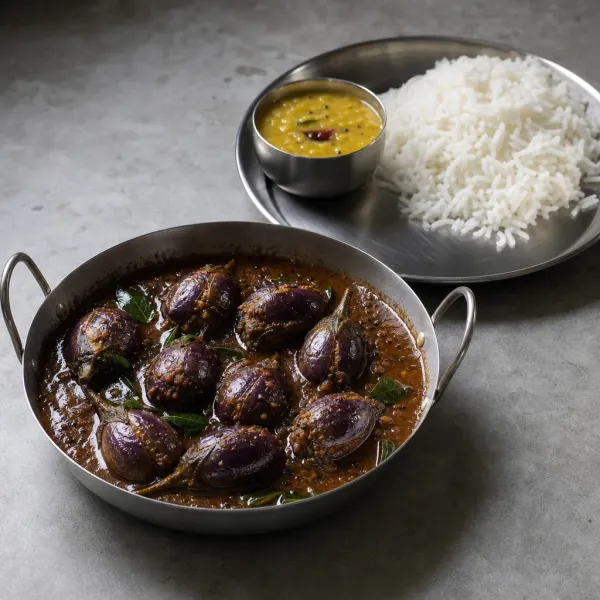
Gutti Vankaya Kura
Authentic Rayalaseema gutti vankaya kura: small brinjals stuffed with a peanut-sesame-coconut masala, slow-cooked in a tamarind gravy with gingelly o…
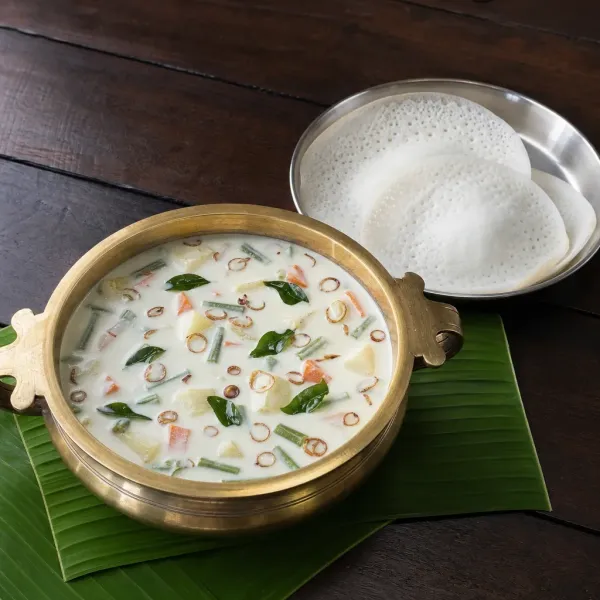
Kerala Vegetable Stew (Ishtu)
Traditional Nasrani vegetable ishtu from Travancore: potatoes, carrots and beans simmered in coconut milk with whole spices. Served with appam.
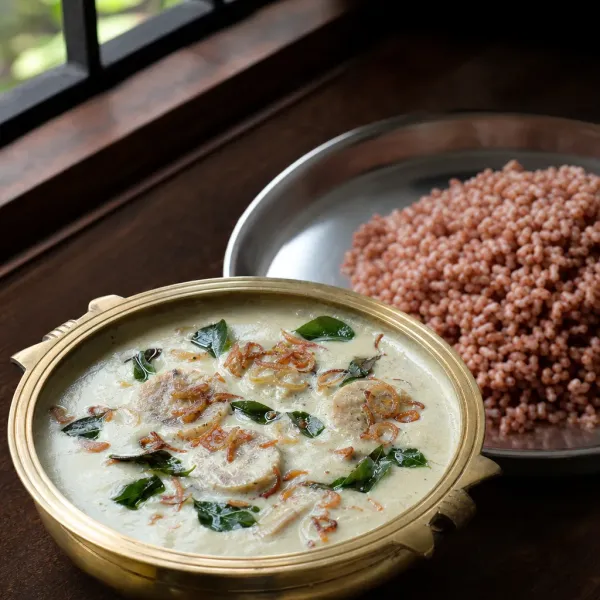
Vazhakka Curry (Raw Banana in Coconut Gravy)
Traditional Nasrani Kerala vazhakka curry with fresh coconut paste and kudampuli. Step-by-step household recipe with exact quantities and cook's note…