

Kerala Vegetable Stew (Ishtu) Recipe
Malayalam ഇഷ്ടുTamil கேரள காய்கறி இஷ்டுKannada ಕೇರಳ ತರಕಾರಿ ಇಷ್ಟುTelugu కేరళ కూరగాయల ఇష్టు
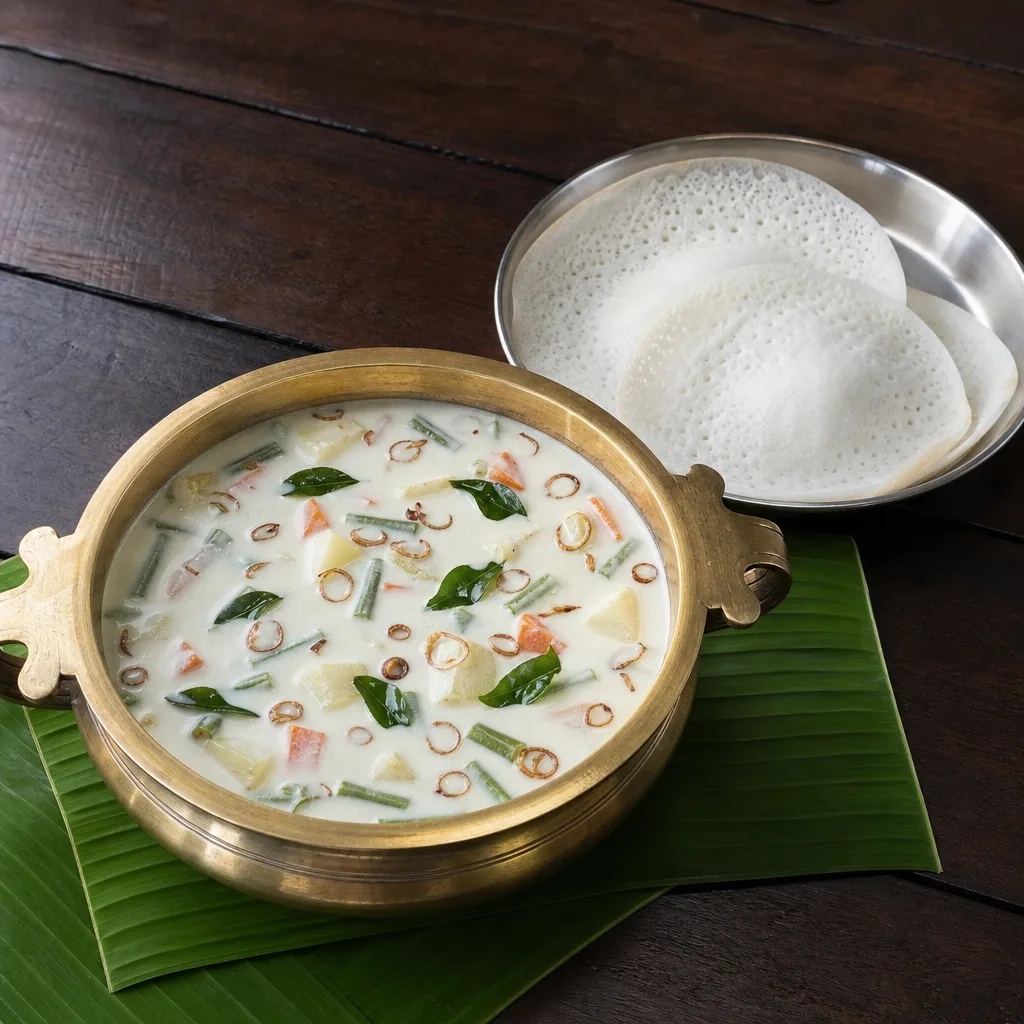
- Prep20 min
- Cook30 min
- Serves4
- DifficultyEasy
- DietVegetarian
Ishtu is a Nasrani kitchen staple from Travancore, cooked for Sunday breakfast and for guests without exception. The vegetables are simmered gently in thin coconut milk with whole spices until just tender, then finished with thick coconut milk poured in off the heat. The colour is ivory white. There is no browning, no frying of the vegetables, and no ground masala paste.
The spicing is restrained on purpose. Whole black pepper, cloves, cardamom, a cinnamon stick and a green chilli or two give warmth without heat. The coconut milk does the rest. The final tempering in coconut oil with shallots, curry leaves and dried red chilli is the one moment of colour and crackle in an otherwise quiet dish.
Households differ on which vegetables to use. Potato and carrot are constants. Some add green peas, some add beans, some add a small piece of ash gourd. The ratio of thin to thick coconut milk varies by how rich the cook wants the gravy. The stew should coat a spoon lightly but pour easily; it is not a thick curry.
Ingredients (serves 4)
Vegetables
Whole spices and aromatics
Coconut milk
For the tempering
Seasoning
Method
Prepare the coconut milk
If using a fresh coconut, grate the flesh and extract the milk in two passes. First press with 100 ml warm water gives the thick milk; set this aside. Second and third presses with 200 ml warm water each give the thin milk; combine these to get roughly 400 ml. If using tinned coconut milk, pour the tin into a jug, take 200 ml of the thick cream from the top and set it aside, then dilute the rest with 200 ml water to make the thin milk.
Sweat the aromatics
Place a wide, heavy-bottomed pan over medium-low heat. Add 1 tablespoon of the coconut oil. When it is warm, add the cardamom, cloves, cinnamon and crushed peppercorns. Let them sizzle for thirty seconds until fragrant. Add the halved shallots, ginger matchsticks, slit green chillies and curry leaves. Stir and cook for two to three minutes until the shallots turn translucent but not brown. This is the only moment of heat in the dish; keep it gentle.
Add the harder vegetables
Add the potato and carrot cubes to the pan. Stir to coat them in the spiced oil. Pour in the thin coconut milk and add salt. The liquid should nearly cover the vegetables; add a splash of water if needed. Bring to a gentle simmer over medium heat.
Cook the vegetables through
Cover the pan and cook on a low, steady simmer for twelve to fifteen minutes until the potato is almost tender when pierced with a knife tip but not yet falling apart. The thin coconut milk will look slightly opaque and pale yellow. Do not let it boil hard or the milk may split and the vegetables will become waterlogged.
Add the beans and peas
Add the French beans and green peas. Stir gently, cover, and cook for a further four to five minutes. The beans should be just cooked through with a little bite remaining. Taste the liquid and adjust salt now, before the thick milk goes in.
Finish with thick coconut milk
Turn the heat to the lowest setting. Pour in the thick coconut milk and stir slowly. Let it warm through for two minutes, stirring gently. Do not let the stew boil after this point. Boiling thick coconut milk causes it to split and turn grainy. The stew should be gently steaming and ivory white. Take the pan off the heat.
Make the tempering
Heat the remaining 1 tablespoon of coconut oil in a small tempering pan over medium heat. Add the sliced shallots and fry, stirring, for three to four minutes until they turn golden brown at the edges. Add the broken dried red chillies and curry leaves. Stand back — the curry leaves will splutter. Let them crackle for twenty seconds.
Pour and rest
Pour the tempering immediately over the stew. Cover the pan and leave it to rest for five minutes before serving. This resting time lets the tempering fragrance settle into the stew. Serve hot.
How to serve
Appam (lacy rice hoppers) is the classic pairing. Also eaten with idiyappam (string hoppers), palappam, or sliced white bread. On weekday mornings, some households eat it with puttu.
Served with: Appam (lacy rice hoppers) is the classic pairing. Also eaten with idiyappam (string hoppers), palappam, or sliced white bread. On weekday mornings, some households eat it with puttu.
Cook's tips
Do not boil after the thick milk goes in
This is the step people rush and regret. Once the thick coconut milk is added, the heat must stay very low. A full boil breaks the emulsion and you get a greasy, curdled-looking gravy. It cannot be fixed.
Tinned coconut milk works well here
Unlike dishes where fresh-ground coconut paste matters, this stew is forgiving of good-quality tinned coconut milk. Shake the tin, open it, spoon out the thick cream from the top for the finish, and dilute the rest for the cooking liquid.
Cut size affects timing
Cut potatoes and carrots to the same size so they finish cooking together. If the pieces are uneven, the smaller ones will dissolve into the gravy by the time the larger ones are done.
The whole spices are not eaten
Cardamom pods, cloves and cinnamon are left in the stew when it is served. Regular eaters know to set them aside on the plate. If you are serving guests unfamiliar with the dish, you can fish them out before serving.
Storage
Refrigerate for up to two days. Reheat very gently on low heat, stirring. Do not microwave on high power; the coconut milk will split. Add a small splash of water when reheating if it has thickened.
Regional variations
Mappila households in Malabar make a similar stew with more whole spices and sometimes add thin coconut milk earlier; Travancore Hindu households make a plainer version with fewer whole spices. A non-vegetarian version with chicken or mutton is common across all communities.
Glossary
- Ishtu ഇഷ്ടു
- The Malayalam rendering of 'stew', adopted from English during the colonial period and now the standard name for this coconut milk vegetable or meat preparation in Kerala Christian households.
- Kudampuli കുടംപുളി
- Gamboge or Malabar tamarind (Garcinia cambogioides); not used in this dish but often confused with the tamarind used in other Kerala curries.
- Kaachampaal കാച്ചാമ്പാൽ
- Thick first-press coconut milk; the richest extract, added at the end of cooking and never boiled.
- Randampaal രണ്ടാമ്പാൽ
- Second-press coconut milk; thinner and used as the cooking liquid.
- Cheriya ulli ചെറിയ ഉള്ളി
- Small shallots (Allium ascalonicum); the standard allium in Kerala cooking, sharper and more fragrant than large onions.
Two things decide whether this stew succeeds. The first is patience with the heat: the vegetables must simmer gently in thin coconut milk, never boiling hard, and the thick milk must go in off or near-off the heat. The second is the tempering — fried shallots and curry leaves in coconut oil poured over at the very end. That last step is what gives the stew its characteristic fragrance and keeps it from tasting flat.
More Vegetarian Gravies recipes
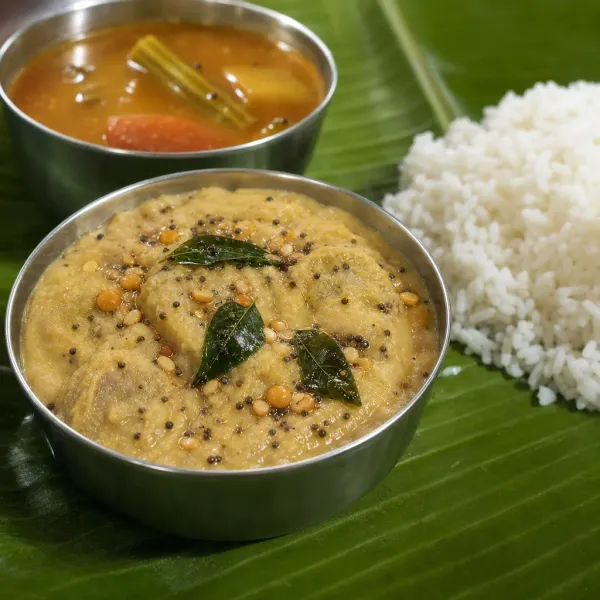
Kootu
Traditional Tamil Brahmin kootu with raw banana and toor dal, bound with a freshly ground coconut and cumin paste. A daily Iyer lunch dish.
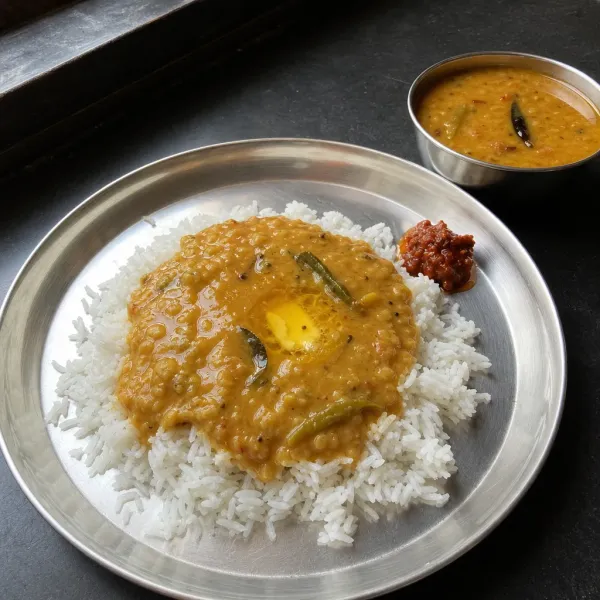
Andhra Pappu
Traditional Coastal Andhra toor dal with tamarind, green chillies, and a ghee tempering. The everyday rice-and-pappu meal made the right way.
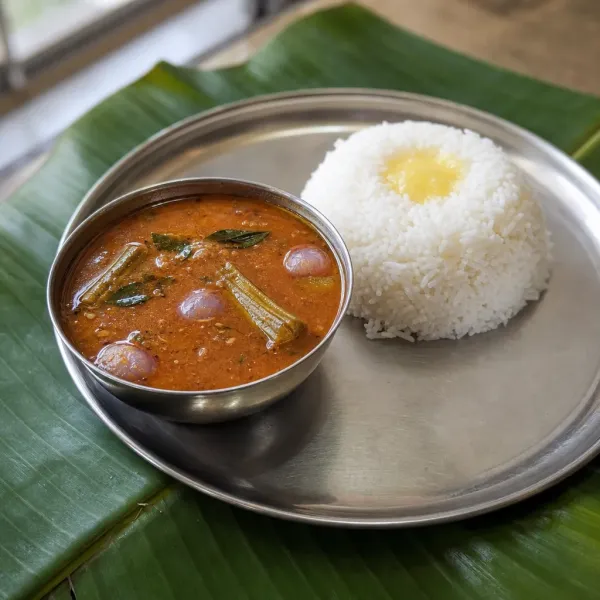
Arachuvitta Sambar (Tamil Brahmin Style, Freshly Ground Masala)
Traditional Tamil Brahmin arachuvitta sambar with freshly ground coconut masala, toor dal, drumstick, and tamarind. No sambar powder, no tomato.
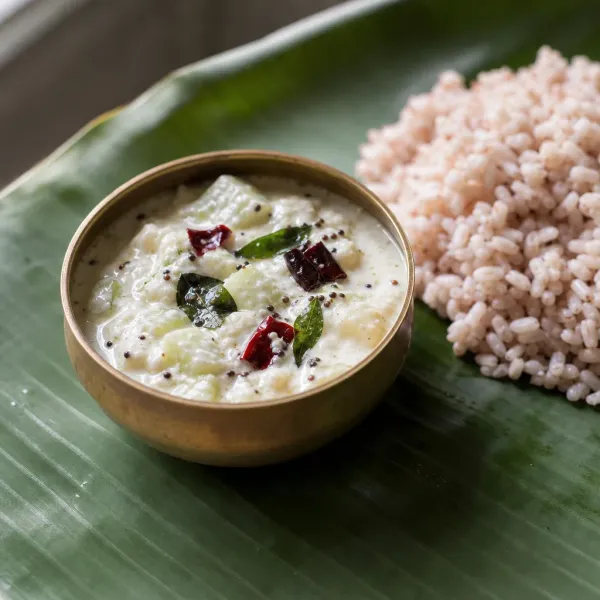
Vellarikka Pachadi
Traditional Kerala vellarikka pachadi with fresh coconut paste, green chilli and thick curd. A cooling sadya side dish ready in 25 minutes.
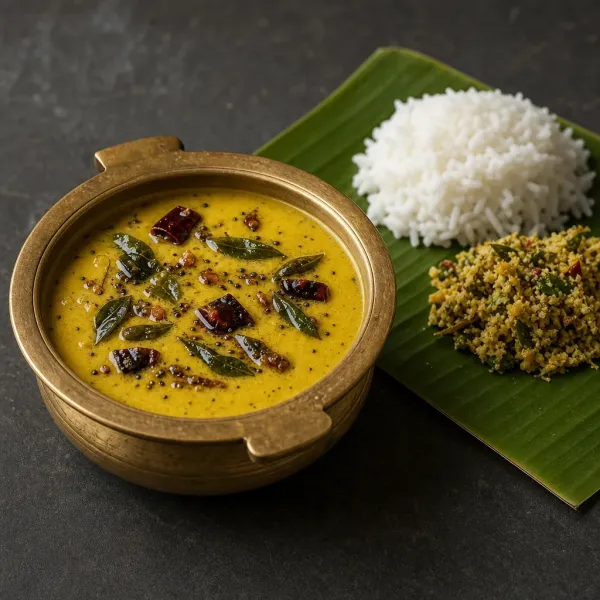
Poricha Kuzhambu
Traditional Tamil Brahmin poricha kuzhambu with roasted coconut paste, toor dal, and raw banana. No tamarind, no onion. Weekday lunch recipe.
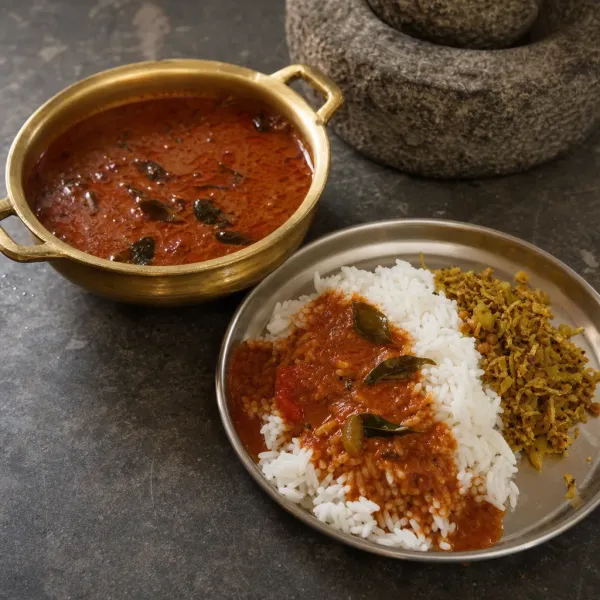
Thakkali Kuzhambu
Traditional Tamil Iyer thakkali kuzhambu with ripe country tomatoes, tamarind, shallots, and freshly roasted kuzhambu podi in gingelly oil.