

Arachuvitta Sambar (Tamil Brahmin Style, Freshly Ground Masala) Recipe
Malayalam അരച്ചുവിട്ട സാമ്പാർTamil அரைச்சுவிட்ட சாம்பார்Kannada ಅರೆದು ಹಾಕಿದ ಸಾಂಬಾರ್Telugu అరచివిట్ట సాంబార్
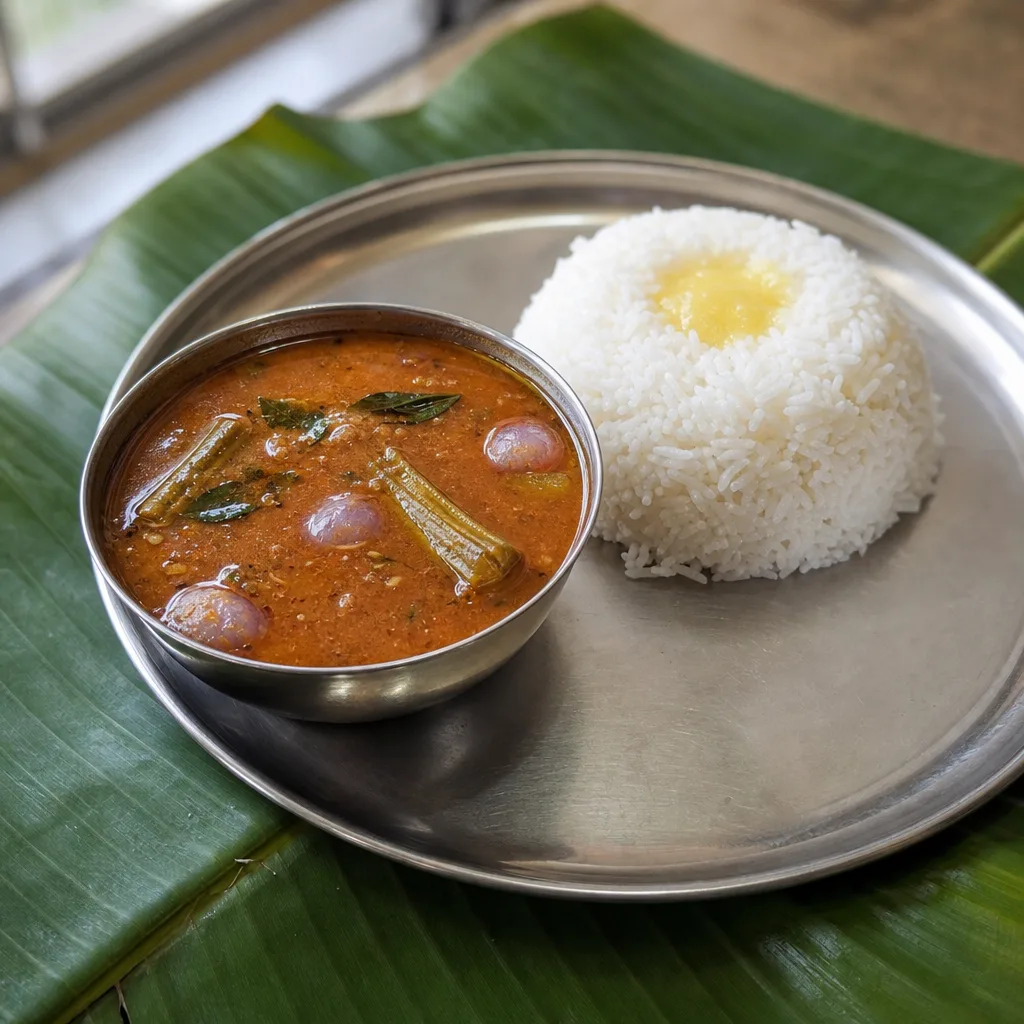
- Prep25 min
- Cook40 min
- Serves4
- DifficultyMedium
- DietVegan
Arachuvitta sambar is the version where the masala is ground fresh for each pot. This is what separates it from the everyday sambar made with stored powder. The grinding takes an extra fifteen minutes but it changes the character of the dish entirely: the coconut thickens the broth, the coriander seeds give a different fragrance when raw-ground than when pre-roasted into powder, and the whole thing has a freshness that the powder version cannot replicate.
This is Tamil Brahmin cooking, and in Iyer households it is made without shallots or garlic. The sourness comes from tamarind, not tomato. The dal is toor dal cooked soft and mashed. The vegetable is typically drumstick, pearl onions (small shallots), or brinjal, though most households have a preferred vegetable for this particular sambar. It is eaten with rice, and a small pool of ghee is often added to the rice at the table.
Household variation is real. Some families dry-roast the coconut lightly before grinding; others grind it raw. The ratio of coriander seeds to dried red chillies shifts from cook to cook. A few families add a small piece of cinnamon to the masala. None of these is wrong; they are family signatures.
Ingredients (serves 4)
For the dal
For the tamarind base
Vegetables
For the freshly ground masala (arachuvitta masala)
For the tempering
Seasoning
Method
Cook the dal
Rinse the toor dal twice and put it in a pressure cooker with 500 ml water and ¼ tsp turmeric. Cook on medium heat for 4 to 5 whistles until the dal is completely soft and falls apart. Let the pressure drop naturally. Open and mash the dal thoroughly with the back of a ladle until smooth. It should have no whole pieces remaining.
Soak the tamarind
Break the tamarind into the warm water and let it soak for 15 minutes. Squeeze the pulp well between your fingers, then strain through a sieve, pressing out every drop. You want a fairly concentrated extract. Dilute it with the 300 ml water and set aside. Discard the fibrous residue.
Dry-roast the masala ingredients
In a small dry pan over low heat, roast the coriander seeds, dried red chillies, chana dal, black pepper, and cumin separately or together, stirring constantly. They are ready when the coriander smells warm and nutty and the chana dal turns pale gold, about 2 to 3 minutes. Do not let anything darken beyond pale gold or the masala will taste bitter. Tip them onto a plate to cool.
Grind the masala
Put the cooled roasted spices into a wet grinder or mixer jar with the fresh grated coconut, curry leaves, and 3 to 4 tablespoons of water. Grind to a very smooth paste. The paste should feel silky between your fingers with no graininess. Add water one tablespoon at a time only if the grinder is struggling. A coarse paste will give a gritty sambar.
Cook the vegetables in tamarind water
Pour the diluted tamarind extract into a medium heavy-bottomed pot. Add ¼ tsp turmeric and salt. Bring to a boil, then add the drumstick pieces and whole shallots. Cook on a medium boil, uncovered, for 12 to 15 minutes until the drumstick is completely tender and the shallots have softened. The tamarind water will deepen in colour and lose its raw smell.
Add the mashed dal
Add the mashed toor dal to the pot and stir well to combine. The broth will thicken noticeably. If it seems very thick, add 100 ml water. Bring back to a gentle boil and let it cook together for 5 minutes so the dal and tamarind water are fully integrated.
Stir in the ground masala
Add the freshly ground coconut masala paste to the pot and stir in thoroughly. Lower the heat immediately to a gentle simmer. Cook for 8 to 10 minutes, stirring occasionally. The sambar will thicken further and the raw coconut smell will cook out. Do not let it boil hard at this stage or the coconut can split the broth and make it look grainy. Taste and adjust salt.
Temper and finish
Heat the gingelly oil in a small tempering pan over medium-high heat until it shimmers. Add the mustard seeds and wait for them to pop fully. Add the broken dried red chilli and curry leaves and stand back as they splutter. Add the asafoetida, stir once, and immediately pour the entire tempering over the sambar. Cover the pot for two minutes to let the aroma absorb into the broth before serving.
How to serve
Steamed white rice (raw rice or parboiled rice depending on the household), with a small amount of ghee added to the rice at the table. Papad and a dry vegetable poriyal alongside.
Served with: Steamed white rice (raw rice or parboiled rice depending on the household), with a small amount of ghee added to the rice at the table. Papad and a dry vegetable poriyal alongside.
Cook's tips
Why gingelly oil and not coconut oil
Tamil Brahmin sambar is made with cold-pressed gingelly oil. Coconut oil changes the flavour profile significantly and belongs to Kerala cooking. Use gingelly oil here.
The coconut roasting question
Some families lightly dry-roast the grated coconut before grinding, which gives a slightly darker, nuttier masala. Both are traditional. The raw-ground version gives a paler, fresher-tasting sambar. Choose based on family preference; neither is wrong.
No tomato
Tomato does not belong in this version. The sourness comes entirely from tamarind. Adding tomato changes both the colour and the flavour in ways that move it away from the traditional Iyer kitchen.
Consistency
Arachuvitta sambar should be thicker than everyday powder-based sambar because of the coconut. It should coat the back of a spoon lightly. If it is too thin after adding the dal, simmer uncovered for a few more minutes. If it is too thick, add a little hot water and stir.
Keeping it
Because of the fresh coconut, this sambar does not keep as well as the powder-based version. Eat within a day at room temperature in a cool kitchen, or refrigerate and finish within two days. Reheat gently; boiling hard after storage can make the coconut separate.
Regional variations
Mappila-influenced sambar with coconut in Kerala; Udupi Brahmin sambar with a different spice balance; Mudaliar and Pillai household versions that include shallots in the masala paste itself.
Glossary
- Arachuvitta அரைச்சுவிட்ட
- Literally 'that which has been ground and added'; refers to the technique of grinding a fresh masala paste for each pot rather than using pre-made powder.
- Perungayam பெருங்காயம்
- Asafoetida, the dried resin used in Tamil Brahmin cooking as a digestive and flavour agent, often replacing garlic and onion in Brahmin kitchens.
- Murungakkai முருங்கைக்காய்
- Drumstick, the long ridged pod of the Moringa tree, a classic vegetable for sambar; the flesh is scraped out from the fibrous skin while eating.
- Chinna vengayam சின்ன வெங்காயம்
- Small shallots, the tiny pink alliums used throughout Tamil cooking; sweeter and more pungent than large onions.
- Toor dal துவரம் பருப்பு
- Split and hulled pigeon peas, the standard dal for sambar across South India.
Two things decide this sambar: the fineness of the ground masala and the restraint of the final simmer. A coarse paste leaves grit in the broth and the coconut never fully integrates. Boiling hard after the paste goes in splits the coconut and makes the broth look broken. Grind long, simmer gently, and the sambar will have the thick, fragrant body that makes this version worth the extra effort.
More Vegetarian Gravies recipes
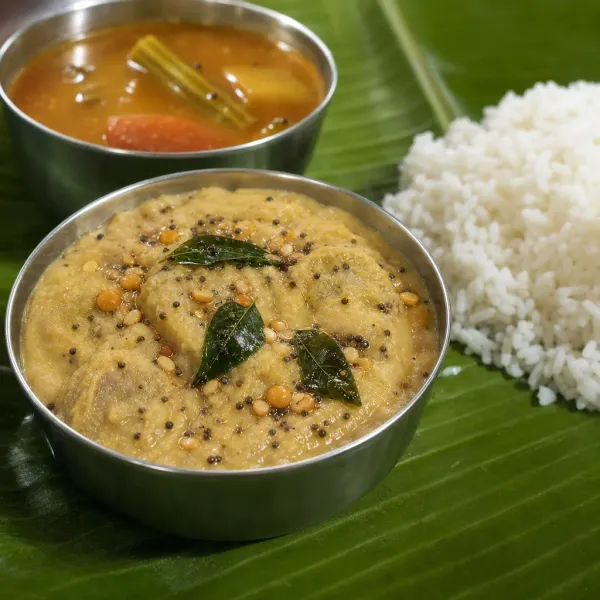
Kootu
Traditional Tamil Brahmin kootu with raw banana and toor dal, bound with a freshly ground coconut and cumin paste. A daily Iyer lunch dish.
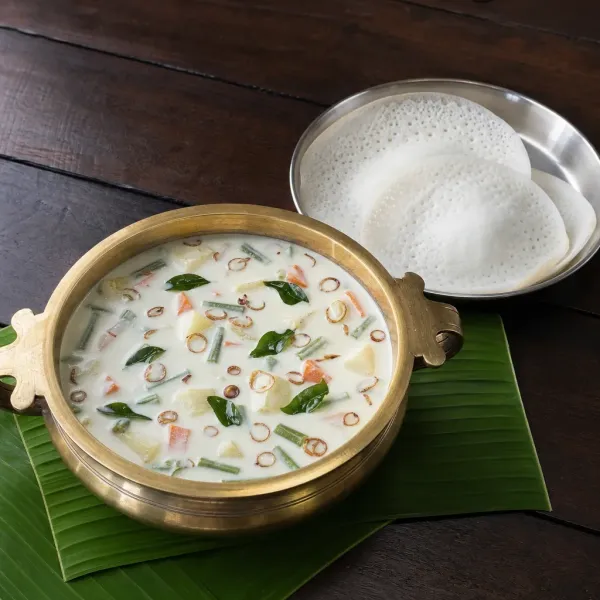
Kerala Vegetable Stew (Ishtu)
Traditional Nasrani vegetable ishtu from Travancore: potatoes, carrots and beans simmered in coconut milk with whole spices. Served with appam.
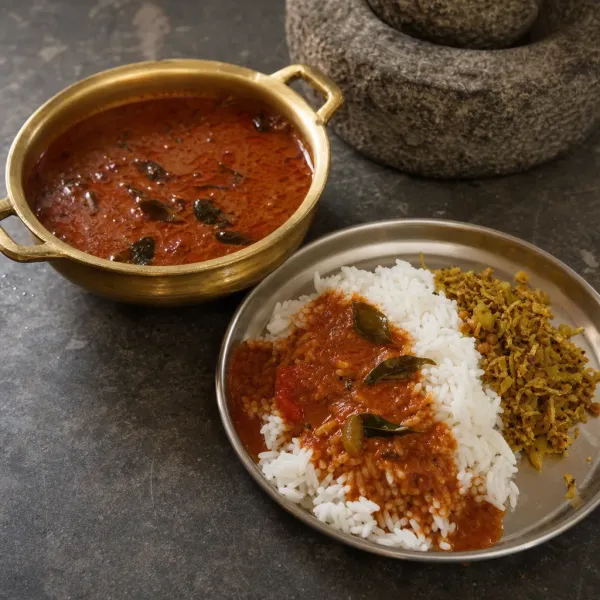
Thakkali Kuzhambu
Traditional Tamil Iyer thakkali kuzhambu with ripe country tomatoes, tamarind, shallots, and freshly roasted kuzhambu podi in gingelly oil.
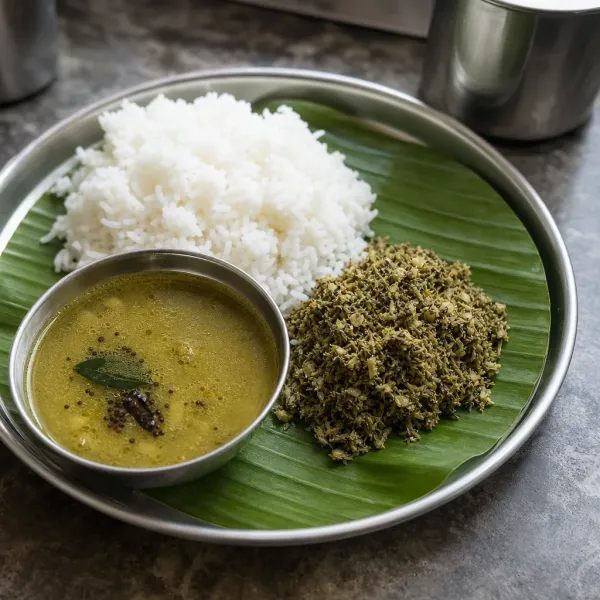
Bassaru
Traditional Karnataka bassaru: toor dal and dill cooked together, strained into a spiced coconut broth and a dry palya. Vokkaliga household recipe.
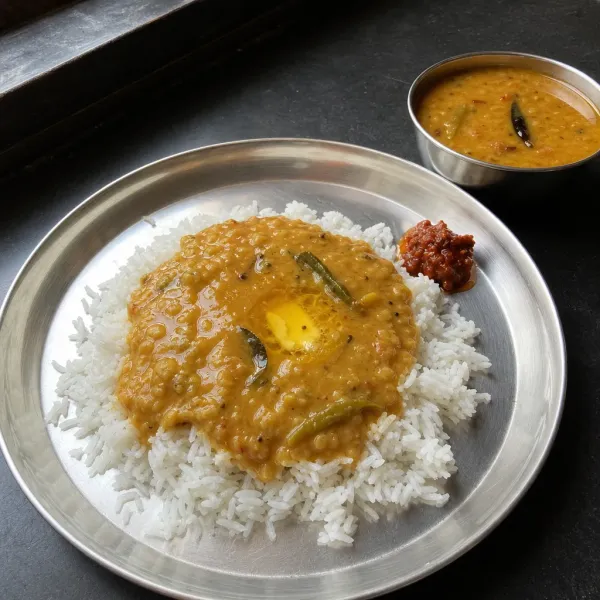
Andhra Pappu
Traditional Coastal Andhra toor dal with tamarind, green chillies, and a ghee tempering. The everyday rice-and-pappu meal made the right way.
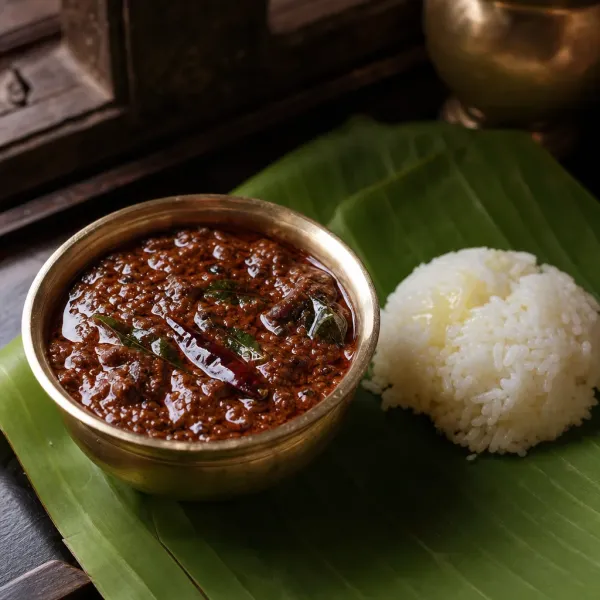
Menthya Gojju
Traditional Karnataka menthya gojju: dry-roasted fenugreek seeds in tamarind, jaggery and fresh coconut paste. Balanced bitter, sour and sweet.