

Menthya Gojju Recipe
Malayalam മെന്ത്യ ഗൊജ്ജുTamil வெந்தய கொஜ்ஜுKannada ಮೆಂತ್ಯ ಗೊಜ್ಜುTelugu మెంతి గొజ్జు
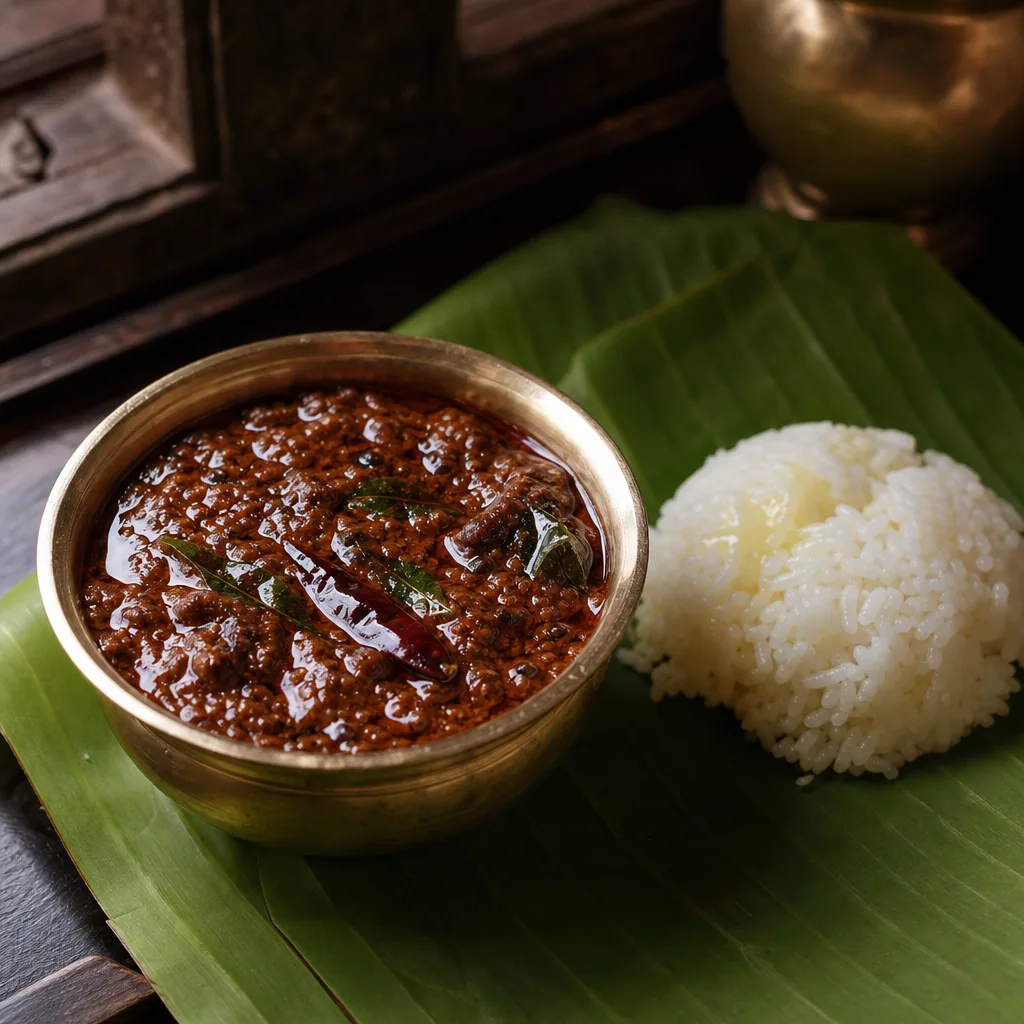
- Prep20 min
- Cook35 min
- Serves4
- DifficultyMedium
- DietVegan
Menthya gojju sits in the Karnataka category of thick, tangy-sweet relish-gravies that are neither a chutney nor a curry but something between the two. The fenugreek seeds give it a distinctive, almost pleasantly bitter undertone that the jaggery softens without erasing. It is a dish that rewards patience: the seeds must be dry-roasted until they deepen in colour and smell nutty, and the tamarind base must cook down until it loses its raw sharpness.
In most South Karnataka households it is eaten with plain rice and a small pour of ghee, or with jolada rotti. It appears at the end of a meal as a palate-settling note, much as a rasam does in Tamil Nadu. The proportion of jaggery to tamarind is the one thing households argue about. Some lean sharply sweet, others keep it tart with just enough jaggery to round the edges. The version here is balanced, adjustable in the final minutes of cooking.
Fresh grated coconut ground with roasted coriander and dry chillies gives the gojju its body. Some cooks add a small piece of dry coconut (kobbari) instead of fresh, which makes it darker and more intense. The tempering of mustard seeds, curry leaves and dry red chilli in coconut oil or gingelly oil goes in last and is not optional — it lifts the whole dish.
Ingredients (serves 4)
For the fenugreek base
For the ground paste
For the tempering
Method
Roast the fenugreek seeds
Heat a dry heavy pan on medium-low. Add the fenugreek seeds and roast, stirring constantly, for 4 to 5 minutes. They are ready when they turn a shade darker — from pale yellow to a warm golden-brown — and smell nutty rather than raw. Do not let them go dark brown or the bitterness becomes harsh and will not cook out. Set aside to cool on a plate.
Roast the paste spices
In the same dry pan, roast the coriander seeds on medium heat until they crackle and colour lightly, about 2 minutes. Add the byadagi chillies and roast for 30 seconds until they puff slightly. Remove and cool. Cumin and peppercorns go in raw into the grinder — no need to roast them separately.
Grind the paste
Grind the roasted coriander, roasted chillies, cumin, peppercorns and fresh coconut together with 3 to 4 tablespoons of water to a smooth, fine paste. The coconut must be ground properly — a coarse paste will leave a raw texture in the finished dish. Set aside.
Grind the fenugreek
Grind the cooled roasted fenugreek seeds to a moderately fine powder in a small dry grinder. You do not need it to be a perfect flour — a slightly gritty texture is normal and correct. Set aside separately from the coconut paste.
Extract the tamarind pulp
Soak the tamarind in 300 ml warm water for 10 minutes, then squeeze and strain to get a thick pulp. Discard the fibres and seeds. You should have roughly 250 ml of medium-thick tamarind water.
Cook the tamarind base
Pour the tamarind water into a wide, heavy pan. Add the turmeric and salt. Bring to a boil on medium heat, then lower to a steady simmer. Cook uncovered for 8 to 10 minutes, stirring occasionally, until the raw tamarind smell is completely gone and the liquid reduces by roughly a third. It should smell rounded and slightly sweet-sour, not sharp.
Add jaggery and fenugreek powder
Add the grated jaggery to the simmering tamarind and stir until it dissolves fully, 1 to 2 minutes. Now add the ground fenugreek powder and stir it in well. The mixture will thicken quickly. Add 100 to 150 ml of water to loosen it to a pourable, medium-thick consistency.
Stir in the coconut paste
Add the ground coconut-spice paste and stir to combine evenly. Keep the heat on medium-low. Cook for 6 to 8 minutes, stirring frequently so the coconut does not catch at the bottom. The gojju is ready when it thickens to a consistency that coats the back of a spoon and the oil from the coconut begins to show at the surface. Taste and adjust jaggery or salt.
Temper and finish
Heat the gingelly oil in a small pan on medium-high. When it shimmers, add the mustard seeds and wait for them to pop. Add the broken red chilli, curry leaves and asafoetida — stand back, the curry leaves will splutter. Pour the entire tempering immediately over the gojju and stir it in. The dish is done.
How to serve
Plain steamed rice with a small spoon of ghee; jolada rotti (jowar flatbread). A small quantity — two or three tablespoons per person — is the typical serving.
Served with: Plain steamed rice with a small spoon of ghee; jolada rotti (jowar flatbread). A small quantity — two or three tablespoons per person — is the typical serving.
Cook's tips
Bitterness control
The bitterness of fenugreek is real and intentional, but it should be background, not dominant. If your seeds are old, they can be more bitter than fresh ones. Roasting on medium-low (not high) heat is the main control. If the gojju tastes too bitter after cooking, a little extra jaggery will help, but do not add so much that it becomes a sweet dish.
Byadagi chilli
Byadagi gives colour and mild heat without overpowering the other flavours. If you cannot find it, use Kashmiri dry chilli for colour, but add a small green chilli for heat separately. Do not use guntur or other very hot chillies — they will unbalance the dish.
Consistency
Menthya gojju thickens further as it cools. Cook it slightly thinner than you want at the table. Leftovers stored in a clean jar at room temperature keep for two days in cool weather; refrigerate in summer and bring to room temperature before serving.
Gingelly oil
The tempering in gingelly oil is characteristic of Karnataka gojju. Coconut oil can be used but changes the flavour profile noticeably. Do not use refined sunflower oil — the dish will taste flat.
Regional variations
A thinner, coconut-free version closer to a tamarind pickle is made in some Brahmin households; a Havyaka version uses less jaggery and more black pepper.
Glossary
- Menthya ಮೆಂತ್ಯ
- Fenugreek seeds in Kannada.
- Gojju ಗೊಜ್ಜು
- A Karnataka category of thick, tangy-sweet relish-gravy, usually made with a souring agent and jaggery.
- Byadagi ಬ್ಯಾಡಗಿ
- A variety of dry red chilli from Byadagi in Karnataka, known for its deep red colour and moderate heat.
- Kobbari ಕೊಬ್ಬರಿ
- Dried coconut (copra) in Kannada, used in some gojju versions for a darker, more intense flavour.
- Jolada rotti ಜೋಳದ ರೊಟ್ಟಿ
- Unleavened flatbread made from jowar (sorghum) flour, a staple in North and Central Karnataka.
- Hing ಹಿಂಗು
- Asafoetida, the dried resin used in small quantities as a tempering spice.
Two things decide whether this gojju works: the fenugreek must be roasted carefully to the right colour — too pale and the dish tastes raw, too dark and the bitterness overwhelms everything — and the tamarind base must be cooked long enough to lose its sharpness before the jaggery and coconut paste go in. Get those two right and the balance of bitter, sour and sweet falls into place on its own.
More Vegetarian Gravies recipes
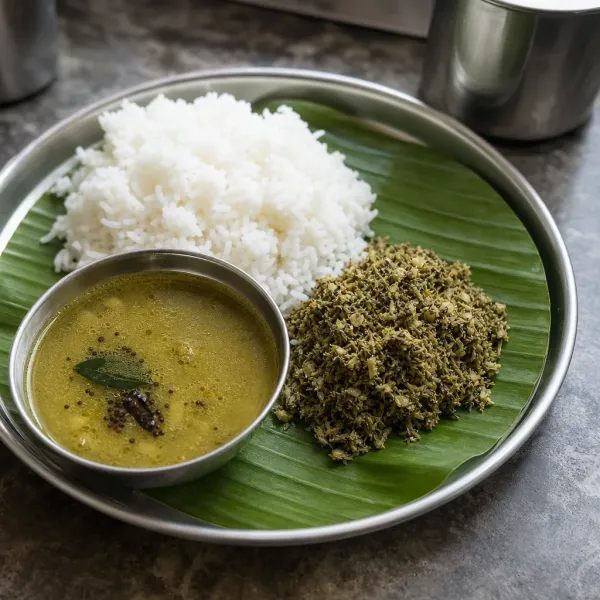
Bassaru
Traditional Karnataka bassaru: toor dal and dill cooked together, strained into a spiced coconut broth and a dry palya. Vokkaliga household recipe.
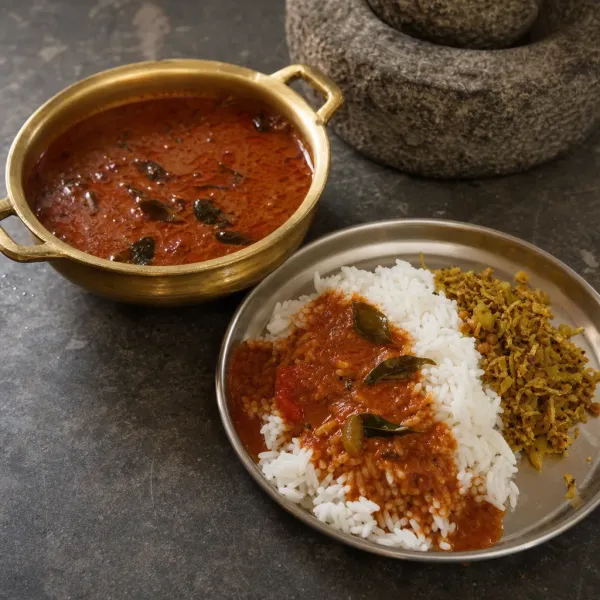
Thakkali Kuzhambu
Traditional Tamil Iyer thakkali kuzhambu with ripe country tomatoes, tamarind, shallots, and freshly roasted kuzhambu podi in gingelly oil.
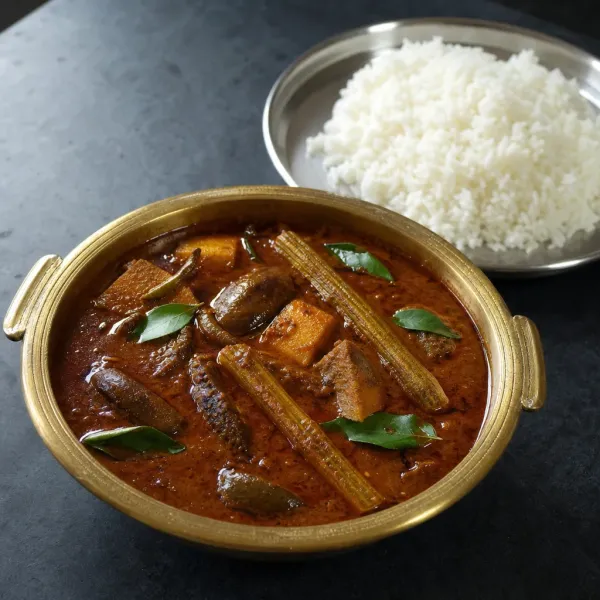
Kadamba Kuzhambu
Traditional Tamil Brahmin kadamba kuzhambu with many vegetables, toor dal, tamarind, and a freshly ground coconut-spice paste. Temple-day recipe.
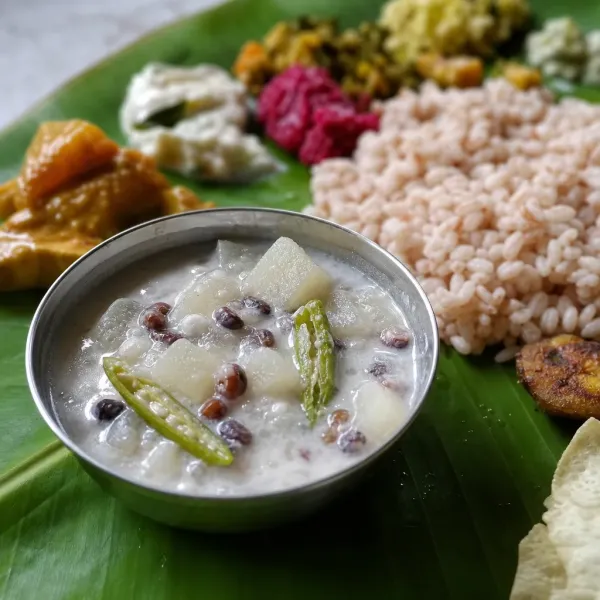
Olan
Traditional Kerala Olan recipe with ash gourd, vanpayar, and fresh coconut milk. A Sadya essential from the Travancore kitchen, cooked the household…
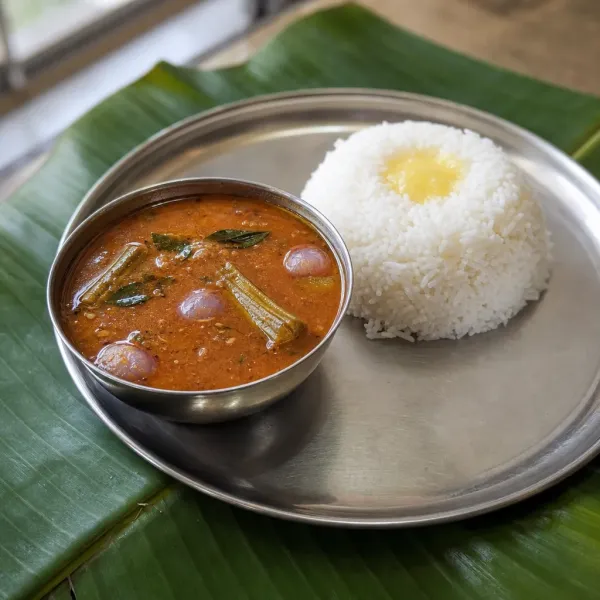
Arachuvitta Sambar (Tamil Brahmin Style, Freshly Ground Masala)
Traditional Tamil Brahmin arachuvitta sambar with freshly ground coconut masala, toor dal, drumstick, and tamarind. No sambar powder, no tomato.
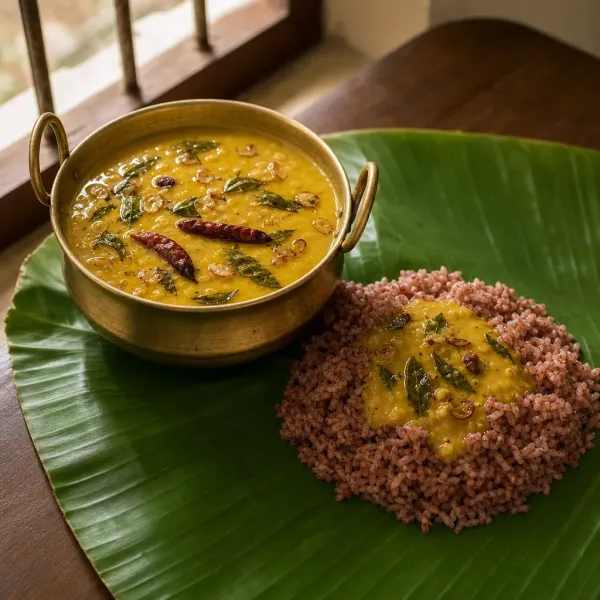
Parippu Curry
Traditional Kerala sadya parippu curry made with split moong dal, freshly ground coconut paste and a coconut oil tempering. Step-by-step home recipe.