

Kallummakkaya Ularthiyathu Recipe
Malayalam കല്ലുമ്മക്കായ ഉലർത്തിയത്Tamil கல்லுமுக்காய் உலர்த்தியதுKannada ಕಲ್ಲುಮ್ಮಕ್ಕಾಯ ಉಲರ್ತಿಯತುTelugu కల్లుమ్మక్కాయ ఉలర్తియతు
- Prep25 min
- Cook35 min
- Serves4
- DifficultyMedium
- DietNon-vegetarian
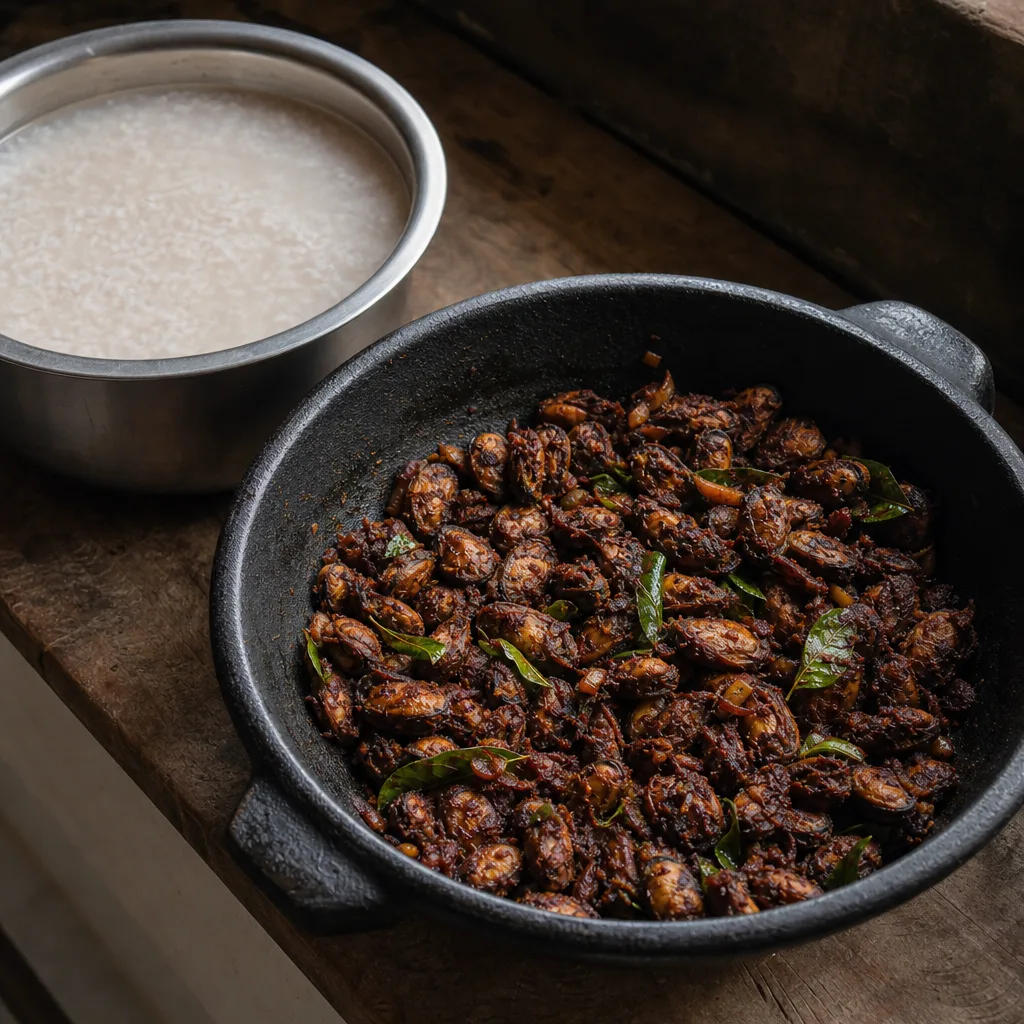
Kallummakkaya Ularthiyathu is a dry-roasted mussel preparation that belongs firmly to the Mappila Muslim kitchens of Malabar, particularly Kozhikode, Kannur and Malappuram. The mussels that come from the rocky shores of this coast are the small, intensely flavoured black-shelled variety. They are cleaned, briefly cooked to open, then tossed with a dark, fragrant masala and roasted in coconut oil until almost every drop of moisture has left the pan. The result is not a gravy, not a stir-fry in the modern sense – it is something close to a dry hash, where the mussel meat has absorbed the spice and the coconut oil has done its work.
In Malabar households this is a side dish eaten with kanji (rice porridge) for breakfast or an early supper, or alongside matta rice and a thin fish curry at lunch. The masala is built on shallots, ginger, garlic, green chilli, and a careful hand with black pepper, fennel and the dried whole spices that Mappila cooking favours. Kudampuli does not appear here; neither does tomato. The sourness, if any, comes from a very small amount of the cooking liquid released by the mussels themselves.
Households differ mainly on the heat level – some cooks add more dried red chilli, others lean on black pepper – and on whether they grate a little fresh coconut into the final roast or keep it entirely without. Both are genuine. This recipe follows the version without coconut, which is the more common one in Kozhikode town kitchens.
Ingredients (serves 4)
Mussels
Masala base
Ground spices
Whole spices for tempering
Fat and seasoning
Method
Open the mussels
Put the scrubbed mussels in a wide pan with 3 tablespoons of water. Cover tightly and cook on high heat for 3 to 4 minutes, shaking the pan once, until the shells open. Discard any that stay shut. Let them cool enough to handle, then pull the meat out of each shell. If any mussel is very large, tear it in half. Reserve about 3 tablespoons of the liquid in the pan; discard the rest and all the shells.
Mix the spices with the mussel meat
In a bowl, combine the mussel meat with the turmeric, red chilli powder, coriander powder, black pepper powder, fennel powder and a little salt. Toss to coat evenly. Let it sit while you prepare the masala base – 10 minutes is enough.
Heat the oil and fry the whole spices
Heat the coconut oil in a heavy iron or steel pan (a cheenachatti or a thick-bottomed kadai) on medium heat. Add the cinnamon, cloves and cardamom. Let them sizzle for 30 seconds until fragrant; do not let them darken.
Cook the shallots until deep golden
Add the sliced shallots and the dried red chillies. Cook on medium heat, stirring regularly, for 10 to 12 minutes until the shallots turn a deep reddish-gold. This is the foundation of the dish's colour and sweetness. If you rush this step the masala will taste raw.
Add ginger, garlic and green chilli
Add the chopped ginger, garlic and slit green chillies. Stir and cook for 3 to 4 minutes until the raw smell of the garlic is gone and the mixture looks dry and cohesive.
Add the curry leaves
Drop in the curry leaves. They will splutter in the oil. Stir for 30 seconds.
Add the spiced mussel meat
Tip the spice-coated mussel meat into the pan. Stir well so every piece is coated in the masala. Add the reserved mussel cooking liquid and salt if needed. Mix again.
Roast on medium-low heat until dry
Reduce the heat to medium-low. Cook, stirring every couple of minutes, for 12 to 15 minutes. The liquid will evaporate completely and the mussels will begin to look glazed and slightly darkened at the edges. The masala should cling to each piece rather than sitting in the pan as a sauce. If the pan looks dry before the mussels are cooked through, add a teaspoon of coconut oil, not water.
Final roast to finish
Raise the heat to medium for the last 2 minutes, stirring constantly, to get a little colour on the mussels and to let the coconut oil separate slightly and coat them. The finished dish is dark, dry and fragrant. Take it off the heat immediately – it overcooks quickly at this stage.
How to serve
Hot kanji (rice porridge) for a Malabar breakfast or supper; or with matta rice and a thin fish curry or rasam at lunch. A wedge of lime on the side is common at the table though not traditional in every household.
Served with: Hot kanji (rice porridge) for a Malabar breakfast or supper; or with matta rice and a thin fish curry or rasam at lunch. A wedge of lime on the side is common at the table though not traditional in every household.
Cook's tips
Choosing the mussels
Use mussels the day you buy them. Tap any open shell before cooking – if it does not close, discard it. The smaller the mussel, the more flavour. Large farmed mussels are watery and take longer to dry out in the pan.
The shallot is not optional
Do not substitute large onions. Shallots (cheriya ulli) break down differently and give this dish its characteristic sweetness and texture. Large onions make it wet and sharp.
Pan choice matters
A cast iron or a heavy steel cheenachatti holds heat evenly and helps the mussels roast rather than steam. A thin non-stick pan will make them stew.
Adding fresh coconut
Some Malabar cooks add 3 tablespoons of freshly grated coconut in the last 3 minutes of roasting, stirring it through until it is lightly toasted. This is a genuine variation that makes the dish slightly richer and nuttier. Do not use desiccated coconut.
Storage
This keeps well for a day at room temperature in a dry vessel, or two days refrigerated. Reheat in the pan with a few drops of coconut oil rather than in a microwave, which makes the mussels rubbery.
Regional variations
Nasrani households in central Kerala make a similar mussel roast but use vinegar and sometimes a touch of coconut milk at the end; Kozhikodan Mappila versions occasionally add a small piece of kalpasi (stone flower) in the masala.
Glossary
- Kallummakkaya കല്ലുമ്മക്കായ
- Black mussels found on the rocky Malabar coast; the name means roughly 'stone fruit'.
- Ularthiyathu ഉലർത്തിയത്
- Dry-roasted preparation; from the Malayalam verb ularthuka, meaning to roast or dry out in a pan.
- Cheriya ulli ചെറിയ ഉള്ളി
- Small shallots; the standard allium in Kerala cooking, not the large purple onion.
- Perumjeerakam പെരുംജീരകം
- Fennel seeds; used in Mappila masalas to add a mild anise warmth.
- Cheenachatti ചീനച്ചട്ടി
- A deep, round-bottomed iron wok used in Kerala kitchens; ideal for roasting and frying.
- Kanji കഞ്ഞി
- Rice porridge, usually made with matta rice; a staple breakfast and light supper in Kerala.
- Karugapatta കറുവപ്പട്ട
- Cinnamon bark; used whole in Mappila tempering for its warm, sweet fragrance.
Two things decide this dish: the shallots must be cooked all the way to a deep golden before the mussels go in, and the final roast must be taken far enough that every trace of liquid is gone and the masala clings dry to the meat. Pull it off the heat too early and it tastes steamed; leave it a minute too long and the mussels toughen. Watch the pan, not the clock.
More Seafood recipes
Meen Thoran
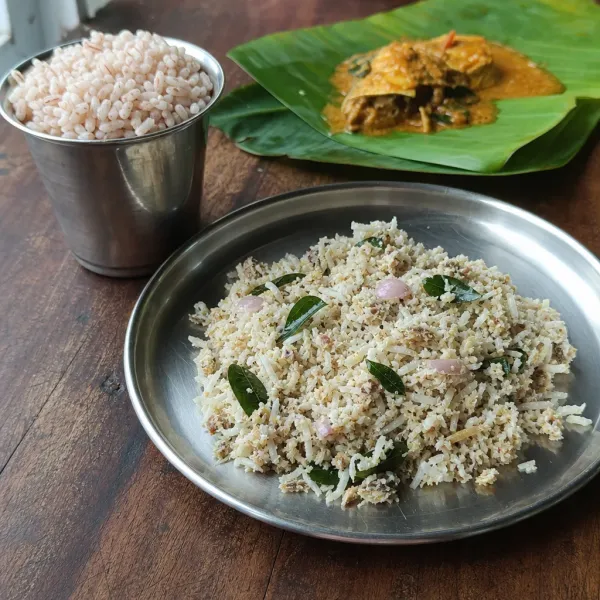
Traditional Nasrani-style meen thoran from Travancore: flaked fish folded with fresh coconut, shallots, and curry leaf in coconut oil. Dry, fragrant…
Koonthal Roast
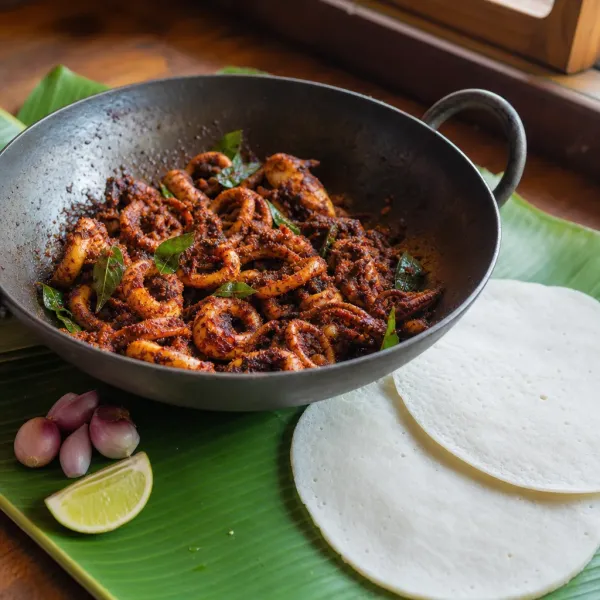
Traditional Mappila koonthal roast from Malabar: squid slow-roasted with shallots, Kashmiri chilli, fennel and kudampuli in coconut oil. Step-by-step…
Chala Curry
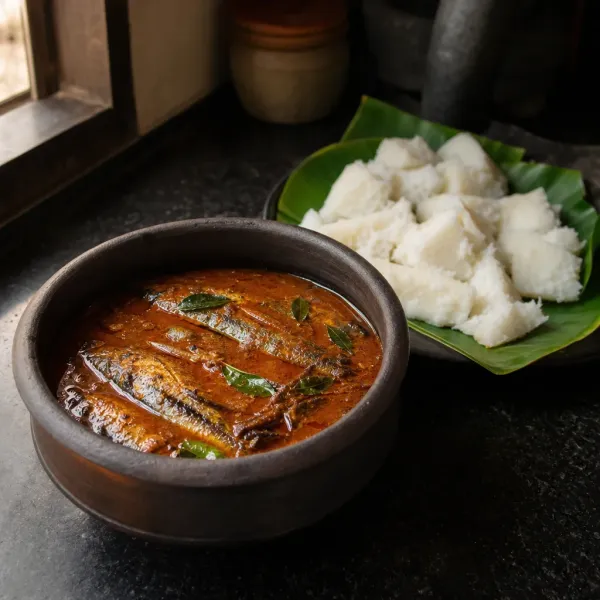
Traditional Kerala sardine curry with kudampuli and fresh coconut paste, cooked in a manchatti. Authentic coastal recipe with kappa or matta rice.
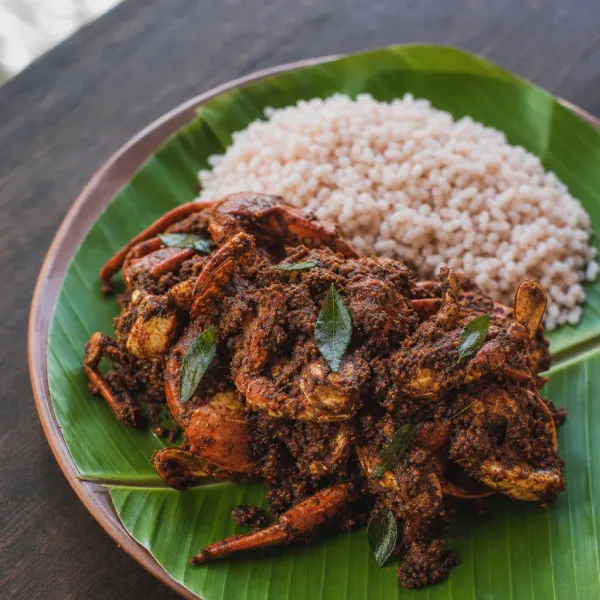
Kerala Crab Roast
Traditional dry Kerala crab roast from a Nasrani Travancore kitchen. Mud crab slow-cooked with shallots, coconut oil, and hand-ground spices until th…
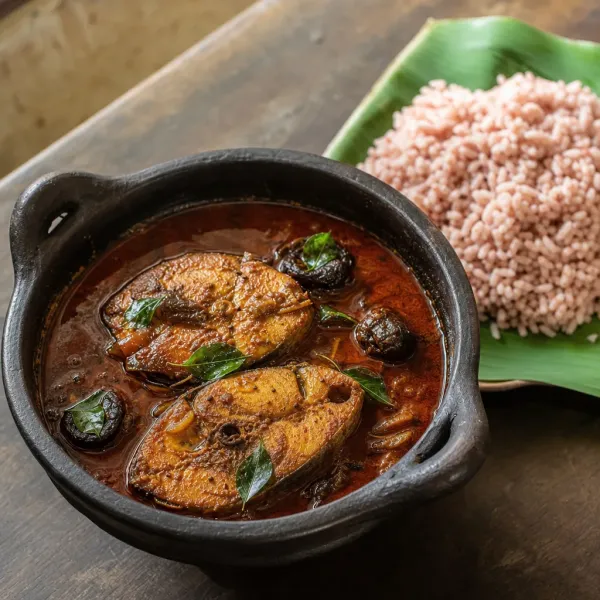
Choora Curry
Traditional Mappila tuna curry from Malabar, made with kudampuli, fresh coconut paste, and shallots in coconut oil. Step-by-step home recipe.
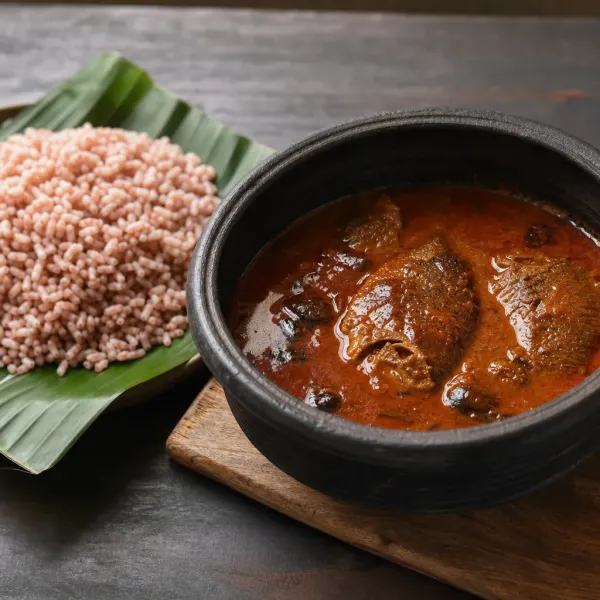
Kottayam Meen Vevichathu
Authentic Kottayam-style red fish curry with kudampuli, no coconut. Traditional Nasrani recipe cooked in a manchatti with Kashmiri chilli and coconut…