

Koonthal Roast Recipe
Malayalam കൂന്തൽ റോസ്റ്റ്Tamil கூந்தல் ரோஸ்ட்Kannada ಕೂಂತಲ್ ರೋಸ್ಟ್Telugu కూంతల్ రోస్ట్
- Prep25 min
- Cook40 min
- Serves4
- DifficultyMedium
- DietNon-vegetarian
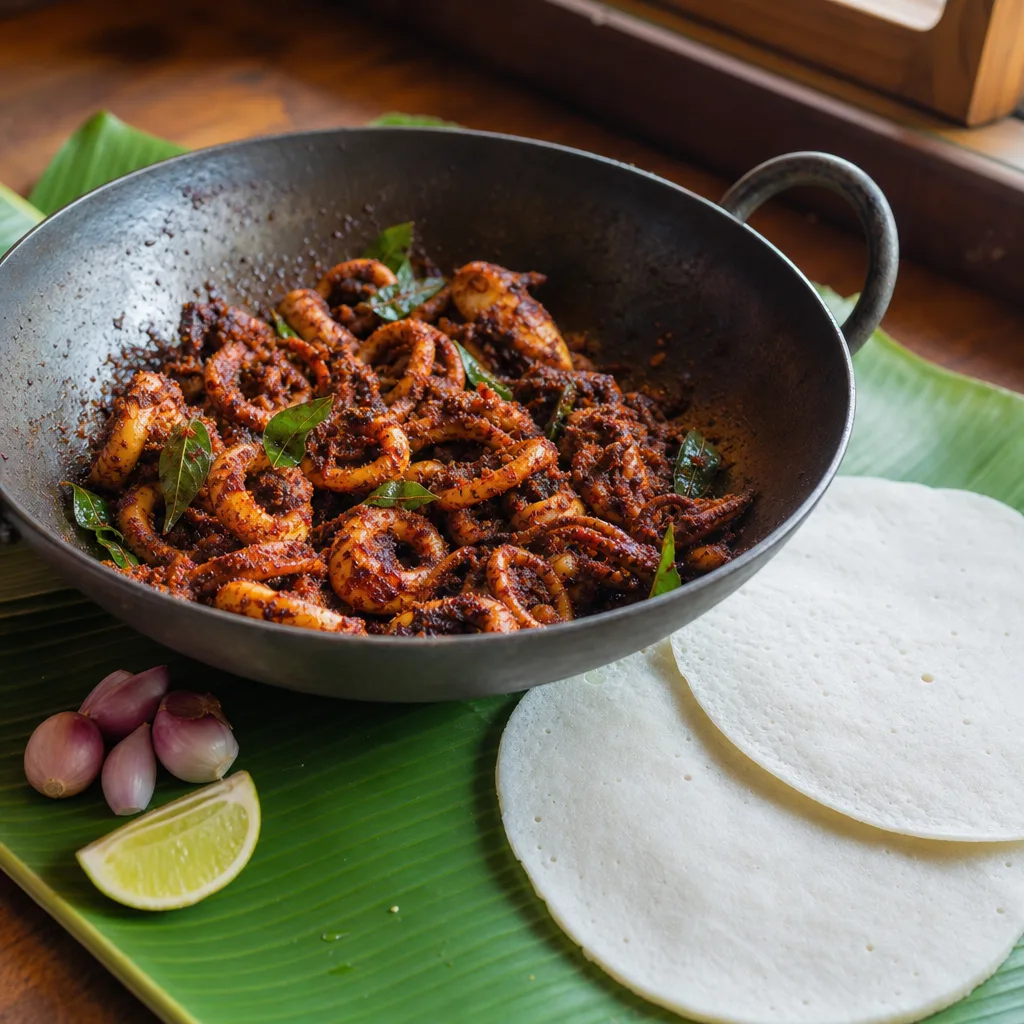
Koonthal roast is a fixture on the Mappila table along the Malabar coast, from Kozhikode down to Malappuram. It is a dry, dark, intensely spiced preparation where the squid is cooked first in its own released water and then roasted slowly until the masala clings to every ring and the whole thing takes on a deep mahogany colour. It is not a curry and it should not have any pooling gravy when it reaches the table.
Mappila cooking draws on Arab trade-route spices, so you will find fennel seed and black pepper working alongside Kashmiri chilli. The heat comes from the chilli but the depth comes from slow caramelisation of shallots in coconut oil, and from giving the squid enough time in the pan to surrender its liquid completely before the roasting begins. Rushing that stage leaves the masala watery and pale.
In most households this is eaten with malabar pathiri or with ghee rice at a feast. On a weekday it will come alongside kanji or ordinary matta rice with a raw shallot and a wedge of lime on the side. Families differ on whether to add a small piece of kudampuli to sharpen the masala; in some Kozhikode homes it is standard, in others the lime at the table does that work instead.
Ingredients (serves 4)
Cleaning and marinating the squid
For the roast masala
Method
Clean the squid
Pull the head and tentacles away from the tube. Remove the transparent quill from inside the tube and discard it. Peel off the purple-pink outer skin under cold running water — it comes away easily in strips. Cut the tubes into rings about 1.5 cm wide. Separate the tentacles from the head just below the eyes and keep them; discard the eyes, beak and ink sac. Rinse everything well.
Marinate briefly
Toss the rings and tentacles with the turmeric and salt. Set aside for 15 minutes while you prepare the masala. Do not marinate longer or the salt will draw out too much moisture too early.
Slow-cook the shallots
Heat the coconut oil in a wide, heavy-bottomed pan or cheenachatti over medium-low heat. Add the sliced shallots and cook, stirring often, for 12 to 15 minutes until they are deep golden and beginning to caramelise at the edges. This is the base of the flavour; do not rush it over high heat or they will burn before they sweeten.
Add aromatics
Add the ginger, garlic and green chillies. Stir and cook for 3 to 4 minutes over medium heat until the raw smell of the ginger and garlic is gone and the mixture looks dry and fragrant.
Bloom the spice powders
Reduce the heat to low. Add the Kashmiri chilli powder, coriander powder, fennel powder and black pepper. Stir continuously for about 1 minute. The masala will turn deep red and begin to stick to the pan. Add a splash of the kudampuli soaking water if it looks like it will scorch, but keep the heat low rather than adding too much liquid.
Add the kudampuli
Add the soaked kudampuli piece and its remaining soaking water. Stir it through the masala. The sourness it gives is gentle and rounds the spices; it should not make the dish taste sour outright.
Add the squid
Increase the heat to medium. Add the marinated squid and curry leaves. Stir well so every piece is coated in the masala. The squid will immediately release a significant amount of water — this is expected. Do not add any extra water.
Cook through in its own liquid
Let the squid cook uncovered in its released liquid, stirring occasionally, for about 8 to 10 minutes. The liquid will reduce and the squid will become opaque and just tender. Test a ring — it should be cooked through but still have a slight bite. If it is already rubbery, the heat was too high.
Roast until dry
Once the liquid has almost entirely evaporated, reduce the heat to medium-low. Continue stirring and cooking for another 8 to 12 minutes, letting the masala coat and cling to the squid and deepen in colour to a dark reddish-brown. The squid rings will look glossy and slightly charred at the edges. This is the roasting stage; do not cover the pan.
Add garam masala and finish
Add the garam masala, stir through, and cook for 1 more minute. Check salt. The finished dish should be nearly dry — no liquid pooling at the bottom of the pan. Remove the kudampuli piece before serving.
Rest and serve
Take the pan off the heat and let it rest for 5 minutes. The masala tightens further as it sits. Serve hot.
How to serve
Malabar pathiri (thin rice flatbread) or ghee rice at a meal; plain matta rice with raw shallots and a wedge of lime on an everyday table; also eaten alongside kanji.
Served with: Malabar pathiri (thin rice flatbread) or ghee rice at a meal; plain matta rice with raw shallots and a wedge of lime on an everyday table; also eaten alongside kanji.
Cook's tips
Mappila garam masala
The Mappila version uses cinnamon, cloves, green cardamom and star anise only — no cumin, no coriander seed, no bay leaf. If you grind it fresh, use roughly equal parts of each. Pan-Indian garam masala changes the character of the dish noticeably.
Squid size matters
Small to medium squid (tubes around 10 to 12 cm before cleaning) give the best result. Very large squid need longer cooking and tend to stay chewy. If you can only get large ones, score the rings lightly before marinating.
Do not cover the pan
Covering traps steam and prevents the roasting from happening. The liquid must evaporate freely. A wide pan helps more than a deep one.
Kudampuli versus lime
Some Kozhikode cooks skip the kudampuli entirely and squeeze lime over the finished dish at the table. Both are traditional. The kudampuli gives a more integrated, mellow sourness; lime is sharper and brighter.
Storage
This keeps well. It is often better the next day after the spices have settled in. Store covered at room temperature for up to 6 hours or refrigerate for up to 2 days. Reheat in the pan with a few drops of coconut oil.
Regional variations
Nasrani (Syrian Christian) households in Kottayam and Ernakulam make a similar dry roast using kudampuli and coconut oil, with a slightly different spice balance and without the fennel; coastal Tamil Nadu fishermen's communities make a version with gingelly oil and more dried chilli.
Glossary
- Koonthal കൂന്തൽ
- Squid in Malayalam; used for both the ingredient and the dish.
- Kudampuli കുടംപുളി
- Malabar tamarind or Garcinia cambogia; a dried souring agent used in Kerala coastal cooking, particularly in fish and seafood dishes; not interchangeable with tamarind.
- Cheriya ulli ചെറിയ ഉള്ളി
- Small shallots; the standard allium in Kerala cooking, sharper and more aromatic than large onions.
- Perumjeerakam പെരുംജീരകം
- Fennel seed; used in Mappila cooking as a signature spice.
- Cheenachatti ചീനച്ചട്ടി
- A wide, round-bottomed iron wok used in Kerala kitchens; ideal for roasting because of its even heat distribution.
- Matta rice മട്ട അരി
- Kerala red parboiled rice; the everyday rice of most Kerala households, with a nutty flavour and firm texture.
Two things decide this dish: the shallots must be cooked until genuinely caramelised before the spices go in, and the squid must be given enough time at the end for every drop of released liquid to cook off and the masala to roast onto the surface. Pull it off the heat too soon and you have a wet, pale curry. Stay with it through that final roasting stage and the colour, the clinging texture and the depth of flavour all arrive together.
More Seafood recipes
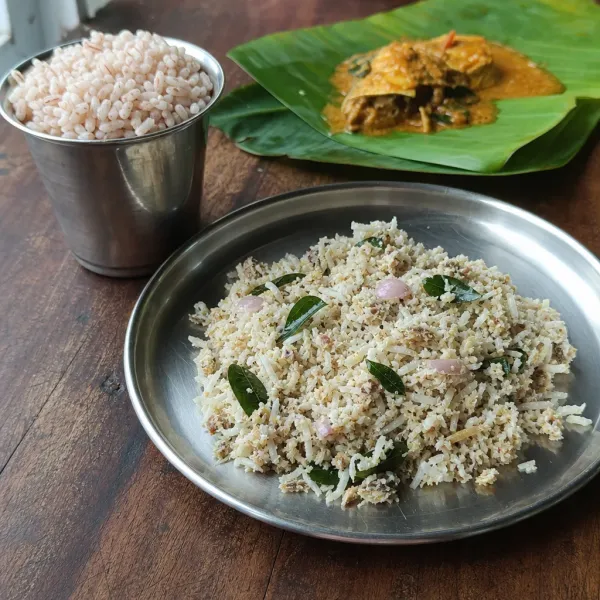
Meen Thoran
Traditional Nasrani-style meen thoran from Travancore: flaked fish folded with fresh coconut, shallots, and curry leaf in coconut oil. Dry, fragrant…
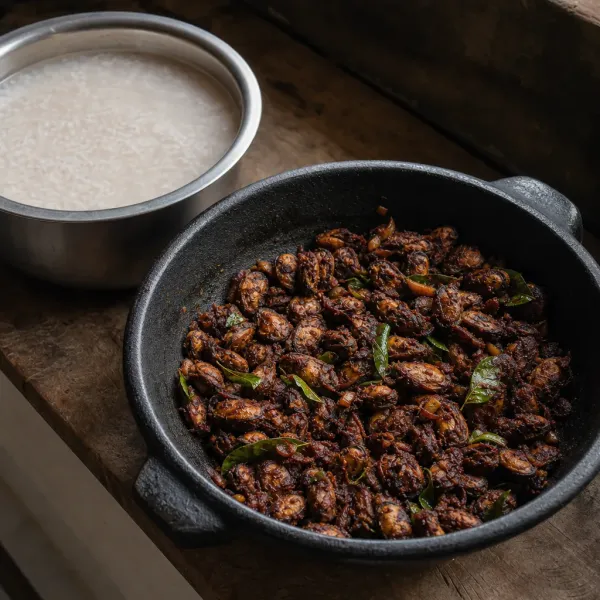
Kallummakkaya Ularthiyathu
Traditional Mappila mussel dry roast from Malabar – shallots, coconut oil, whole spices and fresh mussels roasted until completely dry. Step-by-step…
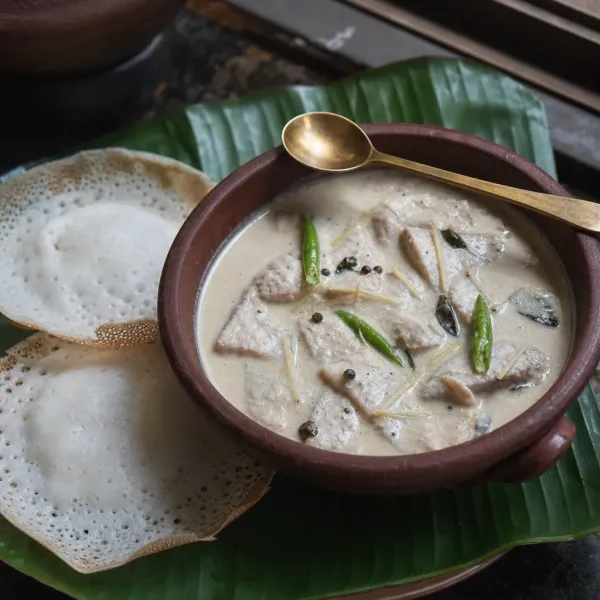
Fish Mappas
Authentic Syrian Christian fish mappas from Travancore: firm white fish in a smooth coconut milk gravy with whole spices and a touch of vinegar. Trad…
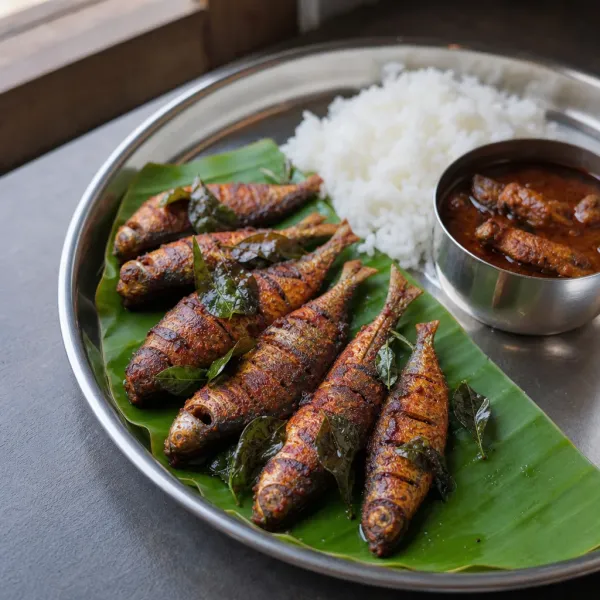
Mathi Fry (Kerala Sardine Tawa Fry)
Traditional Kerala mathi fry: sardines marinated in Kashmiri chilli, kudampuli, and coconut oil, fried on a cast-iron tawa until deeply crusted.
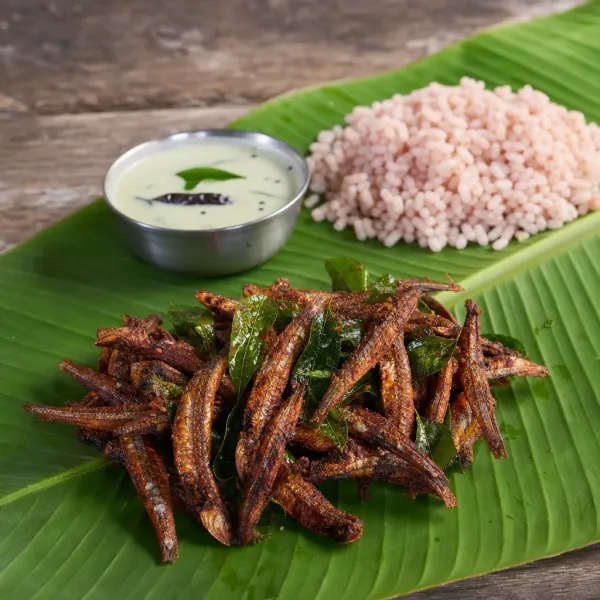
Netholi Fry (Kerala Anchovy Fry)
Traditional Kerala netholi fry with red chilli, turmeric, black pepper, and coconut oil. Step-by-step method for perfectly crisp anchovies every time.
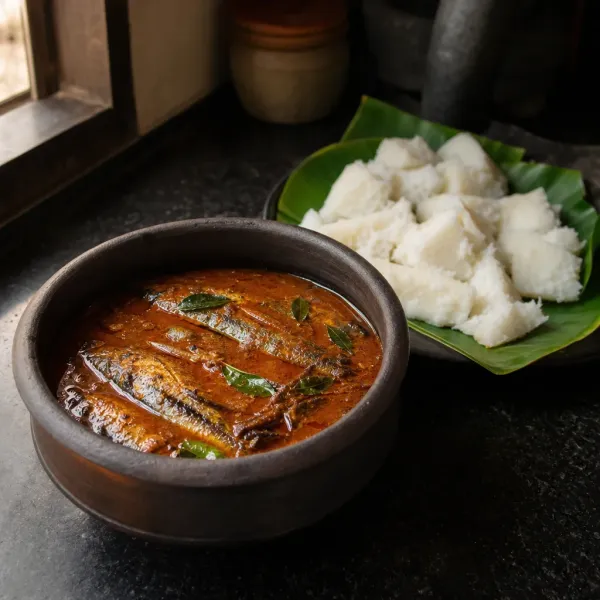
Chala Curry
Traditional Kerala sardine curry with kudampuli and fresh coconut paste, cooked in a manchatti. Authentic coastal recipe with kappa or matta rice.