

Meen Thoran Recipe
Malayalam മീൻ തോരൻTamil மீன் தோரன்Kannada ಮೀನ್ ತೋರನ್Telugu మీన్ తోరన్
- Prep20 min
- Cook25 min
- Serves4
- DifficultyEasy
- DietNon-vegetarian
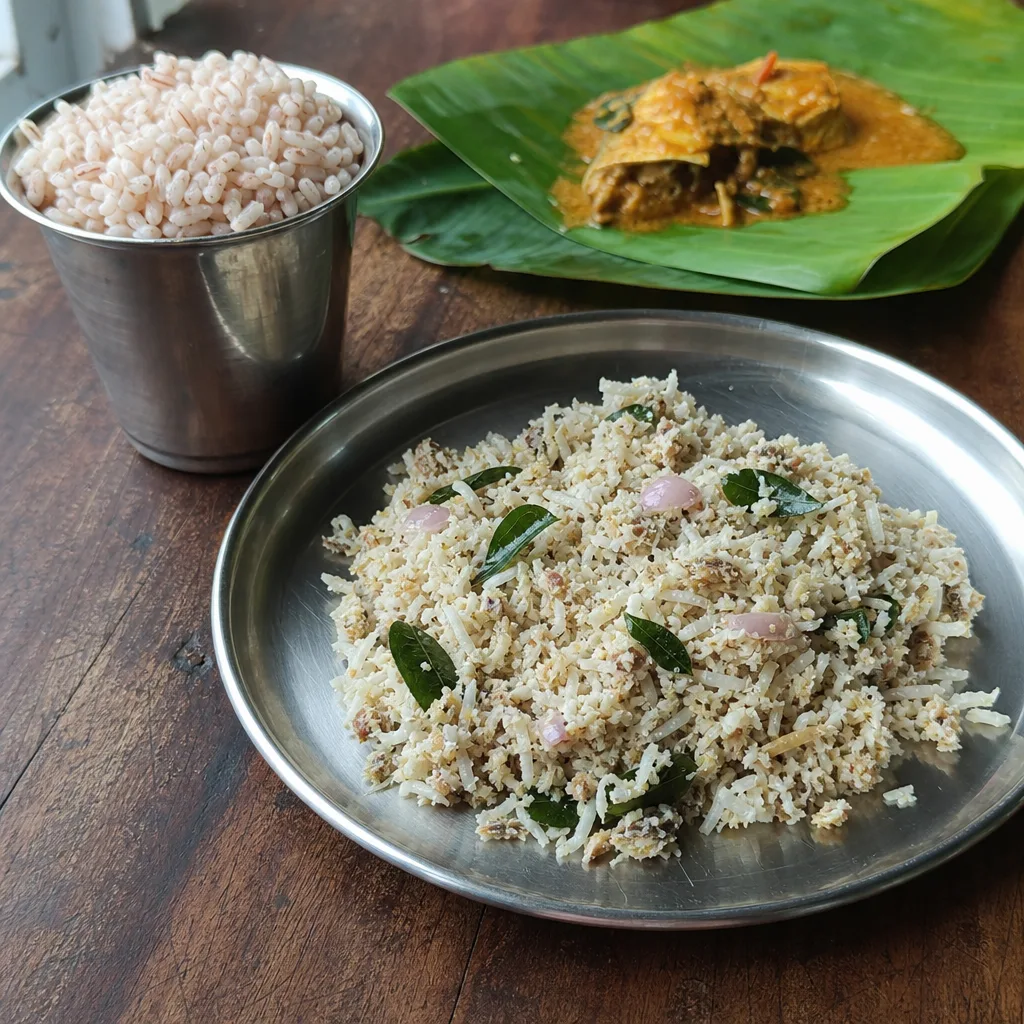
This is a dry side dish, the kind that sits at the corner of a Kerala sadya plate or appears at an everyday rice meal when there is leftover cooked fish. The fish is steamed or poached first, then flaked clean of bones, and finally tossed in a coconut oil tempering with freshly grated coconut, shallots, green chilli, and curry leaf. The result is pale, faintly moist from the coconut, and fragrant with curry leaf.
In Nasrani homes in central Travancore, karimeen (pearl spot) is the prestige fish for this dish, but sardines, mackerel, or any firm-fleshed fish that flakes cleanly are used on ordinary days. The coconut is always grated fresh from the half-shell. The dish is dry enough that it can be pressed into a small mound and eaten with rice and fingers.
Households differ on two things: some add a pinch of turmeric to the coconut, others do not; some finish with a squeeze of lime, others find that unnecessary if the fish is fresh. Both are honest versions. What does not vary is the coconut oil and the fresh coconut.
Ingredients (serves 4)
For cooking the fish
For the thoran
Method
Cook the fish
Place the fish in a wide pan in a single layer. Add just enough water to come halfway up the pieces — roughly 150 ml. Add the turmeric and salt. Bring to a gentle simmer over medium heat, cover, and cook for 8 to 10 minutes until the fish is just cooked through and the flesh turns opaque. Do not boil hard or the flesh will tighten and shred unevenly.
Cool and flake
Lift the fish out and set it aside until cool enough to handle. Discard the cooking water. Break the fish apart with your fingers, removing every bone and all skin. The flakes should be roughly 1 to 2 cm — not dust, not large chunks. Set aside.
Heat the oil and pop the mustard
Heat the coconut oil in a wide iron or heavy pan over medium heat. Add the mustard seeds and wait. When they splutter and the sound dies down, the oil is ready for the next step. If they sit silent, the oil is not hot enough; if they burn before you can add anything else, the oil is too hot — reduce the flame.
Add the dried chillies and shallots
Drop in the broken dried red chillies and let them darken for about 15 seconds. Add the sliced shallots and the slit green chillies. Stir and cook over medium heat for 4 to 5 minutes until the shallots are soft and just beginning to colour at the edges. Do not let them brown deeply or the flavour will overpower the fish.
Add curry leaves and turmeric
Add the curry leaves — stand back, they will spit in the oil. Stir once. Add the turmeric powder and stir for 30 seconds so the raw smell cooks off.
Add the coconut
Add the freshly grated coconut and stir it through the shallot mixture. Cook for 2 minutes over medium heat, stirring, until the coconut is warm and fragrant but still pale. It should not brown.
Fold in the fish
Add the flaked fish and fold it gently through the coconut mixture using a wide spoon or your fingers if the pan is off the heat. You want the coconut and fish evenly combined without breaking the flakes to a paste. Taste for salt and adjust.
Finish and serve
Cook together for 2 more minutes over low heat, stirring gently once or twice, until everything is heated through and the mixture looks dry and cohesive. It should hold a loose mound when pressed. Serve immediately.
How to serve
Hot matta rice, a thin fish curry or rasam, and a vegetable mezhukkupuratti. A wedge of lime is sometimes placed on the side.
Served with: Hot matta rice, a thin fish curry or rasam, and a vegetable mezhukkupuratti. A wedge of lime is sometimes placed on the side.
Cook's tips
Choosing the fish
Karimeen (pearl spot) gives the cleanest flake and the mildest flavour. Sardines are excellent and very traditional, but pick through the bones carefully — there are many. Mackerel works well but has a stronger flavour that some find overpowering against the coconut. Avoid very delicate fish like sole that will dissolve when folded.
Grating the coconut
Desiccated or frozen coconut is not a substitute here. The moisture in freshly grated coconut is part of what binds the dish. If you must use frozen grated coconut, thaw it fully and drain any excess water before adding.
Keeping it dry
Thoran must be dry, not wet. If your fish releases a lot of water when folded in, raise the heat briefly and stir until the extra moisture evaporates. A wet thoran is the most common mistake.
Leftover fish
This is a sensible use of fish left over from a curry the previous day. Rinse off the curry masala, pat dry, and proceed from the flaking step. The flavour will be slightly different but entirely good.
Regional variations
Mappila households in Malabar make a comparable flaked fish and coconut stir-fry with more dried red chilli and sometimes a little fennel; Tamil coastal households make a similar preparation called meen poriyal with gingelly oil and curry leaf.
Glossary
- Thoran തോരൻ
- A Kerala dry stir-fry, vegetable or fish, always finished with freshly grated coconut.
- Karimeen കരിമീൻ
- Pearl spot fish (Etroplus suratensis), native to Kerala backwaters; the state fish of Kerala.
- Cheriya ulli ചെറിയ ഉള്ളി
- Small red shallots used throughout Kerala cooking; sweeter and more pungent than large onions.
- Matta rice മട്ട അരി
- Red parboiled rice from Palakkad, the everyday rice of Kerala households.
- Mezhukkupuratti മെഴുക്കുപുരട്ടി
- A Kerala stir-fry of vegetables cooked in coconut oil with minimal spice; drier than a thoran, without coconut.
- Kudampuli കുടംപുളി
- Gamboge or Malabar tamarind (Garcinia cambogia), the souring agent used in Kerala fish curries; not used in this dish but often confused with tamarind by outsiders.
Two things decide whether this works: the coconut must be grated fresh on the day, and the finished dish must be genuinely dry. Get those right and the rest follows.
More Seafood recipes
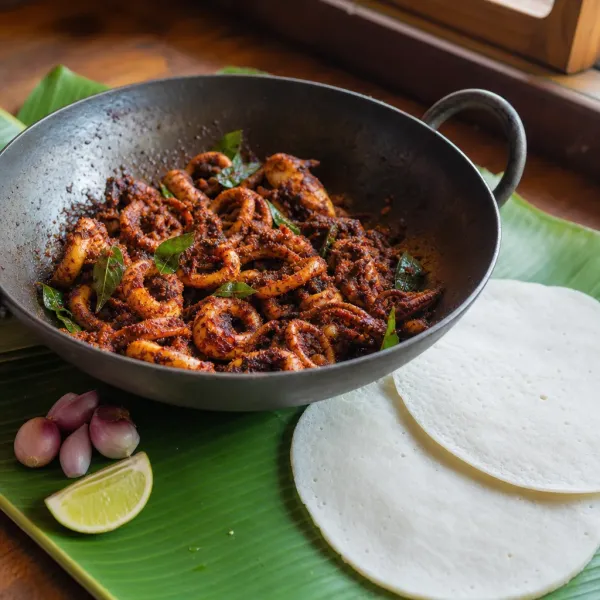
Koonthal Roast
Traditional Mappila koonthal roast from Malabar: squid slow-roasted with shallots, Kashmiri chilli, fennel and kudampuli in coconut oil. Step-by-step…
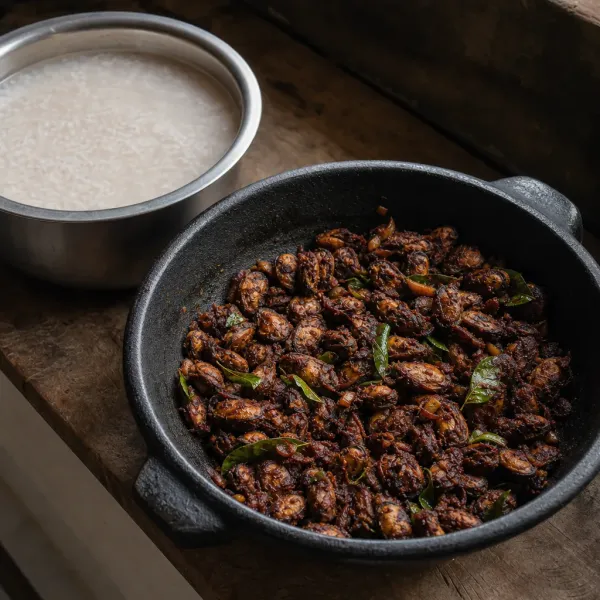
Kallummakkaya Ularthiyathu
Traditional Mappila mussel dry roast from Malabar – shallots, coconut oil, whole spices and fresh mussels roasted until completely dry. Step-by-step…
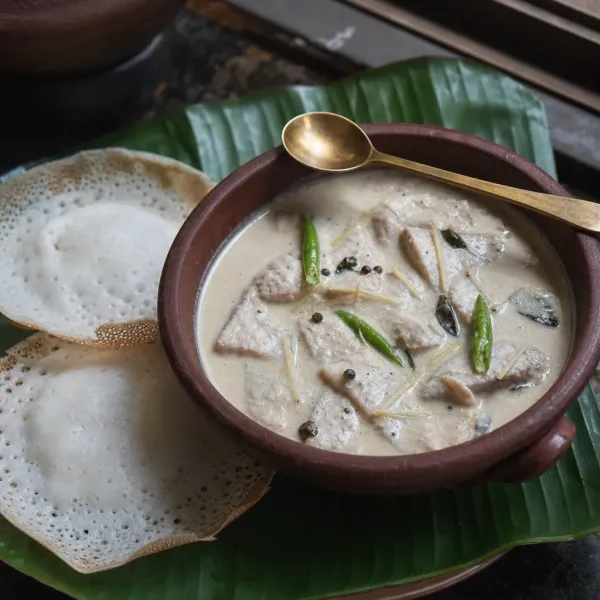
Fish Mappas
Authentic Syrian Christian fish mappas from Travancore: firm white fish in a smooth coconut milk gravy with whole spices and a touch of vinegar. Trad…
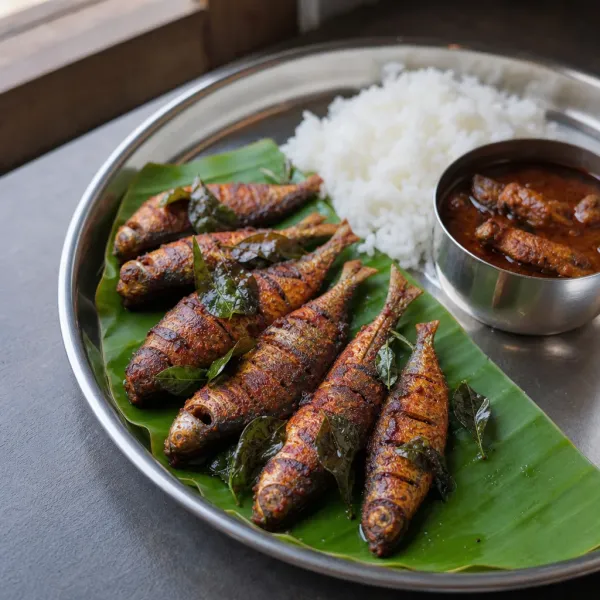
Mathi Fry (Kerala Sardine Tawa Fry)
Traditional Kerala mathi fry: sardines marinated in Kashmiri chilli, kudampuli, and coconut oil, fried on a cast-iron tawa until deeply crusted.
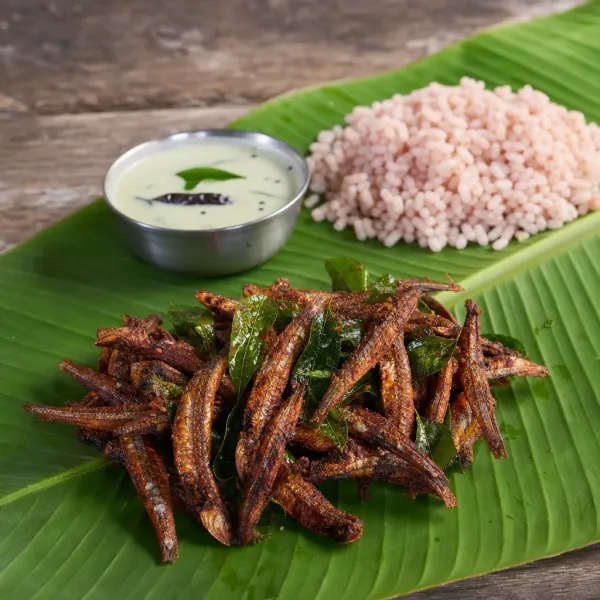
Netholi Fry (Kerala Anchovy Fry)
Traditional Kerala netholi fry with red chilli, turmeric, black pepper, and coconut oil. Step-by-step method for perfectly crisp anchovies every time.
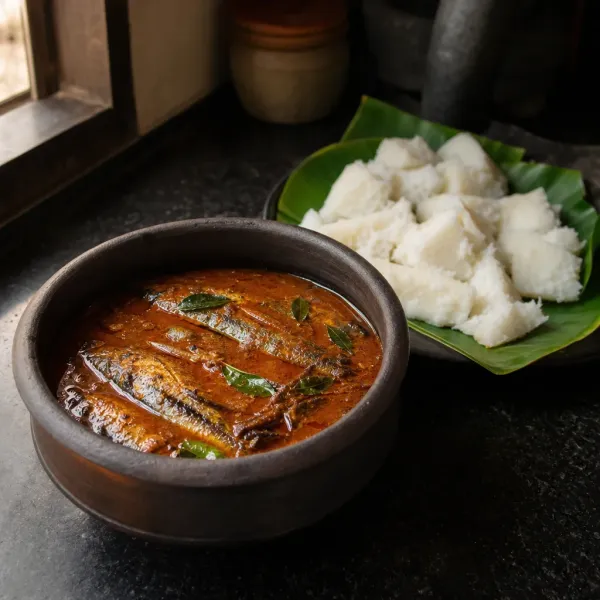
Chala Curry
Traditional Kerala sardine curry with kudampuli and fresh coconut paste, cooked in a manchatti. Authentic coastal recipe with kappa or matta rice.