

Chala Curry Recipe
Malayalam ചാള കറിTamil சாளை கறிKannada ಸಾರ್ಡಿನ್ ಕರಿTelugu సార్డిన్ కూర
- Prep20 min
- Cook30 min
- Serves4
- DifficultyEasy
- DietNon-vegetarian
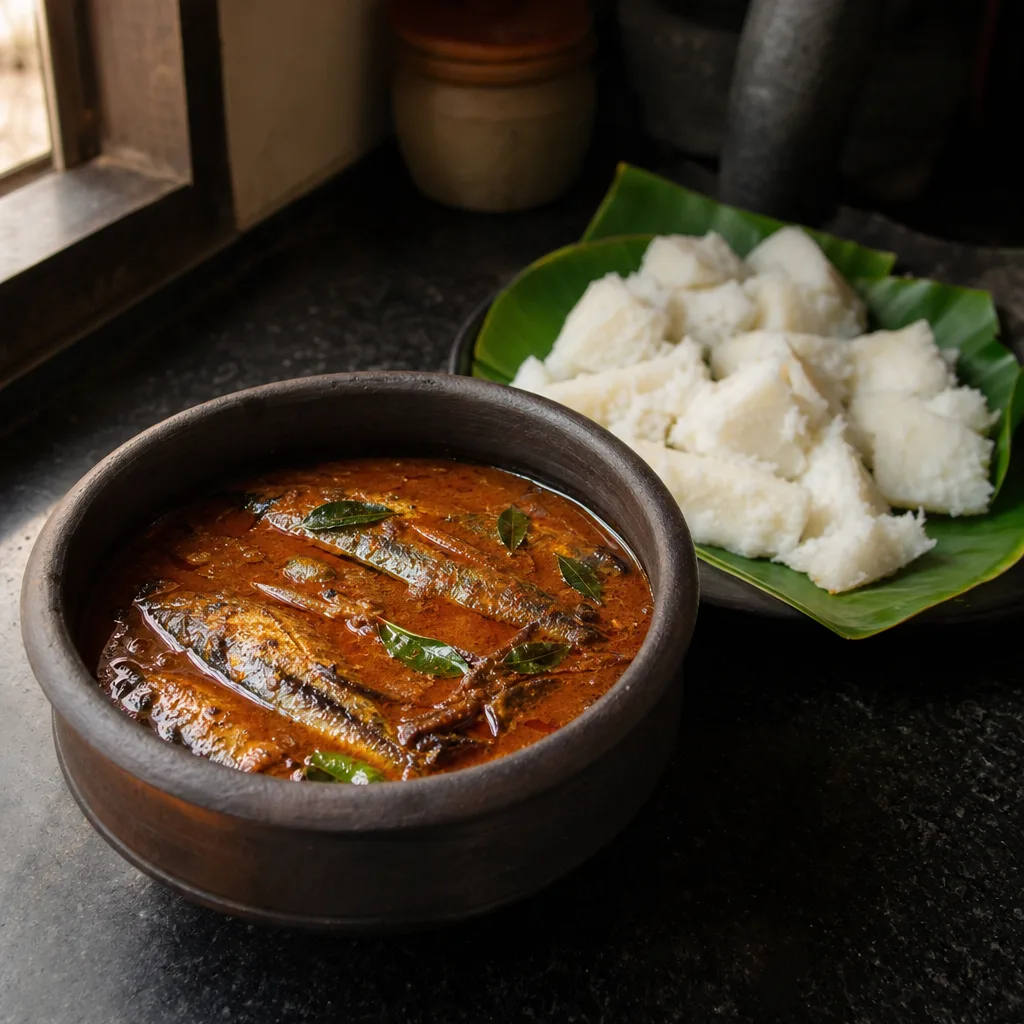
Chala curry is the everyday fish curry of Kerala's coastal households. Sardines are cheap, oily, and deeply flavoured, and they hold together in a long simmer better than most fish. The gravy is built on kudampuli — Malabar tamarind, the dried black rind that gives Kerala fish curries their particular dark, sour depth — and a freshly ground coconut paste that thickens the pot without making it heavy. Coconut oil goes in at the end, raw, so its fragrance stays sharp.
The curry is cooked in a manchatti wherever one is available. Clay keeps the heat even and the sardines do not break apart the way they can in a steel vessel. Most families cook it the evening before and eat it the next morning with kappa or rice — the flavour deepens overnight and the fish absorbs the gravy fully.
Household variation is modest. Some cooks add a green chilli or two into the grinding coconut; others keep the heat entirely in the whole dried chillies that go into the oil. The quantity of kudampuli is personal: a little more and the curry is sourer and keeps longer in warm weather, which is why fishing families traditionally added more.
Ingredients (serves 4)
For the fish
For the ground paste
For the base
For finishing
Method
Soak the kudampuli
Put the kudampuli pieces in a small bowl with 4 tablespoons of warm water. Leave them for 10 minutes while you prepare everything else. The water will turn a pale amber and smell sharply sour. Keep the soaking water — it all goes into the pot.
Grind the coconut paste
Put the grated coconut, dried red chillies, coriander seeds, peppercorns and turmeric into a grinder with 4 tablespoons of water. Grind to a smooth, thick paste. It should have no gritty coconut texture when you rub a little between your fingers. Set aside.
Build the base in the pot
Heat 1 tablespoon of coconut oil in a manchatti or a wide, heavy-bottomed vessel over medium heat. Add the sliced shallots and cook for 4 to 5 minutes, stirring often, until they are soft and just beginning to turn translucent at the edges. Add the ginger matchsticks, slit green chillies and curry leaves and cook for another 2 minutes.
Add the ground paste
Tip the coconut paste into the pot and stir it through the shallot mixture. Cook on medium-low heat for 3 to 4 minutes, stirring constantly so the paste does not catch on the bottom. You are looking for the raw smell of coriander to fade and the paste to deepen slightly in colour.
Add water and kudampuli
Pour in 250 ml of water and the kudampuli along with all its soaking liquid. Stir well to bring the paste and water together into a smooth gravy. Taste and add salt now. Bring to a gentle boil over medium heat.
Add the sardines
Slide the sardines into the simmering gravy in a single layer as far as possible. Do not stir — sardines break apart easily. Gently spoon some gravy over the fish instead. The gravy should come about halfway up the fish; add a little more water if needed.
Simmer until the fish is cooked through
Cook uncovered on medium-low heat for 12 to 15 minutes. Gently shake the pot once or twice rather than stirring. The sardines are done when the flesh is opaque all the way through and the gravy has thickened and turned a deep reddish-brown. Do not overcook or the fish will fall apart entirely.
Finish with raw coconut oil and seasoned oil
Turn off the heat. In a small pan, heat the remaining 2 tablespoons of coconut oil until it shimmers, add the dried red chillies and the sprig of curry leaves and let them crackle for 20 seconds. Pour this seasoned oil over the curry. Then drizzle the remaining coconut oil directly into the pot, raw. Do not stir — let it sit on top. Cover the pot and leave it for 5 minutes before serving.
How to serve
Kappa (boiled tapioca / cassava) is the most traditional pairing on the coast. Also eaten with matta rice or plain cooked rice. Some households serve it with pathiri (rice flatbread) in Malabar.
Served with: Kappa (boiled tapioca / cassava) is the most traditional pairing on the coast. Also eaten with matta rice or plain cooked rice. Some households serve it with pathiri (rice flatbread) in Malabar.
Cook's tips
The manchatti matters
A clay pot distributes heat gently and keeps the sardines from breaking up. If you use a steel or aluminium pan, keep the heat lower than you think you need and resist stirring.
Kudampuli quantity and keeping
Three pieces gives a pleasantly sour curry. Add a fourth piece if you want it to keep for two days in warm weather — the extra acid acts as a preservative. This curry genuinely improves overnight; the fish absorbs the gravy and the sourness mellows.
Fresh coconut cannot be replaced here
Desiccated coconut gives a grainy, sweet paste that does not behave the same way. If fresh coconut is unavailable, frozen grated coconut thawed fully is an acceptable household substitute.
Do not rush the paste cooking
If you add the water before the raw smell of the coriander has cooked out of the paste, the finished curry will taste flat and slightly bitter. Give the paste its full 3 to 4 minutes in the dry pot.
Cleaning the sardines
Scale them under running water, slit the belly and remove the gut cleanly. Rinse the cavity. A fishy or bitter curry is almost always from inadequately cleaned fish, not from the spices.
Regional variations
Mappila households in Malabar use more black pepper and sometimes add tomato; Travancore Christian kitchens often cook it in a manchatti (clay pot) and may add a small piece of drumstick; some northern Kerala households skip coconut entirely and rely on kudampuli alone for body.
Glossary
- Kudampuli കുടംപുളി
- Dried rind of Garcinia cambogia, also called Malabar tamarind or fish tamarind; the souring agent specific to Kerala fish curries.
- Chala ചാള
- Indian oil sardine (Sardinella longiceps); the most commonly eaten fish along the Kerala coast.
- Manchatti മൺചട്ടി
- Unglazed earthenware cooking pot used throughout Kerala; distributes heat gently and imparts a faint mineral quality to curries cooked in it.
- Chuvannulli ചുവന്നുള്ളി
- Small red shallots; the standard allium in Kerala cooking, sharper and more aromatic than large onions.
- Kappa കപ്പ
- Boiled cassava (tapioca); the classic coastal accompaniment to sardine curry.
Two things decide this curry: the quality of the kudampuli and the patience to cook the coconut paste until the raw spice smell is gone before adding any liquid. Get those right and the rest follows naturally.
More Seafood recipes
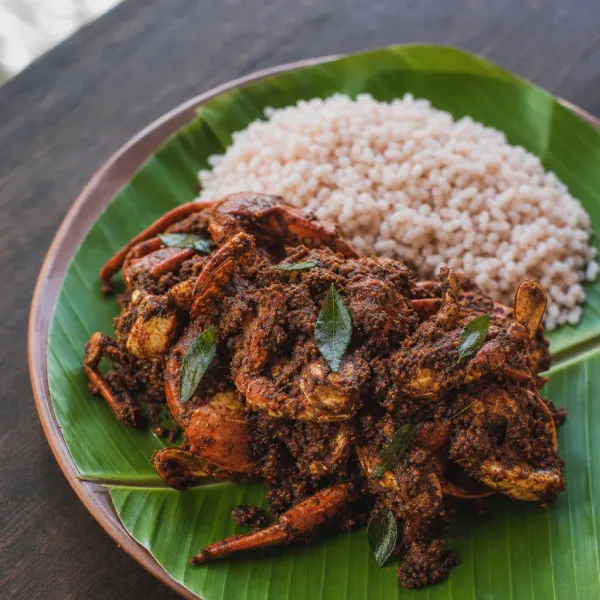
Kerala Crab Roast
Traditional dry Kerala crab roast from a Nasrani Travancore kitchen. Mud crab slow-cooked with shallots, coconut oil, and hand-ground spices until th…
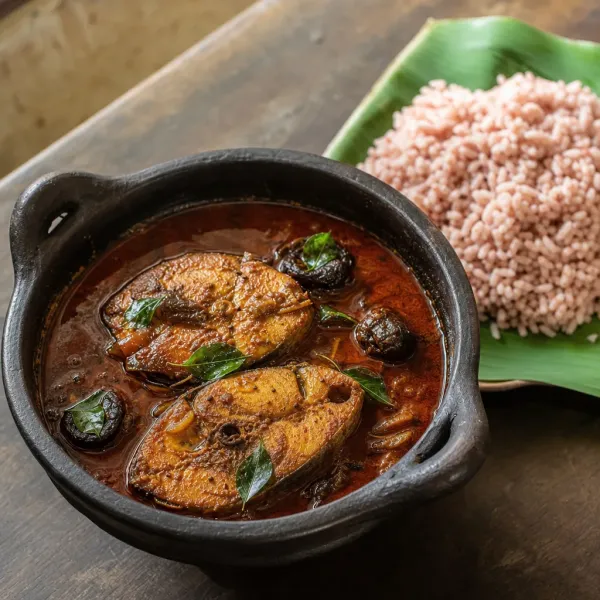
Choora Curry
Traditional Mappila tuna curry from Malabar, made with kudampuli, fresh coconut paste, and shallots in coconut oil. Step-by-step home recipe.
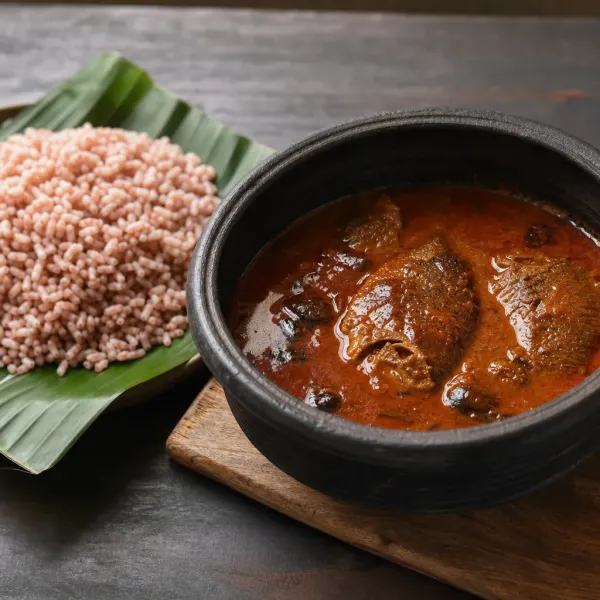
Kottayam Meen Vevichathu
Authentic Kottayam-style red fish curry with kudampuli, no coconut. Traditional Nasrani recipe cooked in a manchatti with Kashmiri chilli and coconut…
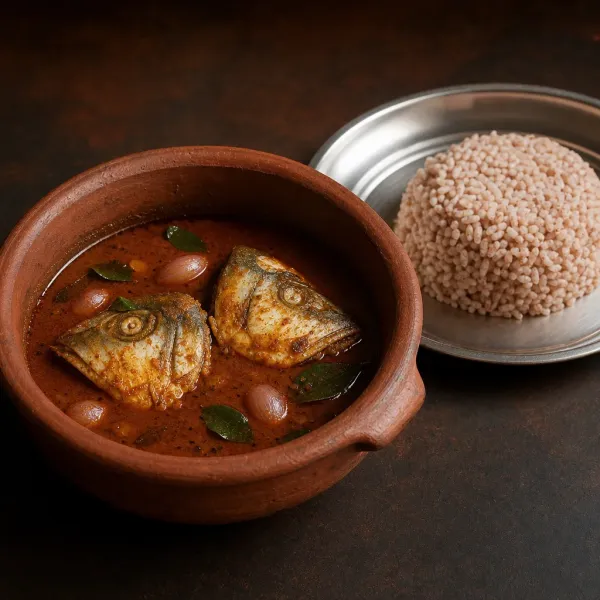
Meen Thalai Kuzhambu
Traditional Chettinad fish head curry with kalpasi, marathi mokku, gingelly oil and tamarind. Household recipe from the Chettiar kitchen of Tamil Nad…
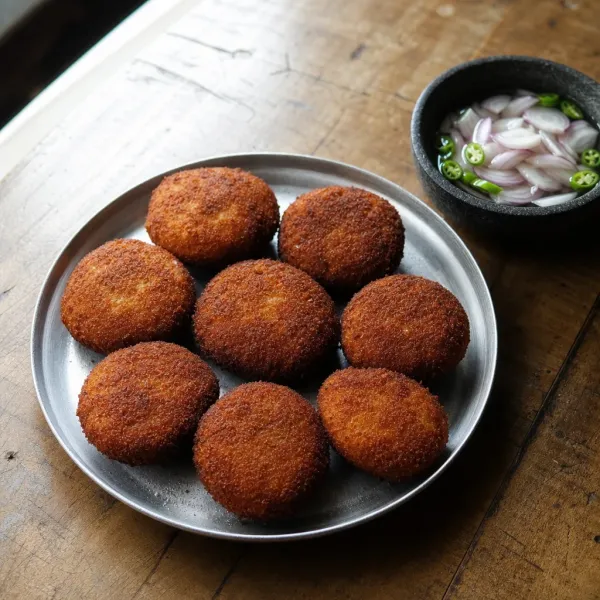
Kerala Nasrani Fish Cutlet
Traditional Kerala Nasrani fish cutlet with seer fish, shallots and coconut oil. Step-by-step method for a crisp, golden crust that holds.
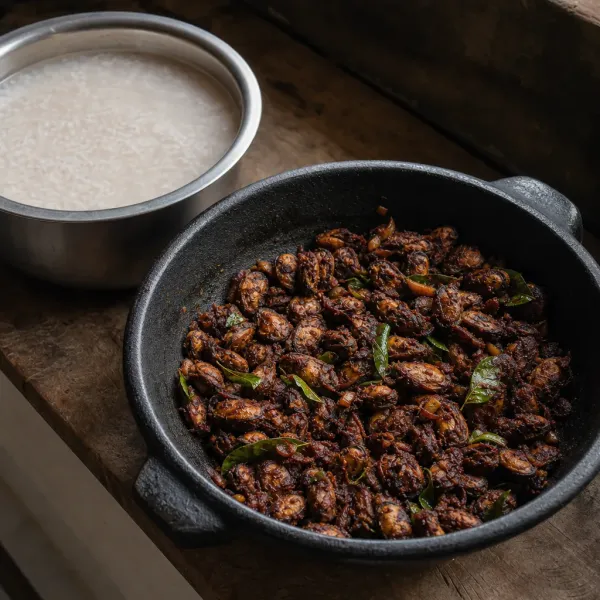
Kallummakkaya Ularthiyathu
Traditional Mappila mussel dry roast from Malabar – shallots, coconut oil, whole spices and fresh mussels roasted until completely dry. Step-by-step…