

Meen Thalai Kuzhambu Recipe
Malayalam മീൻ തല കറിTamil மீன் தலை குழம்புKannada ಮೀನು ತಲೆ ಕರಿTelugu చేప తల కూర
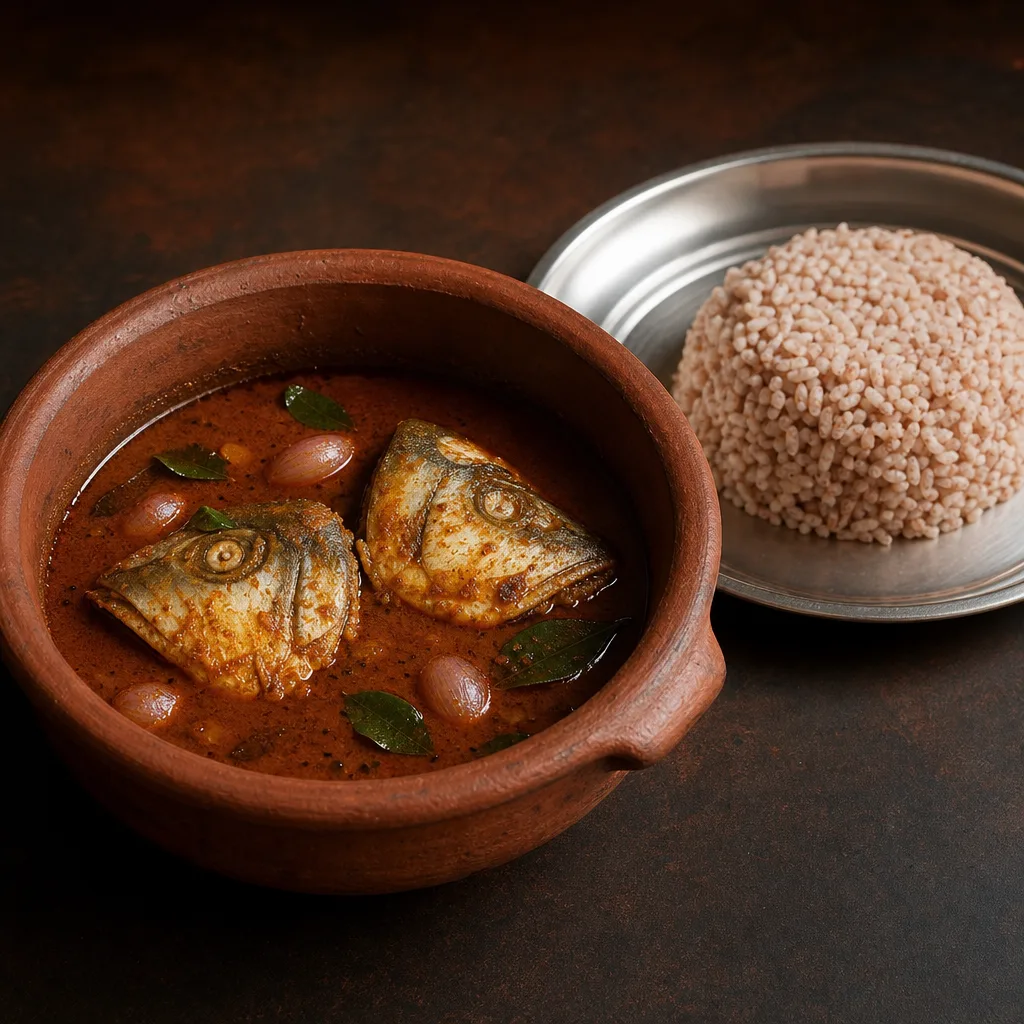
- Prep25 min
- Cook45 min
- Serves4
- DifficultyMedium
- DietNon-vegetarian
In a Chettiar household, the fish head is not a lesser cut. It is sought out specifically because the cheeks, the collar meat and the gelatinous tissue around the bone absorb the kuzhambu and give it a body that fillets never can. Vanjaram (seer fish) and vilanai (red snapper) heads are the most common choices. The head is split in two before cooking so the spiced gravy can reach every surface.
The kuzhambu here is built on gingelly oil, whole kalpasi (stone flower) and marathi mokku (dried flower pods), which are the aromatics that mark Chettinad cooking apart from anything else in Tamil Nadu. Tamarind provides the sour note; there is no tomato in the traditional version. The gravy is thin enough to pool around rice but deeply flavoured from a long simmer.
Households differ on the amount of dried red chilli and on whether small shallots are ground into the masala or left whole for the tempering. Some cooks add a small piece of pandan leaf with the tempering; others do not. The version here follows the more common practice of grinding the shallots into the masala paste.
Ingredients (serves 4)
Main
Whole spices for tempering
Ground masala paste
Method
Dry-roast and grind the masala
In a dry heavy pan over medium heat, roast the coriander seeds, dried red chillies, black peppercorns and fennel seeds separately, each until fragrant and a shade darker, about 1 to 2 minutes per spice. Do not rush this on high heat or the coriander will taste bitter. Cool completely, then grind together with the shallots and garlic for the paste, adding just enough water to bring it together into a smooth, thick paste. Set aside.
Extract the tamarind water
Soak the tamarind in 300 ml warm water for 15 minutes, squeeze thoroughly with your fingers, and strain through a sieve, pressing the pulp hard. Discard the fibres and seeds. You should have about 250 ml of tamarind water. Set aside.
Marinate the fish head
Rub the split fish head pieces with the turmeric powder and a little salt. Let them sit while you prepare the kuzhambu, at least 10 minutes. This firms the surface slightly and stops the flesh from breaking apart too early in the gravy.
Temper the whole spices
Heat the gingelly oil in a wide, heavy-bottomed vessel, ideally a manchatti (terracotta pot) or a thick-based kadai, over medium heat. When the oil shimmers, add the kalpasi and marathi mokku first. They will sizzle and release a distinctive earthy fragrance within 30 seconds. Add the broken dried red chillies, fennel seeds, black peppercorns and cumin seeds, and let them splutter for another 30 seconds.
Fry the shallots and garlic
Add the whole shallots and whole garlic cloves to the tempered oil. Fry over medium heat, stirring often, until the shallots are translucent and beginning to colour at the edges, about 5 to 6 minutes. Do not let them brown deeply or the kuzhambu will taste sharp rather than rounded.
Cook the masala paste
Add the ground masala paste to the pan and stir it into the oil and shallots. Cook over medium-low heat, stirring frequently, until the raw smell of the chillies and coriander is completely gone and the paste has darkened and begun to separate from the oil at the edges, about 8 to 10 minutes. If it sticks, add a small splash of water and scrape the base.
Add tamarind water and bring to a simmer
Pour in the tamarind water and stir well to combine with the masala. Add another 200 ml of plain water to give the kuzhambu enough body to cook the fish without drying out. Taste and add salt. Bring to a steady simmer over medium heat and cook for 8 minutes, letting the raw tamarind taste cook out. The gravy will deepen in colour and smell less sharp.
Add the fish head and simmer gently
Slide the marinated fish head pieces into the simmering kuzhambu. Spoon the gravy over the cut surfaces. Do not stir vigorously from this point; instead, tilt and swirl the vessel. Simmer over low to medium-low heat for 15 to 18 minutes. The flesh at the cheek and collar will turn opaque and begin to pull away from the bone when it is done. The eyes will turn white and set.
Add the curry leaves and rest
Tear the curry leaf sprigs directly into the kuzhambu in the last 2 minutes of cooking. Turn off the heat and let the curry rest, covered, for at least 10 minutes before serving. The gelatin from the fish head will thicken the gravy slightly as it rests, and the whole spices will continue to perfume it.
How to serve
Steamed matta rice or plain boiled raw rice (pacharisi sadam). Some households serve it with idli the next morning when the kuzhambu has deepened overnight.
Served with: Steamed matta rice or plain boiled raw rice (pacharisi sadam). Some households serve it with idli the next morning when the kuzhambu has deepened overnight.
Cook's tips
Choosing the fish head
A head that weighs 700 to 900 g is the right size for four people. Smaller heads give very little eating; larger ones may not fit in a standard kadai. Vanjaram is the prestige choice in Chettinad, but a good red snapper head works excellently.
Kalpasi and marathi mokku
These two aromatics are what make this kuzhambu taste specifically Chettinad. They are available at any good Tamil spice shop. If you genuinely cannot find them, the dish will still be a fish head kuzhambu, but it will not be the Chettinad version. Do not substitute.
Gingelly oil
Use cold-pressed untoasted gingelly oil (not the dark toasted sesame oil used in East Asian cooking). The flavour is milder and it is the correct fat for this dish. Coconut oil changes the character completely.
The kuzhambu next day
Like most tamarind-based gravies, this is better the following day. The gelatin from the fish head sets the gravy overnight. Reheat gently; do not boil hard or the fish will break.
Heat level
Six Gundu chillies in the paste gives medium heat. Chettinad cooking is traditionally bold; reduce to four if your household is sensitive to heat, but do not go lower or the balance of the masala shifts.
Regional variations
Mappila (Malabar Kerala) version with kudampuli and coconut milk; coastal Tamil Mudaliar version with tamarind and more tomato; Andhra Kapu community version with raw mango.
Glossary
- Kuzhambu குழம்பு
- A tamarind-based or thin gravy in Tamil cooking, distinct from a thick curry.
- Kalpasi கல்பாசி
- Stone flower, a dried lichen (Parmotrema perlatum) used as an aromatic in Chettinad cooking.
- Marathi mokku மரத்தி மொக்கு
- Dried flower buds of the Bombax ceiba (kapok) tree; a Chettinad tempering spice with a faintly floral, earthy note.
- Sombu சோம்பு
- Fennel seeds; used both whole in tempering and ground in masala in Tamil cooking.
- Vanjaram வஞ்சரம்
- Seer fish (Scomberomorus commerson); a large, firm-fleshed sea fish prized across Tamil Nadu.
- Manchatti மண்சட்டி
- An unglazed terracotta cooking pot; imparts a faint earthen quality to long-simmered gravies.
- Chinna vengayam சின்ன வெங்காயம்
- Small shallots; used throughout Tamil cooking in preference to large onions.
Two things decide whether this kuzhambu works. The first is the masala paste: it must be cooked long enough in the oil for the raw chilli and coriander smell to disappear completely before the tamarind water goes in. The second is patience after the fish head is added. A rolling boil breaks the flesh and clouds the gravy; a gentle, steady simmer keeps the head intact and lets the gelatin do its work.
More Seafood recipes
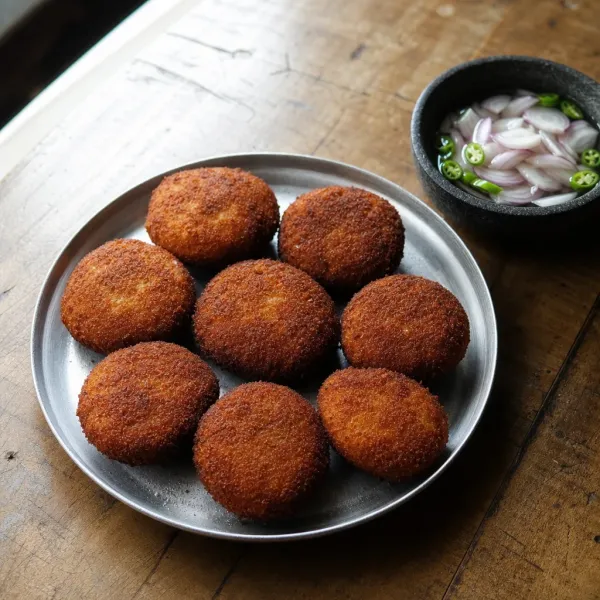
Kerala Nasrani Fish Cutlet
Traditional Kerala Nasrani fish cutlet with seer fish, shallots and coconut oil. Step-by-step method for a crisp, golden crust that holds.
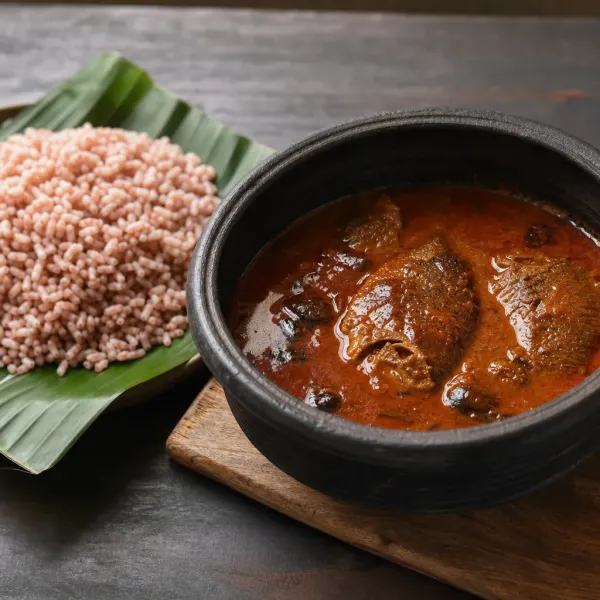
Kottayam Meen Vevichathu
Authentic Kottayam-style red fish curry with kudampuli, no coconut. Traditional Nasrani recipe cooked in a manchatti with Kashmiri chilli and coconut…
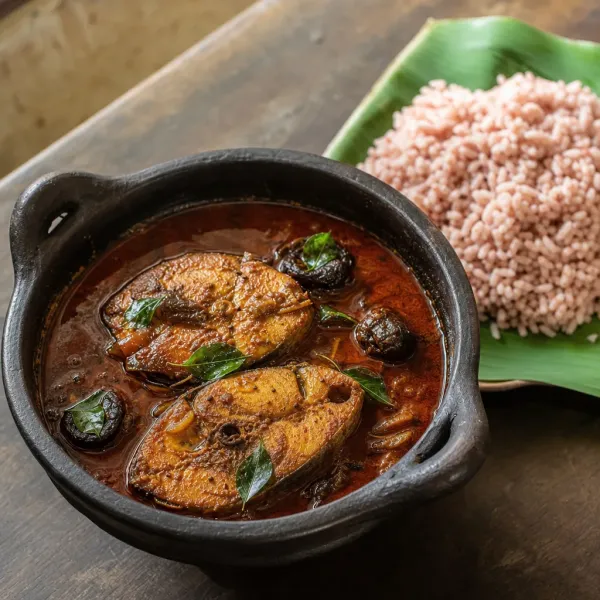
Choora Curry
Traditional Mappila tuna curry from Malabar, made with kudampuli, fresh coconut paste, and shallots in coconut oil. Step-by-step home recipe.
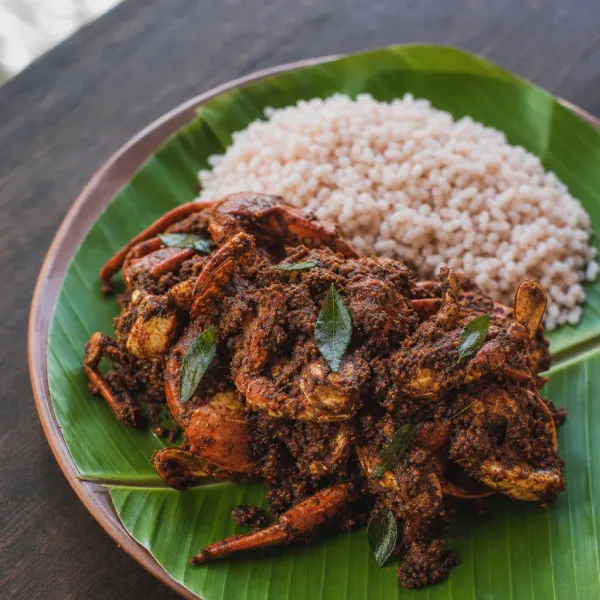
Kerala Crab Roast
Traditional dry Kerala crab roast from a Nasrani Travancore kitchen. Mud crab slow-cooked with shallots, coconut oil, and hand-ground spices until th…
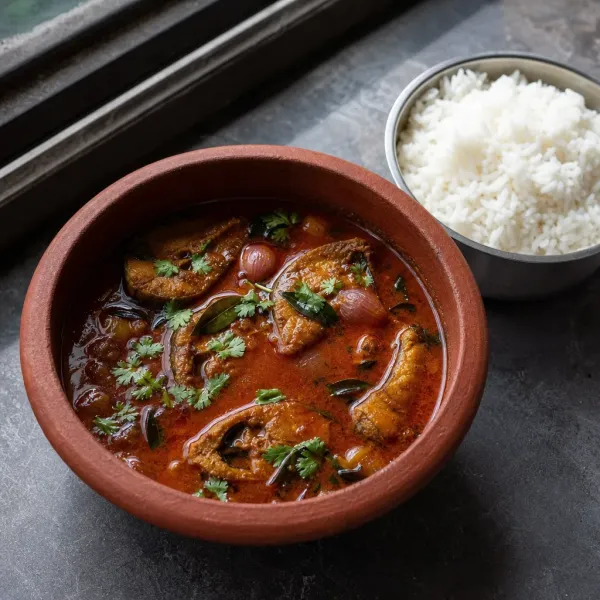
Chepala Pulusu
Traditional Andhra chepala pulusu made with whole shallots, tamarind, and firm fish simmered in gingelly oil. No tomato. Coastal Andhra household met…
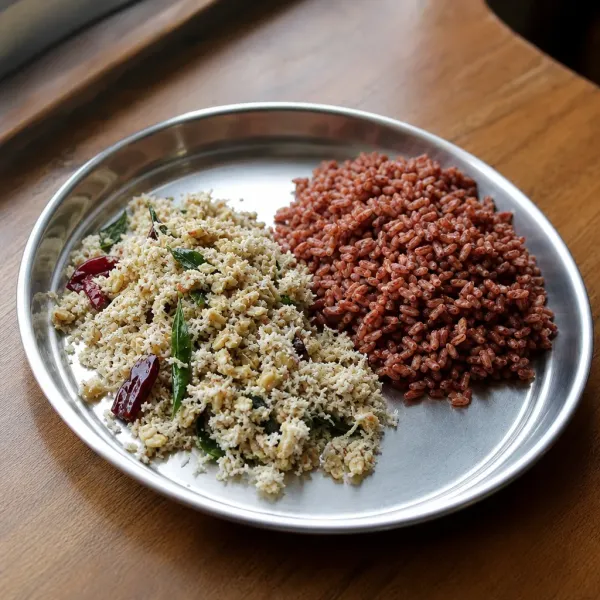
Kakka Irachi Thoran
Traditional Kerala kakka irachi thoran: fresh clam meat stir-fried dry with grated coconut, shallots and curry leaves. Coastal household recipe with…