

Vendakka Kichadi Recipe
Malayalam വെണ്ടക്ക കിച്ചടിTamil வெண்டைக்காய் கிச்சடிKannada ಬೆಂಡೆಕಾಯಿ ಕಿಚಡಿTelugu బెండకాయ కిచడి
- Prep15 min
- Cook25 min
- Serves4
- DifficultyEasy
- DietVegetarian
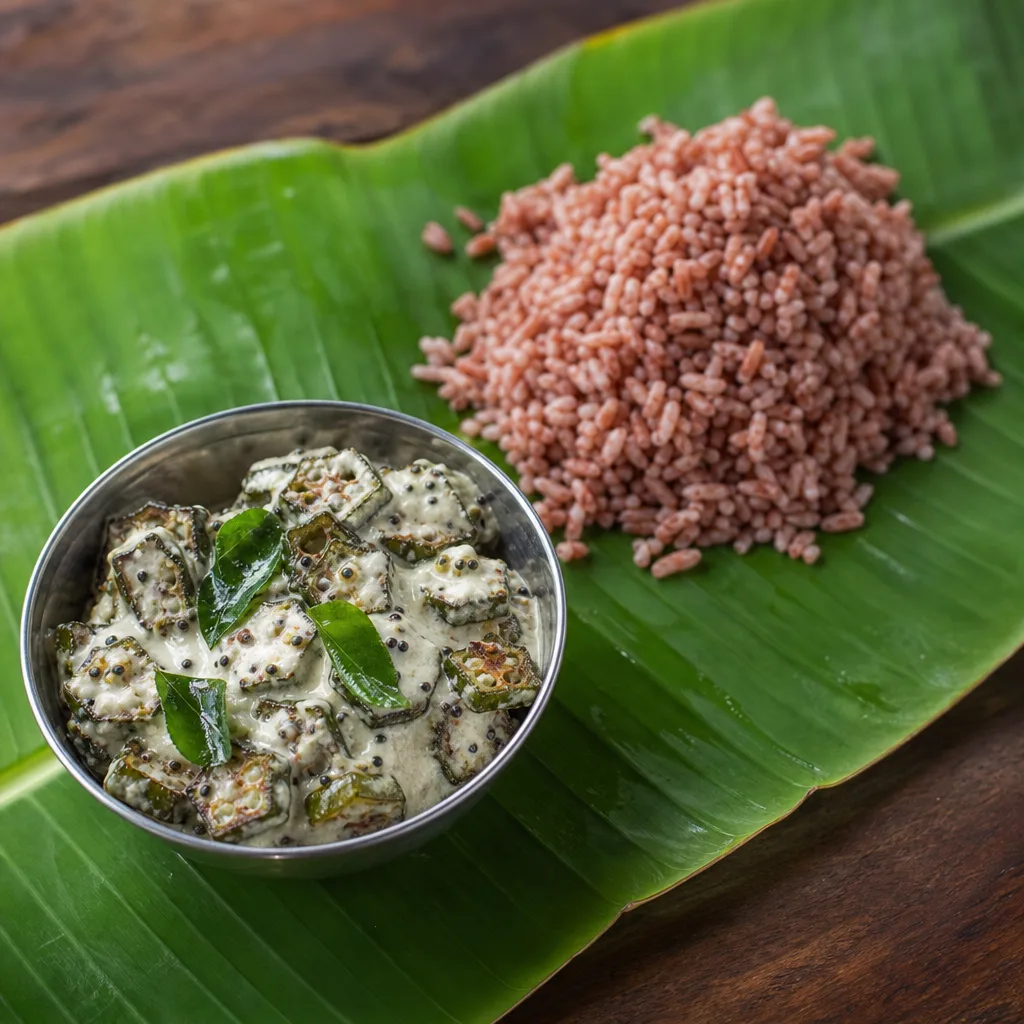
Vendakka kichadi is a standard item on the Kerala Onam sadya, sitting in its small portion on the banana leaf alongside the other kichadis and pachadi. It is not a curry and not a raita. It is fried okra folded into a freshly ground coconut-yogurt base, seasoned with a mustard and dried red chilli tadka in coconut oil. The okra stays distinct; the yogurt should be thick enough to coat without pooling.
The dish depends on two things done correctly: the okra must be fried until the sliminess is completely gone and the pieces are just beginning to colour at the edges, and the yogurt must not be heated after it is added, or it will split and turn grainy. In most Travancore households the coconut is ground fresh with green chilli and a little cumin, then the yogurt is stirred in off the heat.
Households differ mainly on the chilli. Some use only one green chilli in the coconut paste and keep the tadka mild. Others add a second dried red chilli in the tempering. The yogurt used is always the sour, thick curd set at home overnight, not the mild commercial kind.
Ingredients (serves 4)
For the fried okra
For the coconut-yogurt base
For the tadka
Method
Dry the okra thoroughly
After washing, spread the okra on a clean cloth and leave it for at least 10 minutes. Wipe each piece individually if needed. Any surface moisture will cause the oil to spit badly and will make the okra steam rather than fry, leaving it slimy.
Fry the okra
Heat 3 tbsp coconut oil in a wide, heavy pan over medium heat. Add the okra rounds in a single layer. Do not stir for the first 2 minutes. Then stir occasionally and fry for 12 to 15 minutes until the sliminess has completely disappeared and the pieces are dry, with pale golden edges on some sides. Season lightly with salt. Remove from the pan and spread on a plate to cool.
Grind the coconut paste
Put the grated coconut, green chilli and cumin seeds into a small mixer jar with 2 tbsp water. Grind to a smooth, fine paste. The paste should have no coarse coconut threads remaining; run the grinder for a full 2 minutes, stopping to scrape down the sides once.
Beat the curd
Whisk the thick curd in a bowl until smooth with no lumps. It should be at room temperature, not cold from the refrigerator. Cold curd added to a warm pan is more likely to split.
Combine coconut paste and curd
Stir the coconut paste thoroughly into the beaten curd. Taste and add salt. The base should be thick, creamy and slightly sour. Set aside.
Fold in the okra off the heat
Make sure the fried okra has cooled to warm, not hot. Add it to the coconut-curd mixture and fold gently so every piece is coated. Do not place this on the stove. The curd must not be heated or it will split into watery whey and white curds.
Make the tadka
Heat 1 tbsp coconut oil in a small tadka pan over medium-high heat. Add the mustard seeds and wait for them to splutter fully, about 30 seconds. Add the broken dried red chillies and curry leaves. Stand back as the leaves will spatter. The chillies will darken in 10 seconds. Remove from the heat immediately.
Season and serve
Pour the hot tadka over the okra-curd mixture and fold it in quickly. Taste for salt. Serve at once or within 30 minutes while the okra still has some texture. The dish softens as it sits.
How to serve
Steamed matta rice and the other sadya dishes on a banana leaf at Onam; also served as a side in a regular Kerala meal with rice and sambar or rasam.
Served with: Steamed matta rice and the other sadya dishes on a banana leaf at Onam; also served as a side in a regular Kerala meal with rice and sambar or rasam.
Cook's tips
Keeping the okra from going slimy
The okra must be bone dry before it goes into the oil, and the pan must not be crowded. If you have more than 300 g, fry in two batches. Crowding drops the temperature and the okra sweats instead of fries.
Curd that is too thin
Commercial yogurt is often too watery for this dish. Tie it in a clean muslin cloth and hang it over a bowl for 20 minutes to drain off the whey. The resulting curd will be thick enough to coat the okra without the dish becoming a pool of liquid.
Do not reheat
This dish cannot be reheated. Once the curd is added it is done. Make it close to serving time.
Sourness of the curd
The dish is meant to be pleasantly sour. If your curd is very mild, the kichadi will taste flat. Overnight home-set curd is ideal. If your curd is extremely sour, use slightly less and balance with the coconut paste.
Regional variations
Some Malabar households add a small piece of green chilli to the coconut paste; Onam sadya versions are sometimes made with slightly more coconut to keep the dish richer.
Glossary
- Vendakka വെണ്ടക്ക
- Okra or ladies' finger, the vegetable used in this dish.
- Kichadi കിച്ചടി
- A Kerala sadya dish of a vegetable fried or cooked and folded into a coconut-curd base; distinct from the North Indian khichdi made of rice and lentils.
- Kaduku കടുക്
- Black mustard seeds, used whole in the tempering.
- Kariveppila കറിവേപ്പില
- Curry leaves, fresh sprigs used in the tempering.
- Kollamulaku കൊല്ലമുളക്
- Dried red chillies, used whole or broken in the tadka.
- Jeerakam ജീരകം
- Cumin seeds, ground with the coconut paste to flavour the base.
- Tadka തലിക്കൽ
- The tempering of spices in hot oil poured over the finished dish to season it.
What decides this dish is the okra and the curd. The okra must be fried long enough that every trace of sliminess is gone, and the curd must be thick, sour and never heated after it is added. Get those two things right and the dish takes care of itself.
More Vegetarian Gravies recipes
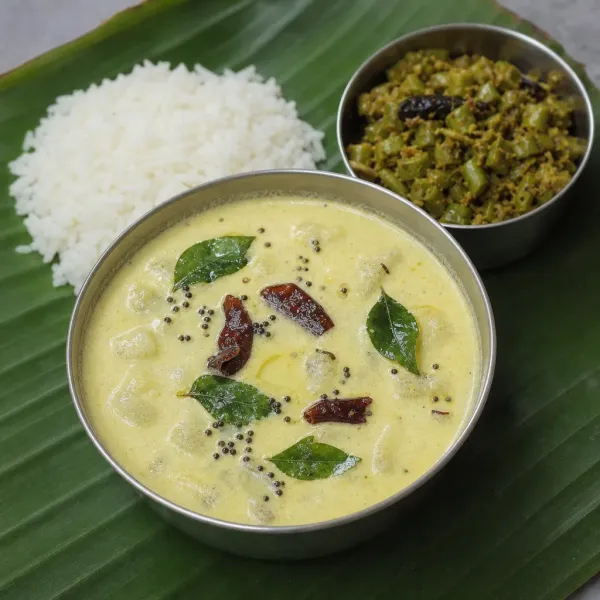
Majjige Huli
Traditional Karnataka Brahmin majjige huli with ash gourd, fresh coconut paste and sour curd. Step-by-step method with tips to prevent splitting.
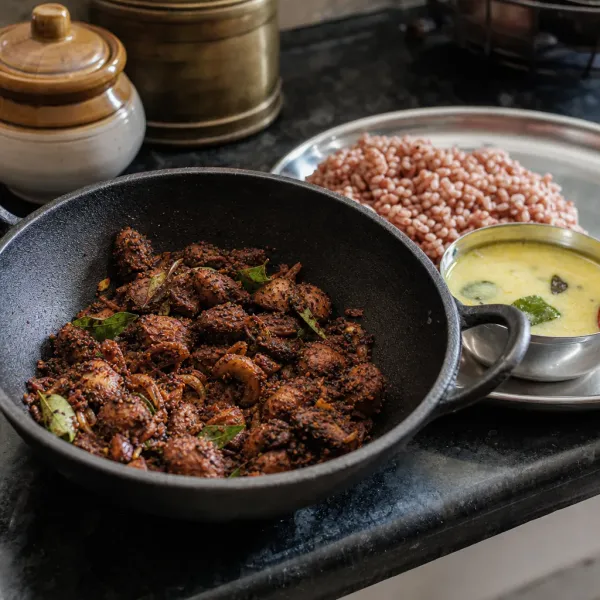
Mushroom Pepper Masala
A dry, pepper-forward mushroom masala from Nasrani kitchens in Travancore, cooked in coconut oil with shallots and curry leaves. Ready in 40 minutes.
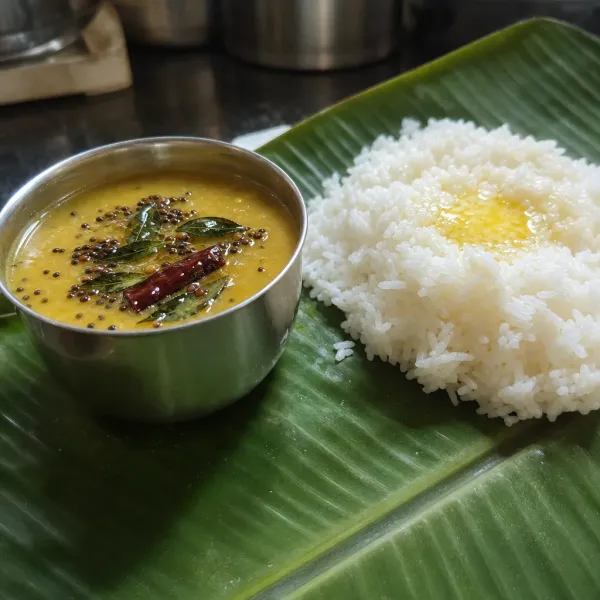
Tovve
Authentic Karnataka Brahmin tovve: mild toor dal with a ghee tempering of mustard, cumin, curry leaf and asafoetida. Ready in 35 minutes.
Kadala Curry
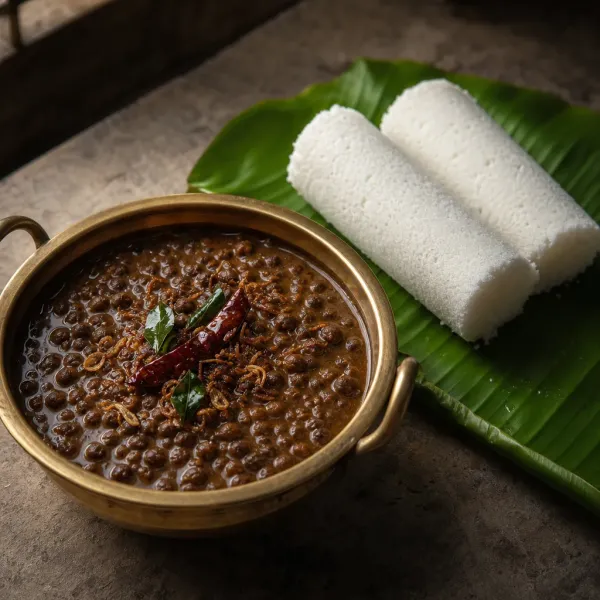
Authentic Kerala kadala curry with roasted coconut paste and shallots. The classic breakfast partner for puttu, made the traditional household way.
Kootu Curry
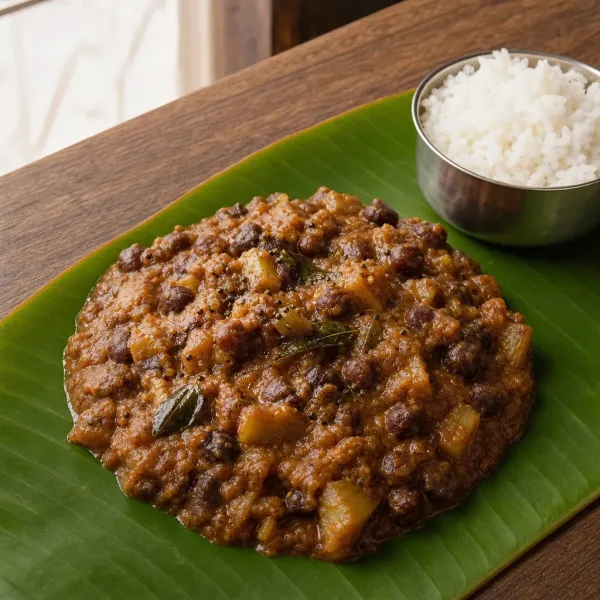
Traditional Kerala kootu curry with kala chana, raw banana, and yam in a deep-roasted coconut paste. A fixed dish on the sadya leaf.
Milagu Kuzhambu
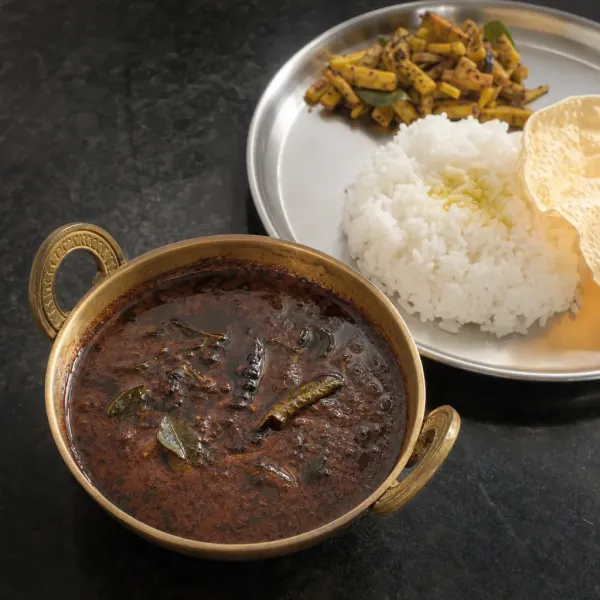
Traditional Tamil Brahmin milagu kuzhambu made with whole black pepper, tamarind, shallots, and gingelly oil. Thick, pungent, and cooked the old way.