

Mushroom Pepper Masala Recipe
Malayalam കൂൺ കുരുമുളക് മസാലTamil காளான் மிளகு மசாலாKannada ಅಣಬೆ ಮೆಣಸು ಮಸಾಲೆTelugu పుట్టగొడుగు మిరియాల మసాల
- Prep15 min
- Cook25 min
- Serves4
- DifficultyEasy
- DietVegetarian
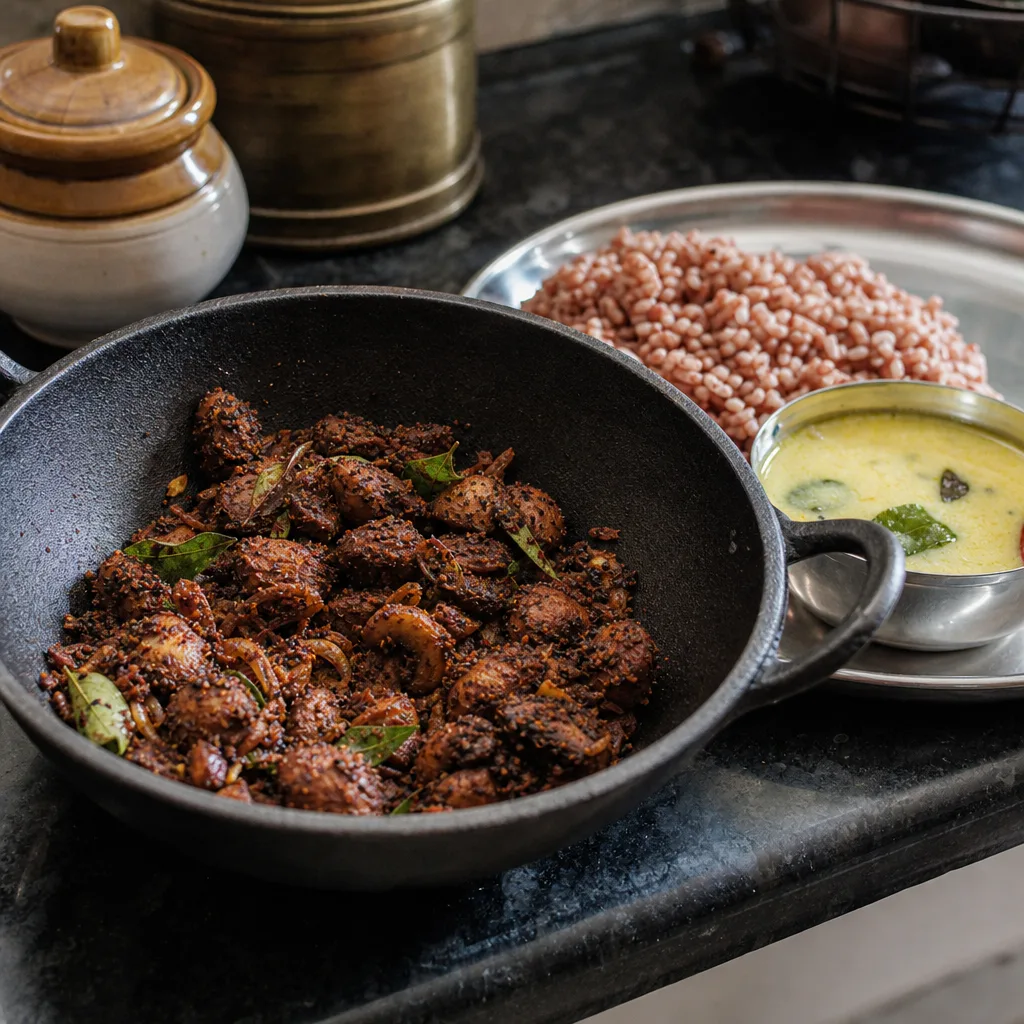
This is a dry, dark, pepper-forward masala cooked in coconut oil with shallots, curry leaves and a restrained hand with water. The mushrooms give up their own liquid as they cook, and that liquid becomes the medium in which the spices bloom and cling. Nothing is added to thin it out; the result is closer to a dry roast than a gravy.
In Nasrani households this comes to the table alongside rice and a thin moru (buttermilk) curry, or it is packed into a lunchbox with matta rice because it travels well and holds its flavour. The pepper quantity here is not decorative. It is the point of the dish. Families differ on whether they add a small amount of freshly ground pepper at the very end as well as during cooking; both practices are common.
Oyster mushrooms are the most widely used in Kerala homes today because they are grown locally and available fresh at most markets. Button mushrooms work but release more water and need a longer drying time in the pan. Either way, do not wash the mushrooms under running water and leave them wet; wipe them or rinse quickly and dry them before you begin.
Ingredients (serves 4)
Main
Spices
Method
Prepare the mushrooms
Wipe the oyster mushrooms with a damp cloth or rinse them quickly under cold water and spread on a clean cloth for ten minutes. Tear them into pieces roughly 5 cm across; they will shrink. Wet mushrooms steam instead of frying, so dryness here matters.
Heat the oil and fry the shallots
Warm the coconut oil in a wide, heavy pan over medium heat. Add the sliced shallots and fry, stirring often, for eight to ten minutes until they are deep golden and beginning to crisp at the edges. Do not rush this; under-fried shallots leave a raw sweetness that fights the pepper.
Add ginger, garlic and chillies
Add the chopped ginger, garlic and slit green chillies to the pan. Stir and fry for two to three minutes over medium heat until the raw smell of garlic is gone and the mixture looks dry. Keep the heat moderate; garlic burns quickly and turns bitter.
Add the curry leaves
Drop in the curry leaves. Stand back as they will splutter in the oil. Stir for thirty seconds until they are fragrant and have darkened slightly.
Add the dry spices
Lower the heat. Add the coriander powder, turmeric, red chilli powder and 2 tsp of the coarsely ground black pepper. Stir continuously for one minute, keeping the spices moving so they toast in the oil without scorching. The mixture will look dry and grainy; that is correct.
Add the mushrooms and salt
Add the mushrooms and salt. Toss well so every piece is coated in the spiced shallot base. The pan will look crowded. Raise the heat to medium-high and do not cover the pan.
Cook out the mushroom liquid
The mushrooms will release water within two to three minutes. Keep the heat at medium-high and stir every minute or so. Cook until all that liquid has evaporated and the mushrooms are frying again in the oil, not steaming. You will hear the sizzle return and the mushrooms will begin to look darker and slightly shrunken. This takes seven to ten minutes depending on the variety and how wet they were.
Dry-roast the masala onto the mushrooms
Once the liquid is gone, reduce the heat to medium-low and continue stirring for three to four minutes. The spice coating should cling to the mushrooms and deepen in colour to a dark reddish-brown. Do not add water. If anything sticks to the pan, scrape it back in; those bits carry flavour.
Finish with fresh pepper
Take the pan off the heat. Scatter the reserved ½ tsp of freshly ground black pepper over the mushrooms and stir it in. Taste for salt. Serve immediately; the pepper fragrance fades if it sits too long.
How to serve
Matta rice and moru curry (thin buttermilk curry); or with chapathi for a lighter meal. Also eaten as a side with appam.
Served with: Matta rice and moru curry (thin buttermilk curry); or with chapathi for a lighter meal. Also eaten as a side with appam.
Cook's tips
Grinding the pepper
Grind the pepper coarsely in a stone mortar, not to a fine powder. Visible fragments of pepper give a different heat and texture from powder; the heat comes in short bursts rather than a uniform background warmth. Pre-ground pepper from a packet will work but the dish will be flatter.
Mushroom variety
Oyster mushrooms are ideal because they have less water and a firmer texture once cooked. Button mushrooms release considerably more liquid and may need an extra five minutes of drying time in the pan. Avoid very small button mushrooms; they turn mushy before the liquid evaporates.
Do not cover the pan
Covering the pan traps steam and you end up with a wet, grey mushroom dish instead of a dark, dry masala. The whole method depends on evaporation.
Storage
This keeps well in the refrigerator for two days. Reheat in a dry pan over low heat; adding oil to reheat makes it greasy. The pepper flavour intensifies overnight, so the next day's portion is often the better one.
Regional variations
A Mappila version from Malabar uses fennel seed and a little coconut paste; a Chettinad version in Tamil Nadu uses kalpasi and marathi mokku alongside heavy black pepper.
Glossary
- Chuvannulli ചുവന്നുള്ളി
- Small red shallots native to Kerala, sharper and more aromatic than large onions; used in most Kerala cooking.
- Moru curry മോരുകറി
- A thin, turmeric-yellow buttermilk curry tempered with mustard seeds and curry leaves; a daily staple in Kerala homes.
- Matta rice മട്ട അരി
- Kerala red parboiled rice, nutty and slightly chewy, the everyday rice of most Kerala households.
- Kalpasi கல்பாசி
- Stone flower, a dried lichen used as a spice in Chettinad cooking; not used in this recipe but named in the variations.
Two things decide this dish: the shallots must be fried long enough to lose their raw edge and develop colour, and every drop of mushroom water must be cooked off before you finish. Skip either step and you have a pale, wet mushroom with spice floating around it rather than clinging to it.
More Vegetarian Gravies recipes
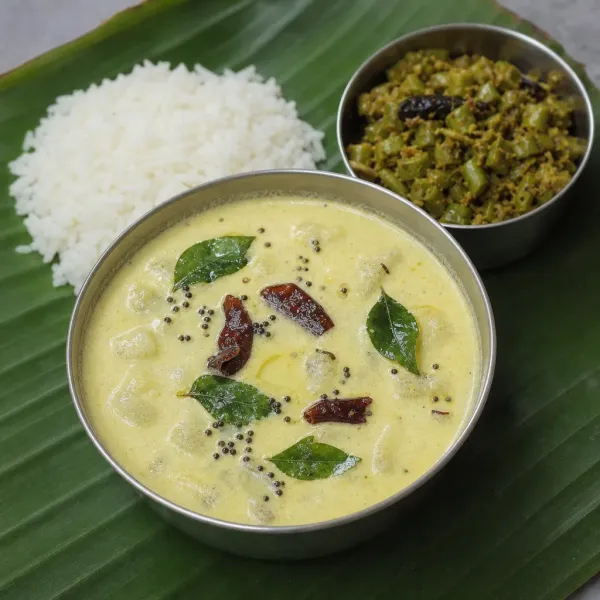
Majjige Huli
Traditional Karnataka Brahmin majjige huli with ash gourd, fresh coconut paste and sour curd. Step-by-step method with tips to prevent splitting.
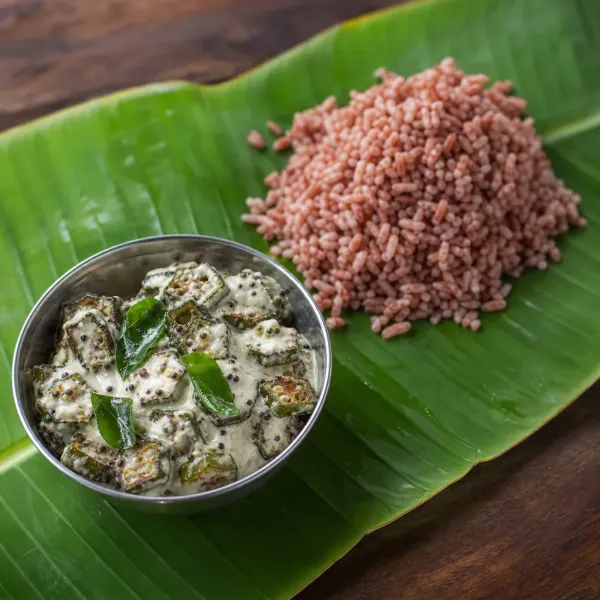
Vendakka Kichadi
Traditional Kerala Vendakka Kichadi: crisp-fried okra folded into a fresh coconut and sour curd base, tempered with mustard and curry leaves in cocon…
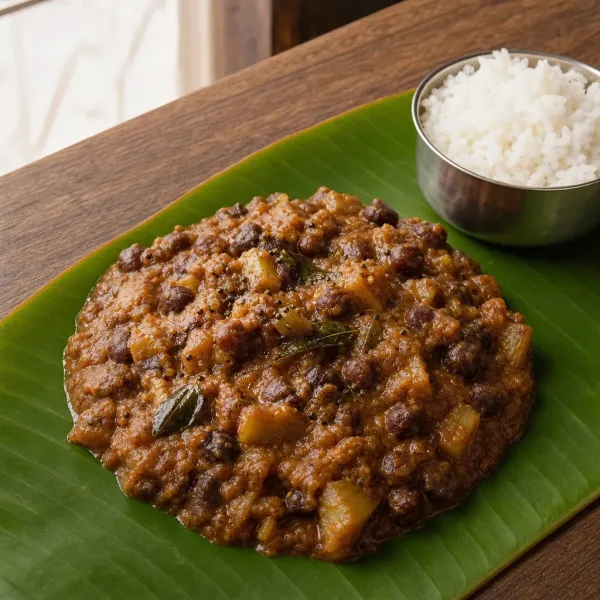
Kootu Curry
Traditional Kerala kootu curry with kala chana, raw banana, and yam in a deep-roasted coconut paste. A fixed dish on the sadya leaf.
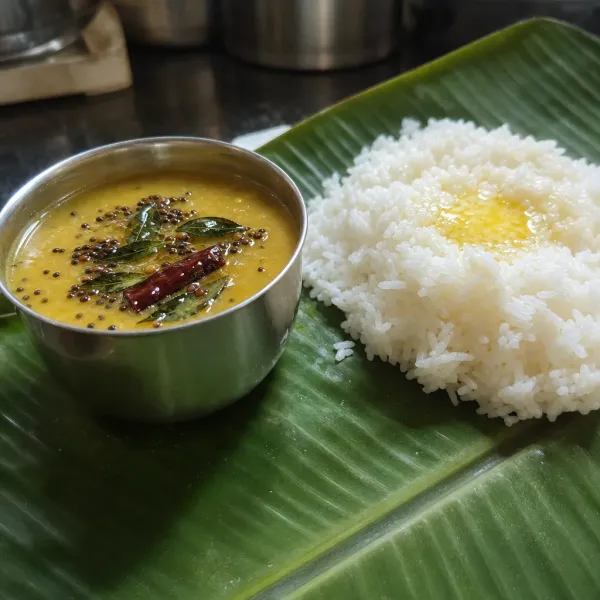
Tovve
Authentic Karnataka Brahmin tovve: mild toor dal with a ghee tempering of mustard, cumin, curry leaf and asafoetida. Ready in 35 minutes.
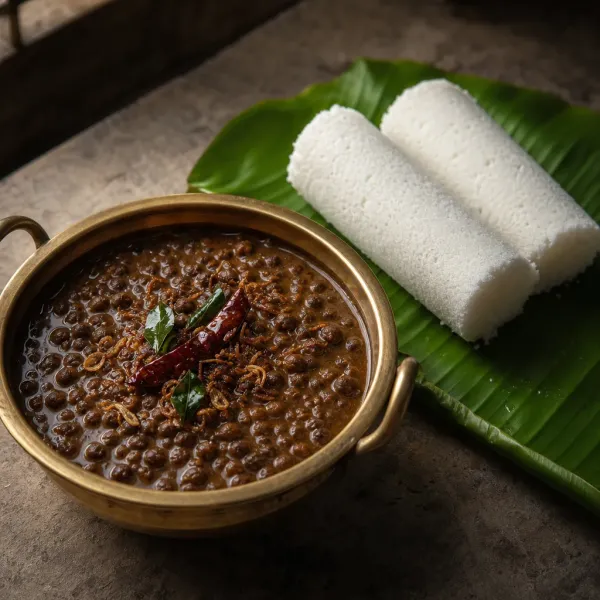
Kadala Curry
Authentic Kerala kadala curry with roasted coconut paste and shallots. The classic breakfast partner for puttu, made the traditional household way.
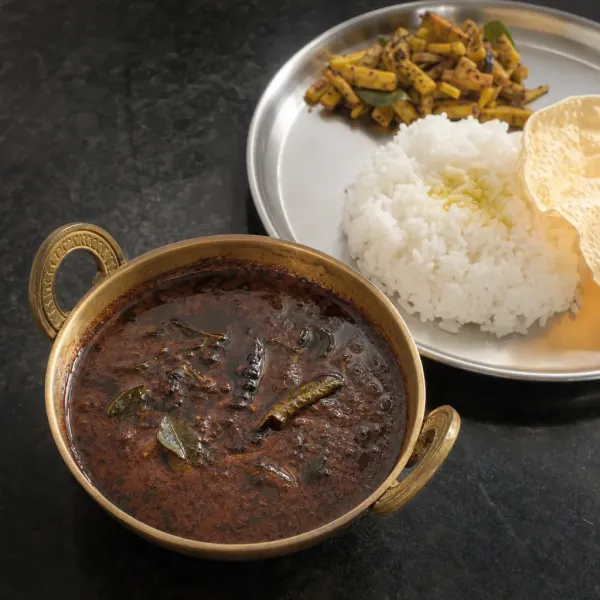
Milagu Kuzhambu
Traditional Tamil Brahmin milagu kuzhambu made with whole black pepper, tamarind, shallots, and gingelly oil. Thick, pungent, and cooked the old way.