

Koorka Mezhukkupuratti (Chinese Potato Stir-Fry) Recipe
Malayalam കൂർക്ക മെഴുക്കുപുരട്ടിTamil கூர்க்கா மெழுக்குபுரட்டிKannada ಕೂರ್ಕಾ ಮೆಳಕ್ಕುಪುರಟ್ಟಿTelugu కూర్కా మెళుక్కుపురట్టి
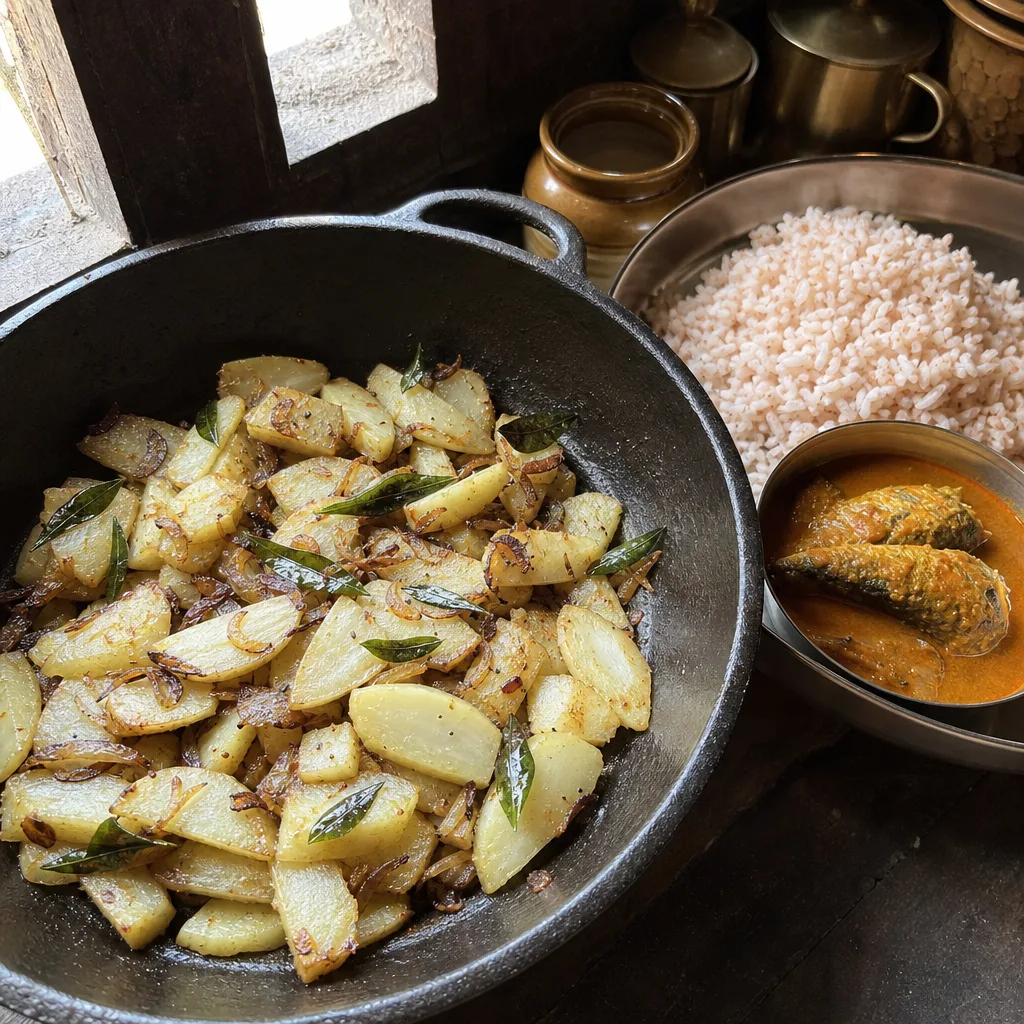
- Prep25 min
- Cook35 min
- Serves4
- DifficultyEasy
- DietVegan
Koorka is a small, knobby tuber that grows in the laterite soil of central and southern Kerala from around October through February. Its season is short and its cleaning is laborious, which is part of why it is so valued when it arrives. The rough brown skin has to be scraped away by hand, and most households do this together, sitting outside with a bucket of water, rubbing the tubers against each other or against a rough stone to loosen the skin.
Mezhukkupuratti is the Kerala household method for tubers and vegetables: cooked until just tender, then tossed in coconut oil with shallots, green chilli, and curry leaves until every piece is coated and slightly glossy. It is dry, not saucy. The koorka should hold its shape and have a faint chew. Overcooking turns it mealy and the stir-fry loses its character.
This is everyday rice-plate food. It appears alongside rice and a simple dal or a fish curry, sometimes a rasam. Every household adjusts the chilli level. Some like it quite hot; others keep it mild enough for children. What does not vary much is the coconut oil and the curry leaves — without both, it is a different dish.
Ingredients (serves 4)
Main
Method
Scrape and clean the koorka
Put the koorka in a large basin of water. Rub them firmly against each other and against the sides of the basin, or use a rough stone, to loosen the thin brown skin. Change the water once and rub again. The skin does not peel away in sheets like potato skin; it comes off in patches. Work until the surface is mostly pale and smooth. This takes 10 to 15 minutes and is the only tedious part of the dish. Halve or quarter any tubers larger than a walnut so that all pieces are roughly even.
Par-cook the koorka
Put the cleaned koorka in a heavy-bottomed pan or a pressure cooker. Add just enough water to cover, ½ tsp turmeric, and salt. If using a pressure cooker, cook for one whistle on medium heat, then turn off and let the pressure release naturally — about 8 minutes total. If cooking open, simmer for 15 to 18 minutes until a knife slides in with a little resistance; you want the koorka cooked through but not falling apart. Drain immediately and set aside.
Heat the oil
In a wide, heavy pan — a cheenachatti or a thick-bottomed kadai works well — heat the coconut oil over medium flame. The oil should be hot but not smoking. You will smell it turn fragrant.
Add the shallots and chilli
Add the sliced shallots and slit green chillies to the hot oil. Stir and cook over medium heat for 4 to 5 minutes until the shallots turn translucent and their edges just begin to colour. Do not rush this step; half-cooked shallots taste raw and sharp in the finished dish.
Add the curry leaves
Add the curry leaves. They will splutter loudly for a few seconds. Stir once and let them fry for about 30 seconds until they stop spluttering and smell fragrant.
Add the koorka and stir-fry
Add the drained, cooked koorka to the pan. Toss well to coat every piece in the oil, shallots, and curry leaves. Spread the koorka in a single layer and let it sit undisturbed for 1 to 2 minutes so the underside picks up a little colour, then toss again. Repeat this two or three times over 6 to 8 minutes. The koorka should look glossy and slightly golden in places, not brown all over. Taste and adjust salt.
Finish and serve
Turn off the heat. The dish is dry — no sauce, no liquid. Transfer to a serving bowl immediately. It is best eaten hot with rice, though it holds well at room temperature for a couple of hours.
How to serve
Steamed matta rice; a fish curry (meen curry with kudampuli) or a simple toor dal; pappadam on the side.
Served with: Steamed matta rice; a fish curry (meen curry with kudampuli) or a simple toor dal; pappadam on the side.
Cook's tips
Cleaning shortcut
Some households boil the koorka briefly for 3 to 4 minutes before scraping — the skin loosens faster. This is a genuinely common practice and works well, especially with older, tougher koorka.
Do not overcook at the boiling stage
If the koorka is fully soft before the stir-fry, it will break apart in the pan and turn to mash. It should still have a slight firmness when you drain it.
Frozen koorka
Frozen, pre-cleaned koorka is sold in Kerala grocery stores outside the season. It works acceptably. Thaw completely and pat dry before using; it will be a little softer than fresh, so reduce the boiling time to one short whistle or 10 minutes open.
Oil quantity
Three tablespoons may seem generous but it is what gives the dish its characteristic gloss. Reducing the oil produces a drier, duller result. This is not a low-oil preparation.
Regional variations
Some Malabar households add a pinch of fennel seed to the tempering; Nasrani cooks occasionally add a small amount of shallot paste rather than sliced shallots.
Glossary
- Koorka കൂർക്ക
- Chinese potato (Coleus rotundifolius), a small seasonal tuber grown in Kerala, with rough brown skin and dense white flesh.
- Mezhukkupuratti മെഴുക്കുപുരട്ടി
- Literally 'coated in fat'; the Kerala technique of tossing cooked vegetables or tubers in oil with aromatics until glossy and dry.
- Chuvannulli ചുവന്നുള്ളി
- Small red shallots used throughout Kerala cooking; sharper and more aromatic than large onions.
- Cheenachatti ചീനച്ചട്ടി
- A wide, shallow wok-style pan used in Kerala kitchens, traditionally made of iron; excellent for stir-frying.
- Matta rice മട്ട അരി
- Kerala red parboiled rice, nutty and slightly chewy; the everyday rice of most Kerala households.
Two things decide this dish: how the koorka is cooked before it hits the pan, and how much time you give the shallots. Get the par-cooking right — tender but still holding — and let the shallots soften properly in coconut oil, and the rest follows easily.
More Dry Vegetable Sides recipes
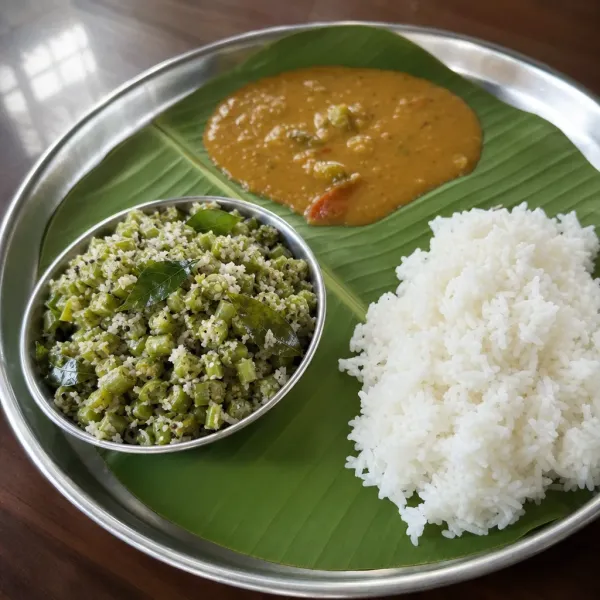
Beans Poriyal
A traditional Tamil Brahmin beans poriyal with gingelly oil tadka and fresh coconut. Dry, lightly spiced, and ready in under 30 minutes.
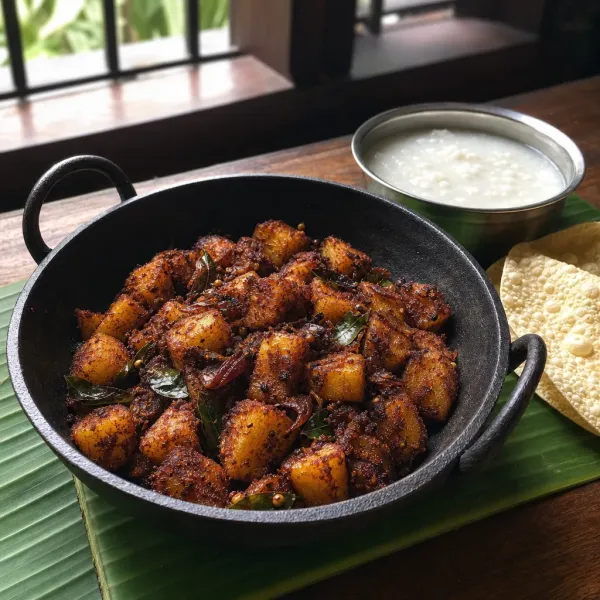
Urulakizhangu Roast
Traditional Kerala Nasrani-style potato roast with shallots, curry leaves and coconut oil. Step-by-step method for a dry, spice-coated urulakizhangu…
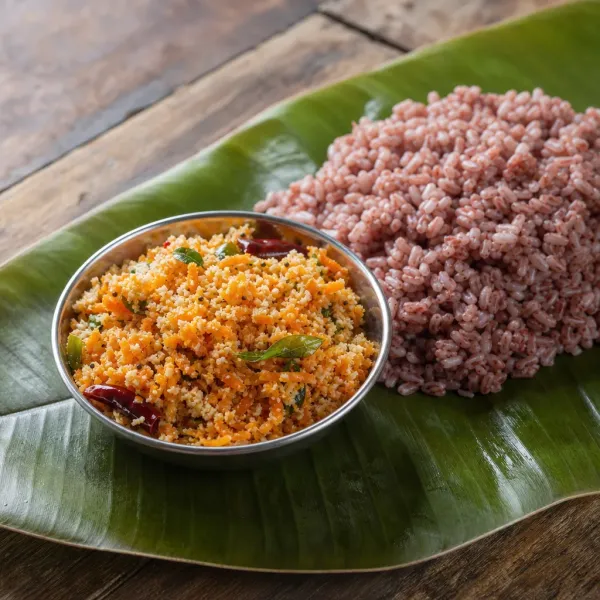
Carrot Thoran
A classic Kerala carrot thoran made with fresh grated coconut, shallots, curry leaves and coconut oil. Dry, fragrant and ready in under 30 minutes.
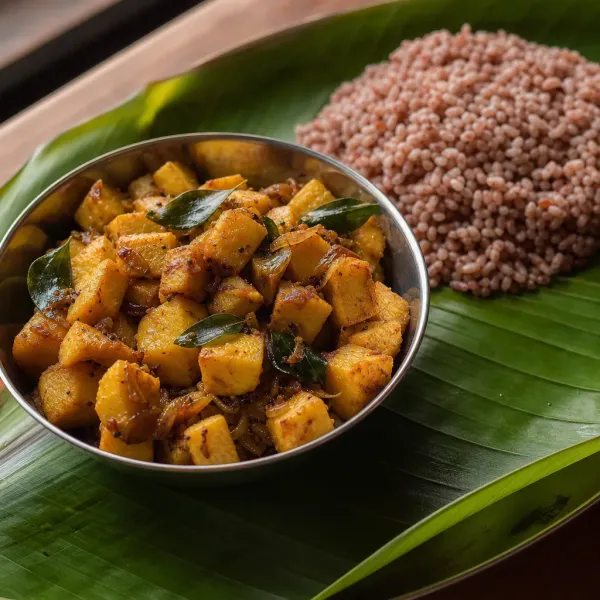
Chena Mezhukkupuratti (Elephant Foot Yam Stir-Fry)
Traditional Kerala recipe for chena mezhukkupuratti: elephant foot yam stir-fried in coconut oil with shallots, dried red chillies, and curry leaves.
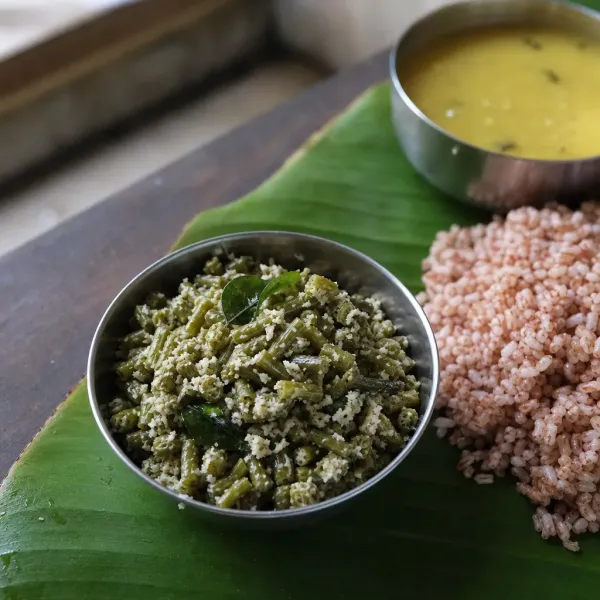
Payar Thoran (Long Beans with Coconut)
Traditional Kerala payar thoran made with long beans, fresh grated coconut and a mustard-curry leaf tempering. Dry, simple, everyday.
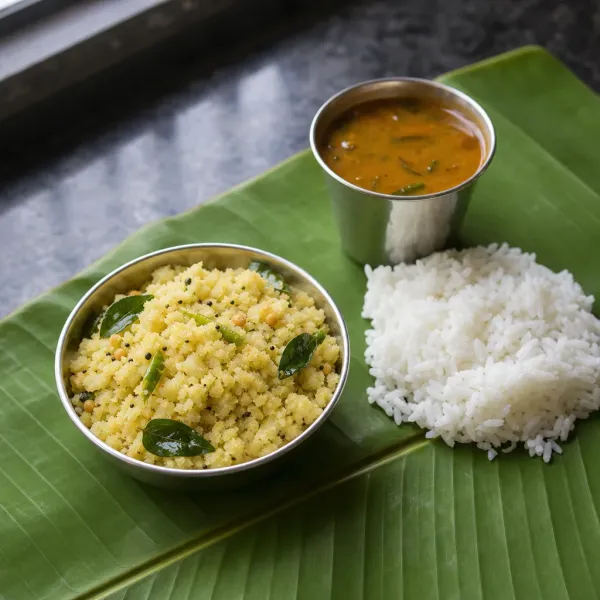
Urulakizhangu Podimas
Authentic Iyer-style crumbled potato podimas with gingelly oil, mustard, curry leaves and ginger. Dry, light and ready in under 30 minutes.