

Carrot Thoran Recipe
Malayalam കാരറ്റ് തോരൻTamil கேரட் துவரன்Kannada ಕ್ಯಾರೆಟ್ ತೊರನ್Telugu క్యారెట్ తోరన్
- Prep15 min
- Cook12 min
- Serves4
- DifficultyEasy
- DietVegan
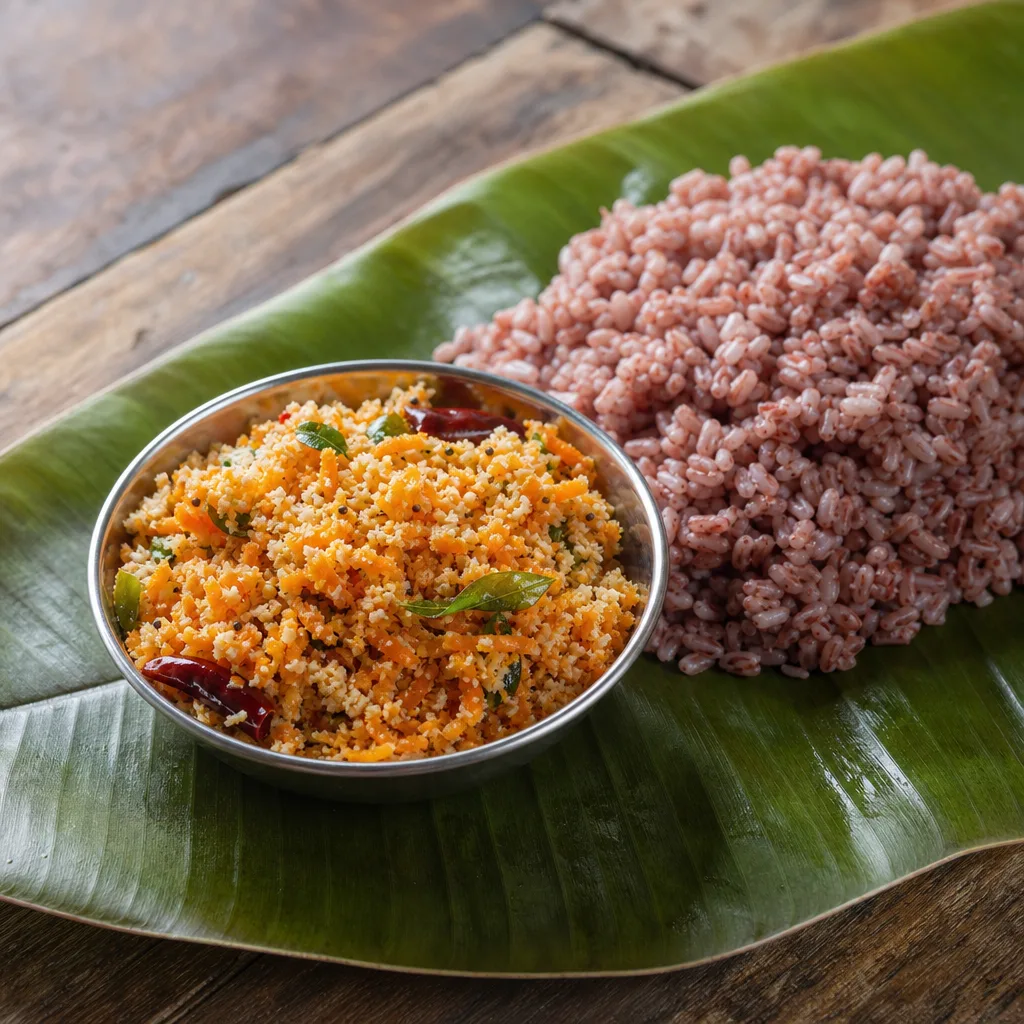
Thoran is the dry vegetable dish that appears at every Kerala meal, whether it is a simple weekday lunch or a full sadya. The carrot version is one of the most common because carrot is available year-round and cooks quickly. It is not a salad and it is not a stir-fry in any Chinese sense; the vegetable is cooked through, coated in seasoned coconut, and the finished dish should be dry enough that each grain of coconut stays separate.
The technique is the same across most Kerala households: temper mustard and dried red chilli in coconut oil, add the finely chopped vegetable with turmeric and salt, cover briefly so the vegetable steams in its own moisture, then fold in the fresh coconut mixture at the end. The coconut goes in last so it warms through without drying out or losing its raw sweetness. Rushing the coconut in too early is the one thing that makes a thoran taste flat.
Households differ on the coarseness of the coconut. Some grandmothers insist on a rough hand-ground coconut that gives the thoran body; others use freshly grated coconut straight from the grater. Both are correct. What is not traditional is desiccated coconut or pre-ground coconut paste, which changes the texture entirely. The shallots can go into the tempering or be mixed raw into the coconut depending on the cook, and both habits are genuine.
Ingredients (serves 4)
For the thoran
Method
Prepare the coconut mixture
In a small bowl, combine the grated coconut, chopped shallots, slit green chillies and turmeric powder. Mix well with your fingers so the turmeric colours the coconut evenly. Set aside. This mixture goes in at the very end, so have it ready before you light the flame.
Heat the pan
Place a wide, heavy-bottomed pan or cheenachatti over medium heat. Add the coconut oil and let it warm until it shimmers. A Kerala iron cheenachatti holds heat evenly and is ideal, but any wide pan works.
Temper the mustard and red chillies
Add the mustard seeds. Keep the lid nearby because they will splutter. Once the spluttering subsides, add the broken dried red chillies and let them darken for about 15 seconds. They should turn a shade darker but not black; black means bitter.
Add the curry leaves
Add the curry leaves to the oil. They will crackle and spit. Let them fry for 10 seconds until the sound quietens. The leaves should look glossy and slightly crisp at the edges.
Add the carrot and season
Add the chopped carrot and salt. Stir everything together so the carrot is coated in the tempered oil. Spread the carrot out in an even layer across the pan.
Cover and cook on low heat
Reduce the heat to low. Cover the pan with a lid. Let the carrot cook in its own steam for 6 to 8 minutes. Do not add water. The carrot is ready when it is just cooked through but still holds its shape; press a piece with a spoon and it should give without crumbling. If the pan sounds dry and you hear sizzling before 6 minutes, the heat is too high.
Check and adjust
Remove the lid and stir. Taste a piece of carrot. It should be tender with no raw crunch. If it needs another minute, cover again briefly. There should be no liquid pooling in the pan; if there is, turn the heat up briefly and stir until it evaporates.
Fold in the coconut mixture
Add the coconut and shallot mixture to the pan. Fold it through the carrot gently but thoroughly. Keep the heat on low. Stir for 2 to 3 minutes until the coconut is warmed through and fragrant. It should not brown or dry out into crumbs. The finished thoran is dry, not sticky, and the coconut coats the carrot without clumping.
Taste and finish
Taste for salt. Turn off the heat. The thoran is done. Serve immediately or keep covered off the heat for up to 20 minutes; it holds well.
How to serve
Plain matta rice (red Kerala rice) and sambar or a simple dal; also part of a full Kerala sadya served on banana leaf alongside other side dishes.
Served with: Plain matta rice (red Kerala rice) and sambar or a simple dal; also part of a full Kerala sadya served on banana leaf alongside other side dishes.
Cook's tips
Chopping versus grating the carrot
A fine dice or thin shred of about 2 to 3 mm gives the thoran its characteristic texture. Grating the carrot on a box grater makes the dish wet and mushy because the grated carrot releases too much moisture during cooking.
Fresh coconut is not optional
Desiccated coconut absorbs moisture and turns the thoran dry and grainy in a bad way. If fresh coconut is not available, frozen grated coconut thawed at room temperature is the only acceptable substitute.
Shallots in the coconut or in the tempering
Some cooks add the shallots to the tempering oil rather than raw into the coconut mixture. Both are traditional. Adding them raw to the coconut gives a slightly sharper flavour; frying them first gives a sweeter, softer result.
The lid is doing the work
No water is added because the carrot has enough moisture to steam itself under a lid on low heat. Lifting the lid repeatedly lets the steam escape and the carrot will not cook evenly; it may also start to scorch on the bottom.
Regional variations
Some Malabar households add a small piece of ginger to the coconut mixture; Nasrani cooks occasionally add a few curry leaves to the coconut itself rather than only to the tempering.
Glossary
- Thoran തോരൻ
- A dry Kerala vegetable dish cooked with fresh grated coconut, mustard tempering and curry leaves; a standard component of any Kerala meal.
- Chuvannulli ചുവന്നുള്ളി
- Kerala shallots, small and pinkish-red, sharper and more aromatic than large onions; used throughout Kerala cooking.
- Cheenachatti ചീനച്ചട്ടി
- A deep, wide iron wok used in Kerala kitchens, traditionally associated with Chinese-influenced cooking methods brought to the Malabar coast.
- Pachari പച്ചരി
- Raw white rice in Malayalam, as distinct from matta (red parboiled rice); mentioned here for context, not used in this recipe.
- Matta rice മട്ട അരി
- Kerala's traditional red parboiled rice, nutty and slightly chewy, the everyday rice of most Kerala households.
Two things decide whether a carrot thoran works. The first is keeping the heat low under the lid so the carrot steams gently without burning or going to mush. The second is adding the coconut only at the end and giving it just enough time to warm through, so it stays moist and fragrant rather than drying out into powder.
More Dry Vegetable Sides recipes
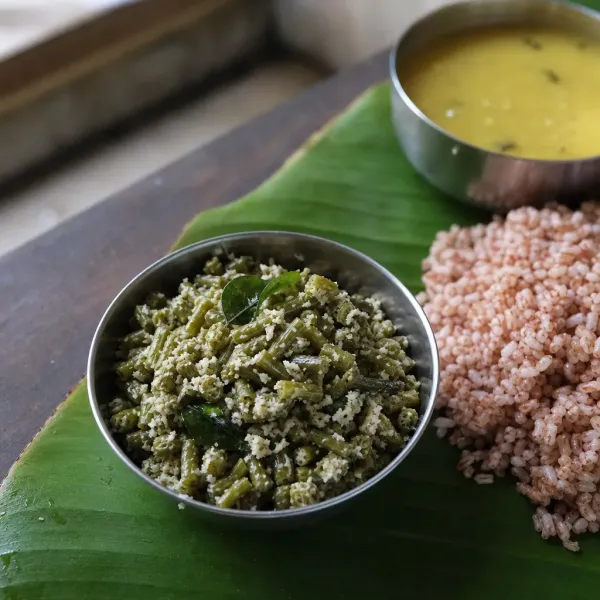
Payar Thoran (Long Beans with Coconut)
Traditional Kerala payar thoran made with long beans, fresh grated coconut and a mustard-curry leaf tempering. Dry, simple, everyday.
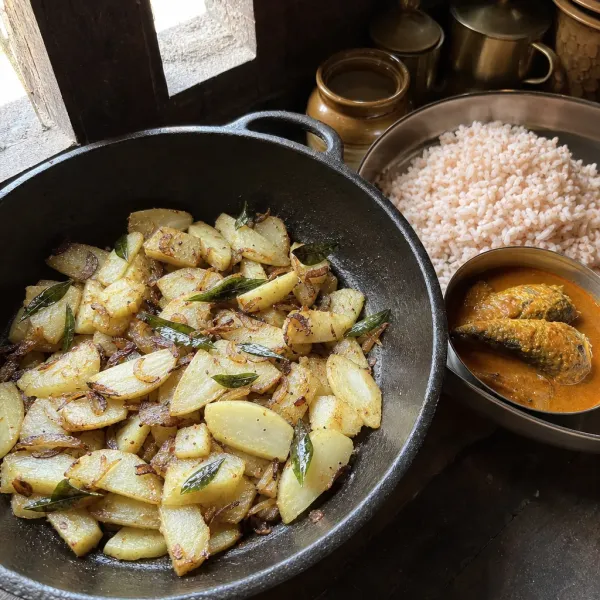
Koorka Mezhukkupuratti (Chinese Potato Stir-Fry)
Traditional Kerala koorka mezhukkupuratti: Chinese potato stir-fried with shallots, green chilli and curry leaves in coconut oil. Step-by-step househ…
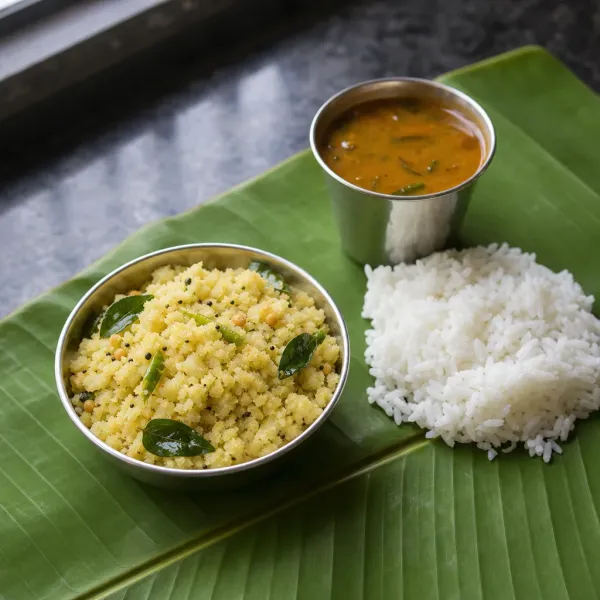
Urulakizhangu Podimas
Authentic Iyer-style crumbled potato podimas with gingelly oil, mustard, curry leaves and ginger. Dry, light and ready in under 30 minutes.
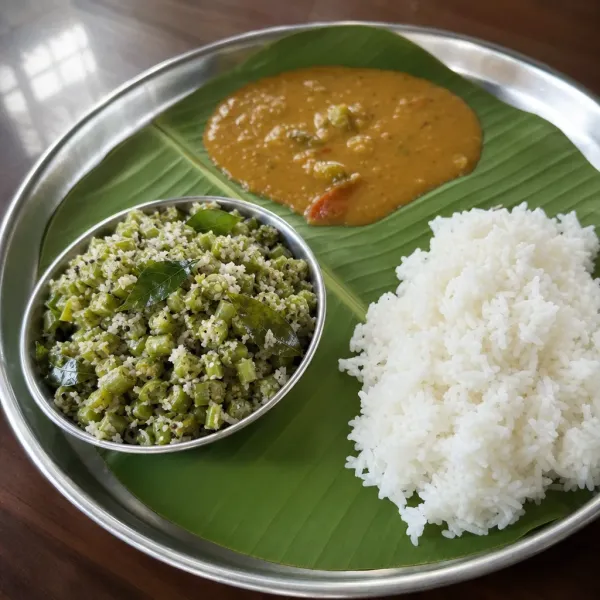
Beans Poriyal
A traditional Tamil Brahmin beans poriyal with gingelly oil tadka and fresh coconut. Dry, lightly spiced, and ready in under 30 minutes.
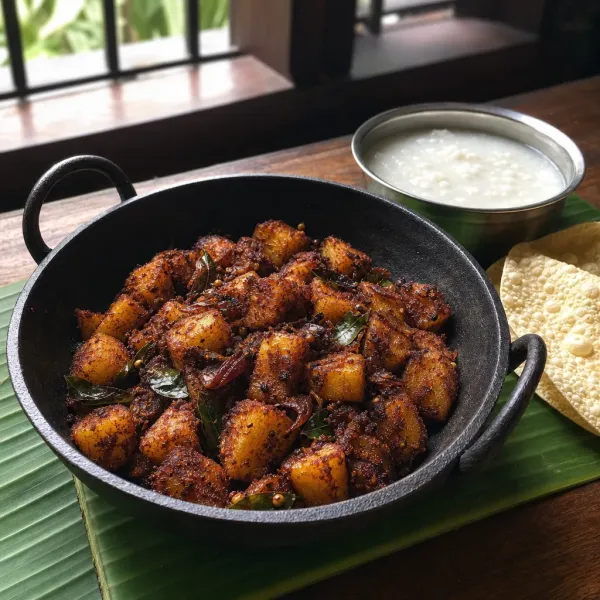
Urulakizhangu Roast
Traditional Kerala Nasrani-style potato roast with shallots, curry leaves and coconut oil. Step-by-step method for a dry, spice-coated urulakizhangu…
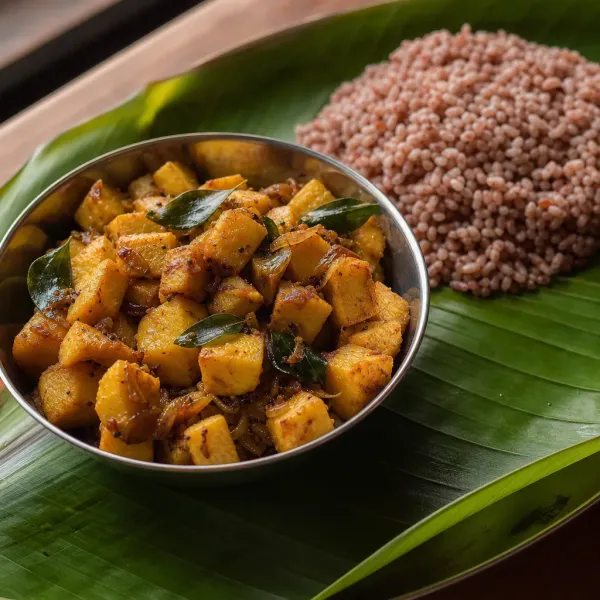
Chena Mezhukkupuratti (Elephant Foot Yam Stir-Fry)
Traditional Kerala recipe for chena mezhukkupuratti: elephant foot yam stir-fried in coconut oil with shallots, dried red chillies, and curry leaves.