

Chicken 65 Recipe
Malayalam ചിക്കൻ 65Tamil சிக்கன் 65Kannada ಚಿಕನ್ 65Telugu చికెన్ 65
- Prep25 min
- Cook30 min
- Serves4
- DifficultyMedium
- DietNon-vegetarian
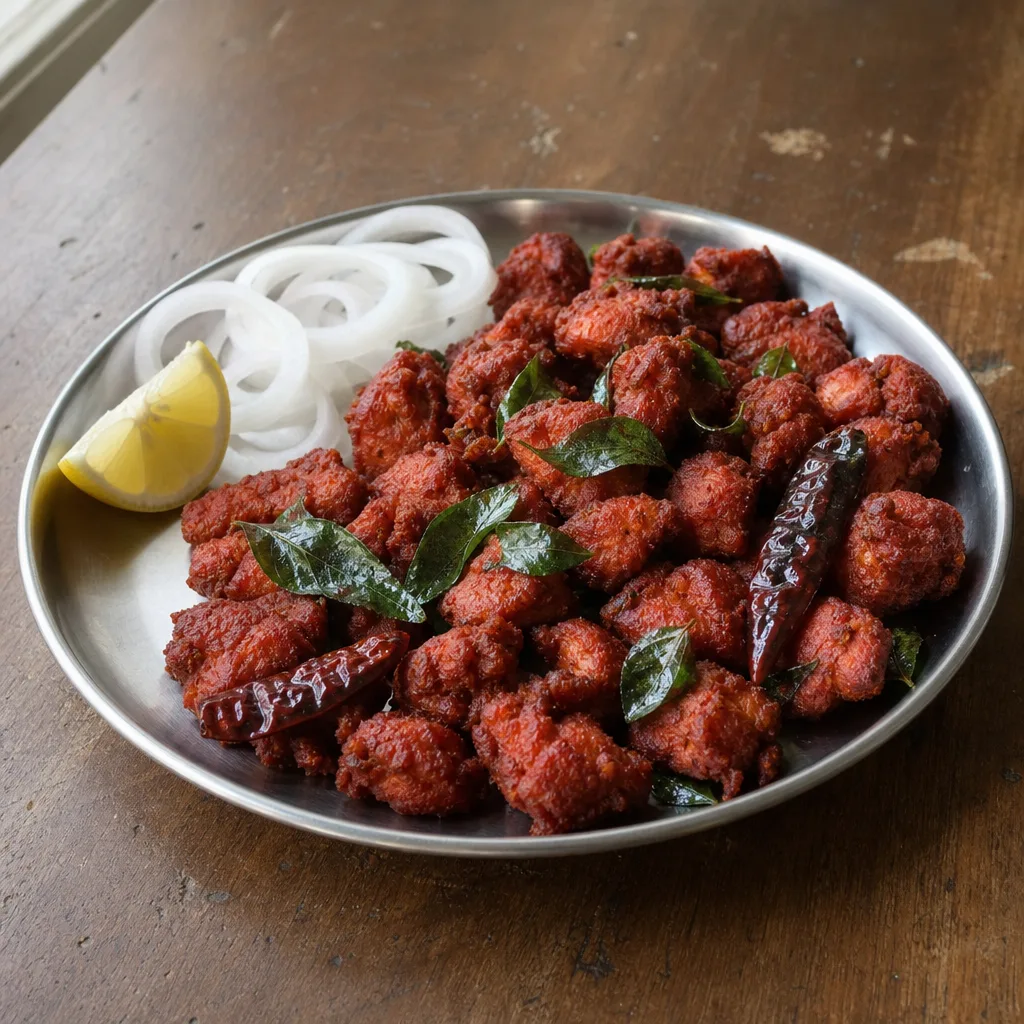
This is a Chennai dish, born in a restaurant kitchen and then carried into Tamil homes. It is a dry preparation: small boneless pieces of chicken, marinated in red chilli, ginger, garlic and a little corn flour to help the coating hold, then deep-fried in hot oil until the surface is dark, dry and faintly crisp. No sauce is added. The colour comes entirely from the chilli and the frying, not from food colouring, which belongs to the restaurant version and not the home kitchen.
In Chennai households it is eaten as a starter or as a snack with sliced onion, lemon wedges and a green chilli on the side. It also appears on the table alongside rice and rasam on special occasions, though it needs no accompaniment to be complete. Gingelly oil is the correct fat for Tamil Nadu; it gives a faint nuttiness that coconut oil cannot replicate here.
Households differ on two points: some cooks add a little rice flour alongside the corn flour for extra crispness, and some add a pinch of food-grade orange colour, which is the restaurant habit leaking into home cooking. Neither is essential. What matters is the oil temperature and the marinade time.
Ingredients (serves 4)
For the chicken and marinade
For frying
Method
Trim and dry the chicken
Cut the chicken thighs into pieces roughly 3 cm across. Pat each piece thoroughly dry with a clean cloth or paper. Any surface moisture will make the marinade watery and cause the coating to slide off in the oil. Remove any large pockets of fat but leave small ones; they keep the pieces from drying out.
Make the marinade
In a bowl large enough to hold all the chicken, combine the curd, grated ginger, grated garlic, both chilli powders, turmeric, black pepper, corn flour, rice flour, lemon juice and salt. Mix until there are no lumps of flour. The paste should be thick enough to coat a spoon; if it looks thin, the curd was too loose, and you can add another half tablespoon of corn flour.
Marinate the chicken
Add the dried chicken pieces to the marinade and turn them until every surface is coated. Cover the bowl and leave it at room temperature for 30 minutes, or in the refrigerator for up to 4 hours. Do not marinate overnight; the acid from the lemon and the salt will begin to cook the surface and the texture after frying will be dry rather than juicy inside.
Heat the oil
Pour the gingelly oil into a deep, heavy kadai and place it over medium-high heat. The oil is ready when a small pinch of batter dropped in rises immediately to the surface and sizzles steadily. This is around 175°C. Do not let the oil smoke before you begin; smoking gingelly oil turns bitter.
First fry
Lower the marinated chicken pieces into the hot oil in batches. Do not crowd the kadai; fry 8 to 10 pieces at a time depending on the size of your pan. Crowding drops the oil temperature and the pieces will steam rather than fry, losing their coating. Fry for 5 to 6 minutes, turning once, until the outside is set and a deep brick-red. The pieces will not be fully cooked through at this stage. Remove with a slotted spoon and rest on a wire rack or a plate lined with paper.
Rest, then second fry
Let all the first-fried pieces rest for at least 5 minutes. This rest allows the interior temperature to rise and the surface to firm up. Then return all the pieces to the oil together for a second fry of 2 to 3 minutes. The second fry is what gives the characteristic dry, slightly crisped exterior. The colour will deepen to a dark red-brown. Remove and rest on the rack again.
Finish with curry leaves and chillies
In the same hot oil, add the curry leaves and the whole dried red chillies. Stand back as you do this; the moisture in the curry leaves will cause vigorous spitting. Fry for 20 to 30 seconds until the curry leaves are crisp and the chillies have darkened. Remove immediately with a slotted spoon and scatter over the resting chicken pieces. The fragrance should reach you across the kitchen.
Serve immediately
Transfer to a serving plate and serve at once. The crisp coating softens within 15 minutes, so bring it to the table directly from the rack. Squeeze a little extra lemon over the top if you like, though the marinade already has enough acid for most.
How to serve
Sliced raw shallots or onion rings, lemon wedges, and fresh green chillies on the side. No chutney or sauce is traditional with the Chennai household version.
Served with: Sliced raw shallots or onion rings, lemon wedges, and fresh green chillies on the side. No chutney or sauce is traditional with the Chennai household version.
Cook's tips
On food colouring
Many restaurant recipes call for red or orange food colour. It is not in this recipe. The Kashmiri chilli powder gives enough colour, and using a higher proportion of it adjusts the shade without any additive.
On the double fry
The single-fry shortcut is common in hurried home kitchens, but the texture is noticeably different: softer and sometimes wet at the surface. The double fry is not optional if you want the dry, almost crackling outside that defines this dish.
Oil temperature is everything
If the oil is too cool, the coating absorbs oil and becomes heavy. If it is too hot, the outside burns before the inside cooks. Let the oil return to temperature for a minute between batches.
Gingelly oil substitution
If gingelly oil is unavailable, use a neutral oil entirely. Do not substitute coconut oil; it has too low a smoke point for sustained deep frying at this temperature and the flavour profile shifts the dish away from its Tamil origins.
Chicken breast vs thigh
Breast meat can be used and is leaner, but it dries out faster in the second fry. If using breast, reduce the second fry to 90 seconds.
Regional variations
Kerala toddy-shop version tossed in a wet yogurt and curry leaf finish after frying; Andhra version with green chillies and extra heat; restaurant versions coated in a sauced yogurt tempering.
Glossary
- nallennai நல்லெண்ணெய்
- Gingelly oil, cold-pressed sesame oil; the standard frying and cooking oil in Tamil Nadu.
- kadai கடாய்
- A deep, round-bottomed iron or steel wok used for deep frying and stir frying across South India.
- pachari പച്ചരി
- Raw (unparboiled) white rice; a Kerala term included for the glossary's regional audience.
Two things decide whether this works: the oil temperature held steady through both fries, and enough marinade time for the spices to penetrate the chicken rather than just coating the surface. Get those right and everything else follows.
More Non-Vegetarian recipes
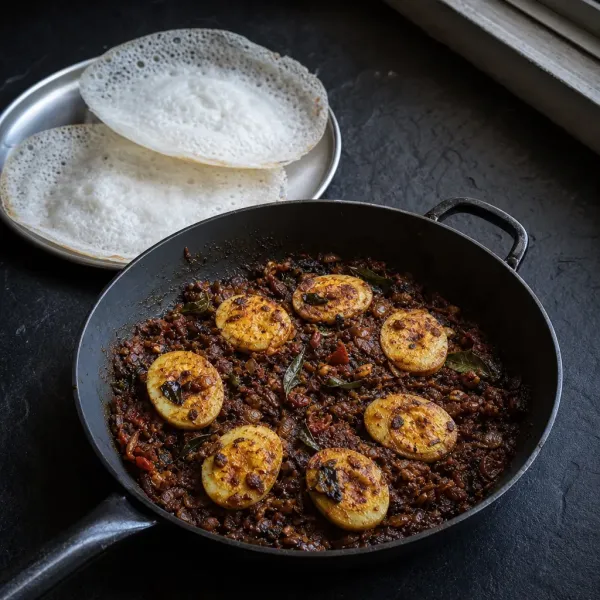
Kerala Egg Roast
Traditional Kerala egg roast from a Nasrani kitchen: hard-boiled eggs in a dark shallot and tomato masala, cooked in coconut oil and served with appa…
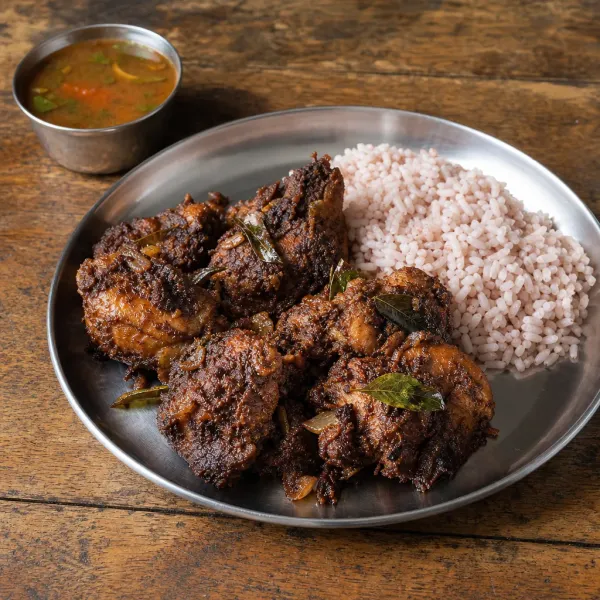
Kozhi Varuval
Traditional Kongunad kozhi varuval: bone-in chicken roasted dry in gingelly oil with shallots, tomato, and freshly ground spices. Stovetop method, no…
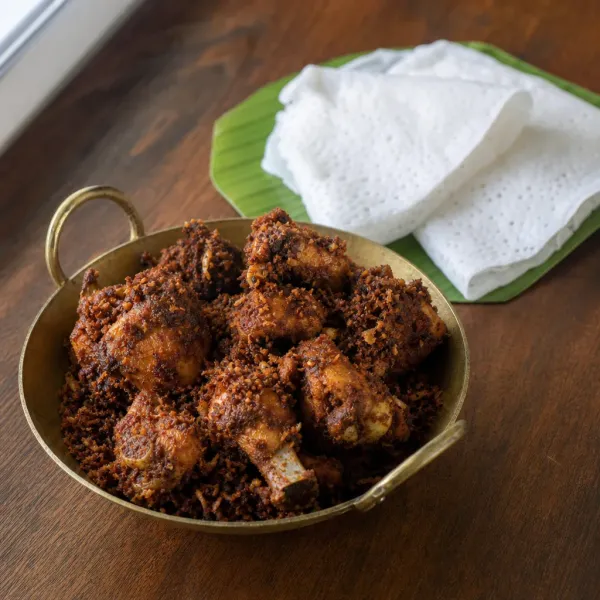
Mangalorean Chicken Sukka
Authentic Mangalorean Chicken Sukka from a Konkani Catholic home kitchen: roasted-ground byadagi masala, dry-fried chicken, finished with fresh grate…
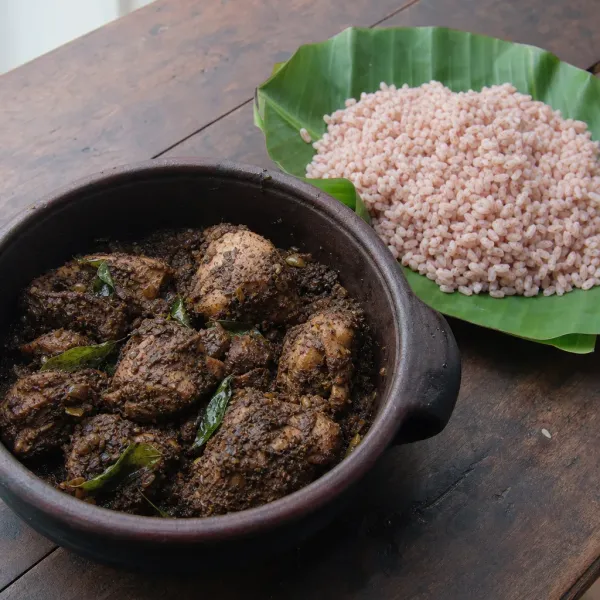
Kurumulaku Kozhi (Kerala Pepper Chicken)
Traditional Kerala Nasrani pepper chicken cooked with freshly cracked black pepper, shallots, curry leaves and coconut oil. A semi-dry Travancore Syr…
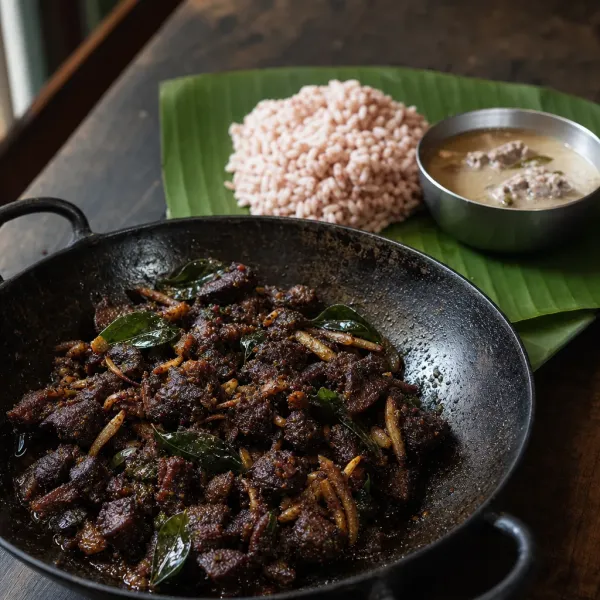
Beef Ularthiyathu
Traditional Kerala Nasrani beef ularthiyathu with coconut slivers. Slow-roasted in an iron kadai with shallots, black pepper, and fresh curry leaves.
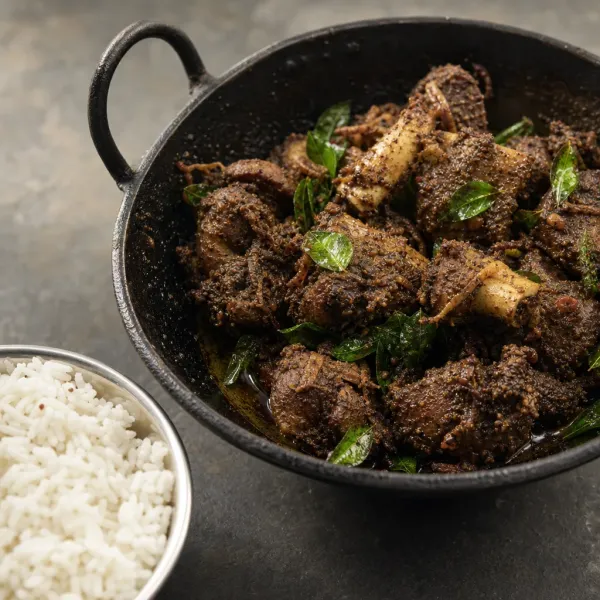
Mutton Pepper Fry
Traditional Chettinad mutton pepper fry in gingelly oil with cracked black pepper, kalpasi and marathi mokku. Bone-in mutton, iron pan finished.