

Kerala Egg Roast Recipe
Malayalam മുട്ട റോസ്റ്റ്Tamil முட்டை ரோஸ்ட்Kannada ಮೊಟ್ಟೆ ರೋಸ್ಟ್Telugu గుడ్డు రోస్ట్
- Prep15 min
- Cook35 min
- Serves4
- DifficultyEasy
- DietNon-vegetarian
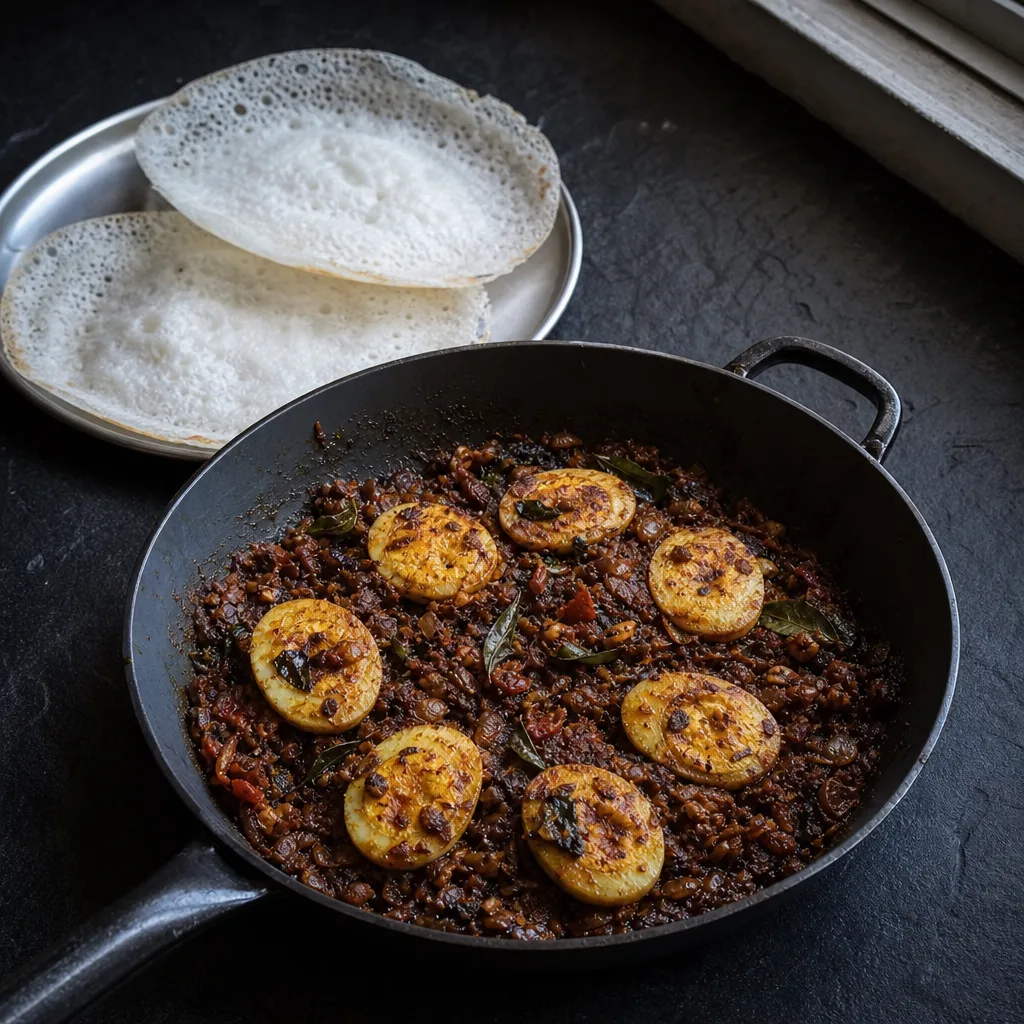
Egg roast is a Nasrani staple from central Travancore, where it has sat beside appam on Sunday breakfast tables for as long as anyone can remember. It is not a fry and it is not a curry. The eggs are hard-boiled, scored and briefly fried in coconut oil until the whites blister and take on a little colour, then folded into a thick, deeply browned onion and tomato masala. The masala is cooked long past the point where it resembles anything saucy; by the time the eggs go in, it should be nearly dry and very dark.
The heat comes from black pepper and green chillies rather than dried red chilli, and the whole spices go in first so they have time to open in the oil before anything else follows. Kashmiri chilli powder is used alongside regular chilli powder solely for colour, not heat; the final gravy should be a deep brick red, almost mahogany where it catches the pan.
Households differ on the tomato. Some add a generous amount and cook it until completely dissolved; others use less and leave a little texture. The line everyone agrees on is that the masala must be cooked until oil separates clearly at the edges before the eggs go in. If you rush that stage, the raw-onion smell never fully leaves.
Ingredients (serves 4)
For the eggs
For the masala
Method
Hard-boil the eggs
Lower the eggs gently into enough salted water to cover them by 2 cm. Bring to a boil over medium heat, then cook for exactly 10 minutes. Transfer immediately to a bowl of cold water and leave for 5 minutes. Peel carefully; the whites should be fully set with no translucency at the centre.
Score and fry the eggs
Make four shallow lengthwise cuts through each egg, cutting just into the white without splitting the egg open. Heat 1 tbsp coconut oil in a wide pan over medium-high heat. When the oil shimmers, add the eggs and fry, turning gently, for about 3 minutes until the surface is lightly blistered and golden in patches. Remove and set aside. The scoring helps the masala cling to the egg later.
Bloom the whole spices
In the same pan, add 3 tbsp coconut oil over medium heat. When hot, add the cardamom, cloves, cinnamon and bay leaf. Let them sizzle for about 45 seconds until fragrant; the cardamom skins will puff slightly. Do not let them darken.
Cook down the shallots
Add the sliced shallots, green chillies and curry leaves to the pan. Stir well to coat in the spiced oil. Cook over medium heat, stirring frequently, for 18 to 22 minutes until the shallots are deeply golden brown and reduced to about a third of their original volume. This step cannot be rushed; pale shallots make a bitter, underdeveloped masala. Add a pinch of salt early on to help them release moisture.
Add ginger and garlic
Add the chopped ginger and garlic. Stir continuously for 2 minutes over medium heat until the raw smell cooks off and the mixture starts sticking slightly to the pan.
Add the ground spices
Reduce heat to low. Add the Kashmiri chilli powder, red chilli powder, coriander powder, turmeric and black pepper. Stir constantly for 90 seconds so the powders toast in the oil rather than steam. The mixture will turn deep red. If it starts to stick and scorch, add a tablespoon of water and stir quickly.
Cook the tomatoes down
Add the chopped tomatoes and salt. Increase heat to medium. Cook, mashing the tomatoes as they soften, for 10 to 12 minutes until they are completely broken down and the oil separates visibly at the edges of the masala. The mixture should look dark, thick and glossy, not wet or saucy. If oil has not separated, keep cooking.
Add the eggs
Nestle the fried eggs into the masala, scored side down first. Spoon the masala gently over each egg. Cook on low heat for 3 minutes, turning the eggs once, so the masala coats them and they absorb some of the flavour. The final dish should be nearly dry with the masala clinging to the eggs, not pooling around them.
Rest before serving
Take the pan off the heat and let it sit covered for 5 minutes. This rest lets the eggs settle into the masala. Serve from the pan or transfer to a heavy steel or brass dish.
How to serve
Appam. Also eaten with pathiri, porotta, or kallappam in many Nasrani households.
Served with: Appam. Also eaten with pathiri, porotta, or kallappam in many Nasrani households.
Cook's tips
Shallots, not onions
Regular onions change the flavour noticeably; the sweetness and texture are different. Use the small red Kerala shallots. If you must use large onions, reduce the quantity to 150 g and expect a softer, less complex masala.
The masala must be dry
This is not a gravy dish. If your masala still looks wet when you add the eggs, the tomatoes were not cooked long enough or the heat was too low. Keep the pan on medium heat, stir, and wait for the oil to show at the edges before proceeding.
Kashmiri chilli powder
It is used here only for the deep red colour. Do not substitute with more regular chilli powder unless you want a much hotter dish. If you cannot find it, a small pinch of sweet paprika is a closer substitute than extra hot chilli.
Scoring the eggs
The cuts must be shallow. If you cut all the way through, the yolk crumbles into the oil and the egg breaks apart when you turn it. A sharp knife and light pressure are enough.
Storage
Tastes better the next morning after the eggs have sat in the masala overnight in the refrigerator. Reheat gently in the pan with a teaspoon of coconut oil; microwaving makes the egg whites rubbery.
Regional variations
Mappila households in Malabar make a similar preparation with more whole spices and sometimes a little coconut milk; the Travancore version is drier and darker.
Glossary
- chuvannulli ചുവന്നുള്ളി
- Small red shallots, the standard allium in Kerala cooking; sweeter and more aromatic than large onions.
- kudampuli കുടംപുളി
- Dried Malabar tamarind (Garcinia cambogia); used in Kerala fish curries for souring, not present in this dish.
- tejpatta തേജ്പത്ത
- Indian bay leaf from the cassia tree; different from Mediterranean bay laurel, with a faint cinnamon note.
- pathiri പത്തിരി
- Thin unleavened rice flour flatbread from the Malabar coast, common in Mappila and Nasrani households.
Two things decide whether this works: the shallots must be cooked until genuinely dark and sweet, not just soft and translucent, and the tomato masala must be dry enough that oil separates before the eggs are added. Everything else is adjustable to taste, but skip either of those steps and the dish will be flat.
More Non-Vegetarian recipes
Kozhi Varuval
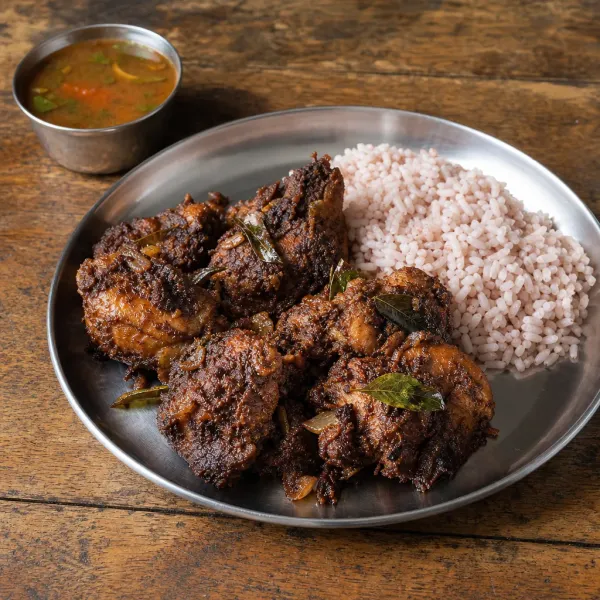
Traditional Kongunad kozhi varuval: bone-in chicken roasted dry in gingelly oil with shallots, tomato, and freshly ground spices. Stovetop method, no…
Chicken 65
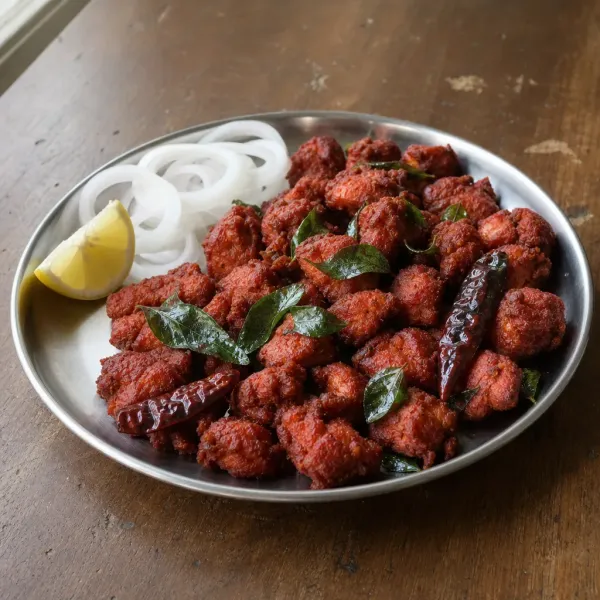
The original Chennai-style Chicken 65: double-fried boneless chicken in Kashmiri chilli and gingelly oil. Dry, crisp, no sauce. Traditional household…
Mangalorean Chicken Sukka
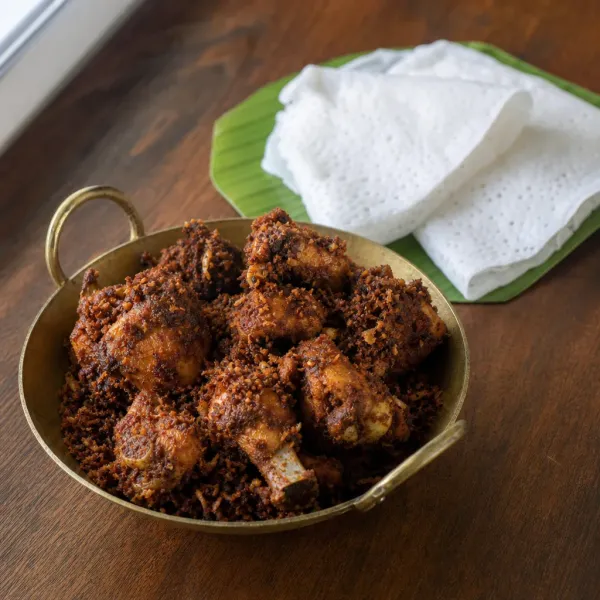
Authentic Mangalorean Chicken Sukka from a Konkani Catholic home kitchen: roasted-ground byadagi masala, dry-fried chicken, finished with fresh grate…
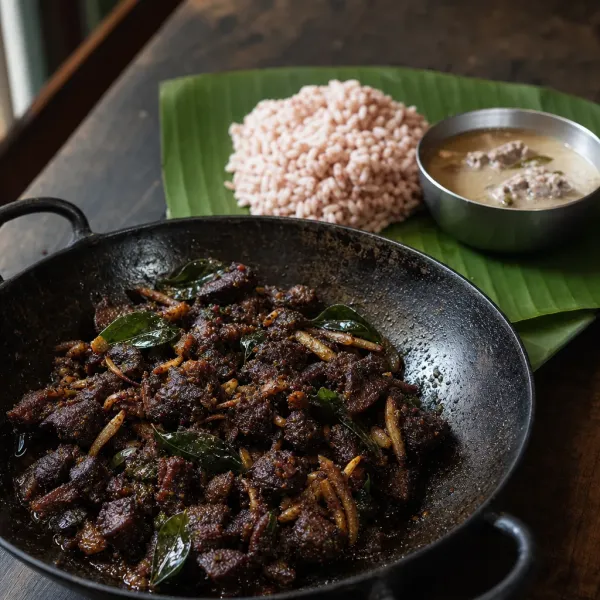
Beef Ularthiyathu
Traditional Kerala Nasrani beef ularthiyathu with coconut slivers. Slow-roasted in an iron kadai with shallots, black pepper, and fresh curry leaves.
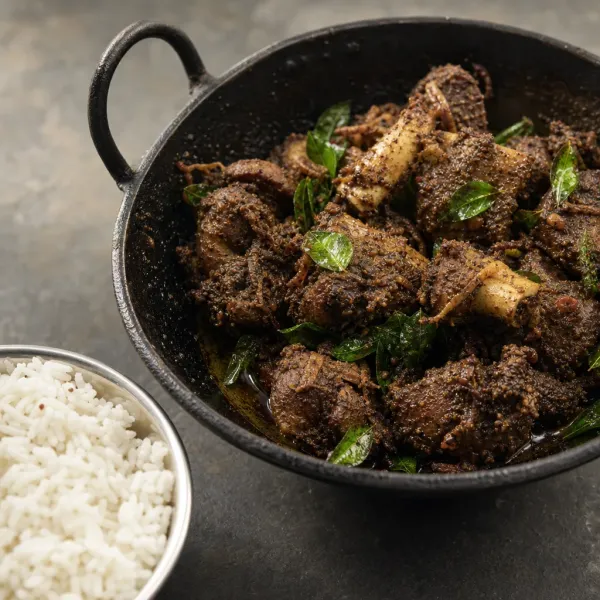
Mutton Pepper Fry
Traditional Chettinad mutton pepper fry in gingelly oil with cracked black pepper, kalpasi and marathi mokku. Bone-in mutton, iron pan finished.
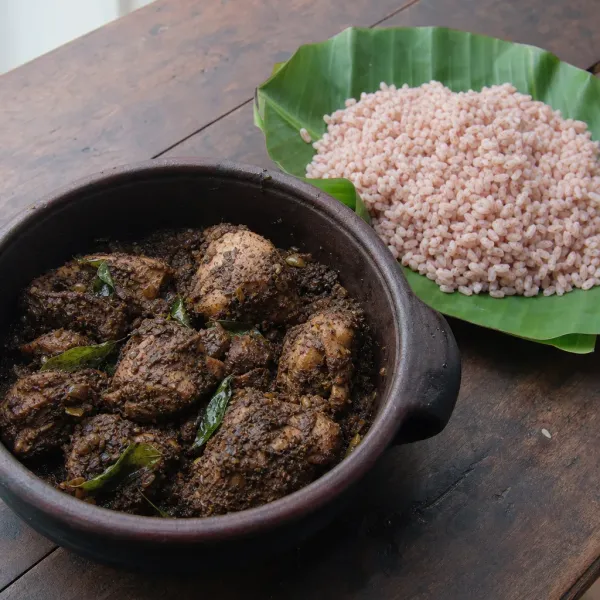
Kurumulaku Kozhi (Kerala Pepper Chicken)
Traditional Kerala Nasrani pepper chicken cooked with freshly cracked black pepper, shallots, curry leaves and coconut oil. A semi-dry Travancore Syr…