

Mutton Pepper Fry Recipe
Malayalam മട്ടൺ കുരുമുളക് വറുത്തത്Tamil மட்டன் மிளகு வறுவல்Kannada ಮಟನ್ ಮೆಣಸು ಫ್ರೈTelugu మటన్ మిరియాల ఫ్రై
- Prep20 min
- Cook55 min
- Serves4
- DifficultyMedium
- DietNon-vegetarian
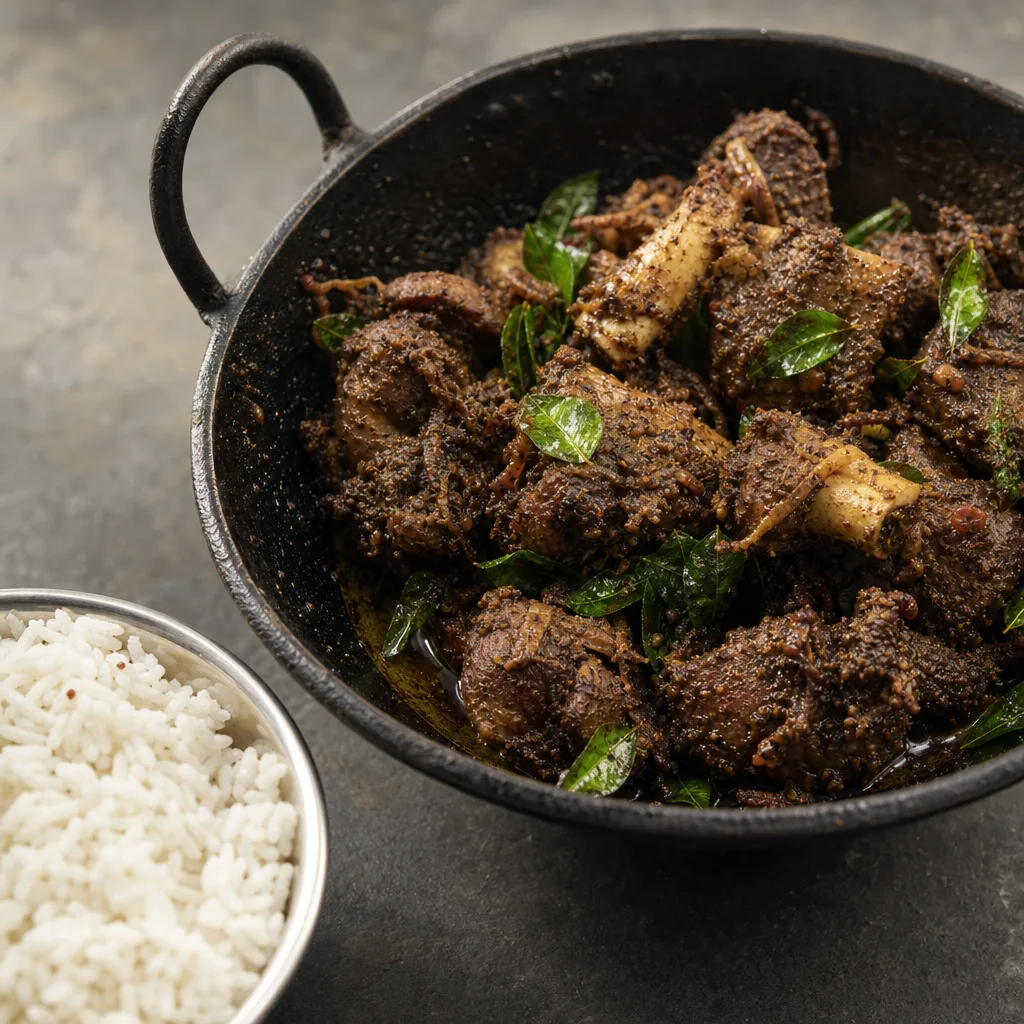
Chettinad mutton pepper fry comes from the Nattukkotai Chettiar community of the Sivaganga and Pudukottai districts of Tamil Nadu. This is a dry-finish dish cooked in gingelly oil, heavy with freshly cracked black pepper and kalpasi, where the meat is first pressure-cooked in its own juices with whole spices and then finished in a hot iron pan until the masala coats each piece closely and the oil begins to separate around the edges. The pepper here is not background heat; it is the primary flavour, and the quantity used would alarm a cook from any other tradition.
In Chettiar households this is Sunday food, made when a whole leg or shoulder is broken down at home. The cook cracks the pepper coarsely on a stone rather than grinding it fine, so you get the bite of larger fragments alongside the warmth of the smaller ones. Some families add a small piece of kalpasi and marathi mokku to the pressure-cook stage; others reserve all aromatics for the final fry. Both are correct.
It is eaten with plain boiled matta rice or seeraga samba rice at a full meal, or folded into dosa at breakfast the next morning when the fat has set and the flavour has deepened overnight.
Ingredients (serves 4)
For pressure cooking the mutton
For the pepper masala and final fry
Method
Crack the pepper and dry-roast the spices
Place the black peppercorns on a stone grinder or in a heavy mortar and crack them coarsely. You want a range of sizes, from near-whole to coarse fragments; nothing that looks like fine powder. In a dry pan over low heat, roast the coriander seeds until they turn a shade darker and smell nutty, about 2 minutes, then add the cumin for the last 30 seconds. Cool, then grind coarsely along with the cracked pepper. Set aside. Do not mix these into the meat yet.
Sear the shallots and aromatics for pressure cooking
Heat 2 tbsp gingelly oil in the pressure cooker base over medium heat. Add the halved shallots and fry, stirring occasionally, until the edges colour to a pale gold, about 5 minutes. Add the crushed ginger, garlic, and slit green chillies. Fry another 2 minutes until the raw smell fades. If you rush this step, the pressure-cooked meat will taste raw at the base.
Add the whole spices and mutton
Add the cinnamon, cloves, black cardamom, kalpasi, and marathi mokku to the pan. Stir for 30 seconds until fragrant. Add the mutton pieces, turmeric, and salt. Stir well so every piece is coated. Fry over medium-high heat for 4 to 5 minutes, turning the meat, until the outside of the pieces loses its raw red colour. The meat will release some liquid; let it cook in that.
Pressure cook until tender
Add 100 ml water, seal the cooker, and cook over medium heat for 4 to 5 whistles, then reduce to the lowest flame for 10 minutes. Turn off and let the pressure drop naturally; do not force-release. Open and check: the meat should be just cooked through and yielding, not falling off the bone yet. There will be a small amount of concentrated stock at the bottom; do not discard it.
Reduce the cooking liquid
If there is more than 3 to 4 tbsp of liquid in the cooker, lift the meat out with a slotted spoon and reduce the liquid in the open cooker over medium heat until it is thick and coats a spoon. Return the meat to it. This reduced liquid carries the first layer of flavour into the final fry.
Build the frying base
Heat a wide, heavy iron pan or a thick-based kadai over medium heat. Add 3 tbsp gingelly oil. When the oil shimmers, add the torn dried red chillies and let them darken for 15 seconds. Add the sliced shallots and fry, stirring, until they are deep golden brown, about 8 to 9 minutes. Do not undercolour them; pale shallots will make the final dish taste sweet and flat. Add the curry leaves; they will sputter. Add the ginger-garlic paste and fry for 2 minutes until the raw smell is entirely gone.
Add the pepper masala
Add the cracked pepper and roasted spice mixture to the pan. Stir over medium heat for 1 minute. The pepper will smell sharp and toasty. Do not let it scorch; keep it moving.
Add the cooked mutton and toss
Add the pressure-cooked mutton along with its reduced liquid. Stir well to coat every piece in the masala. Increase the heat to medium-high. The goal now is to drive off all remaining moisture and get the masala to cling tightly to the meat.
Fry until the masala is dry and clinging
Cook, stirring and turning the meat every minute or so, for 10 to 12 minutes. The masala will first look wet, then paste-like, then begin to darken and stick. When you see the gingelly oil separating around the edges of the pan and the masala has turned from a paste to a dark, dry coating on each piece of meat, it is ready. This is the stage that cannot be rushed; pulling it early leaves the dish tasting of raw spice.
Check seasoning and rest
Taste for salt and pepper at this point. If you want more pepper heat, add another ½ tsp cracked pepper, stir for 30 seconds, and take off the heat. Let the pan sit uncovered for 5 minutes before serving; the residual heat deepens the pepper note.
How to serve
Plain boiled seeraga samba rice or matta rice, with a thin vegetable kuzhambu or rasam on the side. In Chettiar households this is also served as part of a full spread with urundai kuzhambu and a dry poriyal.
Served with: Plain boiled seeraga samba rice or matta rice, with a thin vegetable kuzhambu or rasam on the side. In Chettiar households this is also served as part of a full spread with urundai kuzhambu and a dry poriyal.
Cook's tips
Bone-in is not negotiable
Boneless mutton will cook faster but the dish will be noticeably thinner in flavour. The marrow and collagen from cut bone pieces give the reduced stock its body.
Kalpasi and marathi mokku
These two spices define the Chettinad character of the dish. If you cannot find them, the pepper fry will still taste good but it will not taste specifically Chettinad. Do not substitute.
Gingelly oil cannot be replaced here
The nutty, slightly bitter quality of cold-pressed gingelly oil is part of the flavour. Refined sunflower oil produces a flat result. Coconut oil takes it into a different regional register entirely.
The pepper quantity is correct
Two tablespoons of cracked black pepper for 800 g mutton is the traditional level. First-time cooks often halve it and find the dish tastes like an ordinary fry. If you are cooking for people unused to pepper heat, reduce to 1½ tbsp, not less.
Next-day flavour
This dish improves markedly after a night in the refrigerator. Reheat in a dry iron pan over medium heat, not in a microwave, which softens the crust the frying created.
Stovetop without a pressure cooker
This is the older method. After the initial sear, add 200 ml water, cover tightly, and cook over low heat for 50 to 60 minutes, checking and adding water in small amounts if it catches. The rest of the method is the same.
Regional variations
Kerala Nasrani households make a similar dry mutton fry using coconut oil and curry leaves with less pepper; Andhra households make a version with more dried red chilli and less pepper.
Glossary
- Kalpasi கல்பாசி
- Stone flower, a dried lichen used in Chettinad and some Hyderabadi cooking; gives a faintly mossy, earthy base note.
- Marathi mokku மராத்து மொக்கு
- Dried flower pod of the Ailanthus malabarica tree; used whole in Chettinad spice blends for a faint floral, resinous note.
- Sombu சோம்பு
- Fennel seeds; in Chettinad cooking these appear in the pressure-cook stage to round the heat of the pepper.
- Seeraga samba சீரக சம்பா
- A small-grained, aromatic Tamil Nadu rice variety traditional to Chettinad meals; shorter and more fragrant than regular raw rice.
- Gingelly oil நல்லெண்ணெய்
- Cold-pressed sesame oil, untoasted; the traditional cooking fat for Chettinad savoury dishes and pickles.
Two things decide whether this dish works: the pepper must be cracked on stone to uneven fragments, never powdered, and the final fry in the iron pan must go far enough that the oil separates and the masala is genuinely dry on every piece. Pull it early and you have meat in wet spice paste. Stay with it and you have Chettinad pepper fry.
More Non-Vegetarian recipes
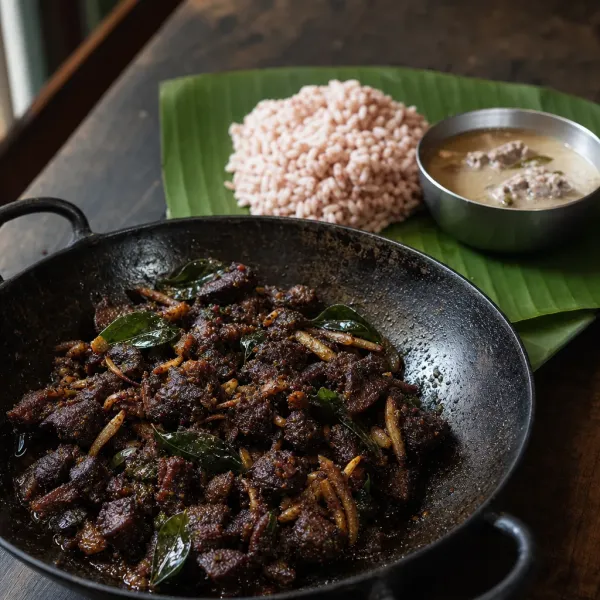
Beef Ularthiyathu
Traditional Kerala Nasrani beef ularthiyathu with coconut slivers. Slow-roasted in an iron kadai with shallots, black pepper, and fresh curry leaves.
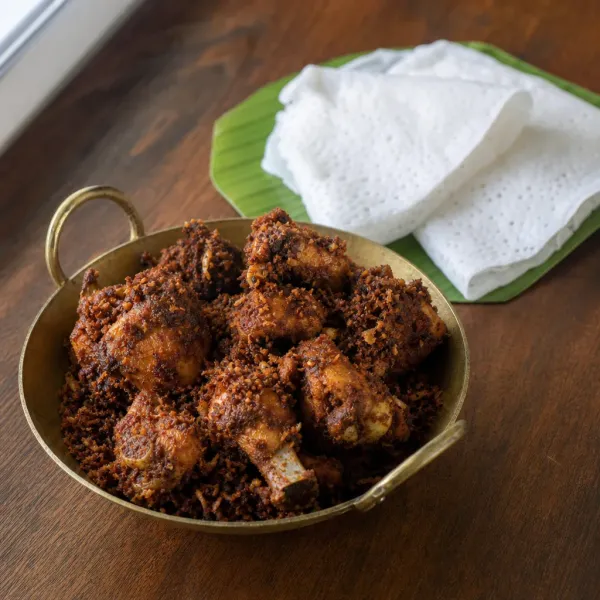
Mangalorean Chicken Sukka
Authentic Mangalorean Chicken Sukka from a Konkani Catholic home kitchen: roasted-ground byadagi masala, dry-fried chicken, finished with fresh grate…
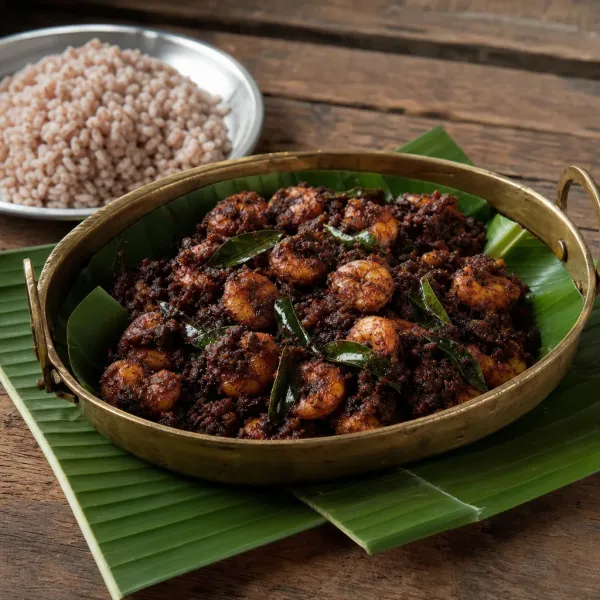
Chemmeen Roast
Traditional Kerala Nasrani chemmeen roast with shallots, kudampuli and coconut oil. Step-by-step method with the slow roasting technique that makes i…
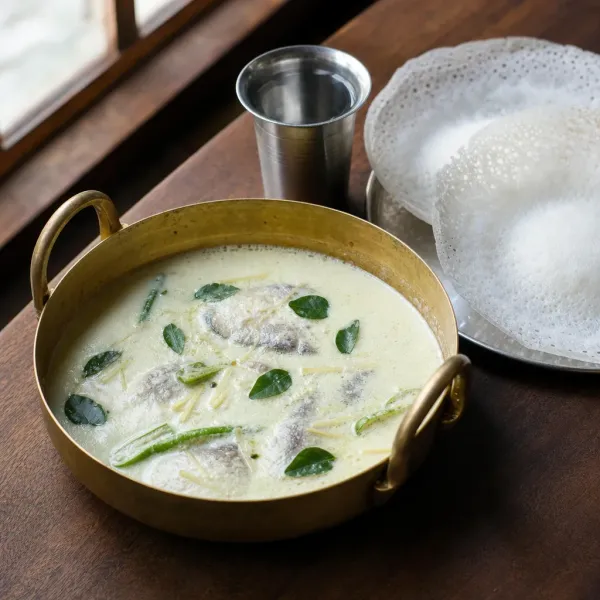
Meen Moilee
Traditional Nasrani Meen Moilee from Travancore: pale coconut-milk fish stew with green chilli, ginger and shallots. Served with appam or matta rice.
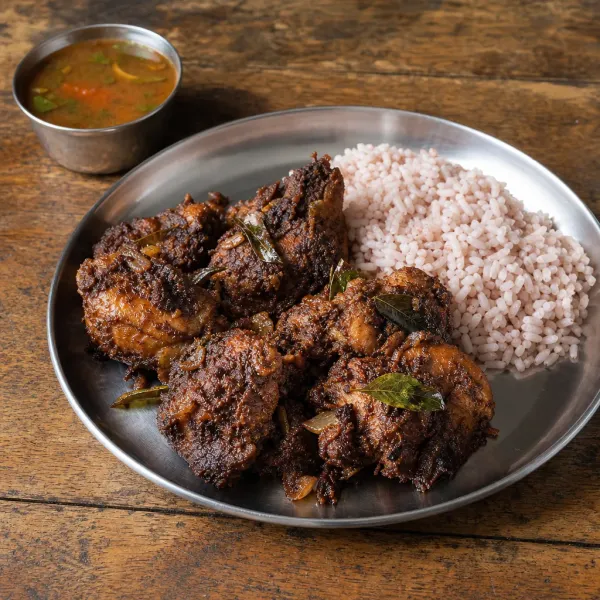
Kozhi Varuval
Traditional Kongunad kozhi varuval: bone-in chicken roasted dry in gingelly oil with shallots, tomato, and freshly ground spices. Stovetop method, no…
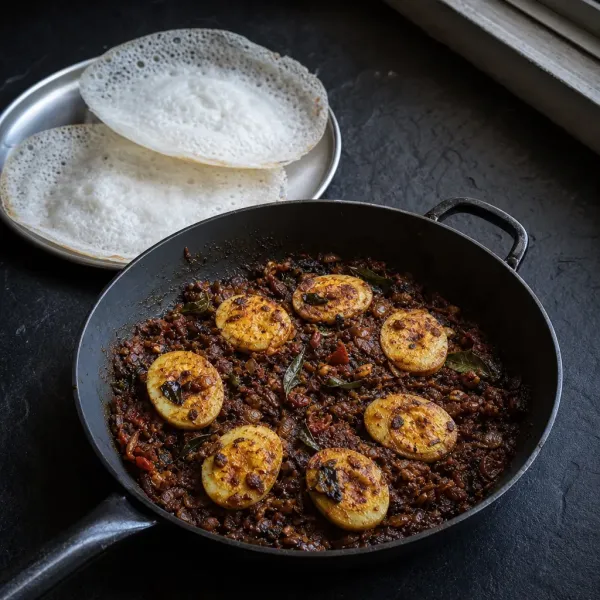
Kerala Egg Roast
Traditional Kerala egg roast from a Nasrani kitchen: hard-boiled eggs in a dark shallot and tomato masala, cooked in coconut oil and served with appa…