

Kozhi Varuval Recipe
Malayalam കോഴി വരുവൽTamil கோழி வருவல்Kannada ಕೋಳಿ ವರುವಲ್Telugu కోడి వరువల్
- Prep20 min
- Cook45 min
- Serves4
- DifficultyMedium
- DietNon-vegetarian
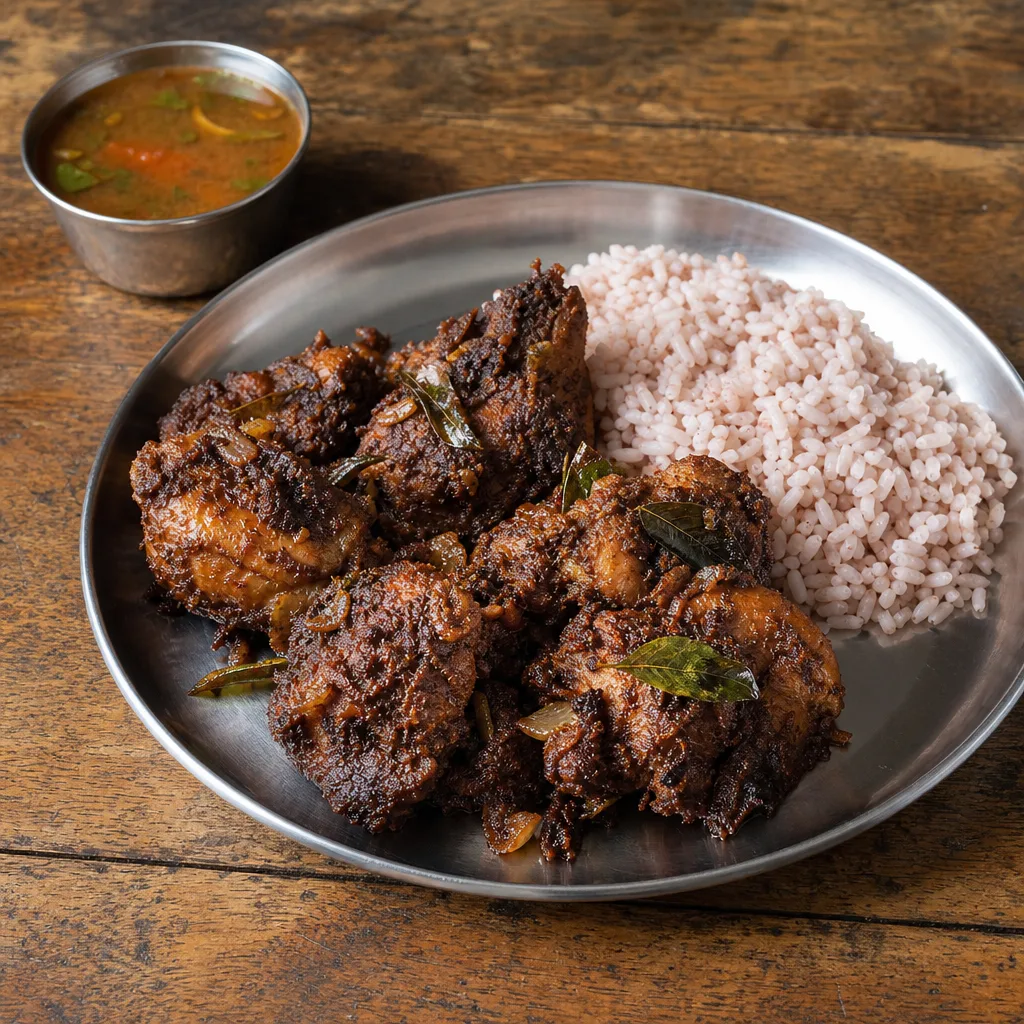
Kozhi varuval is a semi-dry chicken dish cooked in gingelly oil, built on a base of shallots, ginger, garlic, and a short spice list that lets the meat come forward. In Kongunad homes it is the everyday non-vegetarian dish, made on Sundays when the whole family is home and finished on the stovetop without an oven in sight.
The technique is a slow roast in the pan. The chicken goes in with its marinade, sweats down in its own juices, and then the heat is raised so the masala coats and darkens without burning. The result is pieces with a dry, slightly caramelised surface and no pooling gravy. If there is liquid at the end, the cook has not gone far enough.
Households differ mostly on chilli heat and whether to use bone-in pieces or a mix of bone-in and boneless thigh. Bone-in pieces take longer but the flavour is better. Some cooks grind fresh coconut paste into the marinade to help it cling; others use none at all. Both are legitimate. This version uses no coconut in the marinade, which is the drier, more common everyday style.
Ingredients (serves 4)
Chicken and marinade
For cooking
Method
Marinate the chicken
Pat the chicken pieces dry with a cloth. In a large bowl, mix the turmeric, red chilli powder, coriander powder, ground pepper, ground fennel, salt, and lemon juice into a paste. Add the chicken and work the marinade into every piece and under any loose skin. Set aside for at least 30 minutes at room temperature, or up to 4 hours in the refrigerator. Cold chicken dropped into a hot pan stiffens quickly; if it has been refrigerated, let it sit out for 20 minutes first.
Pound the ginger and garlic
Use a stone mortar if you have one. Pound the ginger first until it begins to break down, then add the garlic and pound to a coarse, fibrous paste. A food processor gives a watery result that causes the oil to spit; the stone mortar gives a paste that cooks drier and more evenly. If you must use a processor, keep the texture rough.
Cook down the shallots
Heat the gingelly oil in a wide, heavy kadai or iron pan over medium flame. When the oil shimmers, add the dried red chillies and let them darken for about 30 seconds. Add the curry leaves — they will crackle and spit. Add the sliced shallots and a pinch of salt. Cook, stirring often, for 12 to 15 minutes until the shallots are deep golden and beginning to catch at the edges. Do not rush this step; under-cooked shallots leave a raw sweetness that dulls the final dish.
Add the ginger-garlic paste
Add the pounded ginger-garlic paste to the shallots and stir continuously over medium heat for 3 to 4 minutes. It should turn fragrant and lose its raw smell completely. If it begins to stick, add a small splash of water and scrape the bottom of the pan. The paste is ready when it looks dry and the oil begins to separate at the edges.
Add the tomatoes
Add the chopped tomato, stir well, and cook over medium heat for 6 to 8 minutes until the tomato softens completely and melts into the shallot base. The mixture should look thick and almost paste-like, with the oil visibly separating. A wet, loose base at this point will make the final dish saucy rather than dry.
Add the marinated chicken
Turn the heat to medium-high. Add the chicken pieces with all the marinade clinging to them. Stir to coat every piece in the shallot-tomato base. The chicken will release moisture within the first few minutes. Let it cook uncovered, stirring every couple of minutes, for 10 minutes. Do not cover the pan at this stage; steam will prevent the roasting action.
Cook through on medium heat
Reduce to medium heat. Continue cooking, turning the pieces occasionally, for another 15 to 20 minutes depending on piece size. If the pan looks dry before the chicken is cooked through, add up to 60 ml of water, one splash at a time, and scrape up any masala that has stuck. The chicken is cooked when the juices run clear when you pierce a thigh piece at its thickest point.
Roast off the moisture
Once the chicken is cooked through, raise the heat to medium-high again. Stir more frequently now, every 30 seconds. The goal is to evaporate any remaining liquid and allow the masala to coat the pieces in a dark, almost dry crust. This takes 5 to 8 minutes. The pieces should look glossy and darkened, not wet. Watch the heat carefully here; the difference between a good roast and a burnt pan is two minutes of inattention.
Finish and rest
Taste for salt and add a small squeeze of lemon if the dish seems flat. Turn off the heat and let it rest in the pan for 5 minutes before serving. The residual heat continues to set the masala coating. Scatter the remaining fresh curry leaves over the top if you like.
How to serve
Plain steamed matta rice or seeraga samba rice, with a small bowl of rasam or a thin kootu on the side. Often eaten with parotta at roadside restaurants. Sliced raw shallots and a wedge of lemon are placed alongside.
Served with: Plain steamed matta rice or seeraga samba rice, with a small bowl of rasam or a thin kootu on the side. Often eaten with parotta at roadside restaurants. Sliced raw shallots and a wedge of lemon are placed alongside.
Cook's tips
Gingelly oil is not optional
The flavour of this dish depends on cold-pressed South Indian gingelly oil. Sunflower oil or refined vegetable oil produces a flat result. Toasted Asian sesame oil is the wrong variety entirely and will make the dish taste wrong.
Shallots, not onions
Large red onions are sometimes used but they hold more water and take longer to caramelise properly. Shallots cook down into a sweeter, denser base that coats the chicken better. If you use large onions, slice them very thin and give them 5 extra minutes.
Bone-in pieces versus boneless
Boneless thigh pieces will cook in about two-thirds the time. They are acceptable but the dish has better flavour and texture with bone-in pieces. Breast meat dries out quickly and is not well suited to this method.
The sticking is part of the process
Some masala sticking to the pan bottom is normal and desirable. Deglaze it with the small water additions so it incorporates back into the dish. Heavy burning with a bitter smell means the heat was too high; reduce it and add a splash of water immediately.
Storage
Kozhi varuval keeps well. The flavour deepens overnight. Reheat in the same pan over low heat with a few drops of oil, stirring gently. It does not reheat well in a microwave, which steams the pieces and softens the coating.
Regional variations
Chettinad kozhi varuval uses kalpasi, marathi mokku, and a longer spice list; Madurai households add more fennel and dried red chillies; a Mappila version from Kerala uses coconut oil and curry leaf-heavy tempering.
Glossary
- kozhi varuval கோழி வருவல்
- Literally 'roasted chicken' in Tamil; varuval refers to the technique of frying or roasting in a spiced masala until dry.
- chinna vengayam சின்ன வெங்காயம்
- Small shallots used across Tamil Nadu cooking; 'chinna' means small, 'vengayam' means onion.
- gingelly oil நல்லெண்ணெய்
- Cold-pressed sesame oil used in Tamil Nadu cooking; milder and paler than toasted East Asian sesame oil, with a distinct nutty warmth.
- kalpasi கல்பாசி
- Stone flower, a dried lichen used as a spice in Chettinad cooking; not used in this Kongunad version.
- kadai கடாய்
- A wide, deep cooking vessel with two handles, used across South Indian kitchens for frying and dry-cooking.
Two things decide this dish. The first is cooking the shallots all the way to deep gold before anything else goes in; every subsequent layer of flavour rests on that foundation. The second is the final high-heat roast at the end, which transforms a cooked-through but wet curry into the dry, clinging, darkened thing that kozhi varuval is supposed to be. Pull it off the heat too soon and it is just another chicken curry.
More Non-Vegetarian recipes
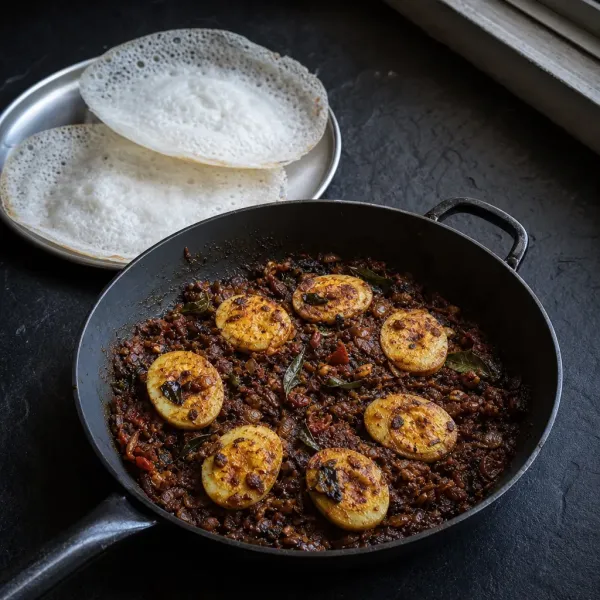
Kerala Egg Roast
Traditional Kerala egg roast from a Nasrani kitchen: hard-boiled eggs in a dark shallot and tomato masala, cooked in coconut oil and served with appa…
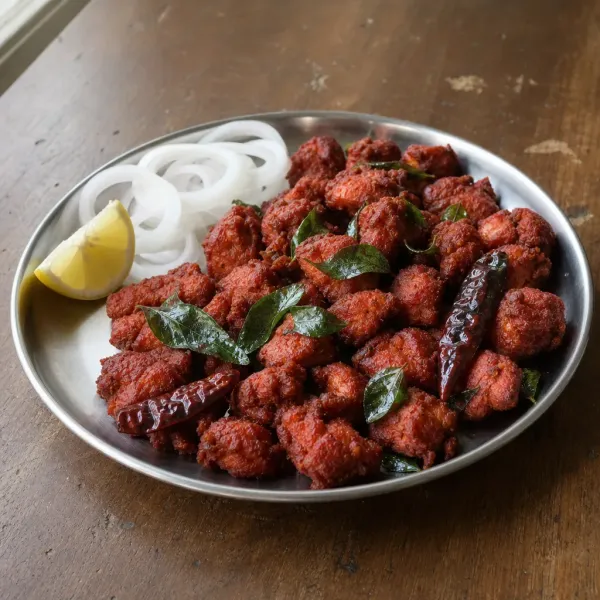
Chicken 65
The original Chennai-style Chicken 65: double-fried boneless chicken in Kashmiri chilli and gingelly oil. Dry, crisp, no sauce. Traditional household…
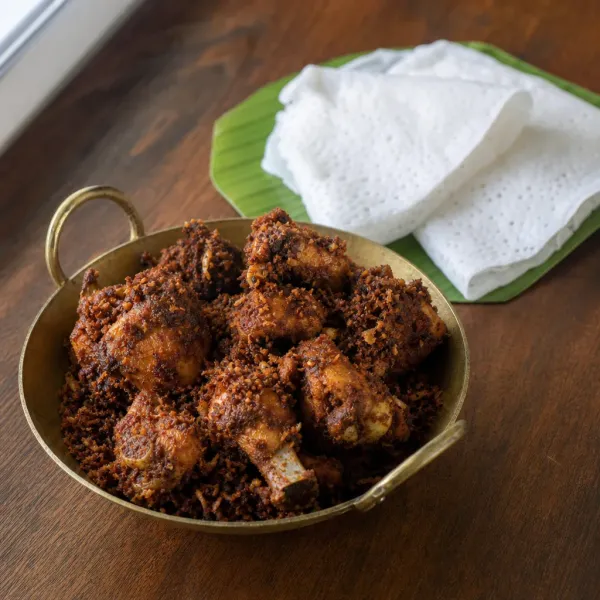
Mangalorean Chicken Sukka
Authentic Mangalorean Chicken Sukka from a Konkani Catholic home kitchen: roasted-ground byadagi masala, dry-fried chicken, finished with fresh grate…
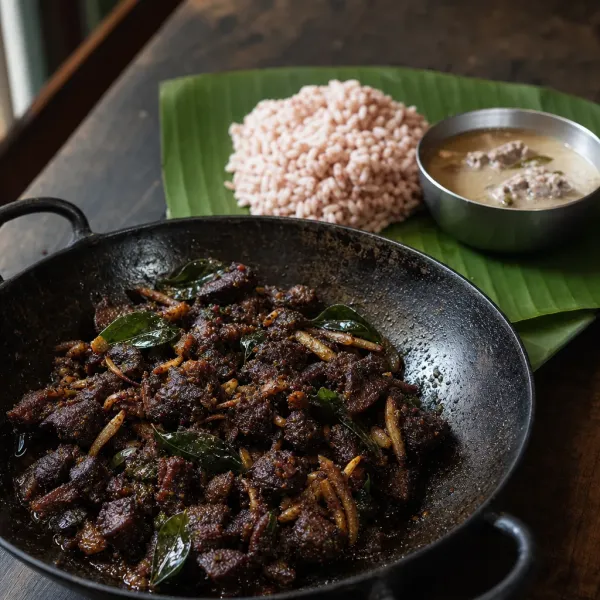
Beef Ularthiyathu
Traditional Kerala Nasrani beef ularthiyathu with coconut slivers. Slow-roasted in an iron kadai with shallots, black pepper, and fresh curry leaves.
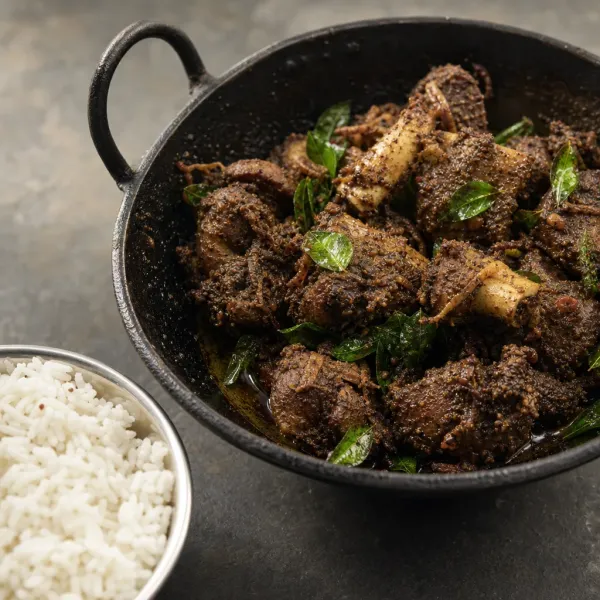
Mutton Pepper Fry
Traditional Chettinad mutton pepper fry in gingelly oil with cracked black pepper, kalpasi and marathi mokku. Bone-in mutton, iron pan finished.
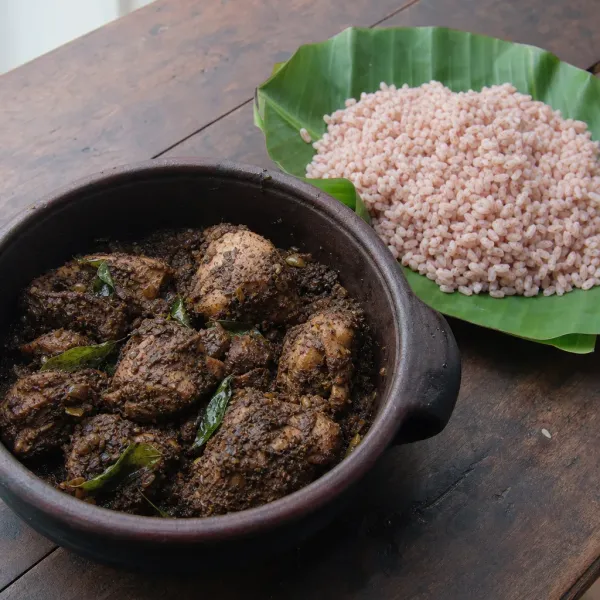
Kurumulaku Kozhi (Kerala Pepper Chicken)
Traditional Kerala Nasrani pepper chicken cooked with freshly cracked black pepper, shallots, curry leaves and coconut oil. A semi-dry Travancore Syr…