

Chicken Chukka Recipe
Malayalam ചിക്കൻ ചുക്കTamil சிக்கன் சுக்காKannada ಚಿಕನ್ ಚುಕ್ಕಾTelugu చికెన్ చుక్కా
- Prep25 min
- Cook55 min
- Serves4
- DifficultyMedium
- DietNon-vegetarian
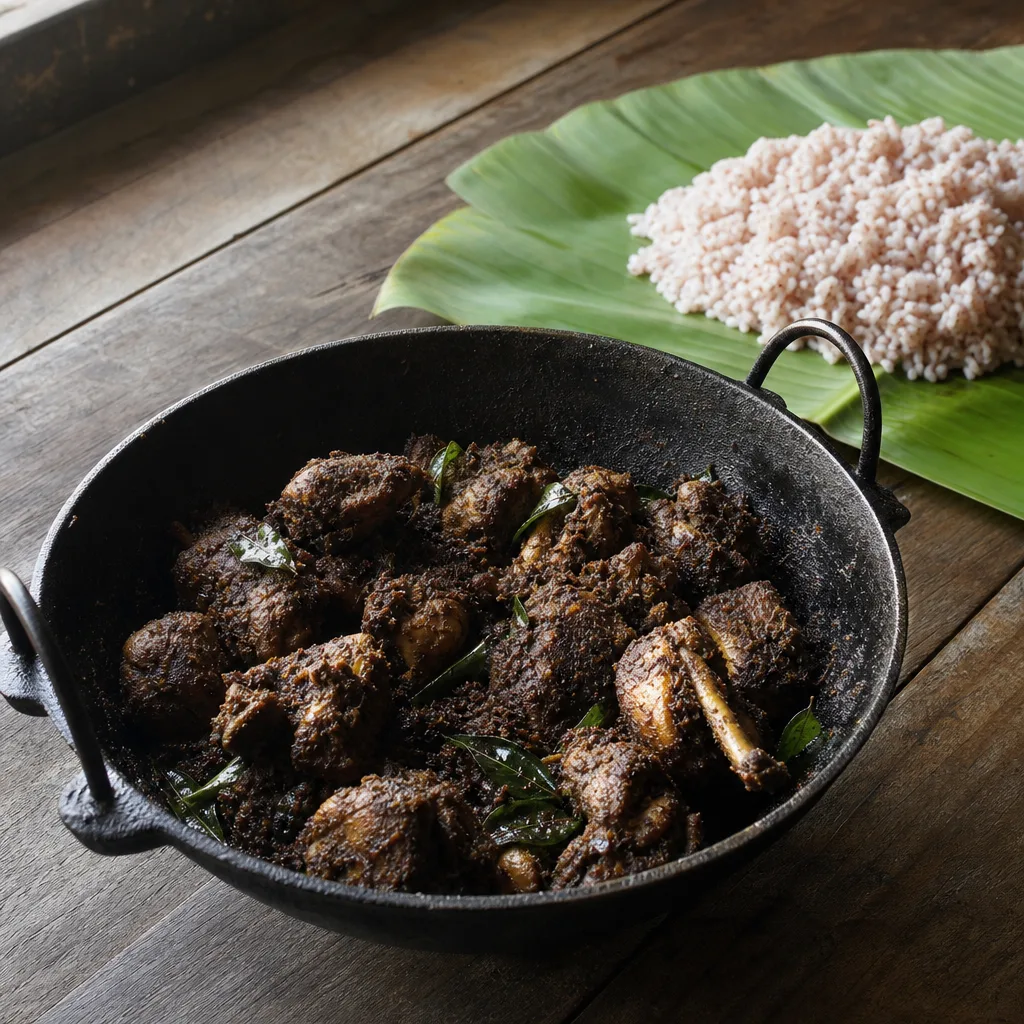
Chicken chukka is a Chettinad dry preparation in which bone-in chicken is cooked down in its own juices with a freshly ground masala until almost every drop of liquid is gone and the spices coat each piece in a dark, fragrant crust. The word chukka simply means dry in this context, and that is the entire point: the finished dish should have no gravy, no pooling oil, just meat that clings to the bone and a masala that has toasted itself onto the surface.
In a Chettiar household this is weekday food, not a feast dish. It is made with country chicken when available, which takes longer to cook and rewards the patience. The masala is ground fresh each time from whole spices that are dry-roasted first. Kalpasi (stone flower), marathi mokku (dried flower pods) and star anise are the aromatics that mark this as Chettinad rather than any other Tamil kitchen; leaving them out makes a decent dry chicken but not this one.
Households differ mainly in the ratio of dried red chillies to black pepper, and in whether they add a small amount of shallots at the end for a second round of sweetness. Some cooks add a handful of curry leaves twice, once into the oil at the start and again in the final dry-fry stage. Both are genuine.
Ingredients (serves 4)
For the chicken
For the fresh-ground Chettinad masala
Method
Dry-roast the whole spices
Set a heavy iron kadai over medium-low heat. Add all the whole spices for the masala except the turmeric and roast them together, stirring constantly, for 3 to 4 minutes until the coriander seeds turn a shade darker and the kitchen smells of warm pepper and anise. Do not let anything blacken. Tip onto a plate and cool completely before grinding.
Grind the masala
Transfer the cooled roasted spices to a stone grinder or small mixer jar. Add the turmeric. Grind to a fine, even powder. If you are using a mixer, grind in short pulses to avoid heating the spices. Set aside. This masala is the backbone of the dish and it must be fresh.
Fry the shallots, ginger and garlic
Heat the gingelly oil in the same kadai over medium heat. Add one sprig of curry leaves and let it crackle for a few seconds. Add the sliced shallots and fry, stirring regularly, for 10 to 12 minutes until they are deep golden and beginning to crisp at the edges. Add the ginger and garlic and fry for another 3 minutes until the raw smell is completely gone.
Add the tomatoes and cook down
Add the chopped tomatoes and a pinch of salt. Cook over medium heat, mashing occasionally, for 6 to 8 minutes until the tomatoes have completely broken down and the oil begins to separate at the edges of the pan. The mixture should look like a thick, dark paste, not a wet sauce.
Add the masala powder
Add the freshly ground masala powder to the pan and stir it into the paste. Fry for 2 minutes over medium heat, stirring continuously, so the raw spice smell cooks out and the masala darkens slightly. If it sticks, add a splash of water, no more than 2 tablespoons.
Add the chicken and coat well
Add the chicken pieces and turn them in the masala until every surface is coated. Fry over medium-high heat for 4 to 5 minutes, turning the pieces, so the masala begins to seal onto the meat. You want a little colour on the chicken at this stage.
Cook the chicken through
Add 100 ml of water, stir, and cover the kadai with a lid. Cook over medium-low heat for 20 to 25 minutes, lifting the lid to stir every 5 minutes. Country chicken will need the full 25 minutes or a little longer; broiler chicken will be done closer to 18 minutes. The chicken is cooked when a piece near the bone shows no pink when you press it.
Remove the lid and dry the dish
Once the chicken is cooked through, remove the lid and raise the heat to medium-high. Stir continuously and let the remaining moisture evaporate. This takes 6 to 10 minutes. The masala will begin to cling and fry rather than steam; you will hear the sound shift from a wet sizzle to a drier crackle. Do not walk away at this stage or the masala will scorch.
Finish with curry leaves
When the chicken is completely dry and the masala forms a dark coat on each piece, add the remaining two sprigs of curry leaves and toss everything over high heat for 1 minute. Taste for salt. The finished dish should have no visible liquid and the pieces should look dark, aromatic and almost caramelised on the surface.
How to serve
Plain steamed matta rice or seeraga samba rice; parotta; or as a side with rasam rice. A simple raw onion and tomato salad is often placed alongside.
Served with: Plain steamed matta rice or seeraga samba rice; parotta; or as a side with rasam rice. A simple raw onion and tomato salad is often placed alongside.
Cook's tips
Tomatoes are optional in some households
Older Chettinad recipes do not always include tomato; the shallots and masala alone build enough body. If your tomatoes are pale and sour, skip them. The dish will be drier and darker, which is not wrong.
Kalpasi and marathi mokku are not decorative
These two aromatics are what separate Chettinad masala from a generic Tamil spice blend. Both are available at any store that stocks Chettinad spices. Do not omit them and call the result the same dish.
The drying stage is where it goes wrong
Most failures happen in the final dry-fry. If the heat is too low the moisture steams off slowly and the masala turns gluey. If the heat is too high and you look away, the masala burns in under a minute. Stay at the pan and keep stirring.
Country chicken versus broiler
Country chicken (naatu kozhi) has firmer, more flavourful meat and takes 30 to 35 minutes to cook through at the covered stage. Broiler chicken is done in 18 to 20 minutes but can dry out if overcooked; watch it closely in the final stage.
Gingelly oil
Use the pale, cold-pressed cooking variety, not the dark toasted sesame oil used in Chinese cooking. The flavour is mild and nutty and it handles the heat of this method well. Coconut oil is not traditional here.
Regional variations
A similar dry chicken preparation appears in Kongunad kitchens using fewer whole spices and more dried red chillies; a Madurai street version uses a quick high-heat toss rather than a long simmer-and-dry technique.
Glossary
- Kalpasi கல்பாசி
- Stone flower, a dried lichen used as an aromatic in Chettinad cooking; smoky and faintly mossy in flavour.
- Marathi mokku மரத்தி மொக்கு
- Dried flower buds of the kapok tree, used in Chettinad masalas for a faint floral, slightly bitter note.
- Sombu சோம்பு
- Fennel seeds; used in Chettinad cooking to balance the heat of pepper and chilli.
- Pattai பட்டை
- Cinnamon bark, specifically the thin, true cinnamon used in South Indian cooking.
- Naatu kozhi நாட்டுக்கோழி
- Country chicken; free-range, with firmer meat and stronger flavour than broiler chicken.
- Chukka சுக்கா
- Dry; in the context of this dish, a preparation with no gravy, the moisture cooked off completely.
Two things decide this dish. The first is the freshness of the masala: whole spices roasted and ground the same day have a depth that any pre-ground powder cannot match. The second is patience in the final drying stage, keeping the heat high enough to fry the masala onto the meat without burning it. Get those two right and the rest follows.
More Chicken recipes
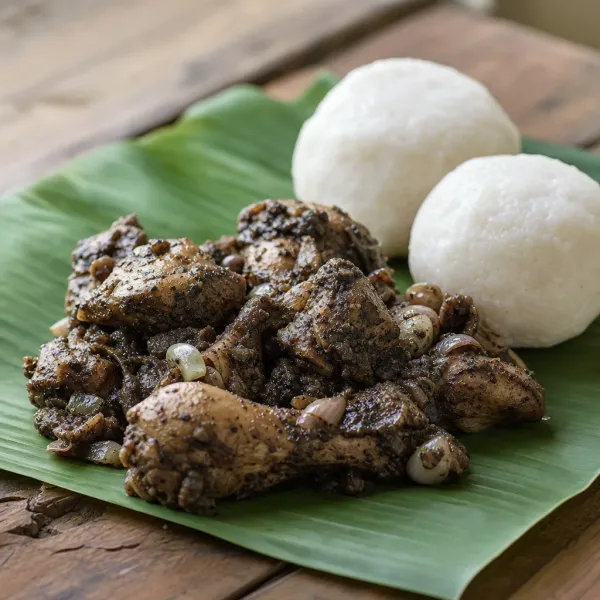
Chicken Uppu Kari
Authentic Kodava chicken uppu kari with black pepper, shallots and kachampuli. Dry-roasted, bone-in, traditional Coorg method. No gravy, no garam mas…
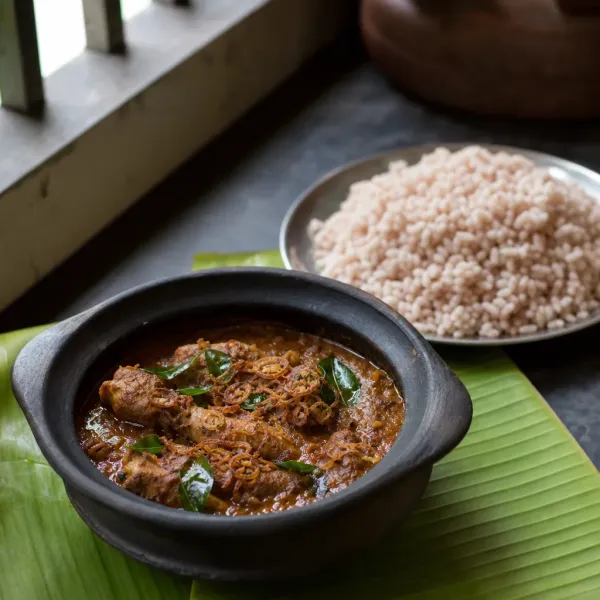
Kozhi Varutharacha Curry
Authentic Kerala Nasrani kozhi varutharacha curry with dry-roasted coconut paste. Step-by-step traditional method for a rich, dark chicken gravy.
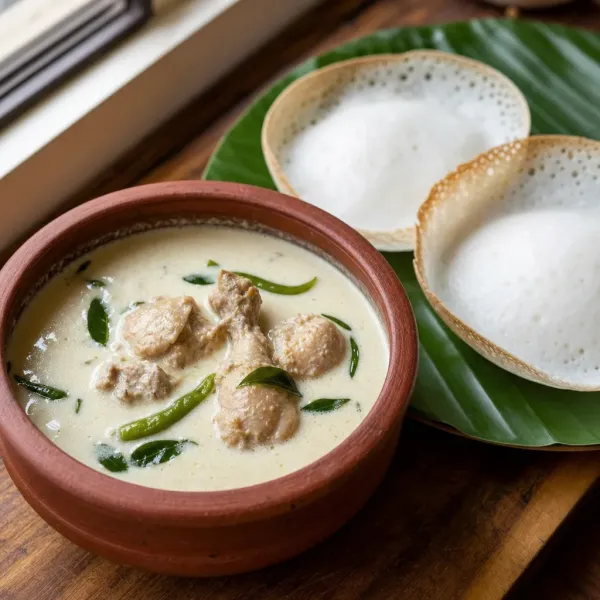
Chicken Mappas
Traditional Kerala Syrian Christian chicken mappas with coconut milk, whole spices and white vinegar. Served with appam or idiyappam. Authentic Nasra…
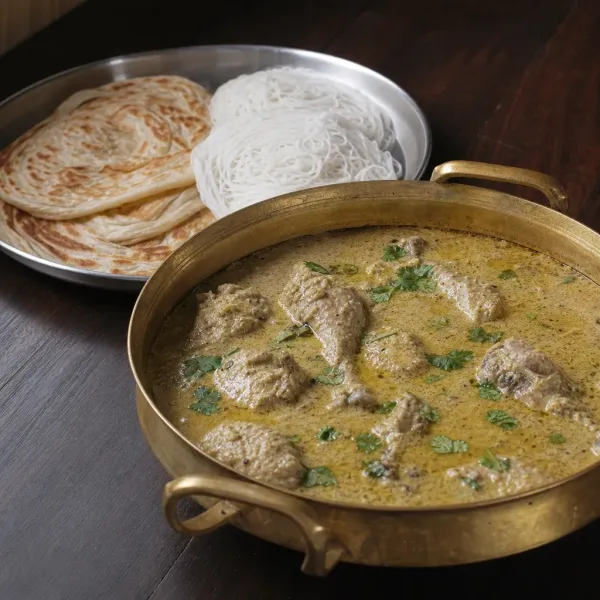
Mappila Chicken Kurma
Authentic Malabar Mappila chicken kurma with freshly ground coconut-cashew paste. The traditional partner for parotta and idiyappam. Step-by-step rec…
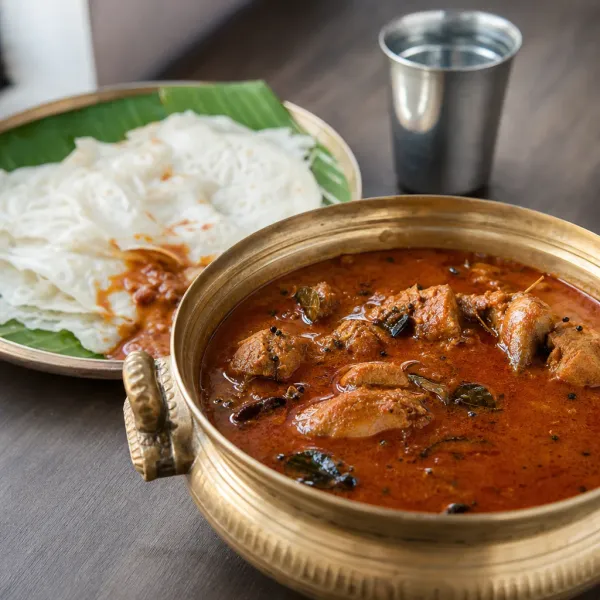
Kori Gassi
Authentic Bunt-style Kori Gassi from coastal Karnataka: chicken in a roasted coconut and byadagi chilli gravy, served with Kori Rotti or neer dosa.
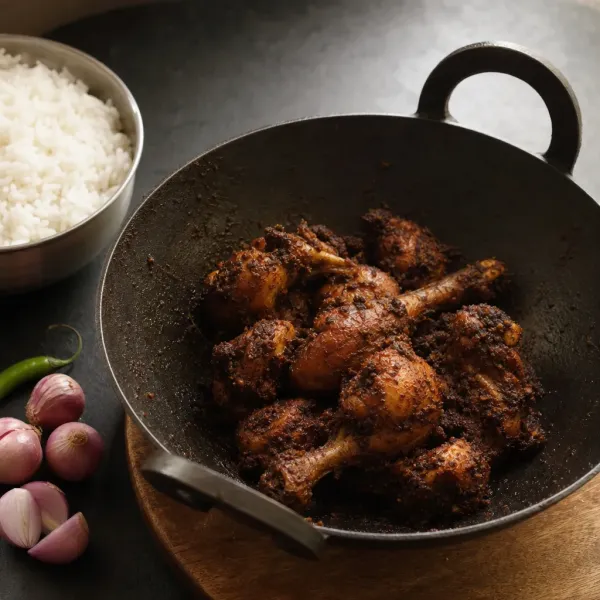
Chicken Varuval
Authentic Chettinad chicken varuval with freshly ground kalpasi and marathi mokku spices, fried dry in gingelly oil. Traditional Tamil Chettiar house…