

Urulaikizhangu Bonda Recipe
Malayalam ഉരുളക്കിഴങ്ങ് ബോണ്ടTamil உருளைக்கிழங்கு போண்டாKannada ಆಲೂ ಬೋಂಡTelugu అలూ బోండా
- Prep20 min
- Cook30 min
- Serves4
- DifficultyEasy
- DietVegetarian
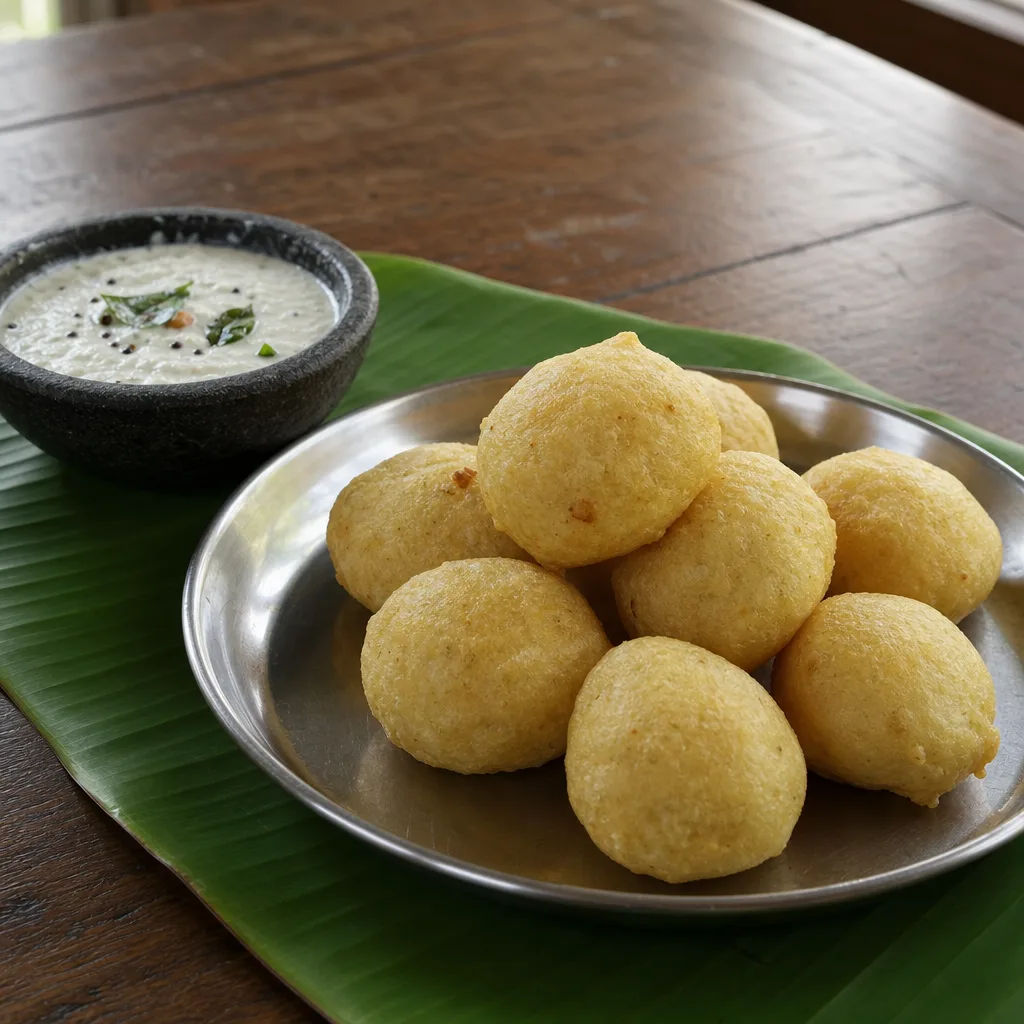
This is the bonda you find at every Tamil Brahmin household's evening tiffin and at every small tiffin stall from Madurai to Chennai. The filling is boiled potato seasoned with mustard, curry leaf, ginger and green chilli, shaped into balls, dipped in a besan batter and fried in gingelly oil. The outside is pale gold and slightly rough; the inside is soft and fragrant with curry leaf.
In Iyer households it is strictly a no-onion, no-garlic preparation. The heat comes from green chilli and ginger alone. Some grandmothers add a small pinch of asafoetida to the filling, and a pinch of rice flour to the batter to keep it crisp longer. These are the only variations you will find within the tradition.
It is eaten in the late afternoon with coconut chutney, sometimes with sambar on the side. It is not a meal; it is tiffin, which means it is eaten the moment it comes out of the oil.
Ingredients (serves 4)
For the filling
For the batter
For frying
Method
Boil the potatoes
Put the potatoes whole and unpeeled into a pot, cover with cold water, add a generous pinch of salt and bring to a boil. Cook until a skewer passes through without resistance, about 20 minutes depending on size. Drain and peel while still hot — the skin slips off easily and the potato absorbs the seasoning better when warm. Mash thoroughly; lumps will tear the bonda open in the oil.
Make the tempering
Heat 1 tbsp coconut oil in a small kadai over medium heat. Add the mustard seeds and wait for them to pop completely. Add the urad dal and chana dal and stir until they turn golden, about 30 seconds. Add the curry leaves — they will splutter — then the green chilli and ginger. Stir for 20 seconds. Add the asafoetida and turmeric, stir once, and take the pan off the heat.
Season the filling
Pour the tempering over the mashed potato. Add the coriander leaves and salt. Mix well with your hands or a spoon. Taste and adjust salt. The filling should be firm enough to roll into a ball without cracking; if it feels wet, let it sit uncovered for five minutes.
Shape the balls
Divide the filling into 12 equal portions and roll each into a smooth ball between your palms. Press firmly so there are no cracks. Set them on a plate. If the filling is sticking to your hands, dampen your palms very lightly.
Make the batter
In a wide bowl, combine the sifted besan, rice flour, red chilli powder, turmeric, asafoetida and salt. Add cold water gradually, whisking as you go, until you have a smooth, thick batter — it should coat the back of a spoon and fall off in a slow ribbon, not run off quickly. Too thin and the coating will be papery; too thick and it will be doughy. Rest the batter for five minutes.
Heat the oil
Pour the gingelly oil into a deep kadai to a depth of at least 8 cm. Heat over medium-high heat until the oil reaches about 170°C. To test without a thermometer, drop a small bead of batter into the oil: it should sink slightly, then rise to the surface and sizzle steadily within two seconds. If it shoots straight up and browns fast, the oil is too hot; lower the flame and wait.
Coat and fry
Drop a potato ball into the batter and turn it gently until fully coated. Lift it out with your fingers or a spoon, let the excess batter drip off for a second, then lower it carefully into the oil. Add three or four bondas at a time — do not crowd the pan or the oil temperature will drop and the coating will absorb oil instead of crisping. Fry, turning occasionally, for 3 to 4 minutes until the surface is pale golden and the batter is set and firm.
Drain and serve immediately
Lift the bondas out with a slotted spoon and rest them on a plate lined with newspaper or a clean cloth for one minute. Serve at once. The crust softens quickly as steam from the filling works outward, so these do not wait.
How to serve
Fresh coconut chutney. Some households also serve with sambar on the side.
Served with: Fresh coconut chutney. Some households also serve with sambar on the side.
Cook's tips
Oil temperature is everything
If the oil is too cool, the batter absorbs oil and the bonda is greasy and pale. If too hot, the outside browns before the filling is warmed through. Steady medium-high heat and frying in small batches keeps the temperature stable.
Dry potato matters
Watery mash makes a filling that tears the batter coat. If your potatoes are wet after boiling, spread the mash in the pan used for tempering and stir over low heat for a minute to dry it out before seasoning.
Resting the batter
Five minutes of rest lets the besan hydrate fully and the batter thicken slightly. A batter made and used immediately is often thinner than it appears and gives a thinner coat.
No onion, no garlic in this version
This is a Tamil Brahmin (Iyer) household recipe and is strictly sattvic. Do not add onion or garlic to the filling. If you are cooking for a household that uses them, that is a different version.
Reusing the oil
Gingelly oil can be strained through a fine sieve once it has cooled and reused one more time for frying. Do not reuse it a third time; it will impart a bitter flavour.
Regional variations
Udupi Krishna math version uses a thinner, crisper besan batter and adds grated coconut to the filling; Andhra households add raw onion and green chilli to the filling and fry in groundnut oil.
Glossary
- Perungayam பெருங்காயம்
- Asafoetida; dried resin used in a very small quantity to aid digestion and add a faint savoury depth, especially in no-onion, no-garlic cooking.
- Kadalai maavu கடலை மாவு
- Besan; flour ground from split chickpeas (chana dal), the base of the batter.
- Nallennai நல்லெண்ணெய்
- Gingelly oil; cold-pressed sesame oil used for deep-frying in Tamil Nadu; gives a faint nutty flavour and a good frying temperature.
- Urad dal உளுந்து
- Split black gram without skin; added to the tempering where it turns golden and adds a mild crunch.
- Chana dal கடலை பருப்பு
- Split chickpeas; used in small quantity in the tempering for texture and a faint sweetness.
Two things decide whether this works: the potato filling must be dry and firmly shaped before it meets the batter, and the oil must be at the right temperature before the first bonda goes in. Get those two right and the rest follows.
More Snacks recipes
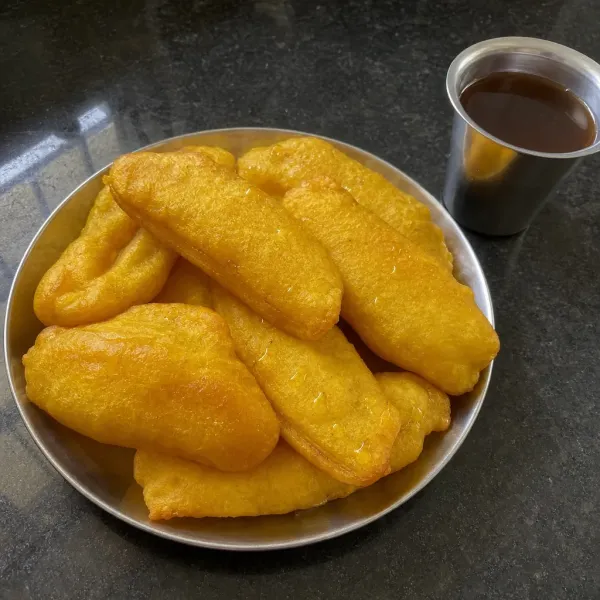
Pazham Pori
Classic Kerala pazham pori: ripe nendra banana slices in a turmeric maida batter, deep fried in coconut oil. Traditional household recipe with step-b…
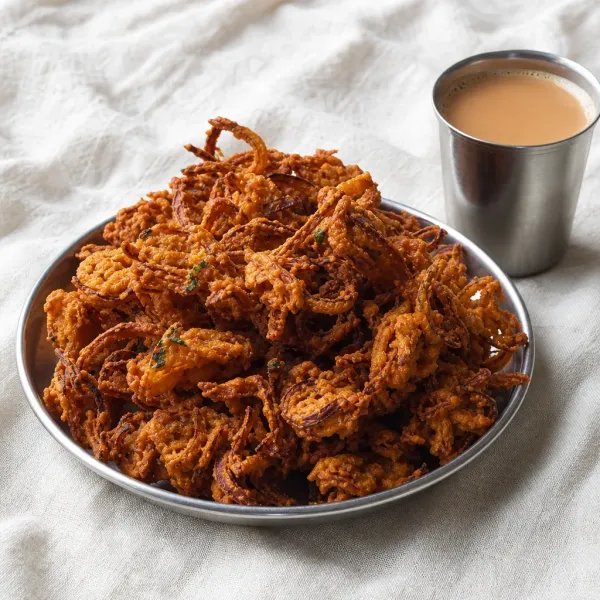
Onion Pakoda (Vengaya Pakoda)
Traditional Tamil Nadu vengaya pakoda made with thinly sliced onion, besan and rice flour. No excess water, fried in gingelly oil for a crisp, craggy…
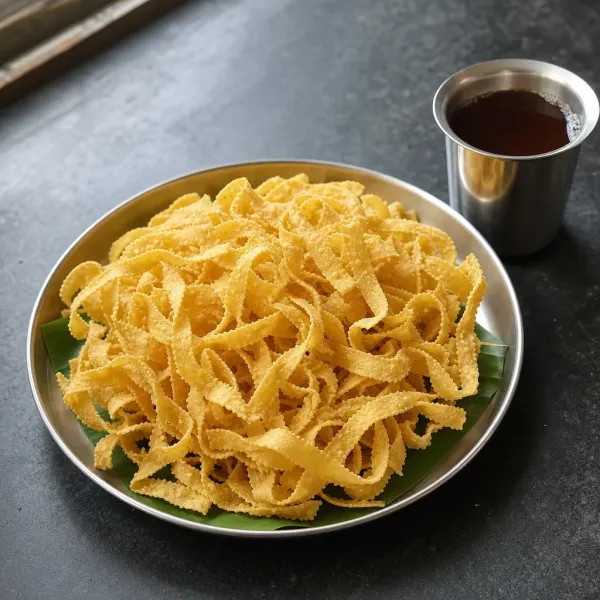
Ribbon Pakoda (Ola Pakoda)
Traditional Tamil Nadu ribbon pakoda made with rice flour, besan, butter and sesame. Step-by-step method for crisp, pale-golden Diwali snack strips.
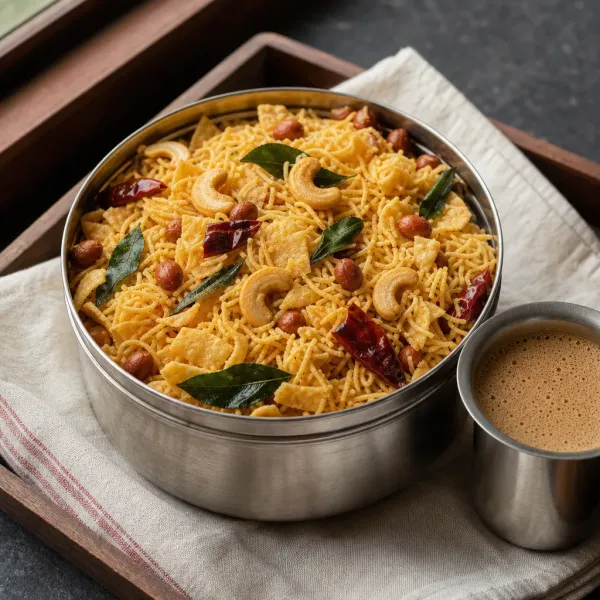
Madras Mixture
Authentic Tamil Madras mixture with fresh omapodi, ribbon pakoda, peanuts and cashews, fried in gingelly oil and tossed with curry leaves.
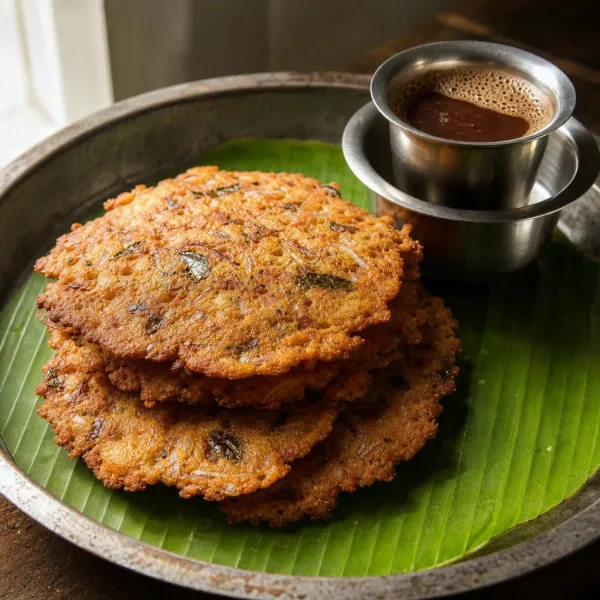
Maddur Vade
Authentic Maddur vade recipe from Mandya, Karnataka — thin, crisp rice flour and shallot discs fried to deep gold, the way they were made at Maddur s…