

Ela Ada Recipe
Malayalam ഇല അടTamil இல அடKannada ಎಲೆ ಅಡೆTelugu ఆకు అడ
- Prep20 min
- Soak / ferment4 hr
- Cook25 min
- Serves8 to 10 adas (serves 4)
- DifficultyEasy
- DietVegan
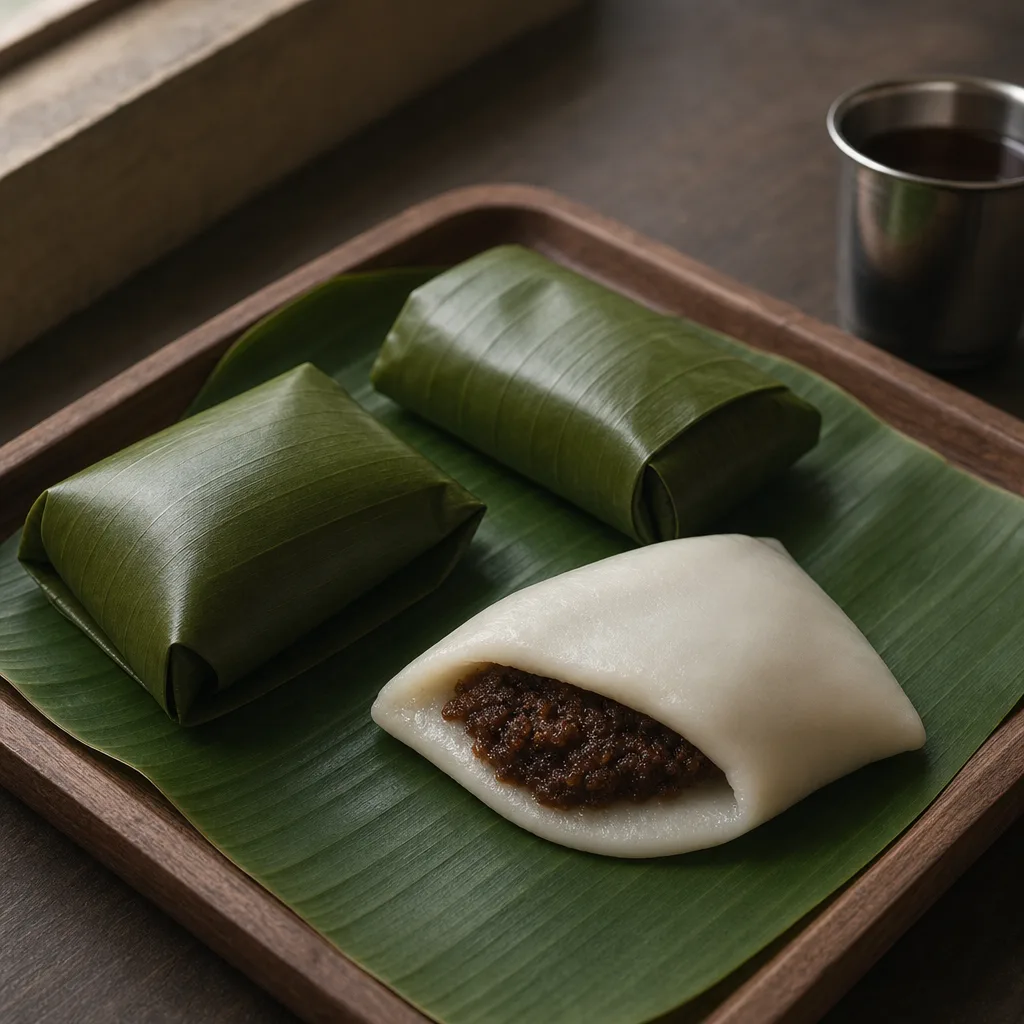
Ela ada is a steamed sweet made in Kerala homes for Onam, Vishu, and ordinary Sundays when someone feels like making something gentle and unhurried. The name says everything: ela is leaf, ada is the steamed cake inside. The banana leaf does more than wrap — it perfumes the rice dough faintly and keeps the steam close so the ada cooks evenly without drying at the edges.
The filling is simple: freshly grated coconut mixed with jaggery that has been melted just enough to bind. Some households add a small amount of cardamom; others leave it out entirely, preferring the clean taste of coconut and jaggery alone. The rice dough is spread thin on the leaf, the filling placed down the centre, and the leaf folded over so the two halves of dough meet and enclose it. After steaming, the leaf peels away cleanly and the ada is pale, soft, and slightly translucent at the edges where the dough is thinnest.
This is a dish where the rice matters. Raw rice — pachari — ground fresh gives a dough that is smooth and pliable. The jaggery should be good dark Kali or Panam kalkandu type; pale, mild jaggery makes a filling that tastes thin. Households that keep a wet grinder use it; those without grind at a nearby mill or use rice flour as a shortcut noted below.
Ingredients (serves 8 to 10 adas (serves 4))
For the rice dough
For the coconut-jaggery filling
For wrapping and steaming
Method
Soak the rice
Wash the raw rice twice in cold water, then cover with fresh water and leave to soak for 4 hours at room temperature. The grains will turn slightly opaque and will break easily between your fingers when ready. Drain completely before grinding.
Grind the dough
Put the drained rice into a wet grinder or a powerful blender with a pinch of salt. Add warm water a little at a time — start with 60 ml and add more gradually. Grind to a smooth, thick batter with no gritty texture; it should be slightly thicker than idli batter and hold a soft shape when you scoop it. This takes 10 to 15 minutes in a wet grinder. If you rush and stop while it is still grainy, the dough will tear when you spread it on the leaf.
Make the filling
Put the grated jaggery in a small heavy pan over low heat. It will melt in 3 to 4 minutes; stir once or twice. As soon as it is fully liquid with no solid lumps, add the grated coconut and the cardamom powder if using. Stir well over low heat for 2 minutes until the coconut absorbs the jaggery and the mixture comes together into a moist, clumping mass. Do not cook it dry — it should still feel slightly sticky. Take it off the heat and cool to room temperature before filling.
Prepare the banana leaves
Cut the banana leaves into rectangles roughly 25 cm × 20 cm. Pass each piece quickly over a medium flame, moving it back and forth, until the leaf turns a slightly darker, more even green and becomes soft and pliable — about 10 to 15 seconds per side. A stiff leaf will crack when you fold it; a wilted one folds cleanly. Wipe each piece with a damp cloth and then rub very lightly with coconut oil.
Spread the dough
Place a banana leaf piece with the grain of the leaf running left to right (so the fold later follows the grain). Wet your fingers or the back of a spoon with a little water. Take a ball of dough about the size of a golf ball and press it onto the centre of the leaf, spreading it into a thin oval roughly 15 cm × 10 cm. Aim for an even thickness of about 3 to 4 mm — thin enough to be slightly translucent but thick enough not to tear.
Add the filling and fold
Spoon 2 to 3 tablespoons of the coconut-jaggery filling along the centre of the dough in a line, leaving a 2 cm border on all sides. Fold the banana leaf in half along its length so the two halves of dough come together over the filling. Press the edges of the leaf gently so the dough seals. The ada is now enclosed inside a folded leaf parcel. Fold or tuck the open ends under if you like, though it is not strictly necessary.
Arrange in the steamer
Bring water to a rolling boil in a large steamer or idli pot. Lay the ada parcels in a single layer in the steamer basket, folded side down. If you need to stack them, place a second layer with the folds also facing down. Cover tightly.
Steam
Steam over medium-high heat for 12 to 15 minutes. The ada is ready when the dough has set and is no longer sticky to the touch — open one parcel carefully after 12 minutes and press the dough lightly; it should feel firm and smooth, not wet or gummy. Do not over-steam or the dough becomes rubbery.
Rest and serve
Lift the parcels out and leave them to rest for 3 to 4 minutes before opening. The leaf will peel away cleanly. The ada should be pale, soft, and uniform throughout — no browning, no crisp edges anywhere. Serve warm.
How to serve
Eaten on its own as a morning or evening snack. Some households serve it alongside black tea or black coffee. It is not served with a curry or chutney.
Served with: Eaten on its own as a morning or evening snack. Some households serve it alongside black tea or black coffee. It is not served with a curry or chutney.
Cook's tips
Rice flour shortcut
Many households today use store-bought roasted rice flour (idiyappam podi) instead of grinding soaked rice. Mix 200 g rice flour with enough boiling water to make a soft, pliable dough, add salt, and use immediately. The texture is slightly less silky than freshly ground dough but perfectly acceptable.
Jaggery quality
Pale or sandy jaggery makes a filling that tastes flat. Use dark, moist Kali sarkkara if you can find it. If your jaggery is very dry, add a teaspoon of water to the pan when melting it.
Banana leaf grain
Always fold the leaf along its natural grain (the direction the parallel lines run). Folding against the grain causes the leaf to split and the parcel to open in the steamer.
Storing leftover ada
Ela ada keeps at room temperature for up to a day in a cool kitchen. To reheat, re-steam for 3 to 4 minutes still wrapped in the leaf. Refrigerating makes the dough hard; if you must refrigerate, bring to room temperature and then steam briefly before eating.
Filling that runs
If the jaggery filling is too loose and wet, it will seep through the dough during steaming. Cook the filling a minute longer until the coconut absorbs the excess moisture and the mixture holds its shape when pressed.
Regional variations
A Tamil version called kozhukattai uses a similar filling but is shaped differently and not wrapped in banana leaf; a Konkani version called patoli uses turmeric leaf and a rice-flour dough rather than a cooked batter.
Glossary
- Pachari പച്ചരി
- Raw (unparboiled) white rice used in Kerala for batters and doughs; not the same as the parboiled matta rice used for everyday meals.
- Kali sarkkara കരിമ്പ് ശർക്കര
- Dark, unrefined palm or cane jaggery used in Kerala sweets; has a deeper, slightly smoky sweetness compared to pale jaggery.
- Ela ഇല
- Leaf; in cooking contexts almost always refers to banana leaf.
- Ada അട
- A category of steamed rice-dough preparations in Kerala, both sweet and savoury.
- Idiyappam podi ഇടിയപ്പം പൊടി
- Fine roasted rice flour sold ready-made, commonly used as a shortcut for dishes that traditionally call for freshly ground rice.
Two things decide whether ela ada works: the thinness and evenness of the dough layer on the leaf, and the consistency of the filling. Dough spread too thick stays gummy at the centre even after steaming; filling left too wet seeps and makes the dough soggy. Get those two right and the rest follows.
More Snacks recipes
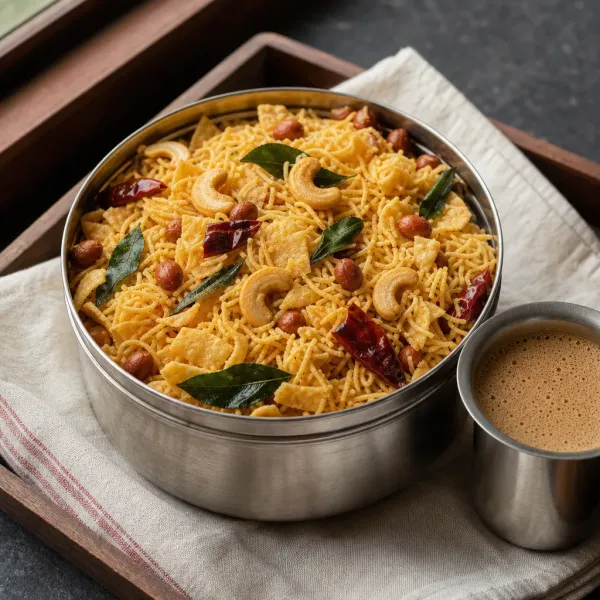
Madras Mixture
Authentic Tamil Madras mixture with fresh omapodi, ribbon pakoda, peanuts and cashews, fried in gingelly oil and tossed with curry leaves.
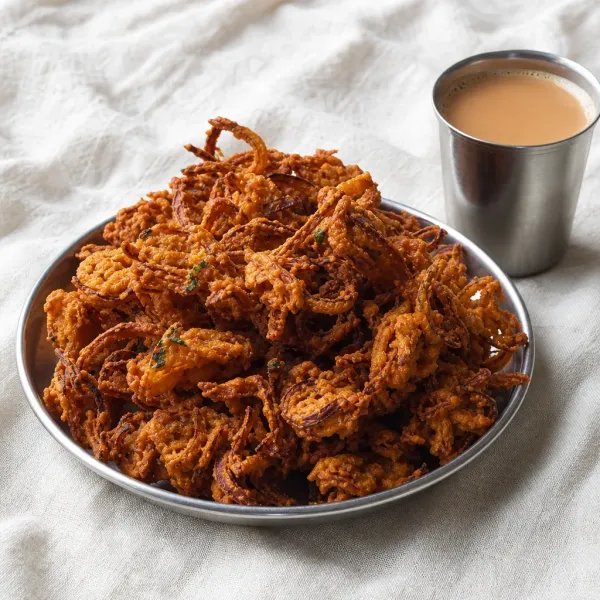
Onion Pakoda (Vengaya Pakoda)
Traditional Tamil Nadu vengaya pakoda made with thinly sliced onion, besan and rice flour. No excess water, fried in gingelly oil for a crisp, craggy…
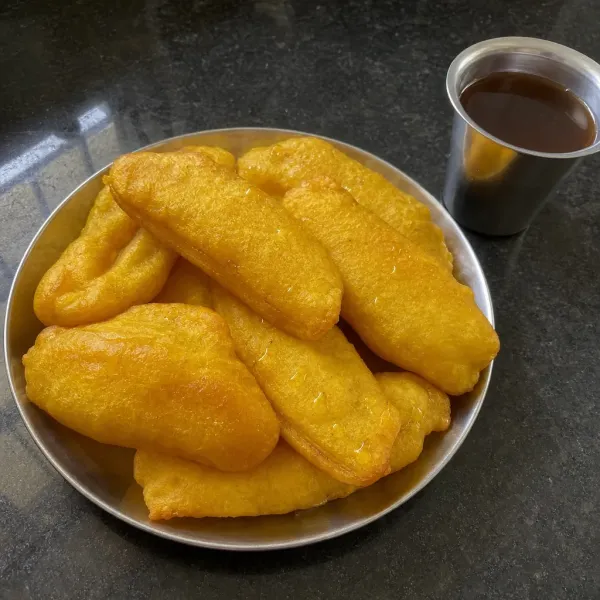
Pazham Pori
Classic Kerala pazham pori: ripe nendra banana slices in a turmeric maida batter, deep fried in coconut oil. Traditional household recipe with step-b…
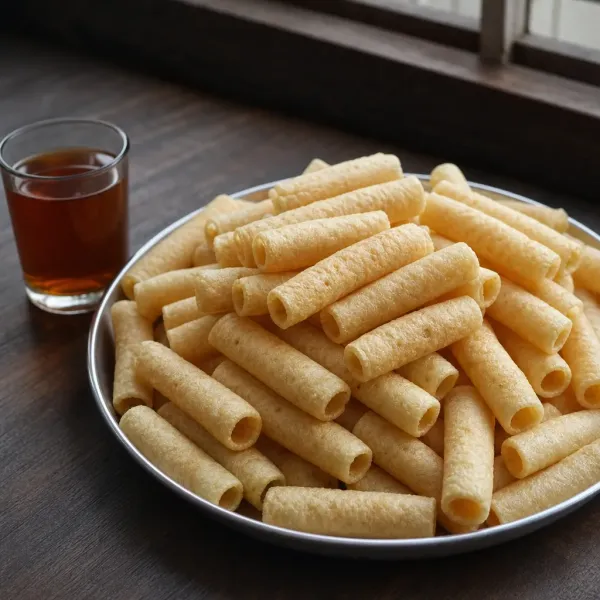
Kuzhalappam
Traditional Kerala kuzhalappam recipe: hollow rice crisps pressed through a tube mould and deep-fried in coconut oil with cumin and sesame.
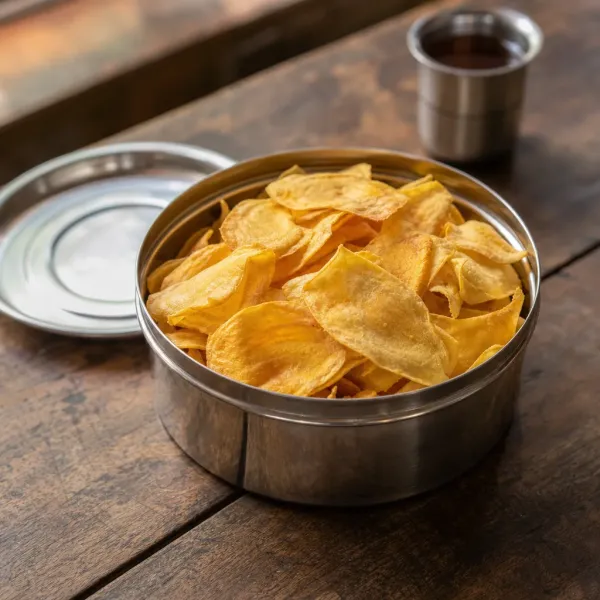
Chakka Varuthathu
Traditional Kerala recipe for raw jackfruit chips fried in coconut oil with a salt brine finish. Crisp, long-keeping, and made the old household way.
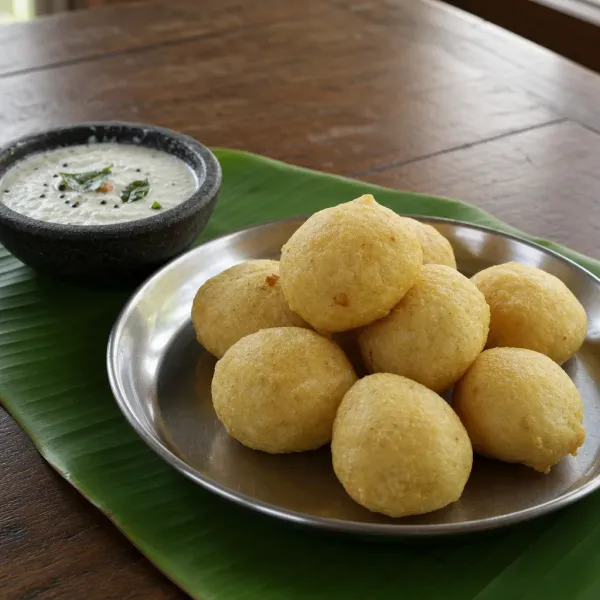
Urulaikizhangu Bonda
Traditional Tamil Brahmin urulaikizhangu bonda: spiced potato filling, crisp besan-rice flour batter, fried in gingelly oil. No onion, no garlic.