

Theeyal Recipe
Malayalam തീയൽTamil தீயல்Kannada ತೀಯಲ್Telugu తీయల్
- Prep20 min
- Cook45 min
- Serves4
- DifficultyMedium
- DietVegan
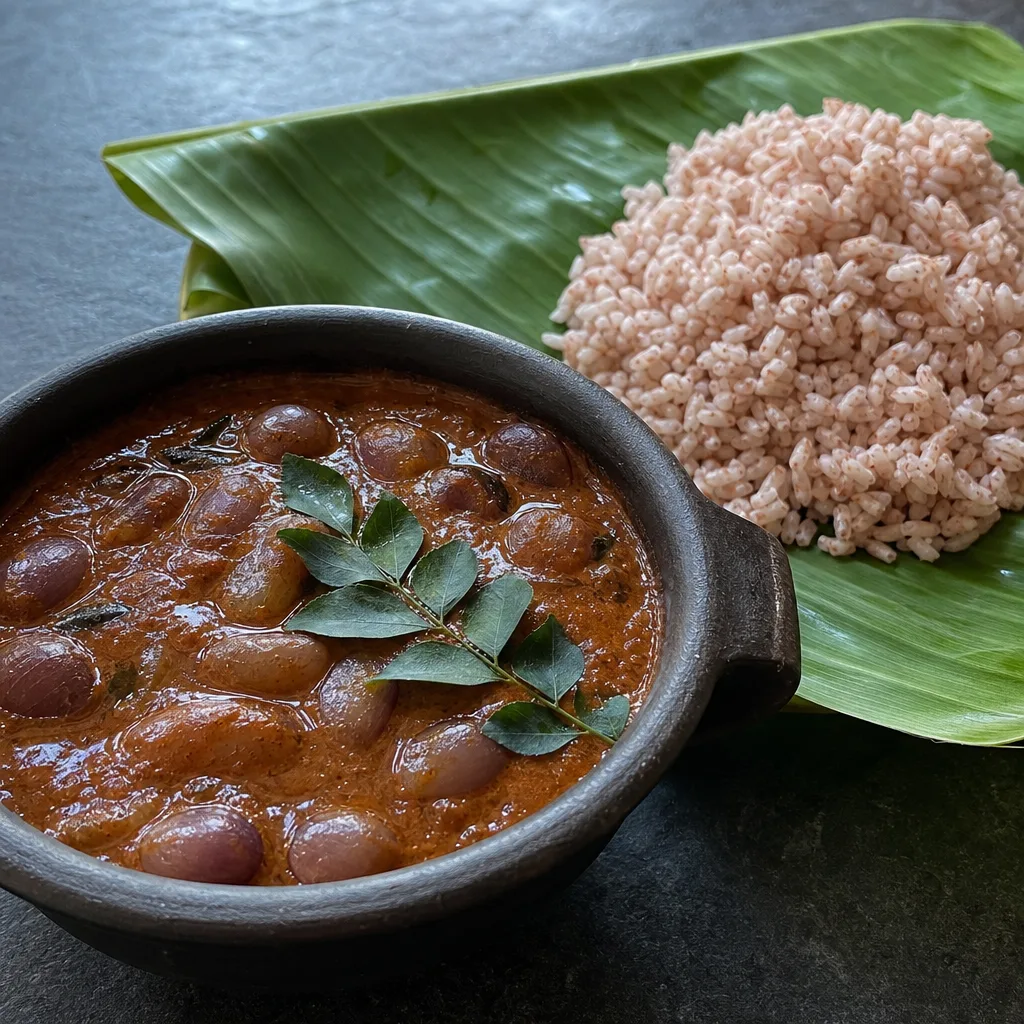
Theeyal belongs to the everyday cooking of Kerala Hindu households, particularly in the Travancore region, though it is made across the state. The name comes from thee, meaning fire, and the dish earns it: the coconut is roasted over direct heat until it turns a deep reddish-brown, almost the colour of dark chocolate, and that roasting is the entire flavour of the gravy. Without it you have a pale coconut curry. With it you have something smoky, bitter at the edges, and completely distinct.
Shallot theeyal is the most common everyday version. The small Kerala shallots, called ulli or kunjulli, are cooked down in the sour, dark gravy until they soften but hold their shape. Kudampuli, the dried Malabar tamarind, gives the sourness; it is not interchangeable with ordinary tamarind because it is milder and fruitier. The gravy is thin enough to pool around rice but thick enough to coat each shallot.
Households differ mainly in how dark they take the coconut. Some cooks stop at a warm brown; others go nearly black and accept a sharper, more bitter note. Both are correct. The coconut is always ground with the roasted spices while still warm, which helps the stone grinder or mixer break it down finely. This dish is made fresh; it does not improve on reheating the next day the way a tamarind kuzhambu does.
Ingredients (serves 4)
For roasting and grinding
For the gravy
For tempering
Method
Soak the kudampuli
Place the kudampuli pieces in 3 tablespoons of warm water and leave them for 10 minutes. You will use this soaking water and the softened fruit together. Do not discard the water.
Dry-roast the coconut and spices
Set a heavy iron or thick-bottomed kadai over medium-low heat. Add the grated coconut with no oil and stir continuously. After about 3 minutes add the coriander seeds, dried red chillies, black pepper, cumin, and fenugreek. Keep stirring without stopping. The coconut will turn golden, then amber, then a deep reddish-brown over 12 to 15 minutes. You want it the colour of dark jaggery, not black. If it smells acrid and sharp rather than toasty and nutty, it has gone too far. Remove from heat the moment it reaches that deep brown.
Grind the roasted coconut
Transfer the hot roasted coconut and spices immediately to a mixer jar. Grind without adding water first, then add 2 to 3 tablespoons of water and grind to a fine, dark paste. The warmth helps it grind smoothly. Set aside.
Cook the shallots
In the same kadai, heat 1 tablespoon of coconut oil over medium heat. Add the peeled shallots and cook, stirring occasionally, for 8 to 10 minutes until they turn translucent and the edges begin to colour lightly. They should soften but not collapse.
Add turmeric and kudampuli
Add the turmeric powder to the shallots and stir for 30 seconds. Add the soaked kudampuli pieces along with their soaking water. Stir to coat the shallots.
Add water and simmer
Pour in 1½ cups of water and add salt. Bring to a gentle boil, then reduce heat and simmer for 5 minutes so the shallots cook through and the kudampuli releases its sourness into the liquid.
Add the ground coconut paste
Add the roasted coconut paste to the simmering gravy and stir well to dissolve it evenly. The gravy will turn a deep brown. Simmer on low heat for 8 to 10 minutes, stirring occasionally, until the raw smell of the ground paste is gone and the gravy thickens slightly. It should coat the back of a spoon but still pour freely. If it thickens too much, add a splash of water.
Taste and adjust
Check the balance of sour, salt, and heat. The kudampuli sourness should be present but not sharp. Add a little more soaked kudampuli water if it needs more sourness. Adjust salt. Do not add more turmeric at this stage.
Temper and finish
In a small pan, heat the remaining 1 tablespoon of coconut oil over medium-high heat. Add the mustard seeds and wait for them to splutter. Add the dried red chilli and curry leaves and let them crackle for 10 seconds. Pour this tempering over the theeyal immediately and cover the vessel for a minute so the fragrance is absorbed.
How to serve
Steamed matta rice (red Kerala parboiled rice). Often eaten alongside a dry thoran and plain papadam. Some households serve it with a small helping of plain cooked dal on the side.
Served with: Steamed matta rice (red Kerala parboiled rice). Often eaten alongside a dry thoran and plain papadam. Some households serve it with a small helping of plain cooked dal on the side.
Cook's tips
How dark to roast
The most common mistake is stopping the roasting too early. A pale golden coconut gives a mild, sweet gravy that is pleasant but is not theeyal. You need the deep reddish-brown. Stir without stopping and keep the heat at medium-low; high heat scorches the outside before the inside colours.
Kudampuli is not tamarind
Ordinary tamarind gives a sharper, more assertive sourness and changes the colour and character of the dish. Kudampuli is fruitier and gentler. If you genuinely cannot find it, a small piece of tamarind is a practical substitute, but use less than you think you need and taste as you go.
Fenugreek quantity
Fenugreek is essential but punishing if overdone. One eighth of a teaspoon is the ceiling for this quantity of coconut. Too much and the gravy turns unpleasantly bitter in a way that cannot be corrected.
Fresh coconut only in the main method
Desiccated coconut does not roast the same way and the flavour is noticeably thinner. In households where fresh coconut is difficult to source, frozen grated coconut thawed and dried briefly in the pan before roasting is a genuinely common workaround.
Same-day eating
Theeyal is best eaten within a few hours of cooking. The roasted coconut flavour is at its peak fresh. Refrigerated leftovers thicken considerably; thin with a little water when reheating and do not boil hard.
Regional variations
Pavakka theeyal (bitter gourd), chembu theeyal (taro), prawns theeyal in coastal households; Malabar households sometimes use a slightly different spice balance with more coriander.
Glossary
- Theeyal തീയൽ
- Kerala gravy dish whose name derives from thee (fire), referring to the deep roasting of coconut that defines it.
- Kudampuli കുടംപുളി
- Dried rind of Garcinia cambogia, the Malabar tamarind; used as a souring agent in Kerala coastal cooking, milder and fruitier than ordinary tamarind.
- Kunjulli കുഞ്ഞുള്ളി
- Small Kerala shallots, also called pearl shallots; sweeter and more pungent than large onions, used whole or halved in Kerala cooking.
- Matta rice മട്ട അരി
- Red parboiled rice from Palakkad, the everyday rice of Kerala households; nutty, slightly chewy, and nutritionally richer than white rice.
- Thoran തോരൻ
- Kerala dry stir-fry of vegetables with grated coconut; cooked without gravy and served alongside rice meals.
Two things decide whether this dish works: how dark you take the coconut during roasting, and whether you use kudampuli rather than tamarind. The roasting is the flavour. If the coconut is pale, the gravy will be sweet and flat. If the coconut is properly dark, the gravy will be smoky, complex, and unmistakably itself.
More Vegetarian Gravies recipes
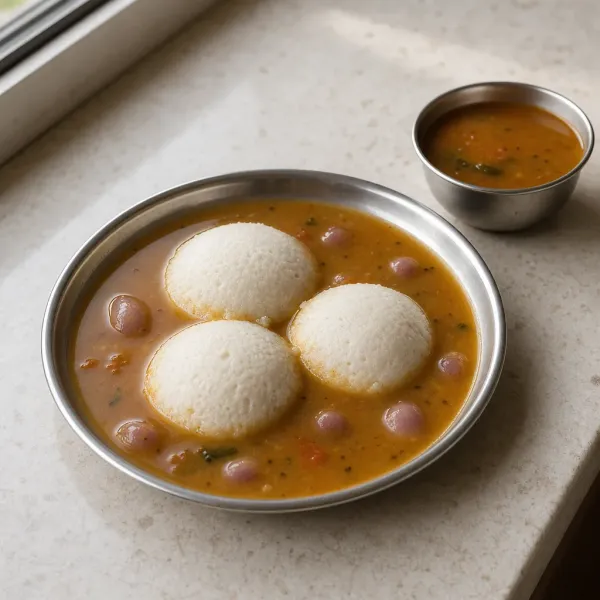
Tiffin Sambar
Thin, shallot-forward tiffin sambar from a Tamil Brahmin kitchen. Made fresh for idli and dosa, cooked with gingelly oil and tamarind. Traditional me…
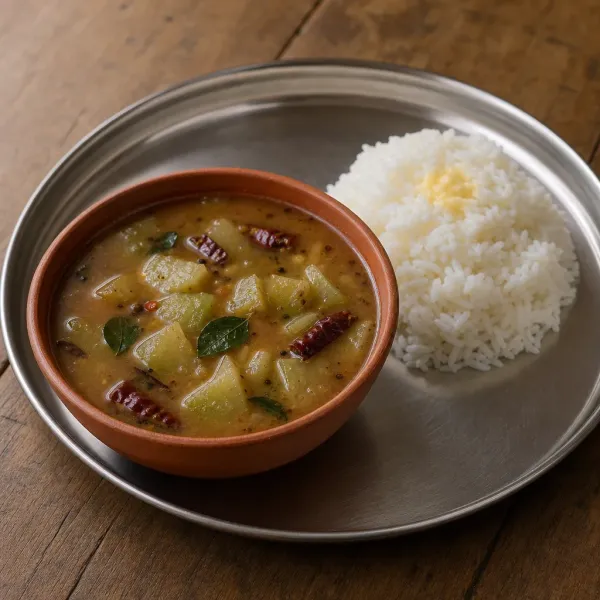
Sorakaya Pulusu
Traditional Coastal Andhra sorakaya pulusu: bottle gourd simmered in tamarind with gingelly oil tempering. Weekday rice dish, step-by-step recipe.
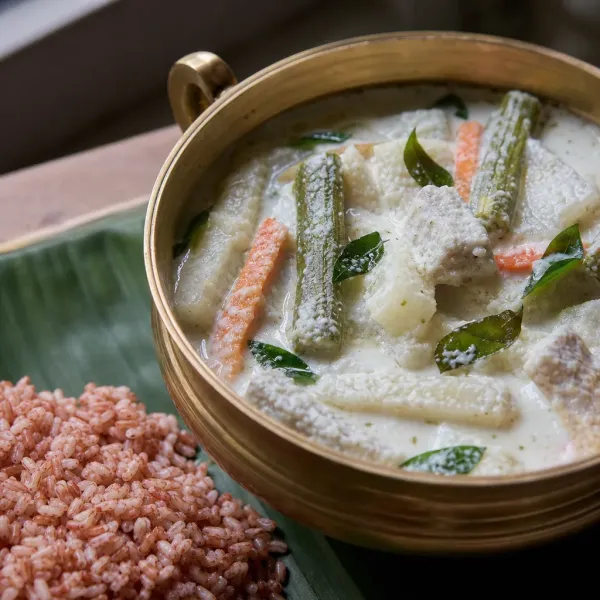
Avial
Classic Kerala avial with fresh coconut paste, sour yoghurt, and raw coconut oil. Traditional Travancore household method with exact quantities.
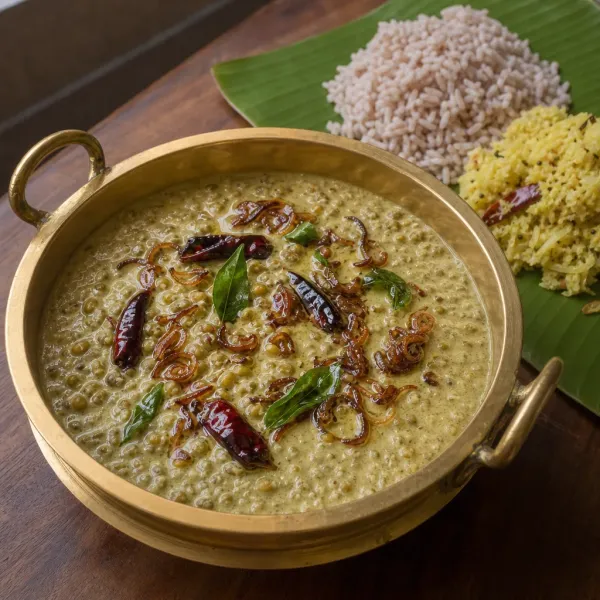
Cherupayar Curry (Kerala Green Gram Curry)
Traditional Kerala cherupayar curry with fresh ground coconut, shallots and coconut oil tempering. A simple everyday dish from Travancore households.
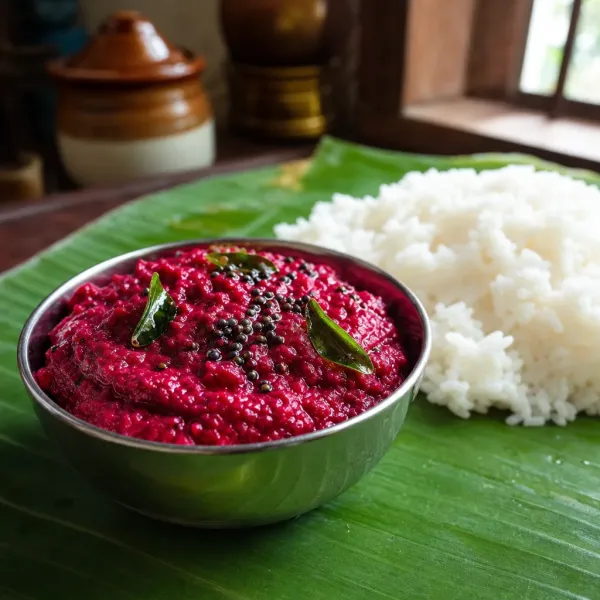
Beetroot Pachadi
Traditional Kerala beetroot pachadi with fresh coconut paste and curd, finished with a mustard and curry leaf tempering. A sadya essential, step by s…
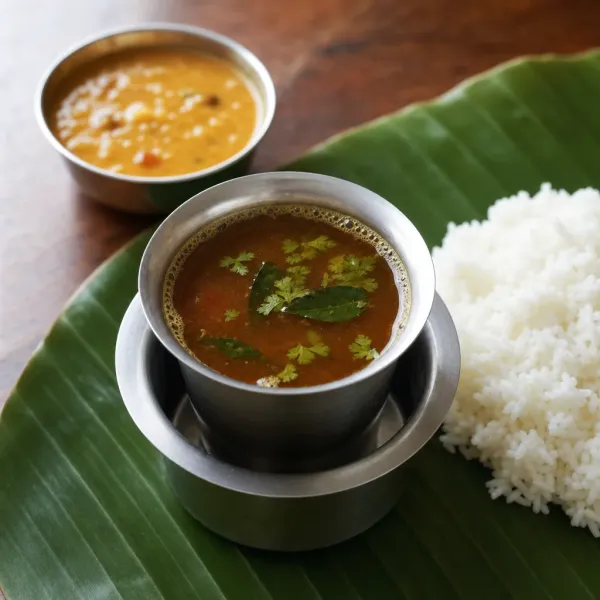
Iyer-Style Rasam with Homemade Rasam Powder
Traditional Tamil Brahmin rasam made with freshly ground rasam powder, tamarind, toor dal water and a ghee tadka. The authentic household method.