

Avial Recipe
Malayalam അവിയൽTamil அவியல்Kannada ಅವಿಯಲ್Telugu అవియల్
- Prep25 min
- Cook35 min
- Serves6
- DifficultyMedium
- DietVegetarian
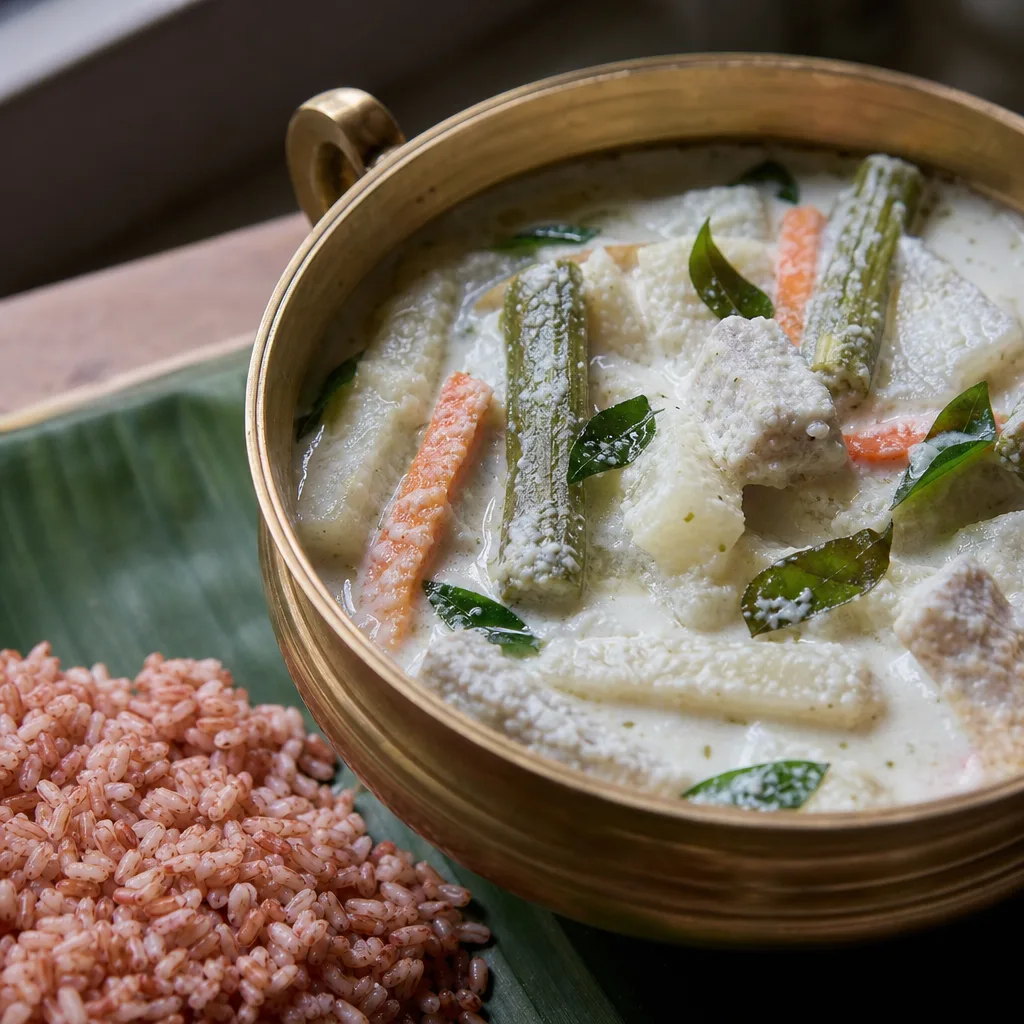
Avial is a Kerala dish through and through, and it is one of the few preparations that crosses every community boundary in the state. It appears on the Onam sadya banana leaf, on the everyday thali, and at temple feasts. The defining character is the combination of many vegetables cooked just until tender but not soft, bound in a thick paste of fresh coconut and cumin, and finished with sour yoghurt and raw coconut oil. Nothing is fried. Nothing is browned. The colour of the finished dish is pale and muted, the coconut paste sitting in the hollows of the vegetables rather than coating them like a gravy.
The choice of vegetables is guided by what is in season, but certain ones appear in almost every household version: raw banana, drumstick, yam or elephant foot yam, raw mango or kudampuli for sourness when yoghurt is not enough, ash gourd, and carrots or beans. The pieces are cut long and thick, roughly the length of a finger, so they hold their shape. Cutting them too small is the most common mistake and it turns the dish mushy.
Households differ mainly on sourness and the ratio of coconut. Some cooks add a piece of raw mango alongside the yoghurt; others use only yoghurt. The coconut paste in Travancore is thick and generous. The coconut oil is always added raw at the very end, off the heat, so its aroma stays sharp. Curry leaves go in with the oil, not in a separate tempering.
Ingredients (serves 6)
Vegetables
Coconut paste
To finish
Method
Sort the vegetables by cooking time
Yam and raw banana take the longest; drumstick and ash gourd are next; carrot and snake gourd cook quickly. Keep them in separate piles. This matters because everything must finish at the same moment, tender but still holding its shape.
Start the harder vegetables
Place the yam and raw banana in a wide, heavy pan. Add 100 ml of water, the turmeric, and salt. Cover and cook on a medium flame for 8 minutes. The water should simmer gently, not boil hard. The vegetables should be about halfway cooked at this point, offering slight resistance when pressed.
Add the remaining vegetables and the mango
Add the drumstick, ash gourd, snake gourd, carrot, and raw mango. Stir once to mix. Add another 50 ml of water if the pan looks dry. Cover and cook for a further 10 to 12 minutes on a medium-low flame. Check by pressing a piece of drumstick: it should yield easily but not collapse. The mango will have softened and will provide sourness to the whole dish.
Grind the coconut paste
While the vegetables cook, grind the fresh coconut, cumin seeds, green chillies, and turmeric together to a coarse, thick paste. Use a stone grinder or a small mixer jar with the minimum water needed to move the blades, no more than 2 tablespoons. The paste should be grainy, not smooth. A fine paste will make the dish gluey.
Add the coconut paste
When the vegetables are just cooked through, remove the lid and reduce the flame to low. Add the coconut paste and fold it in gently using a wide spatula or the back of a spoon. Do not stir vigorously or the vegetables will break. Cook for 3 to 4 minutes, turning the mixture carefully once or twice, until the paste is heated through and has coated the vegetables. There should be very little free liquid in the pan at this point.
Add the yoghurt
Take the pan off the heat completely. Wait one minute for the temperature to drop slightly, then pour in the whisked yoghurt and fold it in. Adding yoghurt to a very hot pan will cause it to split and turn grainy. The residual heat is enough to warm the yoghurt through. The dish will look creamy and pale.
Finish with coconut oil and curry leaves
Pour the raw coconut oil directly over the surface. Tear the curry leaves and scatter them on top. Do not return the pan to the flame. The oil must stay raw so its aroma is present in every mouthful. Fold everything together once, gently, and serve immediately.
How to serve
Hot rice, preferably matta (red parboiled) rice. On a sadya it sits alongside sambar, rasam, olan, kichadi, pachadi, and papad on a banana leaf. At home it is often simply eaten with rice and a pickle.
Served with: Hot rice, preferably matta (red parboiled) rice. On a sadya it sits alongside sambar, rasam, olan, kichadi, pachadi, and papad on a banana leaf. At home it is often simply eaten with rice and a pickle.
Cook's tips
Which vegetables to use
The list above is a reliable household combination, but avial is forgiving about which vegetables appear. Broad beans, kovakka (ivy gourd), and raw jackfruit are all traditional additions. What matters is that you include at least one starchy vegetable (yam or raw banana), one that provides length (drumstick), and one source of sourness (raw mango or the yoghurt alone). Do not use tomato: it does not belong here.
If you have no raw mango
Increase the yoghurt to 180 ml and add a small piece of kudampuli (Malabar tamarind, also called fish tamarind) to the cooking water in step 2. Remove the kudampuli before adding the coconut paste. Some households use this method even when mango is available.
The yoghurt must be sour
Fresh, mild yoghurt gives a flat result. If your yoghurt is not sour, leave it at room temperature for a few hours before using it, or add a small squeeze of lemon as a last resort. The sourness is one of the two things that define the dish.
Cutting size is not optional
Pieces smaller than 4 cm will overcook and turn to mush before the paste is added. The long baton shape also means each piece picks up coconut paste along its surface without being buried in it.
Stone grinder versus mixer
A wet grinder or the heavy stone chakki gives a coarser, more textured paste that sits on the vegetables rather than dissolving into them. A mixer jar works but grind in short pulses and stop while the paste is still grainy.
Regional variations
Tamil Brahmin (Iyer) households make a drier avial with less yoghurt and sometimes no coconut oil finish; Palakkad Iyer avial sits between the two traditions. A Malabar version occasionally uses raw mango in place of yoghurt for sourness.
Glossary
- Ethakka ഏത്തക്ക
- Raw (unripe) Nendran banana, the large starchy Kerala variety used in cooking.
- Muringakka മുരിങ്ങക്ക
- Drumstick, the long ridged pod of the Moringa tree, used widely in Kerala cooking.
- Chena ചേന
- Elephant foot yam, a dense starchy tuber; the surface can irritate bare skin when raw.
- Kumbalanga കുമ്പളങ്ങ
- Ash gourd, also called white gourd or winter melon; pale, watery, and mild.
- Padavalanga പടവലങ്ങ
- Snake gourd, a long pale green vegetable with a mild flavour and high water content.
- Kudampuli കുടംപുളി
- Malabar tamarind or gamboge (Garcinia cambogia); the dried rind used as a souring agent in Kerala, especially in fish dishes and some vegetable preparations.
- Jeerakam ജീരകം
- Cumin seeds; in avial, ground raw with coconut rather than tempered in oil.
- Matta rice മട്ട അരി
- Red parboiled rice from Palakkad and Thrissur, the everyday rice of most Kerala households; nutty, firm, and nutritious.
Two things decide whether avial works: the coconut paste must be coarse and the yoghurt must be genuinely sour. Get both right and the dish takes care of itself. The vegetables are almost secondary, a vehicle for the paste and the raw coconut oil that finishes it.
More Vegetarian Gravies recipes
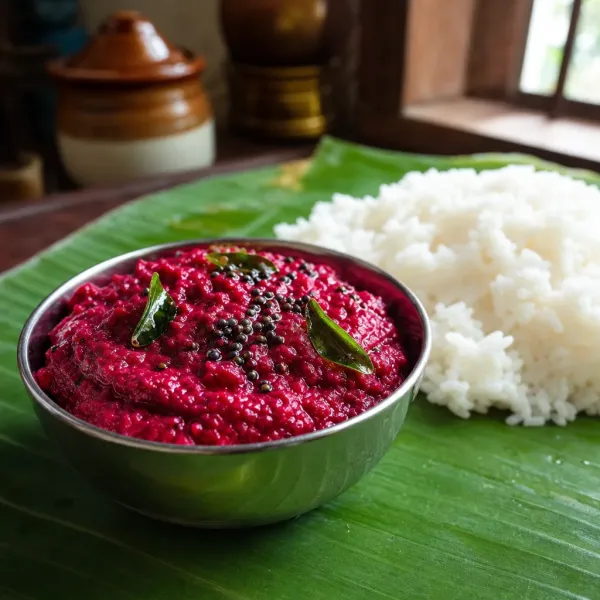
Beetroot Pachadi
Traditional Kerala beetroot pachadi with fresh coconut paste and curd, finished with a mustard and curry leaf tempering. A sadya essential, step by s…
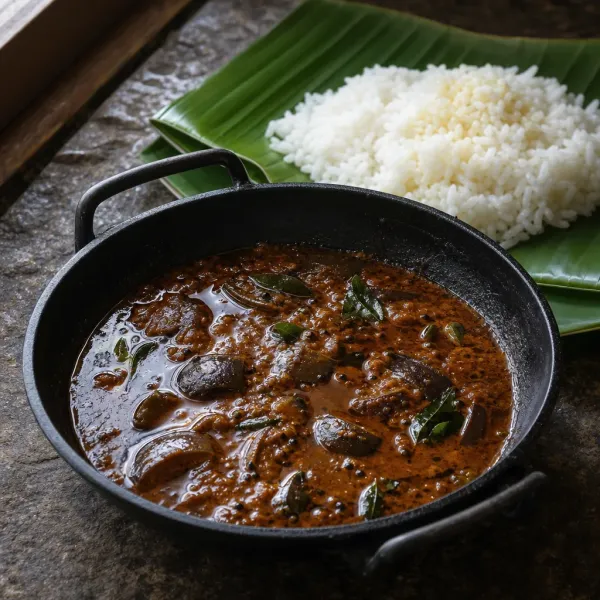
Puli Kuzhambu
Traditional Tamil Brahmin puli kuzhambu with brinjal, freshly ground coconut-spice paste, and gingelly oil. Thick, sour, deeply spiced weekday rice d…
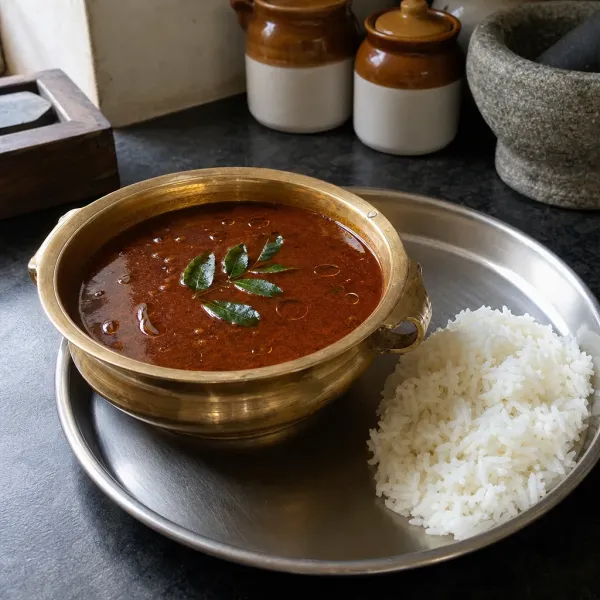
Vendhaya Kuzhambu
Traditional Tamil Brahmin vendhaya kuzhambu made with tamarind, roasted fenugreek paste, fresh coconut, and gingelly oil. A pourable rice kuzhambu.
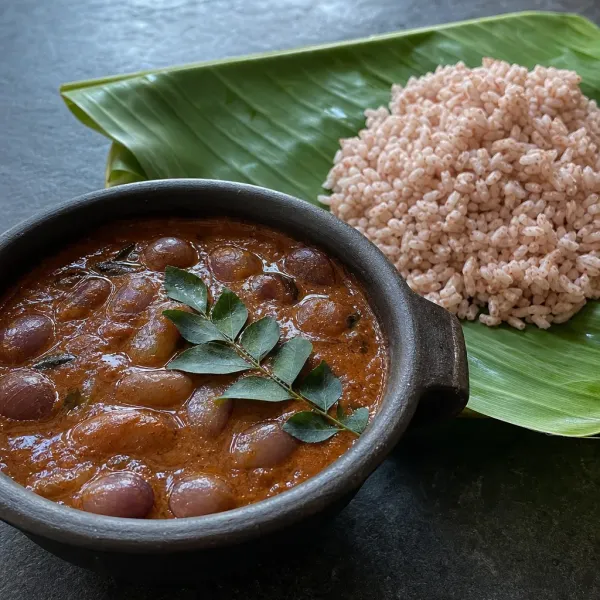
Theeyal
Traditional Kerala shallot theeyal with deep-roasted coconut, kudampuli, and fresh curry leaves. Step-by-step household method from Travancore kitche…
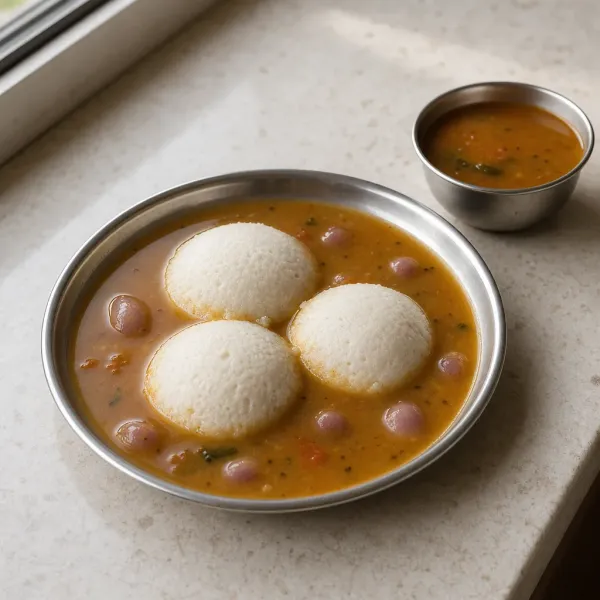
Tiffin Sambar
Thin, shallot-forward tiffin sambar from a Tamil Brahmin kitchen. Made fresh for idli and dosa, cooked with gingelly oil and tamarind. Traditional me…
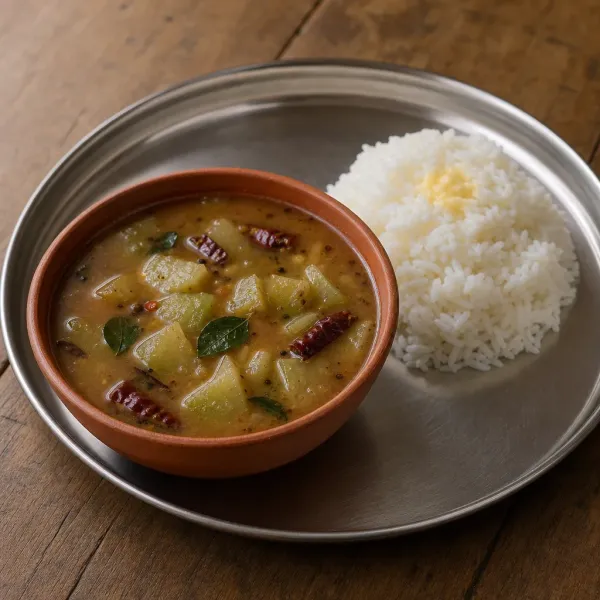
Sorakaya Pulusu
Traditional Coastal Andhra sorakaya pulusu: bottle gourd simmered in tamarind with gingelly oil tempering. Weekday rice dish, step-by-step recipe.