

Adai Recipe
Malayalam അടൈTamil அடைKannada ಅಡೆTelugu అడై
- Prep20 min
- Soak / ferment4 hr
- Cook40 min
- Serves4
- DifficultyEasy
- DietVegetarian
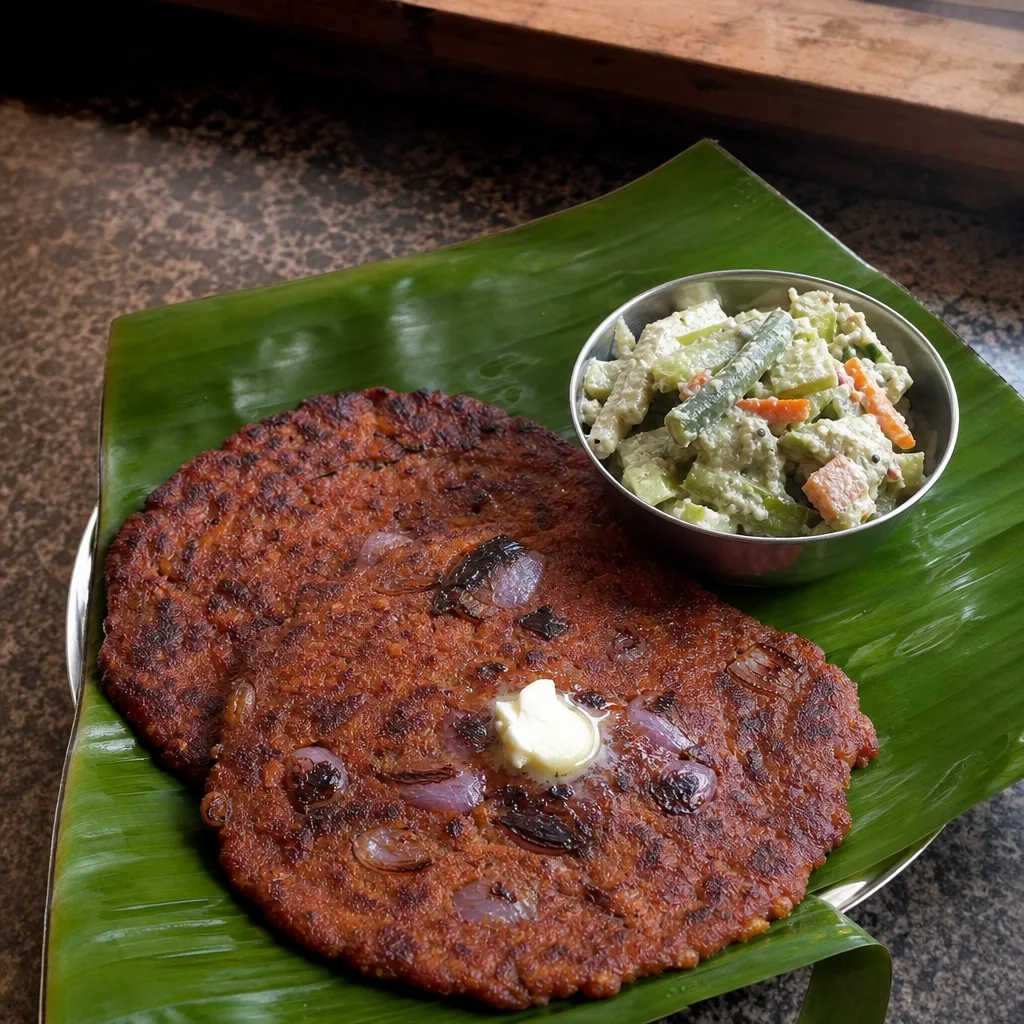
Adai is a Tamil Brahmin staple, eaten at breakfast or as an evening tiffin. Unlike dosa, it needs no overnight fermentation — four hours of soaking is enough, which means you can decide to make it at noon and have it ready by evening. The batter is coarse, not silky, and the pancake is thick, nutty and substantial in a way that plain dosa is not.
In Iyer households the standard combination of dals is raw rice with chana dal, toor dal and a small amount of red chillies and curry leaves ground in. Some families add a pinch of asafoetida; some do not. Onions — specifically shallots — are scattered on top while the adai is cooking, pressed in lightly so they half-cook into the surface. A few households add grated coconut to the batter itself; others keep it out entirely. Both are genuine.
The natural partner is avial — the thick Kerala-style vegetable dish that Iyer cooking shares with its neighbours across the Ghats. At home it is also eaten with white butter and jaggery, especially for children, or with a simple coconut chutney. It is not a dish that needs much else.
Ingredients (serves 4)
For the batter
For cooking and topping
Method
Soak the rice and dals
Measure the raw rice, chana dal and toor dal into a large bowl. Rinse well under cold water until the water runs clear. Cover with fresh cold water by at least 5 cm and leave to soak for 4 hours at room temperature. In a hot kitchen this is enough; in cooler weather give it 5 hours. The grains and lentils should feel soft when you press one between your fingers.
Drain and grind the batter
Drain the soaked rice and dals completely. Transfer to a wet grinder or a sturdy mixer-grinder along with the dried red chillies, curry leaves and asafoetida. Add water in small pours — start with 50 ml and add more only as needed. Grind to a coarse batter: it should feel slightly gritty, not smooth like idli batter. This coarseness is what gives adai its texture. The whole process takes about 10 minutes in a mixer.
Season the batter
Transfer the batter to a bowl and add salt. Stir well. The batter should be thicker than dosa batter — it should fall from a ladle in a slow, heavy ribbon. If it pours too freely it will spread too thin and dry out. Add a tablespoon of water if it is too stiff to spread at all, but err on the side of thick.
Rest the batter briefly
Leave the batter to rest for 15 to 20 minutes. Adai does not need fermentation, but this short rest lets the salt work into the batter and makes it slightly easier to spread on the pan. You can cook it immediately if pressed, but the rest helps.
Heat the tawa
Place a cast-iron or heavy iron tawa over medium-high heat. Let it heat for 2 to 3 minutes. Sprinkle a few drops of water — they should skitter and evaporate immediately. If they sit and steam, the tawa is not hot enough. Adai needs a properly hot surface or it will stick and tear. Wipe the surface with a half-onion or a cloth lightly dampened with oil before the first adai.
Pour and spread the adai
Pour a ladleful of batter (about 80 ml) onto the centre of the tawa. Using the back of the ladle, spread it outward in a slow circular motion to a round about 18 cm across. Adai is spread thicker than dosa — aim for about 4 to 5 mm. Do not try to spread it as thin as a dosa; it will break.
Add the shallots
Immediately scatter a small handful of finely chopped shallots over the surface of the adai. Press them in gently with the back of the ladle so they embed slightly into the batter. They will cook as the adai sets. Drizzle about 1 tsp of gingelly oil around the edges and a few drops on top.
Cook the first side
Cook on medium heat for 2 to 3 minutes. The edges will begin to look set and dry, and the underside will turn a deep reddish-brown with darker spots where the dal has crisped. This browning is correct and intended — adai is meant to have colour, unlike steamed dishes. Do not rush this; if you flip too early the adai will be raw in the centre.
Flip and finish
Flip the adai carefully with a flat spatula. The shallot side is now face down. Drizzle another ½ tsp of oil around the edges. Cook for 1 to 2 minutes on this side until it is cooked through and the shallots have a little colour. Press the centre lightly — it should feel firm, not soft and yielding. Remove to a plate.
Continue with remaining batter
Make the remaining adais in the same way. Between each one, let the tawa reheat for 30 seconds on medium-high. If the tawa starts smoking excessively, lower the heat slightly. The batter thickens as it sits; stir it before each pour and add a tablespoon of water if it has become too stiff to spread.
How to serve
Avial (thick mixed vegetable dish with coconut and yoghurt). Also traditionally eaten with white butter and jaggery, or with coconut chutney.
Served with: Avial (thick mixed vegetable dish with coconut and yoghurt). Also traditionally eaten with white butter and jaggery, or with coconut chutney.
Cook's tips
The grind matters
A mixer-grinder gives a coarser batter than a wet grinder, which is actually fine for adai — coarse is correct. If your mixer runs hot and the batter becomes warm, the adai will be harder to spread. Grind in short pulses and add cold water.
Gingelly or coconut oil
Gingelly oil is traditional in Tamil kitchens for adai and gives a characteristic nutty flavour. Some Iyer households near the Kerala border use coconut oil. Both are authentic; do not use refined vegetable oil, which adds nothing.
Batter storage
The batter keeps in the refrigerator for up to 2 days. It thickens overnight; thin it with a little water and stir well before cooking. Do not freeze it — the texture of the ground rice suffers.
If it sticks and tears
The tawa was not hot enough, or there was not enough oil at the edges. Adai is less forgiving than dosa on a cold pan. Always bring the tawa back to proper heat between adais.
Drumstick leaves
Some families add a small handful of drumstick leaves (murungai keerai) to the batter at the grinding stage. This is a genuine variation, especially in Kongunad, and adds a faint bitterness that works well.
Regional variations
Kongunad households add more toor dal and sometimes drumstick leaves; some Mudaliar kitchens include a small measure of urad dal for softness; Kerala households make a thinner version closer to a dosa.
Glossary
- Pachai arisi பச்சை அரிசி
- Raw unparboiled rice, used here for the batter.
- Kadalai paruppu கடலை பருப்பு
- Split and husked chana dal (Bengal gram).
- Thuvaram paruppu துவரம் பருப்பு
- Split and husked toor dal (pigeon pea).
- Perungayam பெருங்காயம்
- Asafoetida; used in small quantities in Tamil Brahmin cooking in place of onion and garlic in some dishes, or alongside them.
- Nallennai நல்லெண்ணெய்
- Gingelly oil, pressed from sesame seeds; the standard cooking fat for many Tamil dishes.
- Chinna vengayam சின்ன வெங்காயம்
- Small shallots, literally 'small onion'; sharper and more aromatic than large onions.
- Tawa தவா
- Flat or slightly concave iron griddle used for cooking flatbreads and pancakes.
Two things decide whether adai works: the coarseness of the batter and the heat of the tawa. Grind it too smooth and you get something closer to a soft dosa, without the nutty, substantial bite that makes adai itself. Start it on a pan that is not properly hot and it sticks, tears and stays raw in the middle. Get those two things right and the rest follows.
More Breakfast & Tiffin recipes
Karnataka Set Dosa
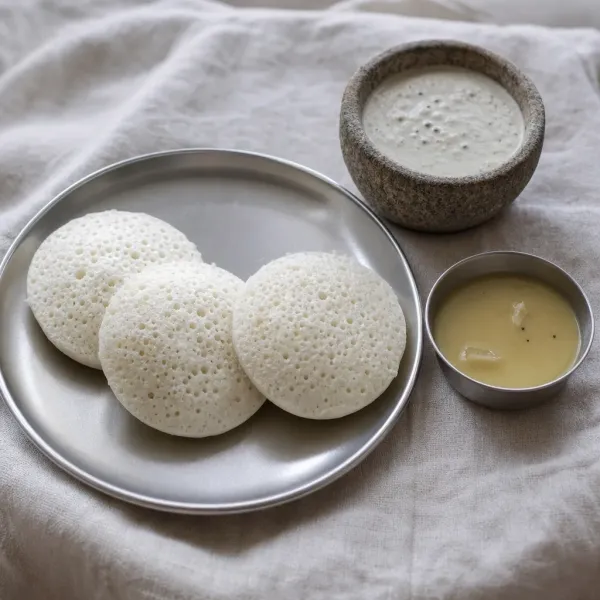
Traditional Karnataka set dosa recipe with raw rice, urad dal and poha. Soft, thick and spongy, served in threes with coconut chutney and sagu.
Kinnathappam
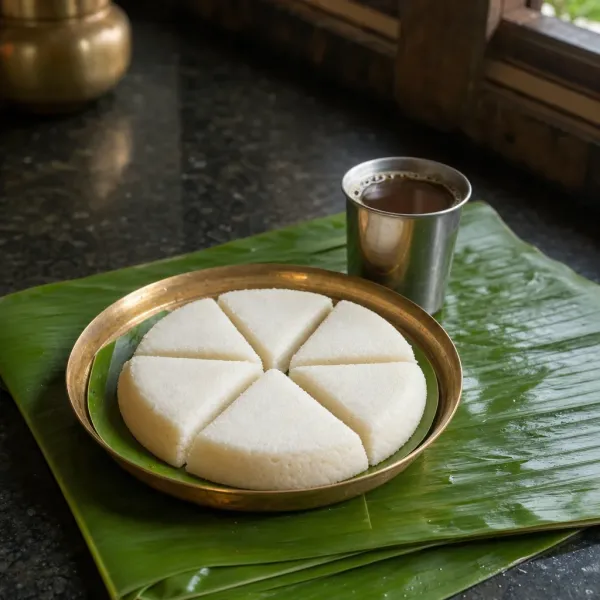
Traditional Nasrani kinnathappam: steamed rice cake with fresh coconut milk and jaggery. Soft, pale, and mildly sweet. Step-by-step household method.
Punugulu
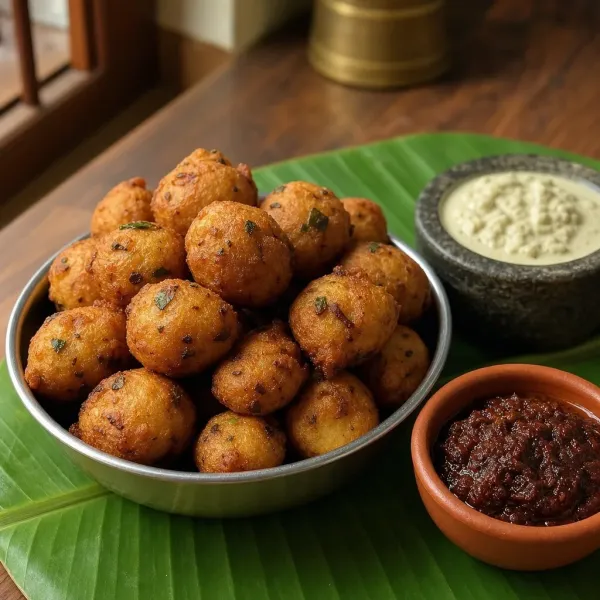
Traditional Andhra punugulu made from fermented dosa batter with shallots, green chilli and curry leaves, deep-fried to a golden crust. Step-by-step…
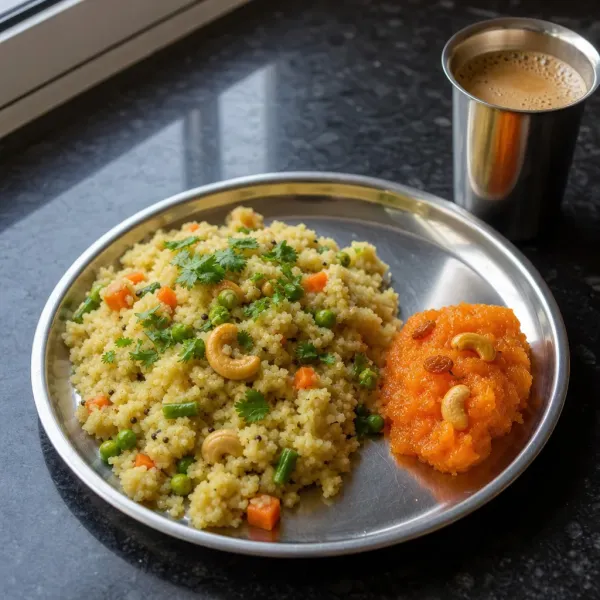
Khara Bath
Authentic Karnataka khara bath made with toasted bombay rava, ghee, green chillies and vegetables. The Bengaluru household method, step by step.
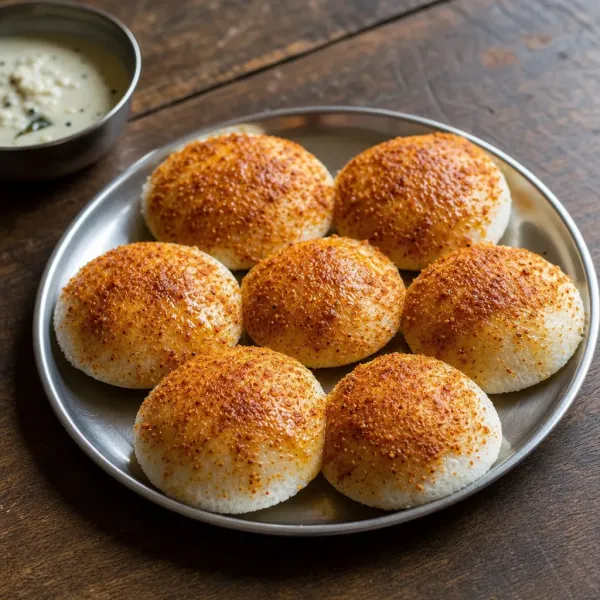
Podi Idli
Soft steamed idli tossed in homemade milagai podi and gingelly oil. Traditional Tamil Iyer household recipe with full batter and podi method.
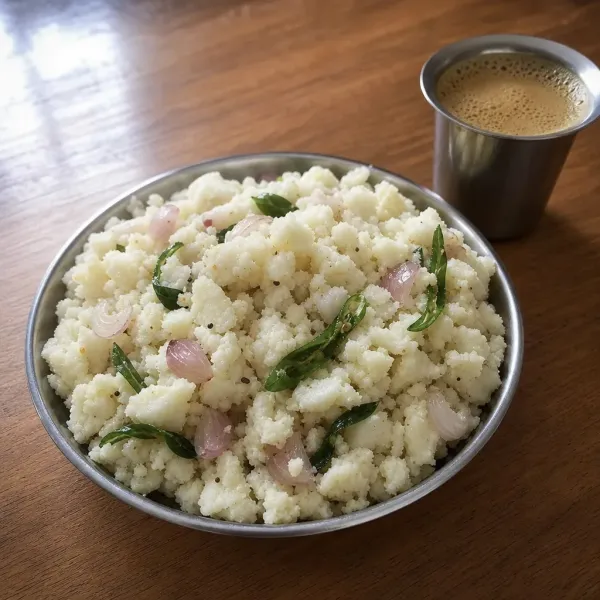
Idli Upma
A traditional Tamil Iyer recipe for idli upma made from cold leftover idlis, tempered in gingelly oil with shallots, green chilli and curry leaves.