

Kinnathappam Recipe
Malayalam കിണ്ണത്തപ്പംTamil கிண்ணத்தப்பம்Kannada ಕಿಣ್ಣತ್ತಪ್ಪಂTelugu కిణ్ణత్తప్పం
- Prep20 min
- Soak / ferment4 hr
- Cook40 min
- Serves6
- DifficultyEasy
- DietVegetarian
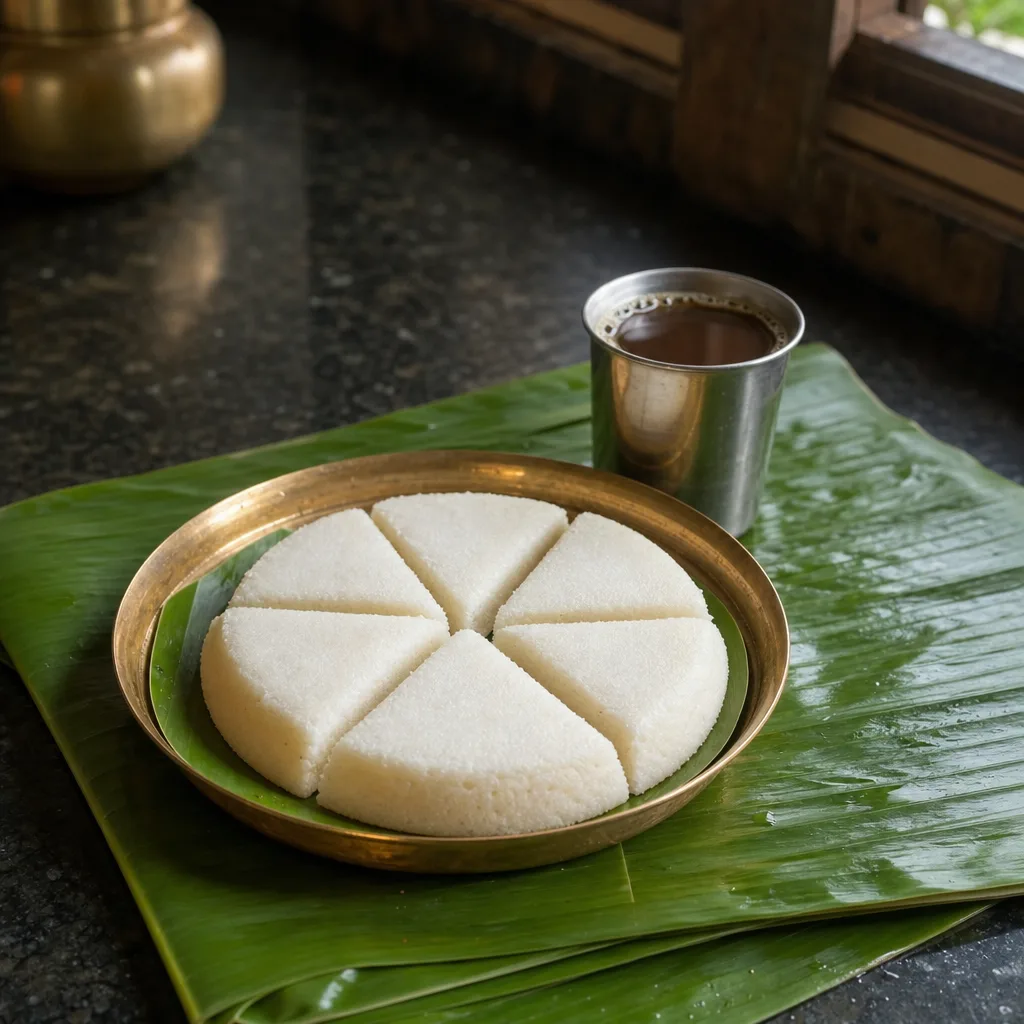
Kinnathappam is a steamed rice cake made in a shallow metal bowl, hence the name: kinnam means bowl, appam means cake. It is soft, pale, and faintly sweet, with the fragrance of coconut milk and a thread of cumin running through it. It is not a fermented batter; it does not rise or develop sourness. What it has instead is a gentle density, the texture of a very tender steamed pudding, sliceable once cooled.
In Travancore Nasrani homes this is a breakfast dish or a tea-time snack, particularly on days when something sweet but not heavy is wanted. It is also made for church feast days and for guests arriving in the morning. Households differ mainly in sweetness: some families use a full cup of jaggery, others use half and find the coconut milk sufficient. A few add a small amount of shallot and coconut pieces fried in coconut oil on top before steaming, which gives the surface a different character entirely.
The batter is thin enough to pour and it sets entirely from the steam. The finished cake is pale throughout, ivory-white with no browning anywhere on the surface or edges. If you see colour, the heat was too high or the bowl sat directly on the steamer floor without water beneath.
Ingredients (serves 6)
For the batter
For greasing the bowl
Method
Soak the rice
Wash the raw rice two or three times in cold water until the water runs mostly clear. Cover with fresh water and leave to soak for 4 hours at room temperature. In a hot Kerala kitchen this is enough; if the weather is very cool, soak for up to 5 hours. The grains should press and crumble easily between your fingers when ready.
Dissolve the jaggery
Put the grated jaggery in a small pan with 3 tablespoons of water over low heat. Stir until fully dissolved, then strain through a fine sieve to remove any grit. Set aside to cool to room temperature. Do not let it boil down to a thick syrup; you want a pourable liquid.
Grind the rice
Drain the soaked rice and put it in a wet grinder or a powerful blender with the thin coconut milk. Grind to a very smooth batter with no gritty feel when you rub a little between your fingers. This takes about 8 to 10 minutes in a blender; stop, scrape the sides, and grind again until completely smooth. A wet grinder will give a finer result.
Combine the batter
Pour the ground rice batter into a large bowl. Add the thick coconut milk and the cooled dissolved jaggery. Add the crushed cardamom, the cumin seeds, and the pinch of salt. Stir everything together well. The batter should be thin and pourable, roughly the consistency of whole milk. Taste it now; adjust jaggery if your family prefers it sweeter.
Prepare the steamer and bowl
Fill your steamer or a large covered pot with enough water to steam for 30 to 35 minutes without running dry. Bring it to a full boil. Grease a shallow steel or aluminium kinnam (bowl) generously with coconut oil, covering the base and sides completely. The bowl should be about 20 to 22 cm across and no more than 5 cm deep so the steam can penetrate evenly.
Pour and steam
Stir the batter once more, as the rice will have begun to settle. Pour it into the greased bowl to a depth of about 3 to 4 cm. Place the bowl on the steamer rack, making sure it sits level. Cover the pot with a tight lid. If your lid does not seal well, wrap a clean cotton cloth around the rim to trap the steam.
Steam on steady medium heat
Steam on medium heat, not a furious boil, for 30 to 35 minutes. A violent boil will make the surface pockmarked and uneven. After 30 minutes, insert a thin skewer or a toothpick into the centre; it should come out clean with no wet batter clinging to it. The surface will be set and pale throughout, with no browning at all.
Cool before unmoulding
Remove the bowl from the steamer carefully. Let it cool on a wire rack or a folded cloth for at least 15 to 20 minutes before cutting. If you try to slice it hot it will tear. Once cooled, run a thin knife around the edge and cut into wedges or squares directly in the bowl, or invert onto a plate if you want to serve it whole.
How to serve
Eaten on its own as a breakfast or tea-time snack. Some families serve it with a small cup of black tea or with sweetened coconut milk on the side. In older Nasrani households it is sometimes placed on a banana leaf.
Served with: Eaten on its own as a breakfast or tea-time snack. Some families serve it with a small cup of black tea or with sweetened coconut milk on the side. In older Nasrani households it is sometimes placed on a banana leaf.
Cook's tips
Fresh coconut milk makes a difference
Canned coconut milk works and many households use it, but freshly pressed milk from a grated coconut gives a cleaner, more delicate flavour. If using canned, shake the can well and use the full-fat variety.
The batter settles quickly
Rice flour settles to the bottom within minutes. Always stir the batter just before pouring into the bowl or you will get a dense, gummy base and a watery top layer.
Jaggery quality varies
Dark, strong-tasting jaggery will colour the cake a light brown and give a more pronounced flavour. Pale golden jaggery keeps the cake ivory-white and milder. Both are correct; it is a household preference.
Storing leftovers
Kinnathappam keeps well covered at room temperature for half a day. Refrigerate if keeping longer; it firms up in the fridge and can be gently steamed for 5 minutes to soften again before serving.
The cloth-wrap trick
Tying a clean cotton cloth over the pot lid prevents condensation dripping back onto the surface of the cake. Water drops cause pitting. This is standard practice in most Kerala kitchens for any steamed sweet.
Regional variations
A Mappila version using maida (plain flour) and thin coconut milk, steamed in the same bowl; a plainer version without cumin or cardamom made in some central Kerala households.
Glossary
- Pachari പച്ചരി
- Raw (unboiled) white rice, the standard rice for batters in Kerala cooking.
- Kinnam കിണ്ണം
- A shallow round metal bowl, traditionally brass or bell metal, used for steaming and serving.
- Sharkkara ശർക്കര
- Jaggery; in Kerala usually made from palm or coconut palm sap, darker and more complex than cane jaggery.
- Elakka ഏലക്ക
- Green cardamom.
- Jeerakam ജീരകം
- Cumin seeds.
- Appam അപ്പം
- A broad term in Malayalam for a range of rice cakes, both steamed and pan-cooked.
Two things decide whether this cake works: the smoothness of the ground rice, and the steadiness of the steam. Gritty batter will never set to a tender, even texture no matter how long it steams. And a fierce, boiling steam will pit the surface and cook the outside before the centre is set. Grind patiently, steam gently, and let it cool fully before you cut it.
More Breakfast & Tiffin recipes
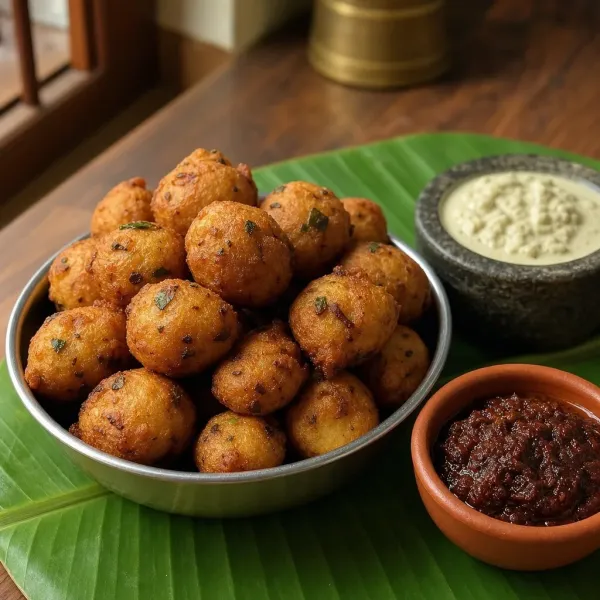
Punugulu
Traditional Andhra punugulu made from fermented dosa batter with shallots, green chilli and curry leaves, deep-fried to a golden crust. Step-by-step…
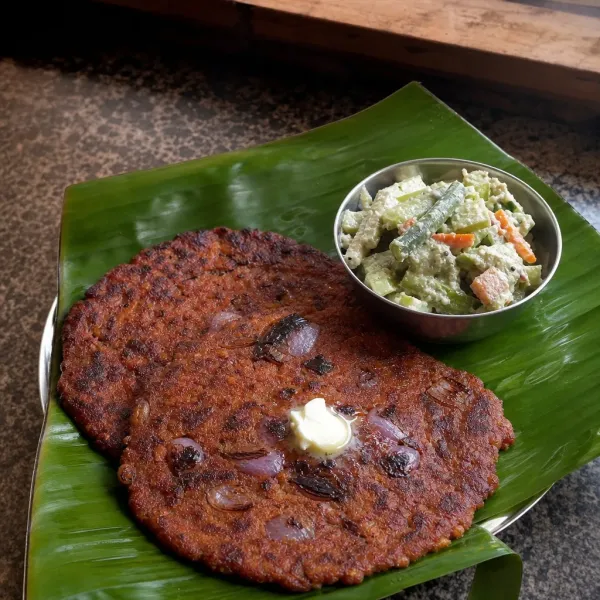
Adai
Traditional Tamil Iyer adai made with raw rice, chana dal and toor dal. Coarse-ground batter, shallot topping, cooked in gingelly oil. Served with av…
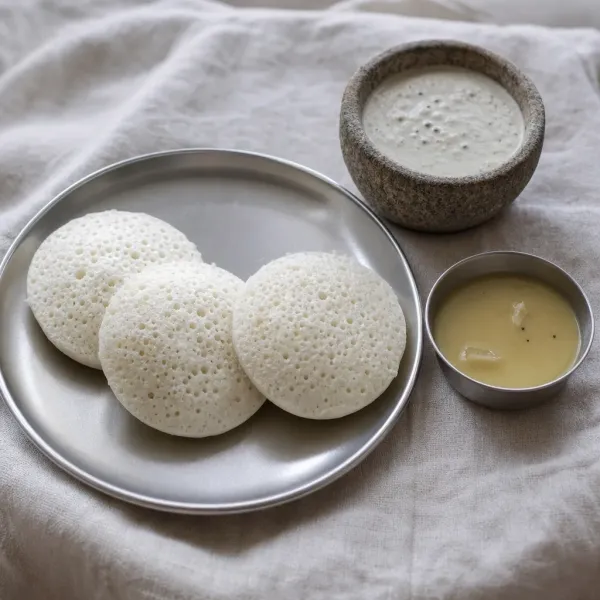
Karnataka Set Dosa
Traditional Karnataka set dosa recipe with raw rice, urad dal and poha. Soft, thick and spongy, served in threes with coconut chutney and sagu.
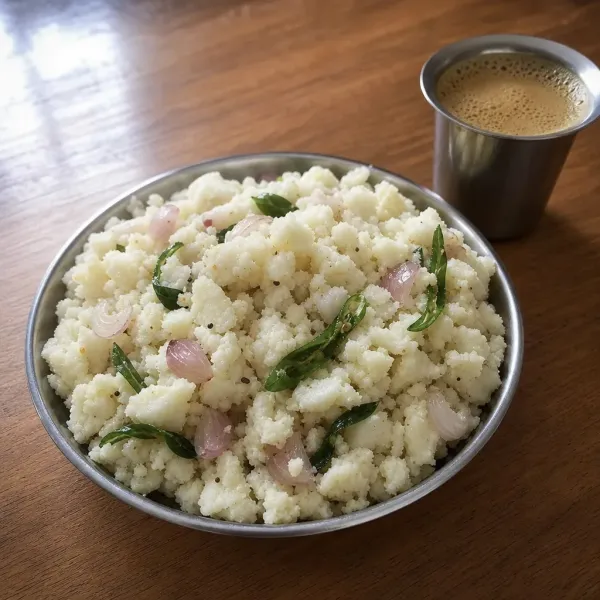
Idli Upma
A traditional Tamil Iyer recipe for idli upma made from cold leftover idlis, tempered in gingelly oil with shallots, green chilli and curry leaves.
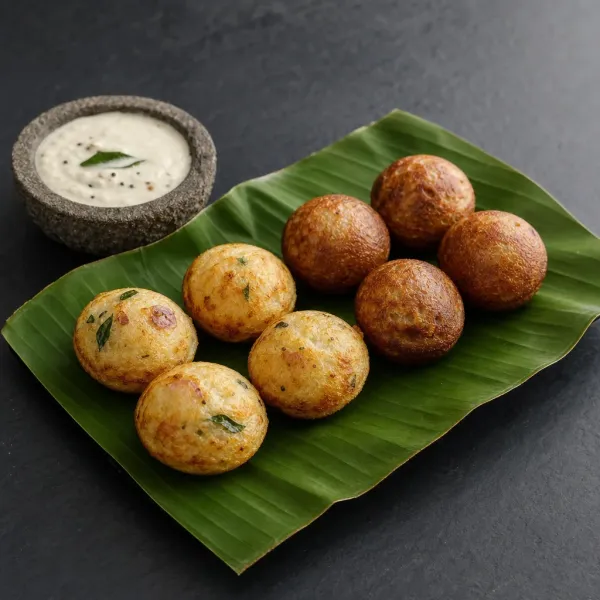
Kuzhi Paniyaram
Authentic Chettinad kuzhi paniyaram recipe with fermented rice-urad batter, savoury tempering and sweet jaggery version. Cooked in gingelly oil.
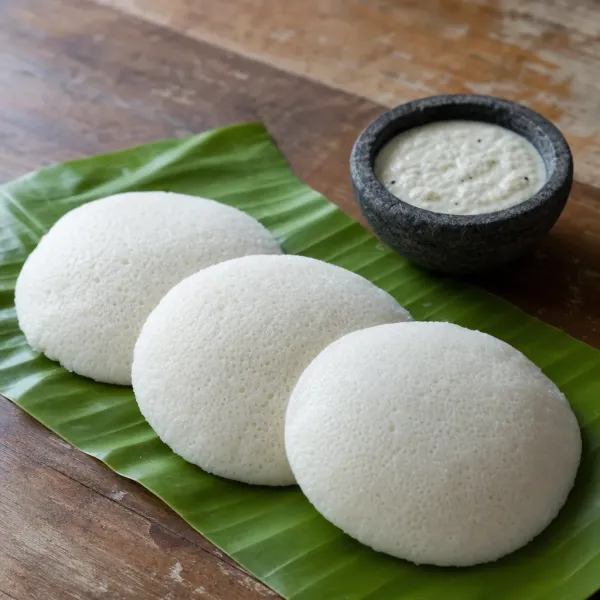
Ramassery Idli
Traditional Ramassery idli from Palakkad: raw rice batter, no urad dal, steamed on damp muslin. Soft, pale, and delicate. Step-by-step home recipe.