

Madras Mixture Recipe
Malayalam മദ്രാസ് മിക്സ്ചർTamil மதராஸ் மிக்ஸ்சர்Kannada ಮದ್ರಾಸ್ ಮಿಕ್ಸ್ಚರ್Telugu మద్రాస్ మిక్స్చర్
- Prep30 min
- Cook45 min
- Serves8 to 10 as a snack
- DifficultyMedium
- DietVegetarian
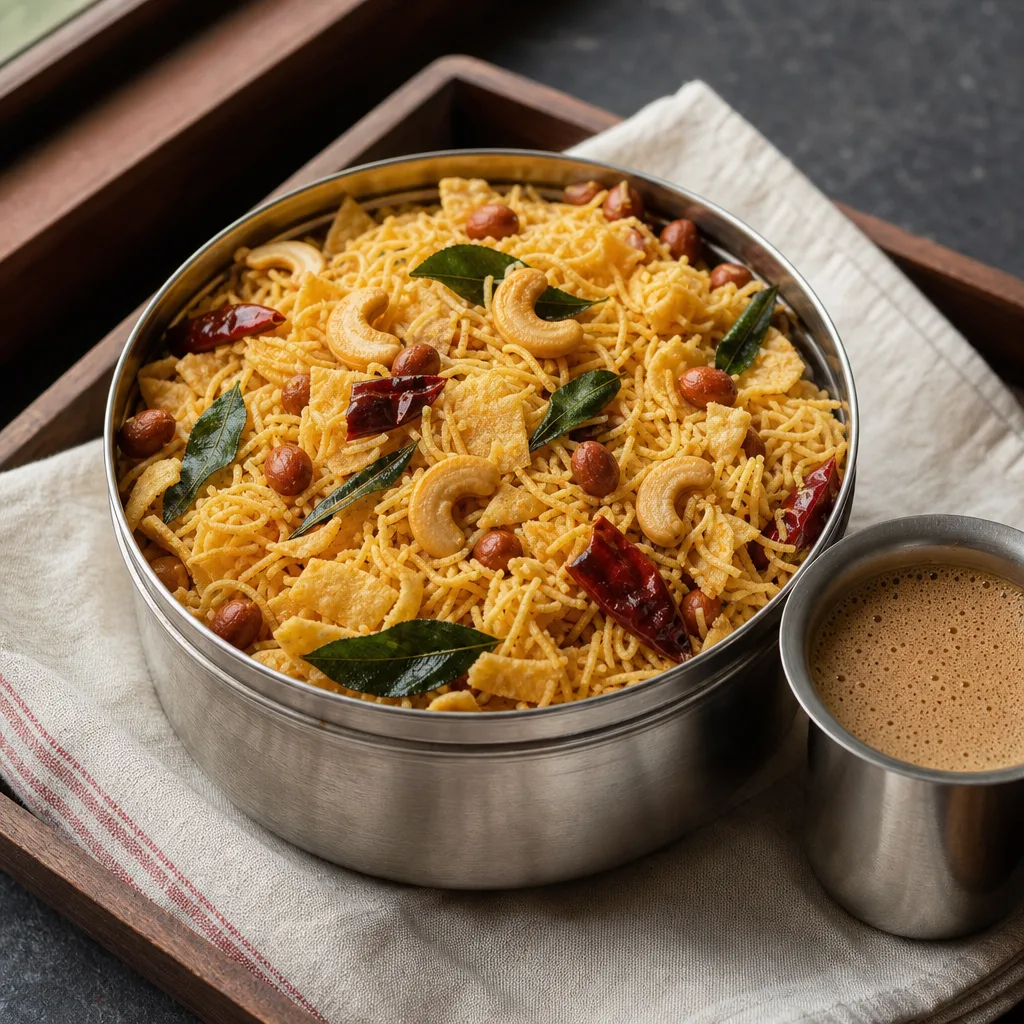
Mixture is the snack that sits in every Tamil household's steel dabba from Diwali until someone finishes it, which is usually within three days. It is not a single fried thing but an assembly: omapodi pressed fresh, ribbon pakoda broken into pieces, fried gram, peanuts, curry leaves, and a handful of raisins or cashews if the house is feeling generous, all tossed together while still warm so the tempering oil coats everything evenly.
The heart of the recipe is the omapodi, the fine chickpea-flour noodle pressed through a plate with tiny holes. Get that right and the rest is straightforward. The omapodi must be fried at a steady medium heat until it snaps cleanly between your fingers; if it bends, it will turn soft in the tin within a day. The ribbon pakoda is thicker, pressed through a wider plate, and fries faster.
Households differ on the ratio of components. Some make more omapodi and less ribbon pakoda; some add a layer of fried thin poha for lightness. The spice level in the final toss varies from a restrained pinch of chilli powder to a proper coating. What does not vary is the fat: gingelly oil for frying gives the mixture its characteristic warmth, and a final toss in the same oil carries the curry leaves and chilli powder across every piece.
Ingredients (serves 8 to 10 as a snack)
For the omapodi (fine sev)
For the ribbon pakoda
For the fried components
For the final toss
Method
Make the omapodi dough
Combine the chickpea flour, rice flour, crushed ajwain, turmeric, chilli powder, asafoetida and salt in a wide bowl. Rub in 1 tbsp gingelly oil until the mixture feels like damp sand. Add warm water a little at a time, kneading to a smooth, pliable dough that is slightly softer than chapati dough. It should not be sticky. Cover with a damp cloth and rest for 10 minutes.
Make the ribbon pakoda dough
In a separate bowl, mix the chickpea flour, rice flour, chilli powder, asafoetida, turmeric and salt. Rub in 1 tbsp gingelly oil. Add warm water gradually and knead to a stiff dough, stiffer than the omapodi dough, because the ribbon needs to hold its shape in the oil. If the dough is too soft, the ribbons will spread and break. Cover and rest.
Heat the oil
Pour the 700 ml gingelly oil into a deep kadai and heat over a medium flame. Test the temperature by dropping a small piece of dough into the oil: it should rise to the surface within 3 to 4 seconds. If it rises immediately, the oil is too hot and the outside will brown before the inside cooks through. Maintain this steady medium heat throughout.
Fry the omapodi
Fit the murukku press with the fine-holed plate (the omapodi plate). Fill with the omapodi dough. Press the dough directly into the hot oil in circular motions, working in batches that fit without crowding. Fry for 2 to 3 minutes, turning once, until the sizzling quietens noticeably and the colour turns a pale golden yellow. Lift out and drain on a clean cloth. While still warm, snap a strand between your fingers: it must break cleanly with a click. If it bends, return it to the oil for another 30 seconds.
Fry the ribbon pakoda
Switch the press to the ribbon pakoda plate, which has a single wide slot or two parallel slots. Press the dough into the oil in straight lines or loose spirals. Fry for 2 to 3 minutes, turning once, until the colour is a slightly deeper gold than the omapodi. Ribbon pakoda is thicker and takes a touch more heat to cook through. Drain and cool on a cloth.
Fry the peanuts
Add the raw peanuts to the same oil over a medium-low flame. Fry slowly, stirring occasionally, for 4 to 5 minutes. The peanuts are ready when the skin begins to blister and the nut inside turns a pale coffee colour when you break one open. Do not rush this on high heat; the centre will stay raw. Drain and set aside.
Fry the cashews
Add the cashew halves to the oil and fry for 1 to 2 minutes until they turn a light golden colour. Cashews go from golden to burnt very quickly, so watch them closely and remove them a shade before you think they are done. They will continue to colour from residual heat. Drain on the cloth.
Fry the curry leaves and dried chillies
Make sure the curry leaves are completely dry or the oil will spit dangerously. Slide the curry leaves and broken dried chillies into the oil together. Stand back. Fry for 30 to 40 seconds until the leaves are crisp and the sizzling stops. Remove immediately with a slotted spoon and drain. These go in last so they stay crisp.
Break and combine while warm
Break the omapodi into rough 4 to 5 cm lengths and the ribbon pakoda into 3 to 4 cm pieces. Combine all the fried components in a large wide bowl: omapodi, ribbon pakoda, peanuts, fried gram, cashews, fried curry leaves and dried chillies. Everything must still be warm so the final seasoning oil coats the pieces rather than pooling at the bottom.
Final toss and season
Warm the 2 tsp gingelly oil in a small pan, take it off the flame, and stir in the chilli powder. Pour this immediately over the mixture in the bowl and toss well with a large spoon or clean hands. Taste and add salt if needed, tossing again. The chilli powder should coat every piece evenly; if you see red patches, keep tossing.
Cool completely before storing
Spread the mixture in a single layer on a clean dry tray and leave it to cool completely at room temperature, at least 30 minutes. Do not cover while warm or the steam will make everything soft. Once fully cool and crisp, transfer to an airtight steel or glass container. It keeps well for up to two weeks in a cool, dry place.
How to serve
Served on its own as a tea-time snack alongside hot filter coffee or tea. At Diwali it is part of a spread that includes murukku, thattai and sweet items such as adhirasam.
Served with: Served on its own as a tea-time snack alongside hot filter coffee or tea. At Diwali it is part of a spread that includes murukku, thattai and sweet items such as adhirasam.
Cook's tips
The oil temperature rule
Gingelly oil has a lower smoke point than refined oil. Keep the flame at medium throughout. If the oil begins to smoke, take the kadai off the heat for a minute before continuing. Overheated gingelly oil turns bitter and will make the entire batch taste off.
Dry curry leaves are not optional
Even a trace of moisture on curry leaves causes violent spattering. Wash them the morning before you cook, spread on a cloth, and leave them in a dry spot for several hours. Pat them once more just before frying.
Fried gram needs no frying
Pottukadalai is already roasted. Add it straight to the mix at the combining stage. Frying it again turns it hard and unpleasant.
Dough consistency is the single biggest variable
Omapodi dough that is too stiff will crack as it is pressed and the strands will break before they reach the oil. Too soft and the strands will stick together in the oil. The right consistency presses through the plate smoothly with moderate effort and the strands fall cleanly.
Reusing the oil
The frying oil can be strained through a fine cloth and stored for one or two more uses for savory frying. Do not use it for sweets; the salt and spices from the dough will have transferred into the oil.
Regional variations
Bombay mixture (with sev and poha); Karnataka mixture (with ribbon pakoda and peanuts fried in groundnut oil); Kerala tea-shop mixture (looser, with more fried gram and less omapodi).
Glossary
- Omapodi ஓமப்போடி
- Fine chickpea-flour noodles flavoured with ajwain (omam), pressed through a small-holed plate and deep fried until crisp.
- Ribbon pakoda ரிப்பன் பகோடா
- Wide, flat chickpea-and-rice-flour strips pressed through a slotted plate and fried; named for their ribbon-like shape.
- Pottukadalai பொட்டுக்கடலை
- Roasted split chickpea (fried gram); sold ready-made, eaten as is or added to chutneys and snack mixes.
- Kadalai maavu கடலை மாவு
- Chickpea flour (besan); the primary flour for most Tamil savoury fried snacks.
- Nallennai நல்லெண்ணெய்
- Gingelly oil (cold-pressed sesame oil); the traditional frying fat for Tamil Nadu savoury snacks and kuzhambu.
- Perungayam பெருங்காயம்
- Asafoetida; used in small quantities in Tamil savoury snacks and lentil dishes as a digestive and flavouring.
- Omam ஓமம்
- Ajwain or carom seeds; the defining flavour of omapodi, with a sharp thyme-like aroma.
- Murukku press முறுக்கு அச்சு
- A cylindrical hand-press with interchangeable plates used to shape and extrude dough for murukku, omapodi and ribbon pakoda.
Two things decide whether the mixture stays crisp for days or goes soft by evening. The first is frying each component to the right stage: the omapodi must snap, not bend. The second is cooling everything completely in open air before the lid goes on. Rush either step and you will have a soft, oily tin of disappointment by the next morning.
More Snacks recipes
Onion Pakoda (Vengaya Pakoda)
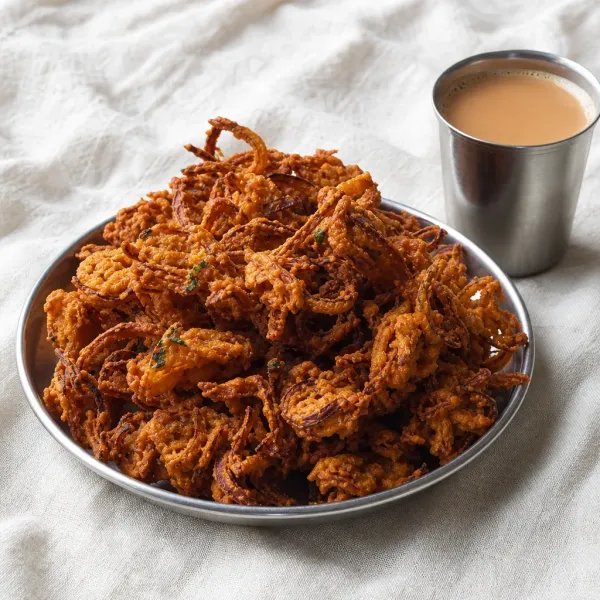
Traditional Tamil Nadu vengaya pakoda made with thinly sliced onion, besan and rice flour. No excess water, fried in gingelly oil for a crisp, craggy…
Pazham Pori
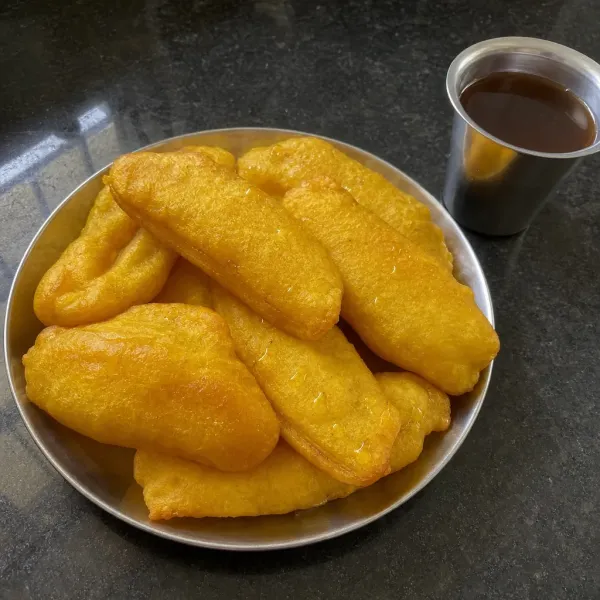
Classic Kerala pazham pori: ripe nendra banana slices in a turmeric maida batter, deep fried in coconut oil. Traditional household recipe with step-b…
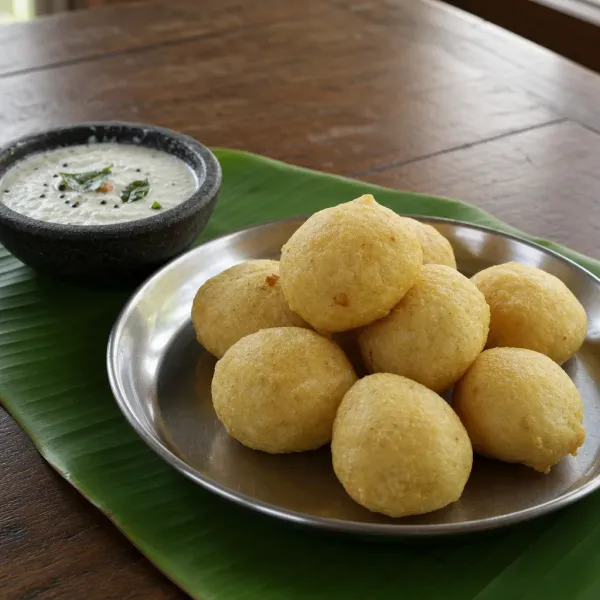
Urulaikizhangu Bonda
Traditional Tamil Brahmin urulaikizhangu bonda: spiced potato filling, crisp besan-rice flour batter, fried in gingelly oil. No onion, no garlic.
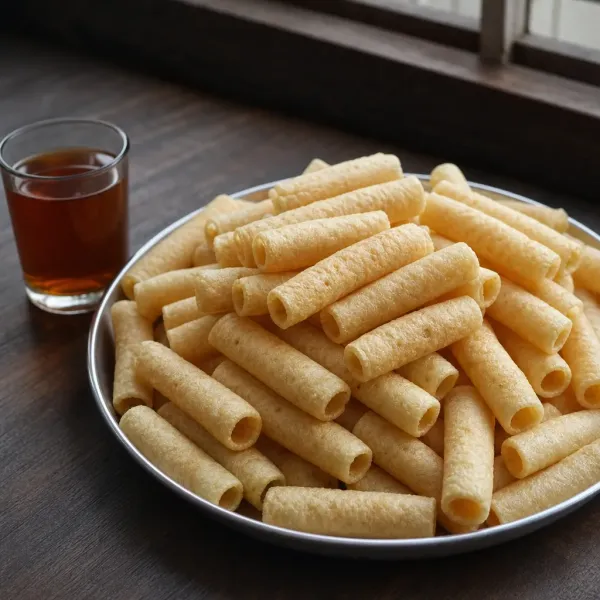
Kuzhalappam
Traditional Kerala kuzhalappam recipe: hollow rice crisps pressed through a tube mould and deep-fried in coconut oil with cumin and sesame.
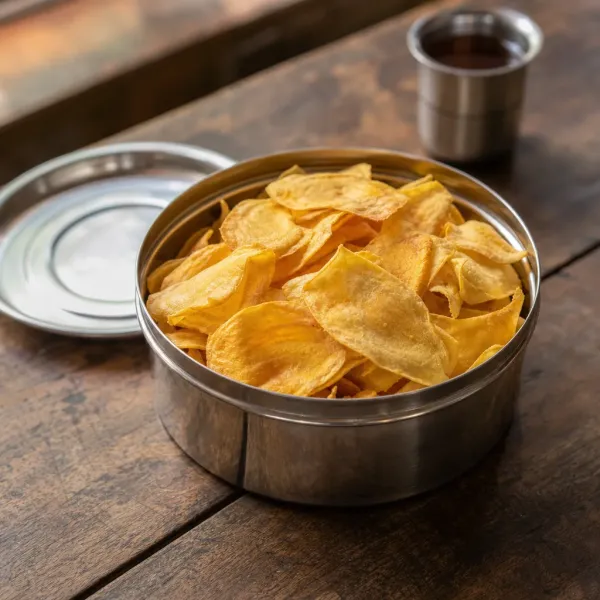
Chakka Varuthathu
Traditional Kerala recipe for raw jackfruit chips fried in coconut oil with a salt brine finish. Crisp, long-keeping, and made the old household way.