

Gorikayi Palya Recipe
Malayalam ഗോരിക്കായ് പള്ളTamil கொத்தவரங்காய் பொரியல்Kannada ಗೋರಿಕಾಯಿ ಪಲ್ಯTelugu గోరుచిక్కుడు పల్య
- Prep15 min
- Cook20 min
- Serves4
- DifficultyEasy
- DietVegan
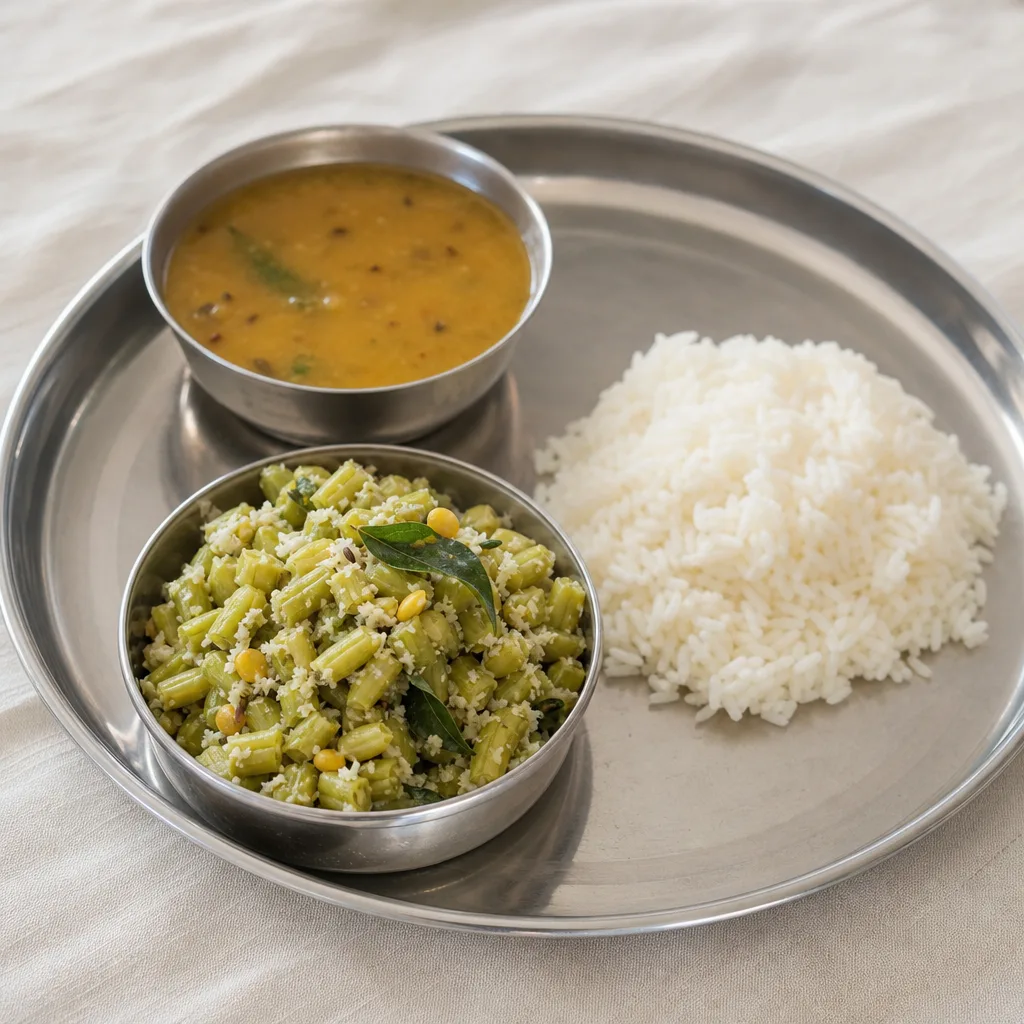
Gorikayi palya is a dry everyday stir-fry from Karnataka home kitchens. The word palya simply means a cooked vegetable side, and this one is made with cluster beans – gorikayi – which have a faint bitterness that softens with cooking but never entirely disappears. That slight edge is the point. Households that find it too sharp will add a little more coconut at the end, but they do not try to remove the character of the bean entirely.
The seasoning follows the standard Karnataka palya pattern: mustard seeds, cumin, curry leaves, dried red chilli, and a small amount of chana dal for texture. Freshly grated coconut goes in at the end, off the heat or on the lowest flame, so it stays moist rather than toasting. Gingelly oil is used in some households, particularly in older kitchens, but coconut oil and refined sunflower oil are both common today. This recipe uses coconut oil, which is traditional in coastal Karnataka households.
It is a weekday dish, cooked quickly and eaten as part of a simple meal. The beans must be strung and cut small – about 1 cm pieces – so they cook through without becoming mushy. If the pieces are too large they stay tough at the centre; if they are too small they collapse and lose their shape.
Ingredients (serves 4)
Main vegetable
For the seasoning
To finish
Method
String and cut the beans
Pull the string from both sides of each cluster bean pod. Cut into pieces roughly 1 cm long. Wash them in a colander and let the water drain off. Do not soak them – they will absorb water and steam rather than fry.
Heat the oil and pop the mustard
Set a wide, heavy pan or kadai over medium heat. Add the coconut oil and let it warm until it shimmers. Add the mustard seeds and keep the lid close to hand. When they begin to pop, add the chana dal immediately.
Brown the dal and add the aromatics
Stir the chana dal for about 30 seconds until it turns light golden – it should be the colour of pale honey. Add the dried red chillies, cumin seeds and curry leaves in quick succession. The curry leaves will sputter; stand back. Stir once.
Soften the shallots
Add the sliced shallots and the slit green chilli. Fry on medium heat, stirring occasionally, for 3 to 4 minutes until the shallots are translucent and just beginning to colour at the edges. Do not rush this step; undercooked shallots leave a raw sharpness.
Add turmeric and the beans
Sprinkle in the turmeric and stir for a few seconds so it coats the shallots. Add the cut cluster beans and mix well so every piece is coated with the oil and turmeric. The pan will look quite dry; that is correct.
Season and cook covered
Add salt and stir. Sprinkle 2 tablespoons of water over the beans, then cover the pan with a lid. Cook on low to medium heat for 8 to 10 minutes. Check once halfway through; if the pan looks dry and the beans are sticking, add one more tablespoon of water.
Check for doneness
Remove the lid. The beans should be tender when pressed between your fingers but still holding their shape – not collapsing or turning olive-grey. If they are still hard at the centre, cover and cook for another 2 to 3 minutes. If any water remains in the pan, raise the heat briefly and let it evaporate.
Finish with coconut
Turn the heat to the lowest setting. Add the freshly grated coconut and fold it through gently. Cook for one minute only – just long enough to warm the coconut through. Remove from heat. Taste for salt. Serve immediately; the coconut turns grainy if it sits in the hot pan too long.
How to serve
Steamed rice with a simple dal or sambar, and a small amount of pickle. Also eaten alongside chapati in many Karnataka households.
Served with: Steamed rice with a simple dal or sambar, and a small amount of pickle. Also eaten alongside chapati in many Karnataka households.
Cook's tips
Choosing the beans
Young, tender pods snap cleanly when bent. Older pods are fibrous and will not soften properly no matter how long you cook them. If the string does not pull away cleanly, the bean is past its best.
The bitterness question
Cluster beans have a natural bitterness. Cooking them fully reduces it. If you find them too sharp, add a pinch of sugar with the salt – this is done in some households – but do not blanch them first, as that washes away both flavour and texture.
Coconut oil versus sunflower oil
Coconut oil gives the palya a mild sweetness that balances the bean's bitterness. Sunflower oil is neutral and perfectly acceptable in a weekday kitchen. Do not use extra-virgin olive oil; the flavour is wrong for this dish.
Desiccated coconut
Fresh coconut is standard. If you genuinely cannot get fresh coconut, soak desiccated coconut in a tablespoon of warm water for five minutes before adding it. It will not taste the same but it will not ruin the dish.
Storing leftovers
The palya keeps in the refrigerator for one day. Reheat in the pan with a drop of oil over low heat. The coconut will have dried slightly; it is still good.
Regional variations
Tamil Nadu households make a similar kotthavarangai poriyal with mustard, curry leaf and freshly grated coconut; Andhra kitchens cook goruchikkudu with dry red chilli and no coconut.
Glossary
- Gorikayi ಗೋರಿಕಾಯಿ
- Cluster beans (Cyamopsis tetragonoloba) in Kannada; the pod vegetable used in this dish.
- Palya ಪಲ್ಯ
- A dry cooked vegetable side dish in Kannada; the Karnataka equivalent of Tamil poriyal.
- Chana dal ಚನ್ನದಾಲ್
- Split and hulled Bengal gram; used in small amounts in palya for a nutty crunch in the seasoning.
- Kadai ಕಡಾಯಿ
- A wide, deep, round-bottomed cooking pan used across South Indian kitchens for frying and stir-frying.
Two things decide whether this palya works: the age of the beans and the timing of the coconut. Young pods that are tender enough to cook through in ten minutes will give you a stir-fry that is slightly firm, faintly bitter and fragrant. Coconut added at the very end and taken off the heat quickly stays soft and moist, binding everything together without turning dry or gritty. Get both of those right and the rest follows.
More Dry Vegetable Sides recipes
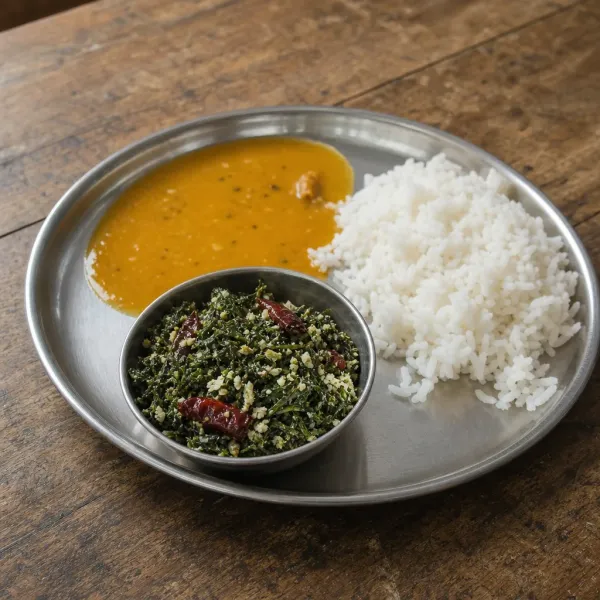
Menthya Soppu Palya
Traditional Karnataka dry stir-fry of fresh fenugreek leaves with coconut, shallots and a tempering of mustard, curry leaves and dried red chillies.
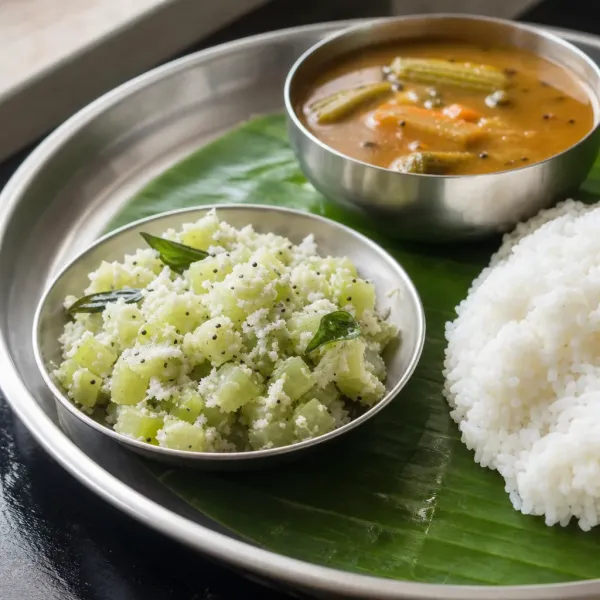
Pudalangai Poriyal
Traditional Tamil Brahmin pudalangai poriyal: snake gourd stir-fried in gingelly oil with mustard, urad dal, and fresh coconut. Ready in 30 minutes.
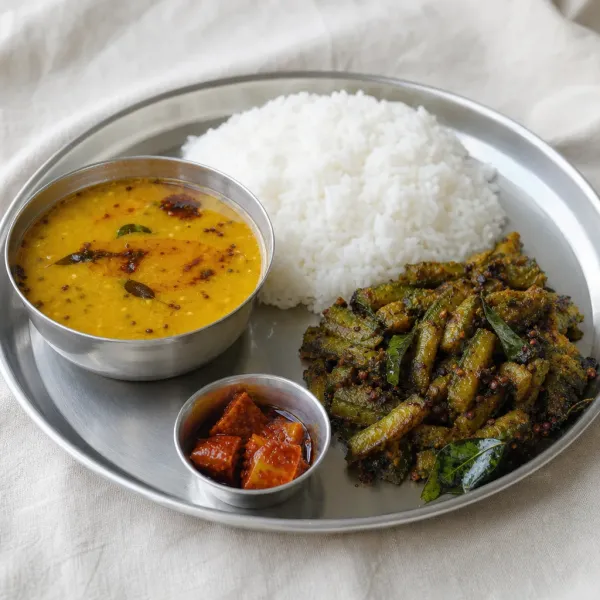
Beerakaya Vepudu (Andhra Ridge Gourd Stir-Fry)
Traditional Andhra Beerakaya Vepudu: a dry ridge gourd stir-fry cooked in gingelly oil with mustard, dried red chillies and curry leaves. Vegan and e…
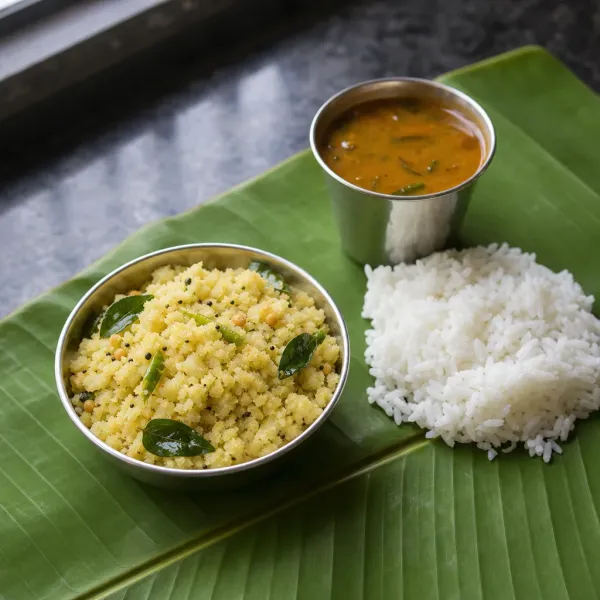
Urulakizhangu Podimas
Authentic Iyer-style crumbled potato podimas with gingelly oil, mustard, curry leaves and ginger. Dry, light and ready in under 30 minutes.
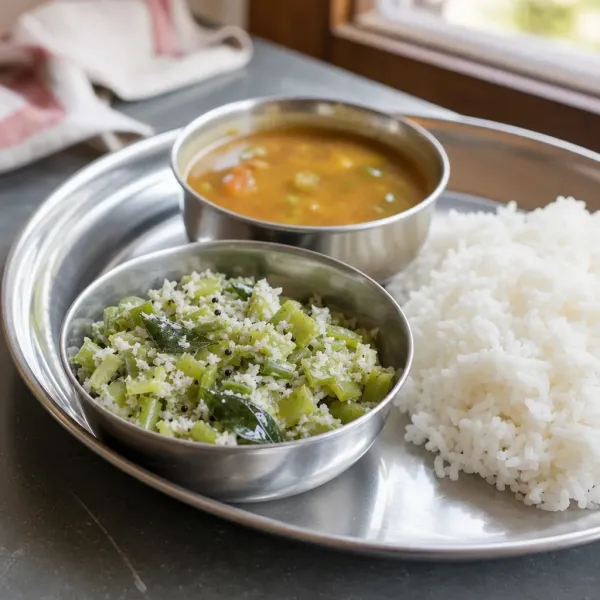
Avarakkai Poriyal (Broad Beans Stir-Fry)
Traditional Tamil Iyer-style avarakkai poriyal: broad beans stir-fried in gingelly oil with mustard, urad dal, curry leaves, and fresh coconut. Dry…
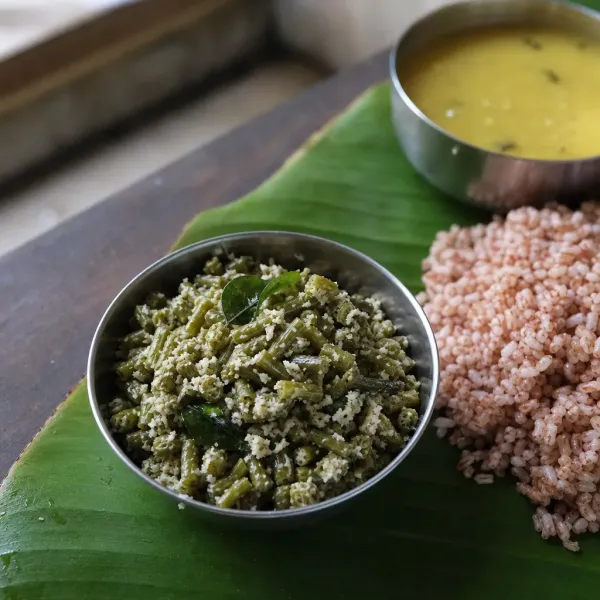
Payar Thoran (Long Beans with Coconut)
Traditional Kerala payar thoran made with long beans, fresh grated coconut and a mustard-curry leaf tempering. Dry, simple, everyday.