

Beerakaya Vepudu (Andhra Ridge Gourd Stir-Fry) Recipe
Malayalam ബീരക്കായ വേപുഡുTamil பீரக்காய் வேபுடுKannada ಬೀರೆಕಾಯಿ ವೇಪುಡುTelugu బీరకాయ వేపుడు
- Prep15 min
- Cook20 min
- Serves4
- DifficultyEasy
- DietVegan
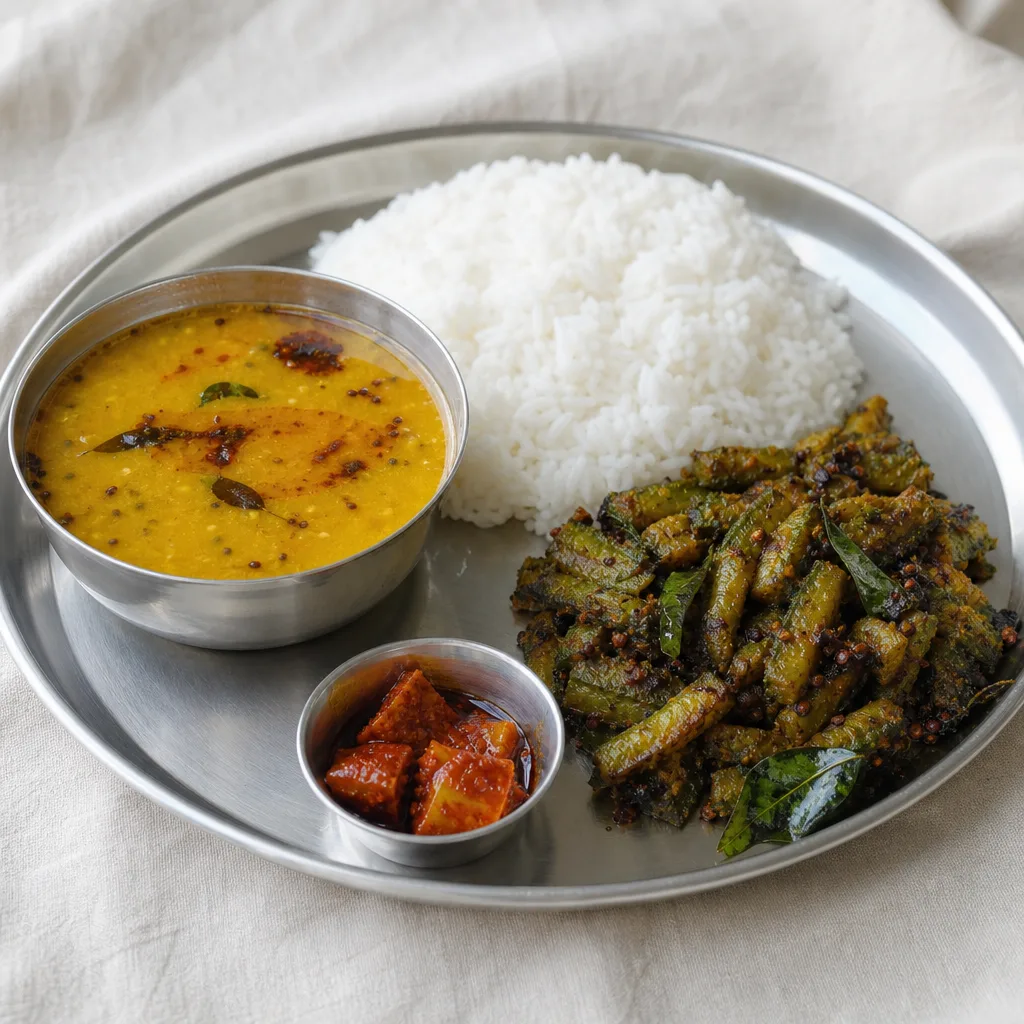
Beerakaya Vepudu is the kind of dish that appears on an Andhra plate without ceremony, doing its quiet work alongside rice and pappu. Ridge gourd cooks faster than you expect and releases moisture as it goes, so the whole technique is about coaxing that moisture out and then letting the gourd sit long enough in the pan to develop a little colour at the edges without turning to mush.
In Rayalaseema homes this is made sharp and dry. The chilli count is not decorative. Gingelly oil is the fat of choice for everyday cooking here, and it gives the finished dish a faint nuttiness that groundnut oil does not. Some households add a pinch of jaggery right at the end to balance the heat; others consider that a coastal habit and leave it out entirely.
It is eaten as part of a full meal: rice, dal, rasam, a pickle. It is not a standalone dish and it is not meant to be saucy. If there is liquid pooling in the pan when you serve it, it has not cooked long enough.
Ingredients (serves 4)
Main
Method
Prepare the gourd
Peel the ridge gourd with a sharp peeler, removing the tough ridges completely. Cut it in half lengthwise. If the seeds are large and spongy, scoop them out with a spoon; if the gourd is young and the seeds are small and firm, leave them in. Cut into pieces roughly 1.5 cm wide. Do not cut them smaller or they will disappear into the pan.
Heat the oil and temper
Heat the gingelly oil in a wide, heavy pan over medium heat. When the oil shimmers, add the mustard seeds and let them pop fully, about 30 seconds. Add the cumin seeds, chana dal and urad dal. Keep the heat at medium and stir. The dals should turn pale gold, not brown, which takes another 30 to 40 seconds. If they darken too fast, lift the pan off the heat for a moment.
Add the dried chillies and curry leaves
Drop in the broken dried red chillies and the curry leaves together. The leaves will splutter loudly for a few seconds. Stir once and let the chillies darken slightly, about 20 seconds. The oil should smell toasted and sharp, not burnt.
Cook the shallots and green chillies
Add the sliced shallots and slit green chillies. Stir well to coat them in the tempered oil. Cook over medium heat, stirring occasionally, until the shallots are soft and translucent at the edges, about 4 to 5 minutes. They should not brown.
Add the spice powders
Add the turmeric and red chilli powder directly over the shallots. Stir immediately so the powders do not scorch on the hot pan base. Cook for 30 seconds, stirring, until the raw smell of the turmeric fades.
Add the gourd and salt
Tip in all the ridge gourd pieces and add salt. Toss everything together so each piece is coated in the spiced oil. The gourd will look dry at first. Do not add water. Turn the heat up to medium-high for the first 2 minutes to get things moving, then reduce to medium.
Cook uncovered, stirring occasionally
Cook uncovered, stirring every 2 to 3 minutes. The gourd will begin releasing its own moisture within 3 to 4 minutes and the pan will look wet. This is correct. Continue cooking until that moisture evaporates completely. This takes 10 to 12 minutes in total from when the gourd went in. Do not cover the pan at any stage or the gourd will steam and turn watery.
Finish and check
Once the moisture has dried up, let the gourd sit undisturbed for 1 minute so the pieces pick up a little colour on the bottom. Stir once, check salt, and remove from the heat. The finished dish should be dry, each piece tender but holding its shape, with the tempering clinging to the gourd rather than sitting in oil at the bottom of the pan.
How to serve
Steamed rice, pappu (toor dal cooked with tamarind and dried red chilli), rasam, and a small portion of pickle such as avakaya (raw mango pickle). Part of a full Andhra meal served on a plate or banana leaf.
Served with: Steamed rice, pappu (toor dal cooked with tamarind and dried red chilli), rasam, and a small portion of pickle such as avakaya (raw mango pickle). Part of a full Andhra meal served on a plate or banana leaf.
Cook's tips
Choose the right gourd
A young, firm ridge gourd with tight ridges and no soft spots is what you want. An old, large gourd has a thick spongy seed cavity and the flesh becomes stringy when cooked. Press the gourd with your thumb; it should give only slightly.
Do not cover the pan
Covering traps steam and makes the gourd waterlogged. The whole point of a vepudu is a dry finish. If you accidentally cover it and the pan becomes wet, uncover, raise the heat and cook off the liquid, stirring more frequently.
Gingelly oil substitution
If gingelly oil is not available, groundnut oil is the closest substitute in everyday Andhra cooking. Do not use refined sunflower oil; it gives none of the background flavour. Coconut oil is not traditional here.
Shallots versus onions
Small shallots (sambar onions) are traditional and cook faster. If you use regular onions, slice them thin and add a minute or two to the cooking time. The flavour will be milder.
Storage
This keeps for one day at room temperature if the kitchen is not too warm, or refrigerate for up to two days. Reheat in a dry pan over medium heat, not in a microwave, which makes it soggy.
Regional variations
Coastal Andhra version finishes with lemon; Telangana households sometimes add curry leaves at two stages and use slightly less chilli.
Glossary
- Beerakaya బీరకాయ
- Ridge gourd in Telugu; the long, ridged vegetable with pale green skin.
- Vepudu వేపుడు
- Telugu term for a dry stir-fry; the dish is cooked until all moisture evaporates.
- Nuvvula nune నువ్వుల నూనె
- Gingelly oil (sesame oil) in Telugu; cold-pressed and used widely in Andhra everyday cooking.
- Aavalu ఆవాలు
- Mustard seeds in Telugu.
- Jeelakarra జీలకర్ర
- Cumin seeds in Telugu.
- Karivepaku కరివేపాకు
- Curry leaves in Telugu; fresh leaves are essential, dried ones are not a substitute.
- Senaga pappu సెనగ పప్పు
- Chana dal in Telugu; added to the tempering for a nutty crunch.
- Minapa pappu మినప పప్పు
- Urad dal in Telugu; used in the tempering alongside chana dal.
- Pasupu పసుపు
- Turmeric in Telugu.
- Endu mirchi ఎండు మిర్చి
- Dried red chillies in Telugu; broken and fried in oil at the start of the tempering.
Two things decide whether this works: the age of the gourd and whether you keep the pan uncovered throughout. A young gourd cooks evenly and holds its shape; an old one turns stringy and wet no matter what you do. And if the pan is covered even briefly, the steam undoes the whole process. Keep the lid off, let the moisture cook away, and the dish takes care of itself.
More Dry Vegetable Sides recipes
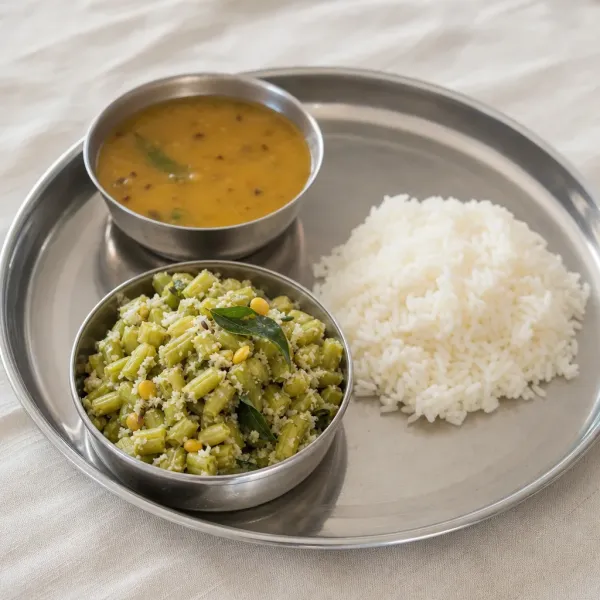
Gorikayi Palya
Traditional Karnataka gorikayi palya: cluster beans stir-fried with mustard, curry leaves, chana dal and fresh coconut. A dry, everyday vegetable sid…
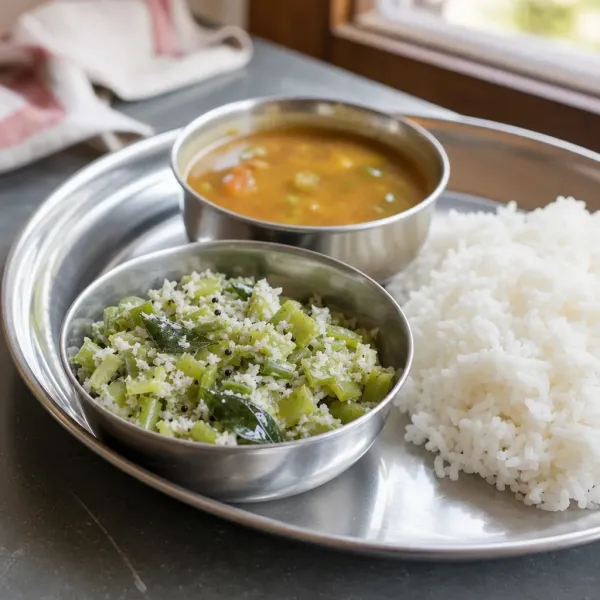
Avarakkai Poriyal (Broad Beans Stir-Fry)
Traditional Tamil Iyer-style avarakkai poriyal: broad beans stir-fried in gingelly oil with mustard, urad dal, curry leaves, and fresh coconut. Dry…
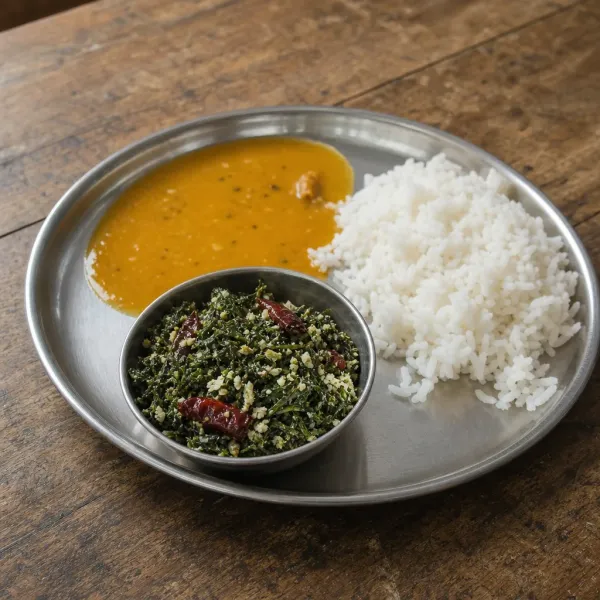
Menthya Soppu Palya
Traditional Karnataka dry stir-fry of fresh fenugreek leaves with coconut, shallots and a tempering of mustard, curry leaves and dried red chillies.
Cabbage Thoran
Classic Kerala cabbage thoran with fresh grated coconut, shallots, cumin, and a mustard-curry leaf tempering in coconut oil. Ready in under 30 minute…
Pudalangai Poriyal
Traditional Tamil Brahmin pudalangai poriyal: snake gourd stir-fried in gingelly oil with mustard, urad dal, and fresh coconut. Ready in 30 minutes.
Carrot Beans Palya
Traditional Karnataka carrot beans palya with mustard seeds, curry leaves, chana dal, and fresh grated coconut. Dry stir-fry ready in 30 minutes.