

Obbattu (Chana Dal and Jaggery Stuffed Flatbread) Recipe
Malayalam ഒബ്ബട്ടുTamil போளிKannada ಒಬ್ಬಟ್ಟುTelugu బొబ్బట్లు
- Prep40 min
- Soak / ferment2 hr
- Cook40 min
- Serves4
- DifficultyMedium
- DietVegetarian
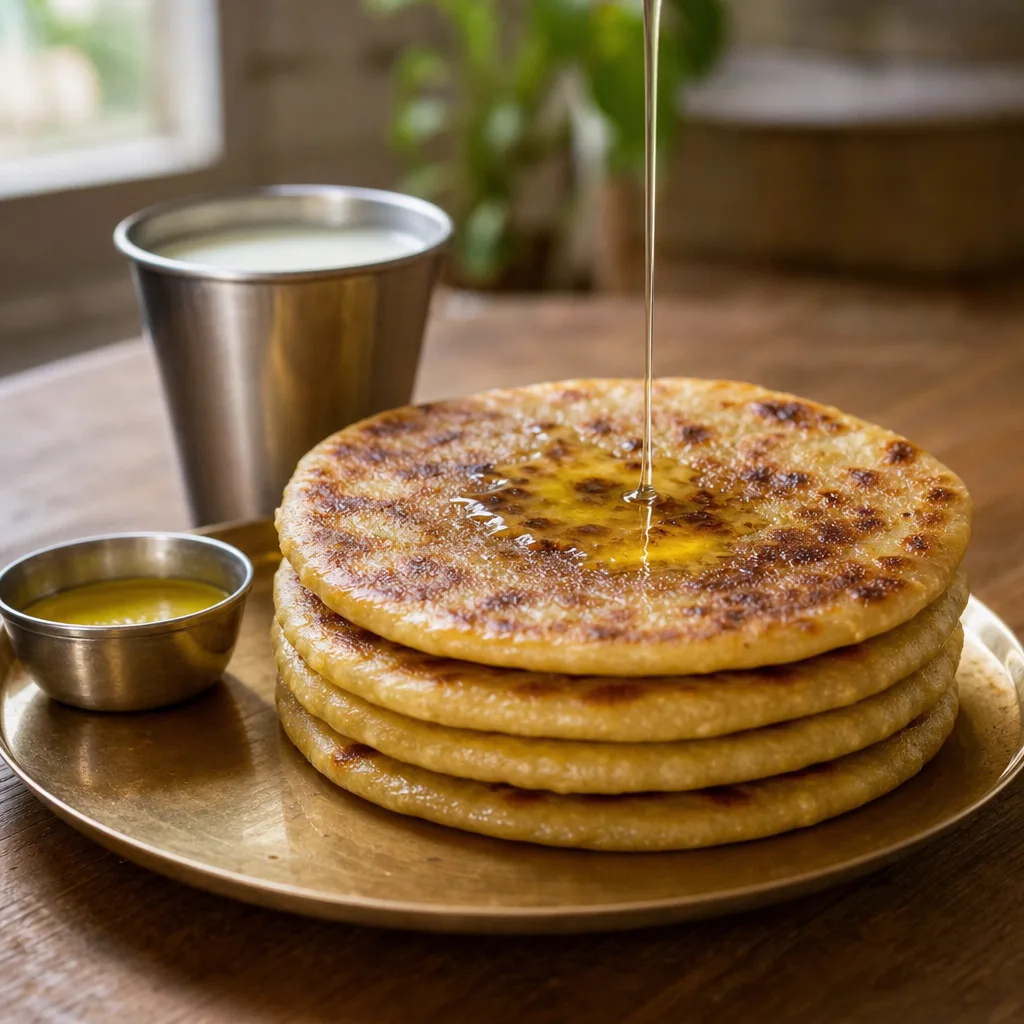
Obbattu is a Karnataka festive sweet flatbread made for Ugadi, Gowri Habba, Ganesh Chaturthi and weddings. The outer shell is a very soft, almost slack maida dough that has been kneaded with oil and left to rest until it becomes pliable enough to stretch thin without tearing. The filling is cooked chana dal mashed smooth with jaggery and scented with cardamom. The two come together as a thin, golden, slightly caramelised flatbread cooked on a tawa with ghee.
The dough is the part that catches people out. It needs more oil than feels reasonable, and it needs time. A dough rested for only thirty minutes will tear when you roll it. Two hours is the minimum; many households prepare the dough the night before and leave it submerged in oil until morning. The filling must be completely dry before you use it. Any moisture left in the dal will make the obbattu burst at the seam.
In Karnataka households there is no single definitive thickness. Some families roll them paper-thin so the filling shows through; others keep them a little thicker. Both are correct. What does not vary is the ghee: obbattu is cooked in ghee and eaten with more ghee poured over the top.
Ingredients (serves 4)
For the outer dough
For the filling (poornam)
For cooking
Method
Make the dough
Combine the maida, turmeric and salt in a wide bowl. Add 30 ml of the oil and rub it into the flour with your fingers until it resembles coarse breadcrumbs. Add warm water a little at a time, kneading as you go, until you have a dough that is softer than chapati dough and slightly sticky. It should feel almost too soft. Knead for five minutes until smooth.
Rest the dough in oil
Pour the remaining 30 ml of oil into the bowl and turn the dough ball in it so it is completely coated. Cover the bowl with a plate or damp cloth and leave it at room temperature for at least two hours, or up to eight hours. The oil penetrates the dough during this rest and is what makes it extensible enough to roll thin without tearing. Do not skip or shorten this step.
Cook the chana dal
Rinse the chana dal and pressure cook it with enough water to cover by 3 cm, for three whistles on medium heat. The dal should be completely soft and mashable but not waterlogged. Drain it thoroughly in a colander and press gently to remove excess water. Spread it on a plate for five minutes to let steam escape.
Make the filling
Put the drained dal and the grated jaggery into a heavy-bottomed pan over low heat. Stir continuously. The jaggery will melt and the mixture will loosen at first, then begin to come together and pull away from the sides of the pan. This takes eight to ten minutes. When the mixture holds its shape when pressed between your fingers and does not feel wet, it is ready. Remove from heat, add the cardamom powder (and dry coconut if using), mix well and let it cool completely. A warm filling will tear the dough.
Divide dough and filling
Divide the rested dough into ten equal portions and roll each into a smooth ball. Divide the cooled filling into ten equal portions and roll each into a smooth ball. The filling ball should be slightly smaller than the dough ball.
Stuff and seal
Flatten a dough ball in your palm into a small disc about 7 cm across. Place a filling ball in the centre. Bring the edges of the dough up and around the filling, pinching firmly to seal at the top. There must be no gaps. Press the sealed ball gently flat. Repeat with all the portions.
Roll out
Dust a banana leaf, plastic sheet or the back of a steel plate lightly with maida. Place a stuffed ball on it and roll it out gently with a rolling pin to a circle of about 18 to 20 cm, as thin as you can manage without the filling breaking through. Roll from the centre outward with light, even pressure. If it tears, pinch it closed and continue. With practice the dough will stretch without tearing.
Cook on the tawa
Heat a flat iron tawa over medium heat until hot. Add half a teaspoon of ghee and spread it. Lift the rolled obbattu carefully, using the banana leaf or sheet to help you transfer it without stretching, and lay it on the tawa. Cook for about ninety seconds until the underside shows golden patches and small brown spots. Add another half teaspoon of ghee around the edges, flip, and cook the second side for sixty to ninety seconds. It should be golden on both sides with some darker caramelised spots where the jaggery has seeped through.
Keep warm and serve
Stack the cooked obbattu on a plate and cover with a clean cloth to keep them soft and pliable. They firm up as they cool. Serve warm with a small spoonful of ghee poured over each one.
How to serve
A generous pour of ghee directly on top is standard. In Karnataka households obbattu is often served alongside katachi amti (the thin spiced water drained from the cooked dal) as a savoury counterpoint, or with warm milk. On festival days it is part of a larger meal.
Served with: A generous pour of ghee directly on top is standard. In Karnataka households obbattu is often served alongside katachi amti (the thin spiced water drained from the cooked dal) as a savoury counterpoint, or with warm milk. On festival days it is part of a larger meal.
Cook's tips
The dough must be very soft
If the dough feels like normal chapati dough after kneading, add a little more water and oil. A stiff dough will crack at the edges when you roll it and the filling will escape onto the tawa, where it burns and sticks.
Dry filling is non-negotiable
If the filling is even slightly wet, the obbattu will burst while rolling or puff and tear on the tawa. Cook it until it is genuinely dry and holds its shape as a ball. When in doubt, cook it another two minutes.
Rolling surface
Many Karnataka households roll obbattu on a piece of banana leaf or on a lightly oiled plastic sheet rather than a floured board, because the dough is so soft it can stick. The leaf also helps you lift and transfer the rolled disc without tearing it.
Overnight dough
If you are making obbattu for a festival, prepare the dough the evening before and leave it submerged in the oil overnight at room temperature. The dough will be noticeably more pliable and easier to roll thin the next day.
Dry coconut in the filling
Some Karnataka households add two tablespoons of dry grated coconut to the filling for texture. This is a genuine household variation, not an error. Fresh coconut is not used because it shortens the shelf life of the obbattu significantly.
Storage
Obbattu keeps well at room temperature for two days if stacked and covered. They can be gently reheated on a tawa over low heat with a little ghee. Do not refrigerate; they become hard and dry.
Regional variations
Tamil Nadu poli (paruppu poli) uses a turmeric-tinted maida dough and a slightly firmer filling; Andhra bobbatlu uses a similar dough but the filling leans sweeter and cardamom-forward; Maharashtra puran poli uses a whole-wheat dough and a chana dal and jaggery filling with a stronger cardamom note; the Karnataka coastal version adds fresh grated coconut to the filling.
Glossary
- Obbattu ಒಬ್ಬಟ್ಟು
- Karnataka name for the sweet stuffed flatbread made with a maida outer shell and a chana dal and jaggery filling.
- Poornam ಪೂರ್ಣ
- The sweet filling inside obbattu, made from cooked and mashed chana dal mixed with jaggery and cardamom.
- Chana dal ಕಡಲೆ ಬೇಳೆ
- Split Bengal gram, the legume used for the filling of obbattu.
- Maida ಮೈದಾ
- Refined white wheat flour, used for the outer dough of obbattu.
- Tawa ತವಾ
- A flat iron griddle used to cook flatbreads; the heavy flat kind gives the best even heat for obbattu.
- Katachi amti कटाची आमटी
- The thin spiced liquid drained from the cooked chana dal, seasoned and served as a savoury accompaniment to obbattu; a Maharashtrian and Karnataka practice.
Obbattu succeeds or fails on two things: the dough and the filling. The dough must rest in oil long enough to become genuinely extensible, and the filling must be cooked until it is completely dry. Get those two right and the rolling and cooking are straightforward. Rush either and the obbattu will tear on the board or burst on the tawa.
More Sweets & Payasam recipes
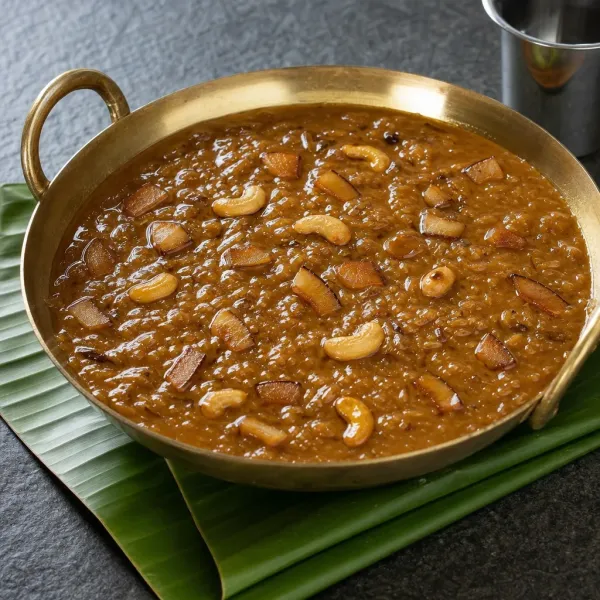
Chakka Pradhaman
Traditional Kerala chakka pradhaman made with chakka varatti, fresh coconut milk and jaggery. A sadya payasam recipe with step-by-step method and coo…
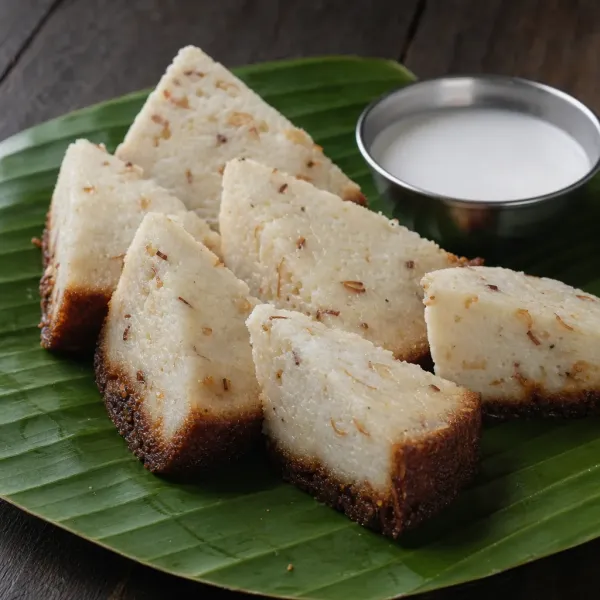
Kalathappam
Traditional Mappila kalathappam from Malabar: fermented rice and coconut batter with fried shallots, jaggery and cumin, baked slow in a heavy vessel.
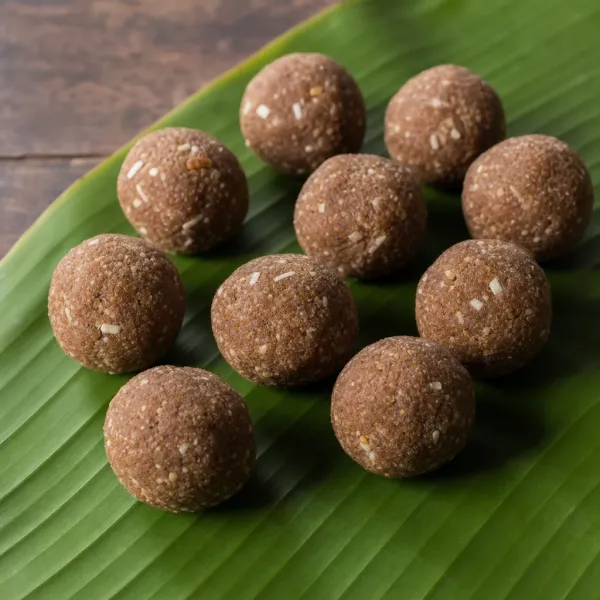
Ari Unda
Traditional Kerala Ari Unda made with roasted raw rice, dark jaggery and fresh coconut. Step-by-step method with tips on roasting and syrup consisten…
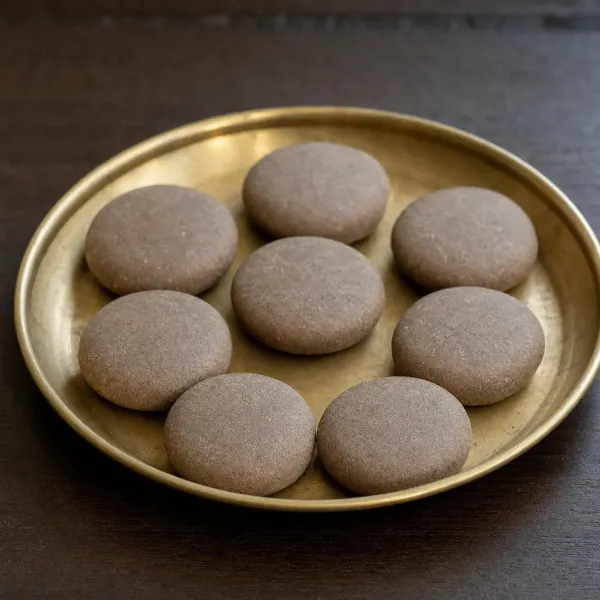
Dharwad Peda
Authentic Dharwad peda made at home with khoya and sugar. The traditional Karnataka sweet with its signature brownish-grey colour, step by step.
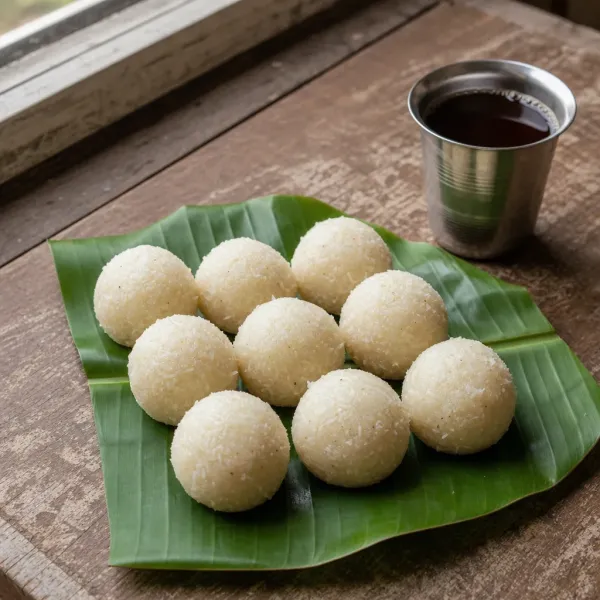
Avalose Unda
Traditional Kerala avalose unda recipe: roasted rice flour, fresh coconut and dark jaggery pressed into soft, crumbly balls. A classic Travancore sna…
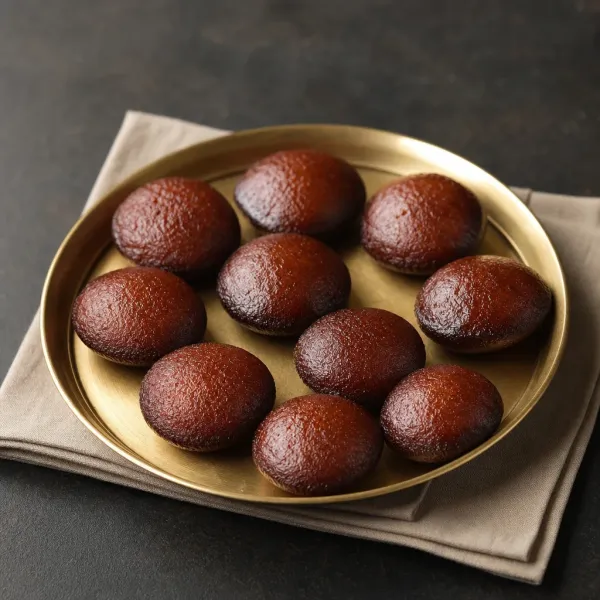
Neyyappam
Traditional Kerala neyyappam made with soaked raw rice, dark jaggery, and pure ghee. Step-by-step temple-style recipe with tips on batter and heat.