

Ari Unda Recipe
Malayalam അരി ഉണ്ടTamil அரிசி உண்டைKannada ಅಕ್ಕಿ ಉಂಡೆTelugu అరిసె ఉండలు
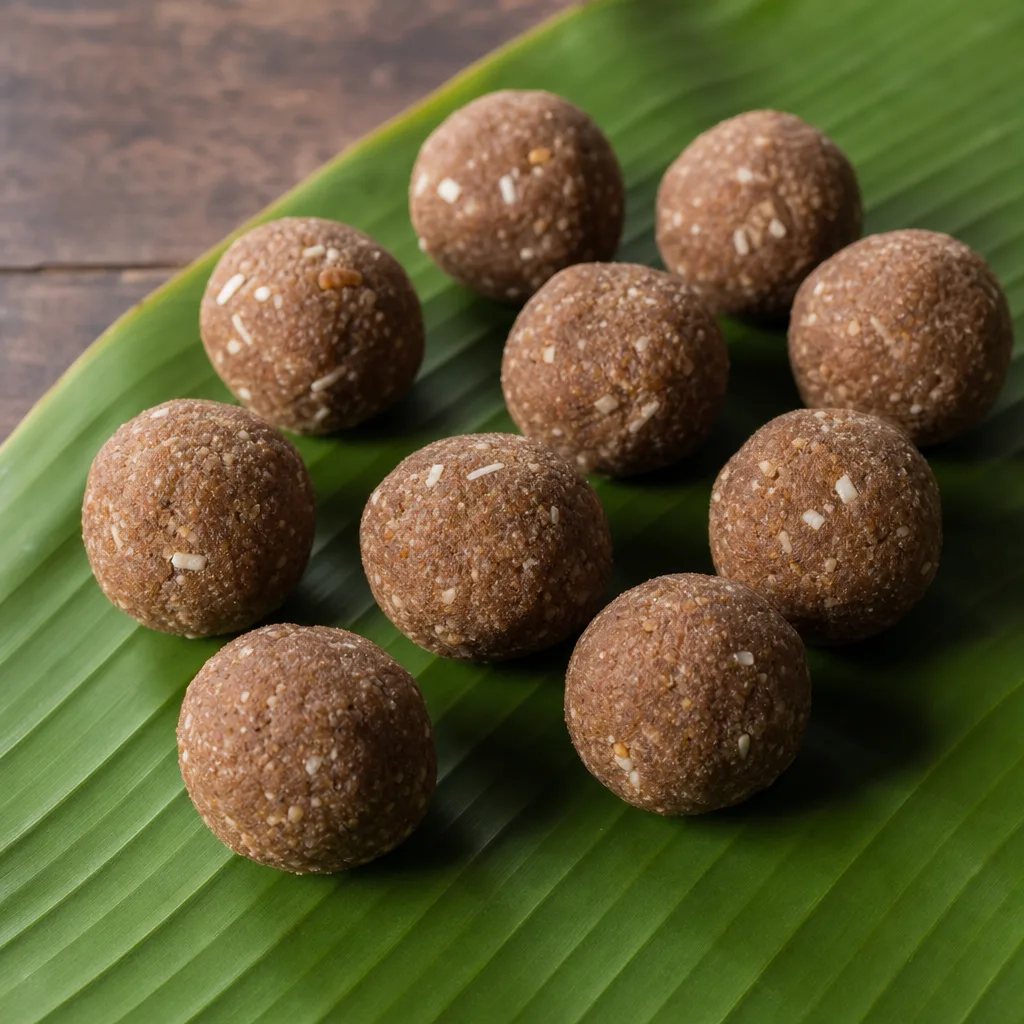
- Prep15 min
- Cook35 min
- Serves4
- DifficultyEasy
- DietVegan
Ari Unda is a simple, everyday sweet made in Kerala homes, particularly as an after-school snack for children or as an offering during temple festivals. It asks for nothing more than raw rice, jaggery, grated coconut, and a little cardamom. The rice is dry-roasted until it smells nutty, ground to a coarse powder, and then bound together with melted jaggery and coconut into firm, round balls.
Most households make this from scratch using raw rice that is roasted and ground at home, giving the unda a slightly coarser texture than anything made from packaged flour. That coarseness is intentional and pleasant. The balls hold their shape well, are not sticky, and keep for two or three days in a cool spot. They are eaten on their own, not alongside anything else at the table.
Household variation is mainly in the coarseness of the grind and the ratio of coconut. Some grandmothers grind the rice very fine for a smoother ball; others keep it gritty, closer to a puttu texture. The jaggery used is always dark Kerala jaggery, which gives the unda its characteristic deep brown colour and faint molasses note.
Ingredients (serves 4)
Main
Method
Dry the rice thoroughly
Spread the washed raw rice on a clean cloth and leave it for 20 to 30 minutes until every grain is completely surface-dry. Any moisture left in the rice will cause it to steam rather than roast in the pan and the flour will clump. The grains should feel dry to the touch and separate freely.
Roast the rice
Heat a heavy iron or thick-bottomed kadai over medium-low flame. Add the dried rice with no oil. Stir continuously with a wooden spoon or ladle, keeping the grains moving so they colour evenly. Roast for 10 to 12 minutes until the rice turns an even pale gold and the kitchen smells distinctly nutty. The grains will make a light clicking sound and a few may begin to puff very slightly. Do not let them brown further than pale gold or the flour will taste bitter.
Cool and grind
Spread the roasted rice on a plate and let it cool completely to room temperature before grinding. Grinding warm rice produces a gummy powder. Once cool, grind in a mixer-grinder in short pulses to a slightly coarse powder, the texture of fine semolina rather than smooth flour. Sieve through a medium strainer; return any coarse pieces to the grinder for one more short pulse. Set the flour aside.
Melt the jaggery
Put the jaggery pieces and 60 ml water in a small saucepan over medium heat. Stir until the jaggery dissolves completely, then let it come to a gentle boil. Simmer for 3 to 4 minutes until the syrup thickens slightly. To test, drop a small amount into a bowl of cold water; it should form a soft ball that holds its shape briefly. Do not take it to a hard-ball stage or the unda will be rock-hard once cooled. Strain through a fine sieve to remove any grit.
Mix the dry ingredients
In a wide mixing bowl, combine the roasted rice flour, grated coconut, and crushed cardamom. Mix well with your fingers so the coconut is evenly distributed through the flour.
Bring together with jaggery syrup
Pour the hot strained jaggery syrup over the flour and coconut mixture in a slow, steady stream, stirring with a spoon as you pour. Mix until everything comes together into a damp, crumbly mass that just holds when pressed in your fist. You may not need every drop of syrup; add it gradually and stop when the mixture holds. If it feels too dry and crumbles apart, add syrup a teaspoon at a time. If it feels wet and sticky, it will be difficult to shape and the unda will not hold.
Shape the balls while warm
Rub a little coconut oil on your palms. Take a portion of the warm mixture, about 40 g or roughly the size of a small lime, and press it firmly between your palms, rotating to form a smooth round ball. Apply steady, firm pressure; the ball should feel compact, not loosely packed. Set each shaped unda on a plate. Work quickly while the mixture is still warm and pliable. As it cools, it firms up and becomes harder to shape cleanly.
Cool and set
Leave the shaped unda at room temperature for 15 to 20 minutes. They will firm up as they cool and the jaggery sets. Once firm, they are ready. Store in an airtight tin at room temperature; they keep well for two to three days.
How to serve
Eaten on their own as a snack or as a festival offering (naivedyam). Sometimes placed alongside other traditional sweets on a plantain leaf during Onam or Vishu. No specific accompaniment is traditional.
Served with: Eaten on their own as a snack or as a festival offering (naivedyam). Sometimes placed alongside other traditional sweets on a plantain leaf during Onam or Vishu. No specific accompaniment is traditional.
Cook's tips
Rice flour shortcut
If you have store-bought raw rice flour, you can dry-roast it directly in the kadai for 6 to 8 minutes, stirring constantly, until it smells nutty. The texture will be finer and the unda slightly smoother, but this is a genuinely common household shortcut.
Jaggery quality matters
Light or pale jaggery gives a blander, less complex sweetness. Use the darkest Kerala sharkkara you can find. If the jaggery is very clean and fine, you can skip straining, but gritty jaggery must be strained or you will bite into sand.
The mixture cools fast
Once you mix the syrup into the flour, you have only a few minutes of comfortable shaping time before the mixture stiffens. Have your plate ready and your palms oiled before you pour the syrup.
Coconut freshness
Use freshly grated coconut. Frozen grated coconut, fully thawed and drained, works acceptably. Desiccated coconut absorbs moisture differently and throws off the balance of the mixture.
Regional variations
Some households in northern Kerala add a small amount of grated coconut into the mixture itself rather than keeping it separate; Onam sadya versions sometimes use roasted red rice flour instead of white raw rice flour.
Glossary
- Pachari പച്ചരി
- Raw white rice, unparboiled; the everyday rice used in Kerala for grinding and cooking.
- Sharkkara ശർക്കര
- Kerala jaggery made from coconut palm or cane; dark, unrefined, with a strong molasses flavour.
- Unda ഉണ്ട
- Ball; used in Kerala to name any round, hand-shaped sweet or savoury preparation.
- Kadai കടാഹം
- Deep, wide cooking vessel used for roasting, frying and sautéing; the Indian wok.
- Naivedyam നൈവേദ്യം
- Food offered to a deity during prayer or festival worship, then distributed to the household.
Two things decide whether Ari Unda works: the roasting of the rice and the consistency of the jaggery syrup. Under-roasted rice gives a raw, starchy taste that no amount of jaggery can cover. Syrup taken too far produces unda that set like pebbles. Get those two right and the shaping takes care of itself.
More Sweets & Payasam recipes
Kalathappam
Traditional Mappila kalathappam from Malabar: fermented rice and coconut batter with fried shallots, jaggery and cumin, baked slow in a heavy vessel.
Dharwad Peda
Authentic Dharwad peda made at home with khoya and sugar. The traditional Karnataka sweet with its signature brownish-grey colour, step by step.
Neyyappam
Traditional Kerala neyyappam made with soaked raw rice, dark jaggery, and pure ghee. Step-by-step temple-style recipe with tips on batter and heat.
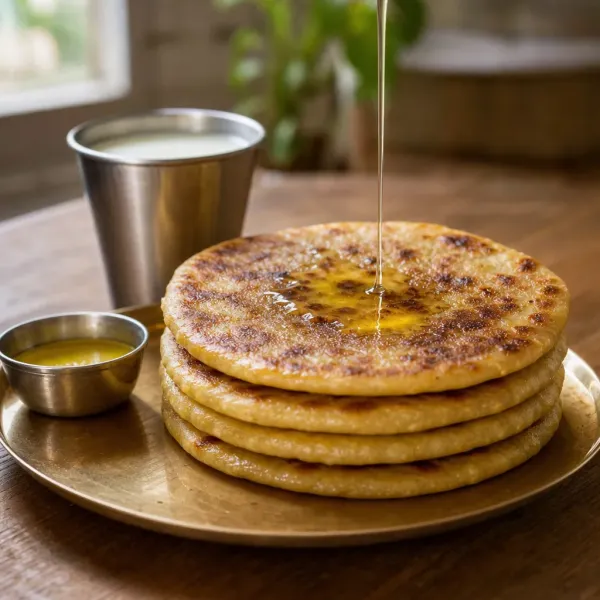
Obbattu (Chana Dal and Jaggery Stuffed Flatbread)
Traditional Karnataka obbattu with chana dal and jaggery filling. Step-by-step household recipe with tips on the oil-rested dough and dry poornam fil…
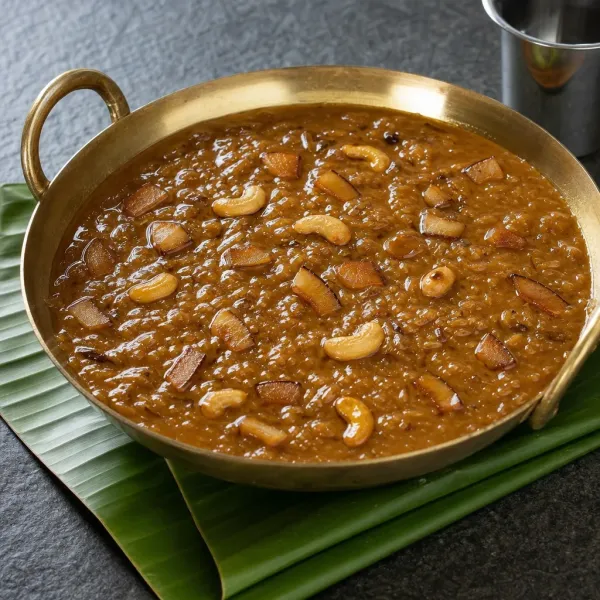
Chakka Pradhaman
Traditional Kerala chakka pradhaman made with chakka varatti, fresh coconut milk and jaggery. A sadya payasam recipe with step-by-step method and coo…
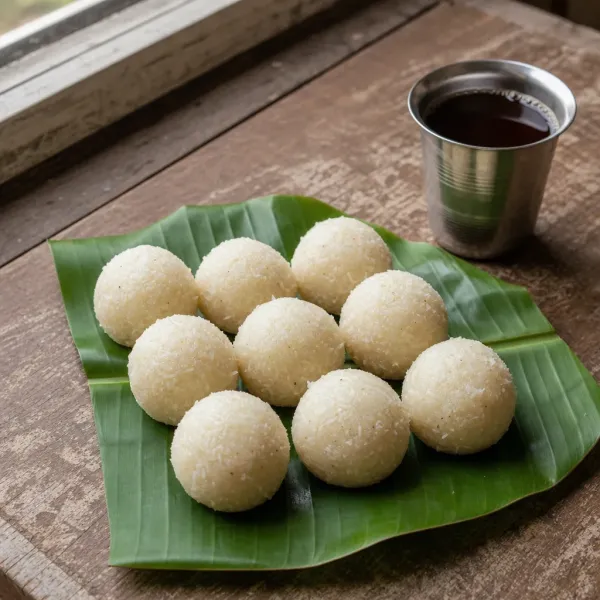
Avalose Unda
Traditional Kerala avalose unda recipe: roasted rice flour, fresh coconut and dark jaggery pressed into soft, crumbly balls. A classic Travancore sna…