

Neyyappam Recipe
Malayalam നെയ്യപ്പംTamil நெய்யப்பம்Kannada ನೆಯ್ಯಪ್ಪTelugu నెయ్యప్పం
- Prep20 min
- Soak / ferment4 hr
- Cook45 min
- Serves20 to 24 pieces
- DifficultyMedium
- DietVegetarian
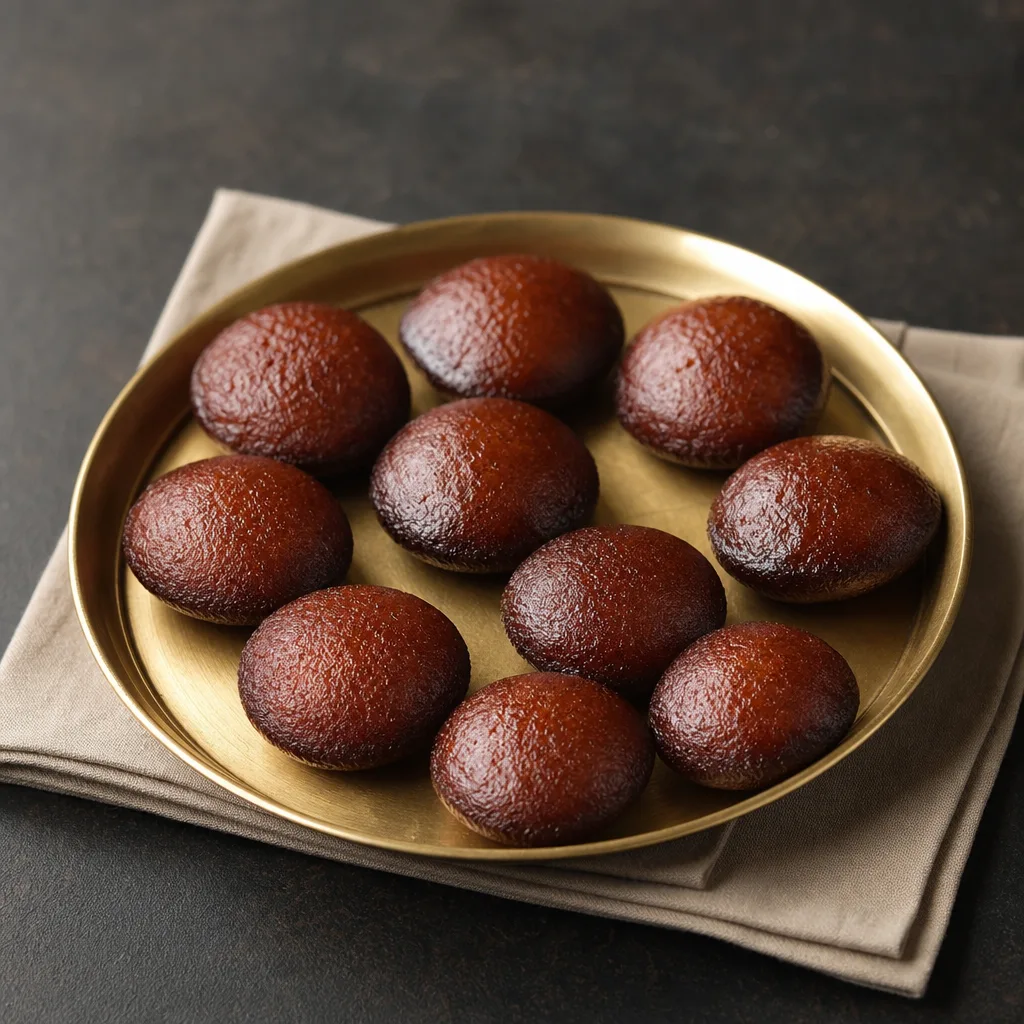
Neyyappam is a Kerala sweet fritter made from soaked raw rice ground with jaggery and fried in ghee in a paniyaram pan. It is round, deep brown on the outside, and soft within. The name says everything: neyy is ghee, appam is a round cake. This is not a fermented batter and it needs no rising time beyond the short rest after grinding.
In Kerala homes it is made for Karthika, Thiruvonam, and for temple offerings. The Guruvayur temple kitchen is famous for it, and many households keep the recipe close to that standard: no banana, no coconut, no cardamom beyond a small measure. The flavour comes entirely from good jaggery and the ghee the appam fries in.
Household variation is modest. Some cooks add a small piece of ripe banana to the batter for softness; others add a pinch of dry ginger powder. A few add a spoon of black sesame seeds. The core recipe here is the plain version, without those additions, which is also the version used in most temple kitchens.
Ingredients (serves 20 to 24 pieces)
For the batter
For frying
Method
Melt the jaggery
Put the broken jaggery in a small pan with 3 tbsp water. Heat on medium, stirring, until it dissolves completely. Do not boil it hard. Strain through a fine sieve to remove grit. Set aside to cool to room temperature before it touches the batter.
Grind the rice
Drain the soaked rice and grind it in a wet grinder or a powerful mixer-grinder, adding the cooled jaggery syrup gradually in place of water. Grind until the batter is very smooth with no gritty feel between your fingers. The batter should be thick — thicker than dosa batter — and will fall in a slow, heavy ribbon from a spoon.
Season the batter
Add the crushed cardamom seeds and the dry ginger powder if using. Stir well. The batter at this point should be dark brown from the jaggery. Taste for sweetness; it should be clearly sweet because frying will mellow it slightly.
Rest the batter
Cover and leave the batter to rest for 20 to 30 minutes at room temperature. This short rest lets the ground rice hydrate fully. Do not leave it longer or it may thin out.
Add the cooking soda
Just before you begin frying, stir in the pinch of cooking soda. Mix it through evenly. The batter may bubble very slightly. Fry within a few minutes of adding it; if you wait too long the lift is lost.
Heat the pan and ghee
Place a paniyaram pan (appe pan, seven or nine moulds) over medium heat. Add enough ghee to fill each mould about two-thirds full. Let the ghee heat until it shimmers but does not smoke. Test with a drop of batter: it should rise to the surface within two seconds.
Fill the moulds
Pour the batter into each mould using a small ladle or a spoon, filling each mould about three-quarters full. The batter will puff up as it fries. Do not overfill or the appam will not turn cleanly.
Fry the first side
Keep the heat at medium-low. Fry undisturbed for 3 to 4 minutes. The edges will set and turn deep brown, and the top will look mostly dry with just a moist centre. If the outside browns in under 2 minutes, the heat is too high; lower it immediately or the inside will be raw.
Turn and finish
Slide a thin skewer or the tip of a coconut-leaf midrib under each appam and flip it. The turned side should be a rich dark brown, almost mahogany, with no pale patches. Fry the second side for 2 to 3 minutes until equally coloured and the appam feels firm when pressed gently.
Drain and cool
Lift out the neyyappam and rest them on a plate lined with a clean cloth or paper. Do not stack them hot or they will steam and soften the crust. Eat them warm or at room temperature.
Fry subsequent batches
Add a little more ghee to the moulds between batches and let it heat before pouring the next round of batter. Stir the batter gently each time before ladling, as the rice solids settle. If the batter thickens as it sits, add no more than a teaspoon of water and stir through.
How to serve
Eaten on its own as a snack or temple prasadam. No accompaniment is traditional.
Served with: Eaten on its own as a snack or temple prasadam. No accompaniment is traditional.
Cook's tips
Jaggery quality matters
Pale or sandy jaggery gives a wan colour and flat flavour. Use the darkest Kerala sharkkara you can find, the kind that smells slightly of molasses. The deep brown colour of a good neyyappam comes from the jaggery, not from over-frying.
Batter consistency
If the batter is too thin the appam spreads flat and fries into a disc rather than a round ball. It should be thick enough to mound slightly in the mould before it settles. If you have thinned it accidentally, there is no easy fix; grind a small amount of additional soaked rice and mix it in.
Heat control is everything
Too high and the outside burns before the inside cooks; too low and the appam absorbs excess ghee and turns greasy. Medium-low is correct. A cast-iron paniyaram pan holds heat more evenly than a non-stick one and is preferred for this reason.
Ghee versus oil
Coconut oil is sometimes used when ghee is not available, and the result is still good. But the name of the dish is ghee-appam, and the flavour with ghee is noticeably different. Use ghee if you are making this for an occasion.
Storage
Neyyappam keeps well at room temperature for two days in an airtight container. After that the texture softens. Do not refrigerate; the cold makes them dense and the ghee congeals unpleasantly.
Regional variations
Tamil Nadu has a version called nei appam made with rice flour and jaggery, sometimes with banana, fried in ghee or oil in an aebleskiver pan; the Palakkad Iyer version is thinner and uses a small measure of urad dal in the batter.
Glossary
- Pachari പച്ചരി
- Raw (unparboiled) white rice used in Kerala for batters and sweets.
- Sharkkara ശർക്കര
- Jaggery in Malayalam; the dark, unrefined palm or cane sugar used in Kerala sweets.
- Neyy നെയ്യ്
- Pure clarified butter, ghee; the defining fat of this dish.
- Chukku ചുക്ക്
- Dry ginger powder; used in small amounts in some traditional neyyappam recipes.
- Paniyaram pan പനിയാരം ചട്ടി
- A cast-iron or hard-anodised pan with seven or nine hemispherical moulds, used for frying small round cakes.
Two things decide whether neyyappam succeeds. The first is the jaggery: it must be dark, flavourful, and fully dissolved and strained before it enters the batter. The second is heat management in the pan: patient medium-low frying gives a deep brown exterior and a cooked, soft interior. Rush either of these and you will have either a pale, bland fritter or a burnt shell around raw batter.
More Sweets & Payasam recipes
Dharwad Peda
Authentic Dharwad peda made at home with khoya and sugar. The traditional Karnataka sweet with its signature brownish-grey colour, step by step.
Ari Unda
Traditional Kerala Ari Unda made with roasted raw rice, dark jaggery and fresh coconut. Step-by-step method with tips on roasting and syrup consisten…
Kalathappam
Traditional Mappila kalathappam from Malabar: fermented rice and coconut batter with fried shallots, jaggery and cumin, baked slow in a heavy vessel.
Obbattu (Chana Dal and Jaggery Stuffed Flatbread)
Traditional Karnataka obbattu with chana dal and jaggery filling. Step-by-step household recipe with tips on the oil-rested dough and dry poornam fil…
Paal Kova
Authentic Kongunad paal kova made by slowly reducing full-fat cow's milk with sugar. Pale, grainy, soft fudge — no condensed milk shortcut.
Chakka Pradhaman
Traditional Kerala chakka pradhaman made with chakka varatti, fresh coconut milk and jaggery. A sadya payasam recipe with step-by-step method and coo…