

Idli Upma Recipe
Malayalam ഇഡ്ലി ഉപ്മTamil இட்லி உப்மாKannada ಇಡ್ಲಿ ಉಪ್ಮಾTelugu ఇడ్లీ ఉప్మా
- Prep10 min
- Cook10 min
- Serves2
- DifficultyEasy
- DietVegetarian
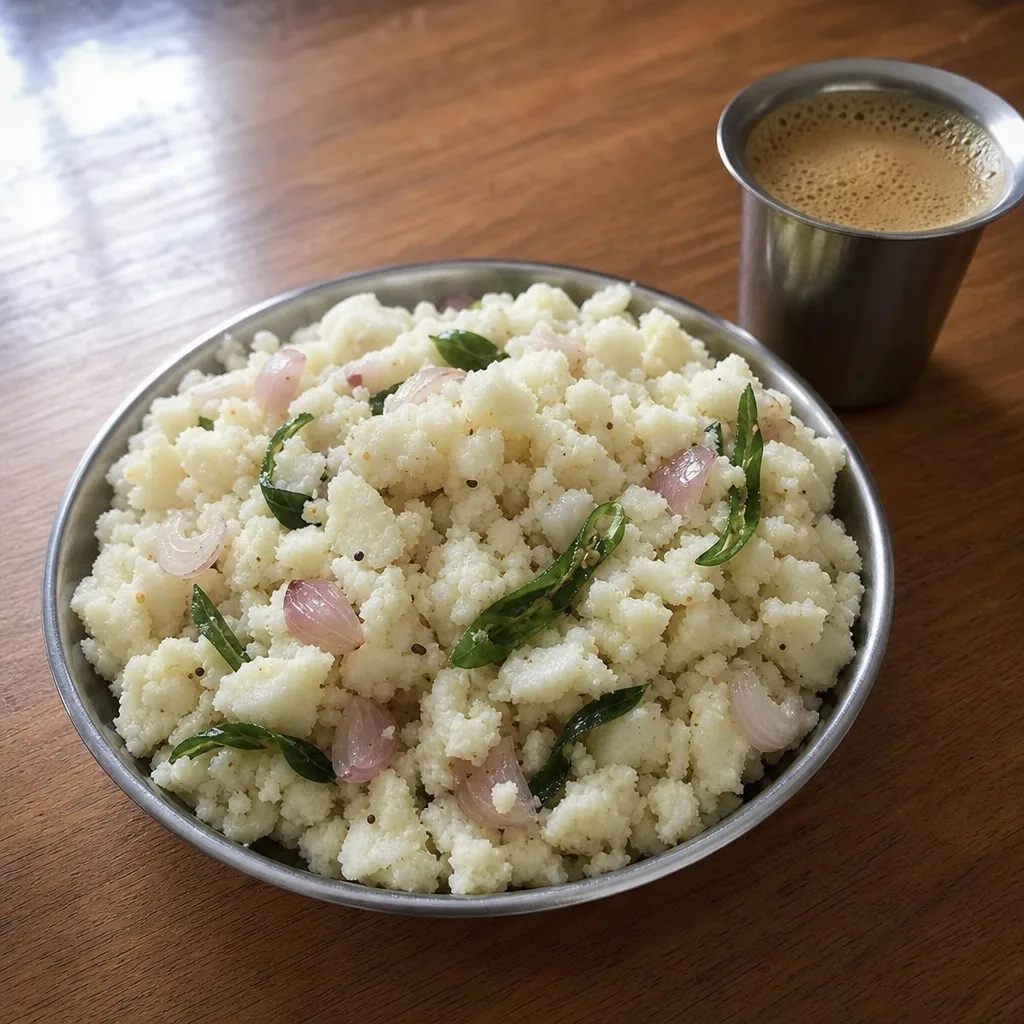
This is what happens to leftover idlis the morning after, or sometimes the afternoon after a heavy breakfast. The idlis are crumbled by hand and tossed in a quick tempering of mustard, curry leaves, green chilli and shallots. Nothing is added to bulk it out or dress it up. It is a humble, fast dish made because good idlis should not be wasted.
In Iyer households it is eaten as a mid-morning tiffin or a light lunch, usually with a small cup of filter coffee alongside. Some families squeeze a little lemon over it at the end; others do not. Both are correct. The only real rule is that the idlis must be cold and firm before you crumble them, which is why day-old idlis work better than fresh ones.
The texture is the thing. Crumble too fine and you get a paste when it hits the hot oil. Leave the pieces too large and the tempering does not coat them. Aim for rough, uneven chunks about the size of a large pea, with a few smaller crumbs scattered through.
Ingredients (serves 2)
For the upma
Method
Crumble the idlis
Break the cold idlis into rough chunks with your fingers directly into a wide bowl. You want uneven pieces, mostly pea-sized, with a scatter of smaller crumbs. Do not use a grater or a fork. Set aside.
Heat the oil
Place a wide kadai or heavy pan over medium heat. Add the gingelly oil and let it warm until it shimmers. Gingelly oil has a lower smoke point than refined oil, so do not let it get to the stage where it begins to haze.
Temper the mustard and dal
Add the mustard seeds. Keep the lid close by. Once they begin to pop, add the split urad dal and stir. Let the dal turn pale gold, which takes about 30 seconds. If it darkens to brown it will taste bitter, so move quickly.
Add the aromatics
Add the asafoetida, then the slit green chillies and curry leaves in quick succession. Stand back when the curry leaves hit the oil as they will spit. Stir once and let them sizzle for about 20 seconds.
Cook the shallots
Add the sliced shallots and stir well to coat them in the oil. Cook over medium heat, stirring occasionally, until they soften and turn translucent at the edges, about 3 minutes. They should not brown.
Add the crumbled idli
Tip in the crumbled idli and sprinkle salt lightly, keeping in mind the idlis already carry salt. Toss everything together with a flat spatula or a large spoon, turning rather than pressing, so the pieces stay distinct and do not mash.
Heat through
Cook over medium heat, tossing every 30 seconds, for 3 to 4 minutes until the idli pieces are heated through and have absorbed the oil and seasoning. The surface of each piece will look slightly glossy. Do not let them sit still too long or the bottom layer will stick.
Taste and serve
Taste for salt and adjust. Serve immediately while hot. The dish does not hold well; it becomes dense and dry within 20 minutes of cooking.
How to serve
A small cup of filter coffee or plain black tea. Some families add a wedge of lemon on the side to squeeze over.
Served with: A small cup of filter coffee or plain black tea. Some families add a wedge of lemon on the side to squeeze over.
Cook's tips
Why cold idlis matter
Warm or fresh idlis have too much moisture and will clump and turn gluey the moment they hit the hot oil. Refrigerated idlis from the previous day crumble cleanly and hold their shape through the tossing.
Salt carefully
Idlis made for breakfast are already salted. Add only a small pinch at first, toss, taste, then adjust. Over-salting is the most common mistake with this dish.
On the oil
Gingelly oil is traditional in Tamil Brahmin cooking and gives the dish its characteristic flavour. Coconut oil will make it taste like a Kerala dish; refined sunflower oil will make it taste like nothing in particular. Use gingelly oil.
Chilli heat
Two slit green chillies gives a mild, background warmth. If your household likes more heat, add a third chilli or leave the seeds in. Do not substitute red chilli powder, which belongs to a different dish.
Regional variations
Andhra households make a similar dish with green chillies and curry leaves but add a pinch of turmeric; Karnataka homes sometimes include grated coconut stirred in at the end.
Glossary
- chinna vengayam சின்ன வெங்காயம்
- Small shallots used across Tamil Nadu cooking; sweeter and more pungent than large onions.
- nallennai நல்லெண்ணெய்
- Cold-pressed gingelly oil (sesame oil); the traditional cooking fat for Tamil Nadu tiffin dishes and kuzhambu.
- perungayam பெருங்காயம்
- Asafoetida; used in a very small quantity in Tamil Brahmin cooking as a digestive and flavour note.
- kadai கடாய்
- A wide, round-bottomed pan used for stir-frying and tempering across South Indian kitchens.
Two things decide whether this works: the idlis must be cold and firm so they crumble without mashing, and the shallots must cook through without browning so they stay sweet rather than sharp. Get those two right and the rest follows.
More Breakfast & Tiffin recipes
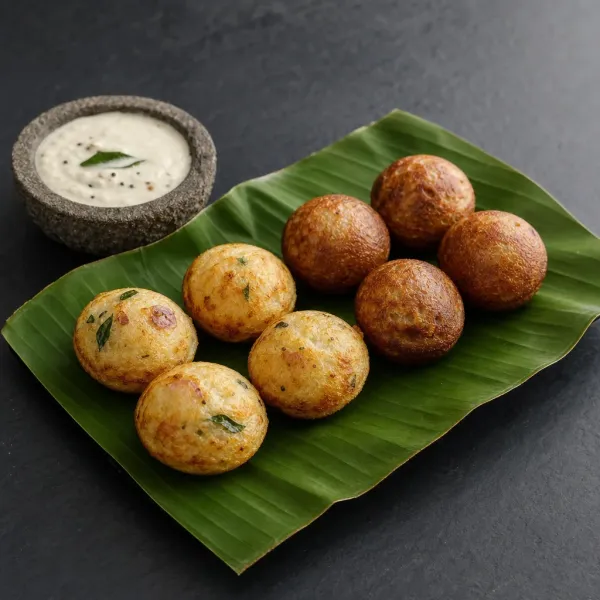
Kuzhi Paniyaram
Authentic Chettinad kuzhi paniyaram recipe with fermented rice-urad batter, savoury tempering and sweet jaggery version. Cooked in gingelly oil.
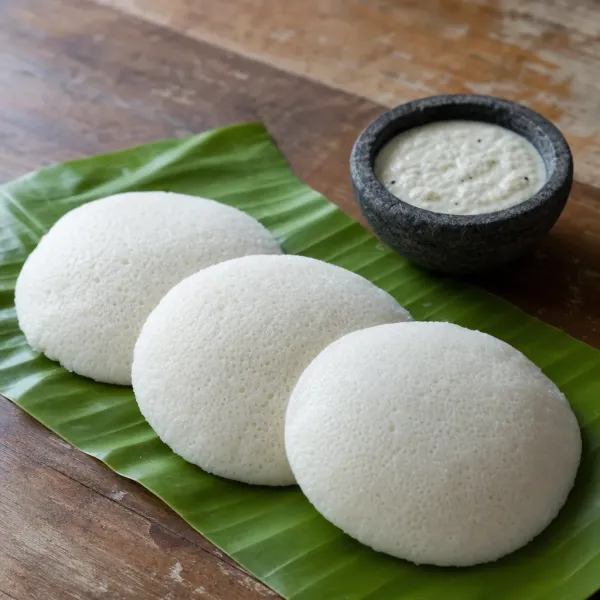
Ramassery Idli
Traditional Ramassery idli from Palakkad: raw rice batter, no urad dal, steamed on damp muslin. Soft, pale, and delicate. Step-by-step home recipe.
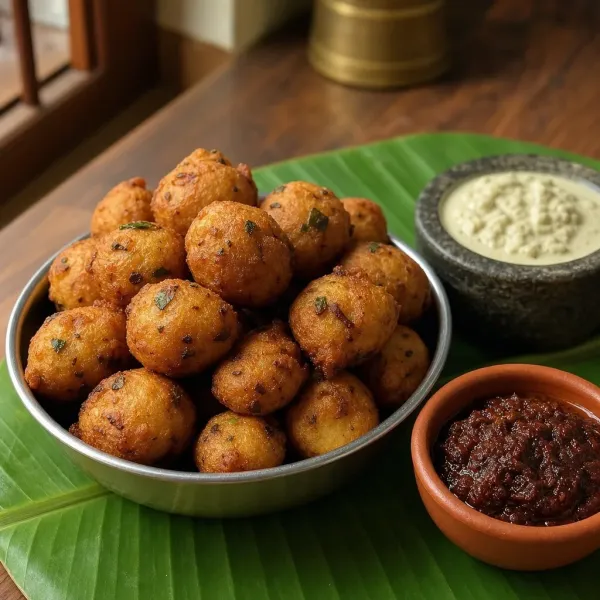
Punugulu
Traditional Andhra punugulu made from fermented dosa batter with shallots, green chilli and curry leaves, deep-fried to a golden crust. Step-by-step…
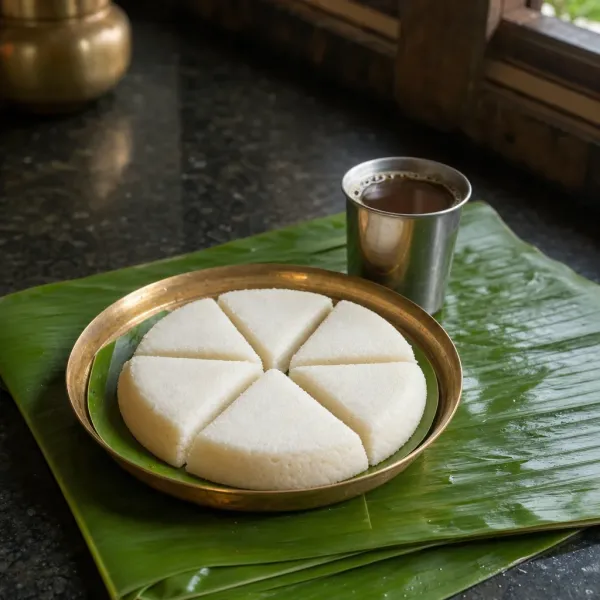
Kinnathappam
Traditional Nasrani kinnathappam: steamed rice cake with fresh coconut milk and jaggery. Soft, pale, and mildly sweet. Step-by-step household method.
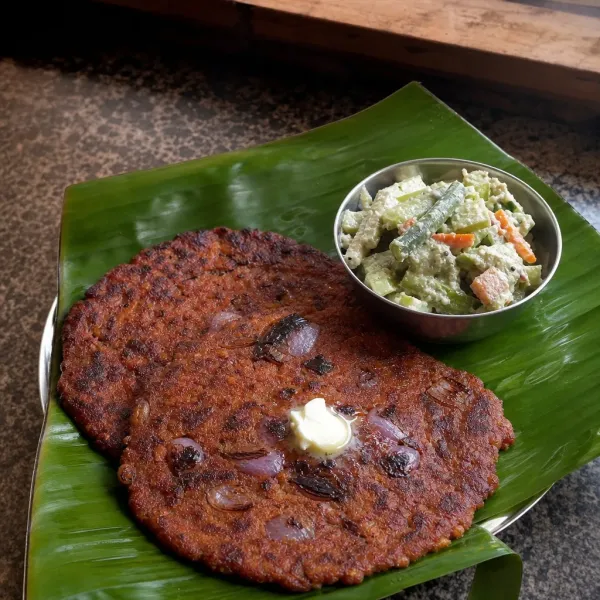
Adai
Traditional Tamil Iyer adai made with raw rice, chana dal and toor dal. Coarse-ground batter, shallot topping, cooked in gingelly oil. Served with av…
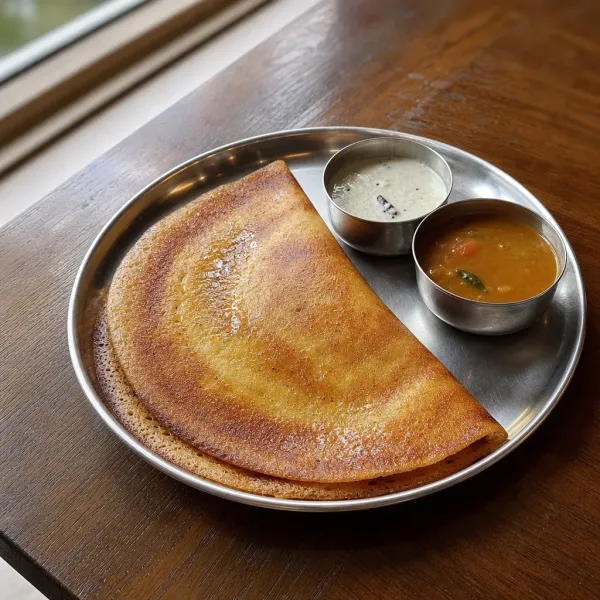
Ghee Roast Dosa
Traditional Udupi ghee roast dosa with fermented rice-urad batter, cooked on one side on a hot iron tawa with generous cow's ghee until deep golden.