

Ramassery Idli Recipe
Malayalam രാമശ്ശേരി ഇഡ്ഡലിTamil ராமச்சேரி இட்லிKannada ರಾಮಸ್ಸೇರಿ ಇಡ್ಲಿTelugu రామస్సేరి ఇడ్లీ
- Prep20 min
- Soak / ferment12 hr
- Cook40 min
- Serves4
- DifficultyMedium
- DietVegan
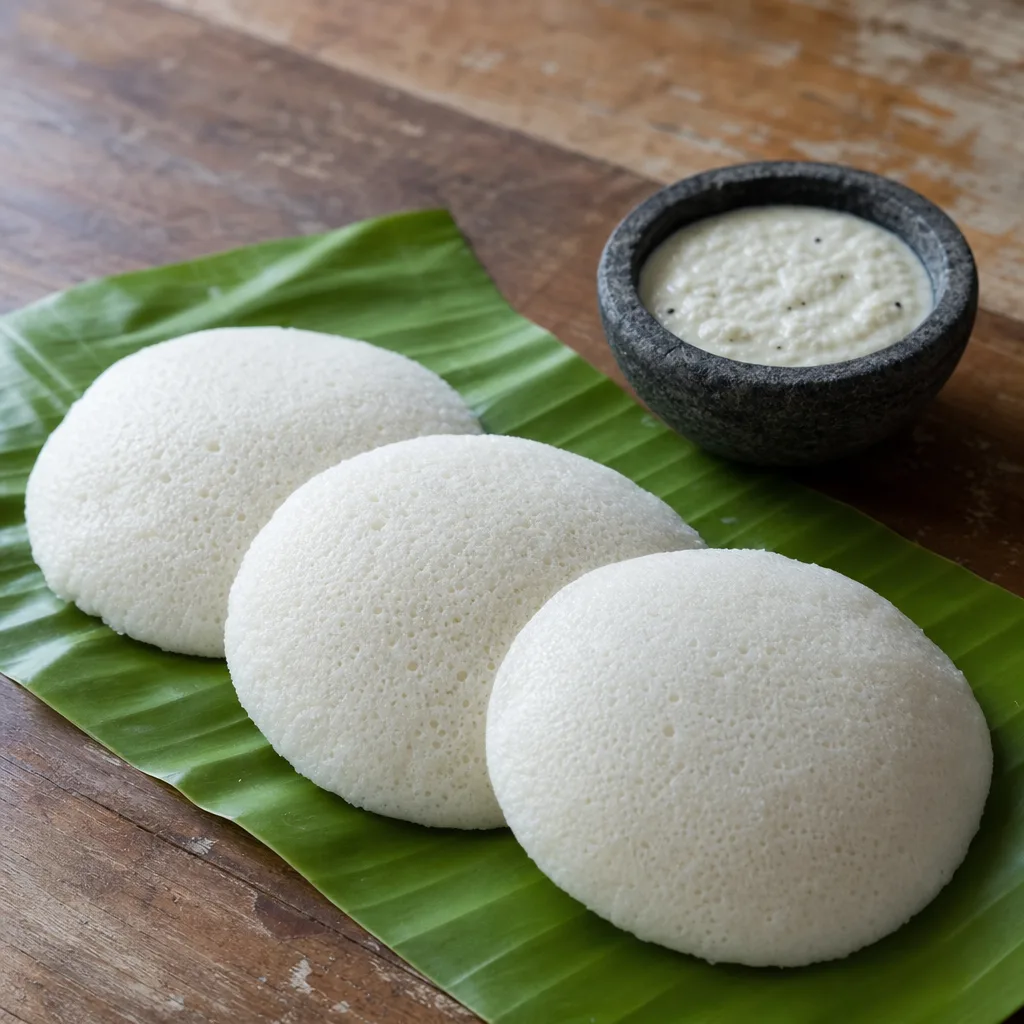
Ramassery idli comes from a small village on the outskirts of Palakkad town. Unlike the thick, pillow-shaped idli made with urad dal batter that most of South India knows, this one is made from raw rice alone, ground to a thin, almost pourable batter, and steamed on a cloth to produce a wide, flat, soft disc — pale, moist, and faintly translucent at the edges. It has no sourness, no chewiness. It is delicate in a way that surprises people the first time.
The cloth is the whole point. A piece of fine cotton muslin is soaked, wrung out, and stretched tightly over a wide uruli or a large vessel of simmering water. A ladleful of batter is poured onto the cloth and covered with a dome lid. Steam does the work in minutes. The idli lifts cleanly off the cloth when it is ready, leaving no residue. That clean lift is the sign you have the batter right.
At home in Palakkad, these are eaten for breakfast or as a light evening meal. Households serve them with coconut chutney or a thin sambar. The idli is soft enough that it needs no accompaniment to be edible, but the coconut chutney is the natural partner. Some families eat them with a small spoon of coconut oil and a green chilli on the side, nothing more.
Ingredients (serves 4)
For the batter
For steaming
Method
Soak the rice
Wash the raw rice in three changes of water until the water runs nearly clear. Cover with fresh cold water and leave to soak for 6 hours. The grains should be slightly softened but not mushy when you press one between your fingers. Drain completely before grinding.
Grind to a thin batter
Grind the drained rice in a wet grinder or a powerful blender, adding water gradually. The batter should be much thinner than ordinary idli batter — closer to a crepe batter than a pancake batter. It should coat the back of a spoon lightly and run off in a thin, steady stream. Grind for at least 15 minutes in a wet grinder so the batter is completely smooth with no grit. Pour into a large vessel; the batter will rise as it ferments.
Ferment overnight
Cover the vessel loosely with a plate or a clean cloth and leave in a warm spot for 8 to 10 hours, or overnight. In Palakkad's warm climate this is usually enough. The batter is ready when it has risen slightly and smells faintly sour and yeasty. Do not let it over-ferment; if it smells sharply acidic, it has gone too far and the idli will be rubbery.
Add salt and check consistency
Stir in salt and mix gently. Check the batter — it should still pour easily. If it has thickened during fermentation, stir in a few tablespoons of water to bring it back to a thin, flowing consistency. The batter should spread on its own when poured; you will not need to spread it with a ladle.
Set up the steaming vessel
Choose a wide, heavy vessel — a large uruli or a deep stockpot at least 30 cm across. Pour water to a depth of about 5 cm and bring it to a steady simmer over medium heat. You need consistent steam throughout, so do not let the water drop below a simmer or boil so hard that it spits.
Prepare the cloth
Soak the muslin cloth in water, then wring it out firmly so it is damp but not dripping. Stretch it tightly over the mouth of the vessel and secure it — tie it around the rim with a string, or hold it taut with a helper. The cloth must be taut and flat; any sag will make the idli uneven.
Pour and cover
Using a ladle, pour one measure of batter (roughly 80 to 100 ml) onto the centre of the cloth. The batter will spread on its own into a thin, even round roughly 18 to 20 cm across. Do not touch it or spread it. Immediately cover with a domed lid or an inverted vessel large enough to trap the steam above the batter without touching it.
Steam until set
Steam on medium heat for 4 to 5 minutes. The idli is ready when the surface looks completely set and matte — no wet or shiny patches remain. It will be pale throughout with no colour whatsoever. If you lift the lid too early and the centre is still wet, cover and give it another minute.
Lift off the cloth
Slide a thin spatula or your dampened fingers gently under the edge of the idli. If the batter was the right consistency and the cloth was properly damp, it will lift away cleanly in one piece. Fold or roll it slightly if needed to get it off the cloth, then lay it flat on a plate. A clean lift with no tearing means your batter and cloth preparation were right.
Continue with remaining batter
Re-dampen the cloth between each idli by quickly dipping it in water or wiping it with a wet cloth. Pour the next ladleful and repeat. Keep the water in the vessel topped up so it does not dry out. Serve the idlis as they come off the cloth; they are best eaten immediately while still warm and soft.
How to serve
Fresh coconut chutney; thin sambar. Some households serve with a small pour of coconut oil and a raw green chilli on the side.
Served with: Fresh coconut chutney; thin sambar. Some households serve with a small pour of coconut oil and a raw green chilli on the side.
Cook's tips
The cloth matters more than the vessel
Use plain, unbleached, fine-weave cotton muslin. Synthetic cloth does not breathe properly and the idli will not set evenly. Wash the cloth before first use to remove any sizing, and do not use fabric softener or scented soap on it.
Batter too thick — the most common mistake
If the batter is as thick as ordinary idli batter, the result will be a dense, gummy disc, not the soft, delicate one you want. It should flow freely from the ladle. When in doubt, thin it a little more.
Wet grinder gives the best result
A stone wet grinder produces a smoother batter than a blender because it works the starch differently. If using a blender, grind in short bursts and check for grit by rubbing a little batter between your fingers. Any coarseness will show in the finished texture.
Fermentation in cooler weather
Outside Palakkad's warm climate, fermentation can take 10 to 14 hours. Place the vessel in a warm oven with only the light on, or near a warm spot in the kitchen. Do not use a sealed container — the batter needs a little air.
Leftover batter
Refrigerate unused batter after fermentation. Use within one day. Batter that has been in the fridge will be slightly thicker; bring it to room temperature and stir well before using.
Regional variations
The original Ramassery idli is made commercially by the Palakkad family who originated it; some home cooks add a small quantity of cooked rice to the soaked raw rice before grinding to improve softness.
Glossary
- Pachari പച്ചരി
- Raw, unparboiled white rice used in Kerala cooking, distinct from the parboiled matta rice.
- Uruli ഉരുളി
- A wide, shallow, round-bottomed vessel made of bell metal or brass, traditional to Kerala kitchens.
- Kudampuli കുടംപുളി
- Gamboge or Malabar tamarind, the souring agent characteristic of Kerala fish and meat dishes; not used in this recipe but included for reader reference as a common Palakkad term.
Two things decide whether this works: the batter must be genuinely thin — thinner than you think is right — and the muslin must be damp and taut every single time. Get those two things right and the idli will lift cleanly, sit pale and soft on the plate, and need almost nothing alongside it.
More Breakfast & Tiffin recipes
Kuzhi Paniyaram
Authentic Chettinad kuzhi paniyaram recipe with fermented rice-urad batter, savoury tempering and sweet jaggery version. Cooked in gingelly oil.
Idli Upma
A traditional Tamil Iyer recipe for idli upma made from cold leftover idlis, tempered in gingelly oil with shallots, green chilli and curry leaves.
Punugulu
Traditional Andhra punugulu made from fermented dosa batter with shallots, green chilli and curry leaves, deep-fried to a golden crust. Step-by-step…
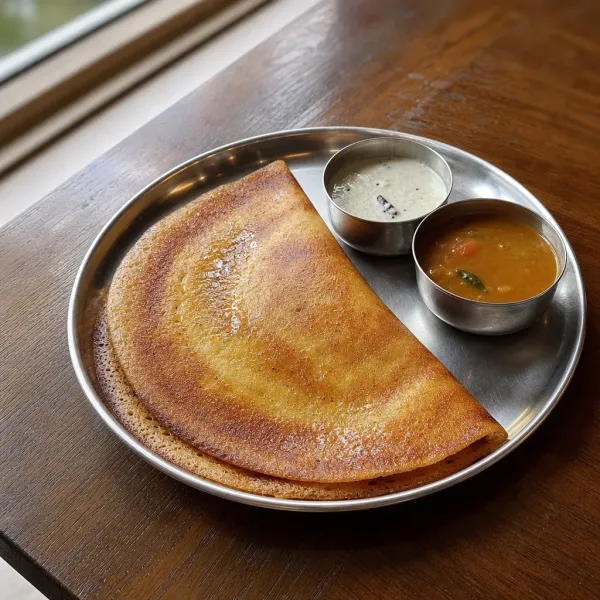
Ghee Roast Dosa
Traditional Udupi ghee roast dosa with fermented rice-urad batter, cooked on one side on a hot iron tawa with generous cow's ghee until deep golden.
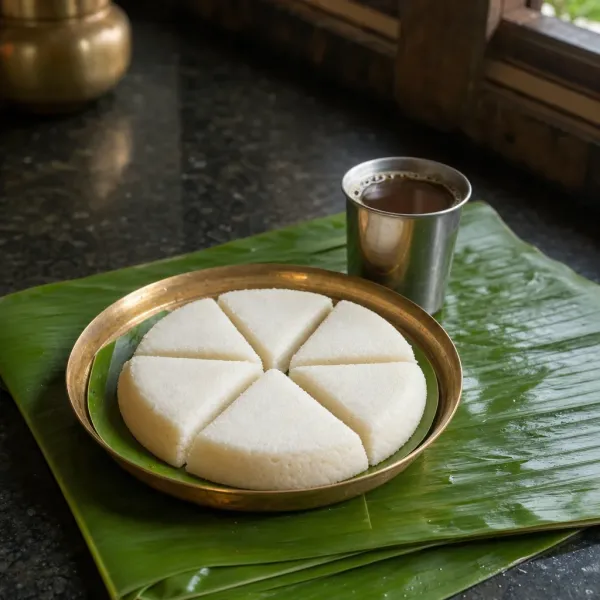
Kinnathappam
Traditional Nasrani kinnathappam: steamed rice cake with fresh coconut milk and jaggery. Soft, pale, and mildly sweet. Step-by-step household method.
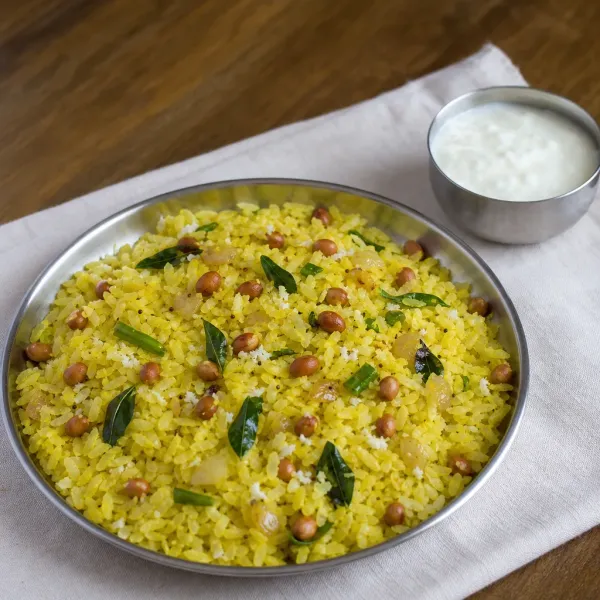
Avalakki Oggarane
Traditional Karnataka avalakki oggarane recipe — medium poha tempered with mustard, shallots, curry leaves and groundnuts. Ready in 20 minutes.