

Punugulu Recipe
Malayalam പുനുഗുലുTamil புனுகுலுKannada ಪುನುಗುಲುTelugu పునుగులు
- Prep15 min
- Soak / ferment12 hr
- Cook30 min
- Serves4
- DifficultyEasy
- DietVegan
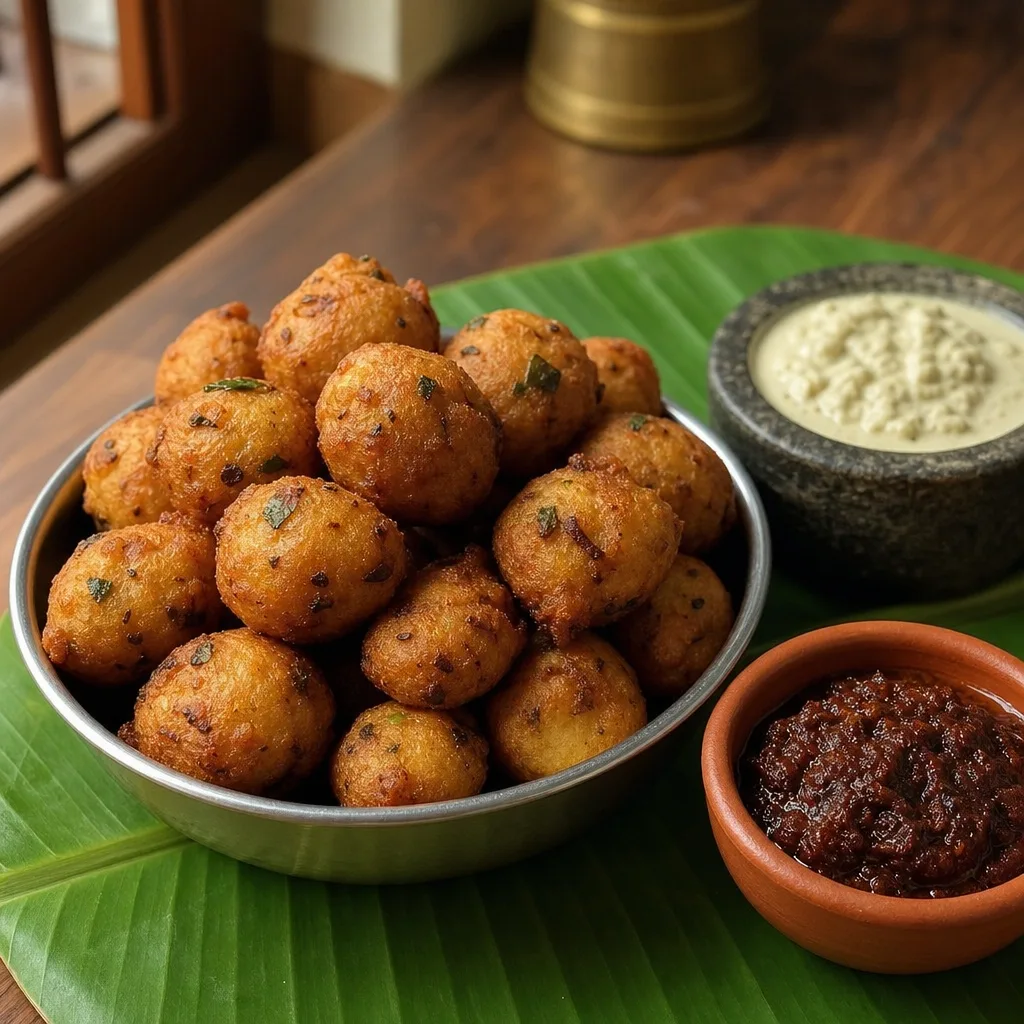
Punugulu are small, round deep-fried fritters made from fermented idli-dosa batter. They are a street food and a home snack across coastal Andhra, sold from iron kadais at bus stands and made at home on rainy afternoons when the batter jar in the kitchen has more than is needed for the morning meal. The batter does all the work: fermentation gives the fritters their slight tang and their open, spongy interior, while the hot oil seals a thin crust around the outside.
The additions are minimal and sharp — chopped shallots, green chilli, fresh ginger, curry leaves, and cumin. Nothing is cooked before it goes into the batter; everything is raw, so it stays vivid inside the fritter. The fritters are dropped by the spoonful and come out roughly round, never perfectly spherical, which is how you know they were made at home.
They are eaten immediately, while the crust still holds. The usual accompaniments are a coconut chutney and a sharp, thin gongura pachadi or tomato pachadi — the acidity cuts through the oil. Households differ mainly on heat: some like four green chillies to a cup of batter, others use two. The ginger is not optional.
Ingredients (serves 4)
For the batter base
Additions stirred into the batter
For frying
Method
Ferment the batter
If you are making the batter from scratch, soak 3 parts raw rice to 1 part urad dal separately for 6 hours, grind to a smooth batter, mix well, add salt, and leave covered in a warm spot for 8 to 12 hours. In a hot coastal Andhra climate this is usually overnight. The batter is ready when it has risen noticeably, smells pleasantly sour, and small bubbles break the surface when you stir it. Do not use under-fermented batter — the fritters will be dense and will not cook through.
Check the batter consistency
The batter for punugulu should be thicker than what you would spread for dosa — thick enough that a spoonful holds its shape for a moment before it slowly settles. If your batter has thinned during fermentation or was made on the loose side, stir in the rice flour now. Mix well and let it rest for 5 minutes. If the batter is already thick and holds a soft mound, skip the rice flour.
Prepare the additions
Chop the shallots fine — you want small pieces that will cook through inside the fritter, not large chunks that stay raw. Chop the green chillies equally fine. Grate the ginger directly into the bowl. Tear or roughly chop the curry leaves so they do not stay in long strips that can catch in the oil.
Mix the batter
Add the shallots, green chillies, ginger, curry leaves, and cumin seeds to the batter. Taste for salt and adjust — the batter should be well seasoned because the fritters will not be salted after frying. Stir everything together with a firm hand. The batter should look thick and lumpy with the additions visible throughout.
Heat the oil
Pour the oil into a heavy kadai to a depth of at least 6 cm. Heat over a medium flame until the oil reaches approximately 170°C. Test it by dropping a small blob of batter into the oil: it should sink slightly, then rise to the surface within 3 to 4 seconds and begin to sizzle steadily. If it rises immediately and browns fast, the oil is too hot; lower the flame and wait a minute.
Drop the fritters
Use a wet tablespoon or your wet fingers to drop rough balls of batter into the oil. Each fritter should be roughly the size of a large marble — about 1 heaped tablespoon of batter. Do not crowd the kadai; fry 6 to 8 at a time depending on the size of your vessel. They will not be perfectly round and that is correct.
Fry until cooked through
Fry over medium heat for 4 to 5 minutes, turning the fritters gently with a slotted spoon so they colour evenly on all sides. They are ready when the outside is a deep golden brown and they feel firm when you press them lightly against the side of the kadai. If you pull one out too early, the inside will still be wet batter. The colour should be uniform, not pale on one side.
Drain and serve immediately
Lift the fritters out with a slotted spoon and rest them on a plate lined with absorbent paper for no more than a minute. Serve at once. The crust softens quickly as they cool, and punugulu eaten five minutes after frying are noticeably better than punugulu that have sat and steamed under a cover.
How to serve
Coconut chutney (fresh coconut ground with green chilli, ginger, and tempered with mustard and curry leaves) and gongura pachadi or tomato pachadi. Either chutney is sharp enough to balance the oil.
Served with: Coconut chutney (fresh coconut ground with green chilli, ginger, and tempered with mustard and curry leaves) and gongura pachadi or tomato pachadi. Either chutney is sharp enough to balance the oil.
Cook's tips
Using leftover batter
Punugulu are traditionally the use for batter that has fermented a little longer than ideal for dosa — batter that is very sour or has separated slightly. Stir it well, add the rice flour, and it fries perfectly. This is why the dish exists.
Oil temperature is everything
Too hot and the outside browns before the inside cooks; too cool and the fritters absorb oil and turn greasy. Medium heat throughout is the rule. If you are frying a large batch, check the oil temperature between batches — it rises after the cold batter goes in and then drops again.
Do not cover them
Covering freshly fried punugulu traps steam and turns the crust soft within minutes. Serve them open on the plate.
Batter that is too thin
If the batter will not hold a rough ball shape when you try to drop it, add rice flour a teaspoon at a time, stir, and test again. Maida is sometimes used instead of rice flour in some households but gives a slightly denser result.
Regional variations
Telangana households sometimes add finely chopped gongura leaves or a pinch of ajwain; some cooks fold in a spoon of sooji to crisp the crust.
Glossary
- Punugulu పునుగులు
- Small round deep-fried fritters made from fermented idli-dosa batter; the name is Telugu.
- Chinna ulli చిన్న ఉల్లి
- Small shallots used in Telugu cooking, sharper and more pungent than large onions.
- Gongura pachadi గోంగూర పచ్చడి
- A sharp, sour chutney or relish made from sorrel leaves (Hibiscus sabdariffa), characteristic of Andhra cooking.
- Kadai కడాయి
- A deep, round-bottomed iron or steel wok used for deep frying across South India.
Two things decide whether punugulu work. The first is the batter: it must be properly fermented and thick enough to hold a rough shape when dropped — thin batter produces flat, oily discs. The second is oil temperature: a steady medium heat that lets the inside cook through before the outside over-browns. Get those two right and the rest is simple.
More Breakfast & Tiffin recipes
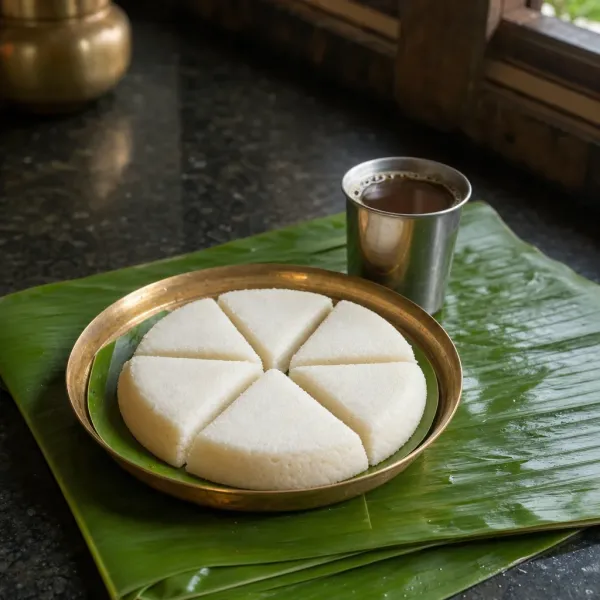
Kinnathappam
Traditional Nasrani kinnathappam: steamed rice cake with fresh coconut milk and jaggery. Soft, pale, and mildly sweet. Step-by-step household method.
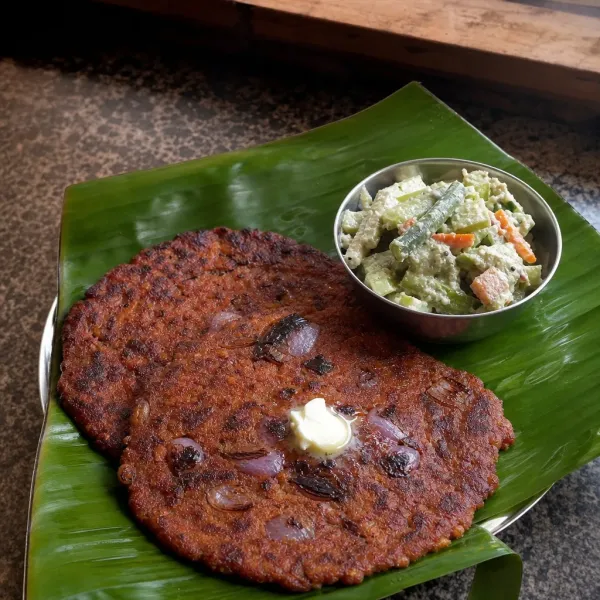
Adai
Traditional Tamil Iyer adai made with raw rice, chana dal and toor dal. Coarse-ground batter, shallot topping, cooked in gingelly oil. Served with av…
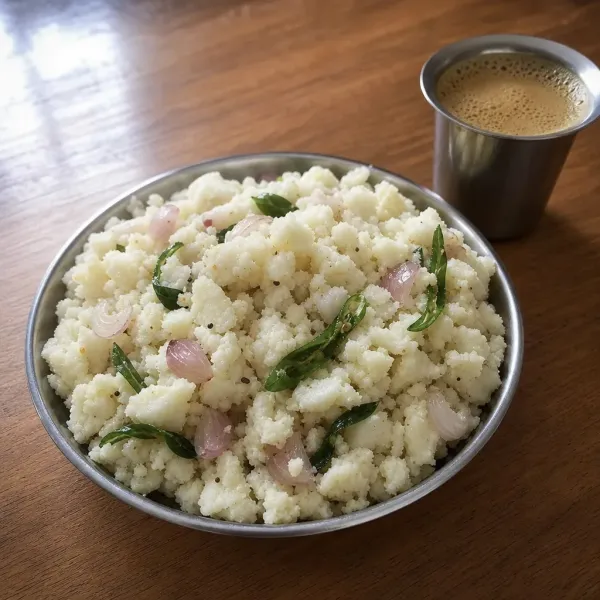
Idli Upma
A traditional Tamil Iyer recipe for idli upma made from cold leftover idlis, tempered in gingelly oil with shallots, green chilli and curry leaves.
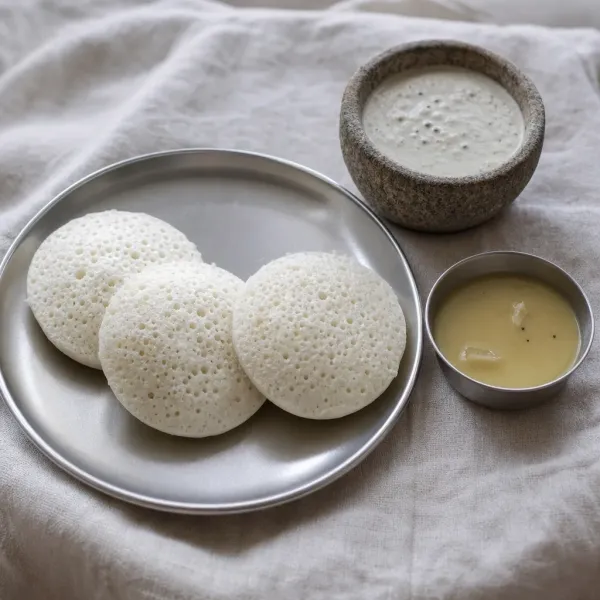
Karnataka Set Dosa
Traditional Karnataka set dosa recipe with raw rice, urad dal and poha. Soft, thick and spongy, served in threes with coconut chutney and sagu.
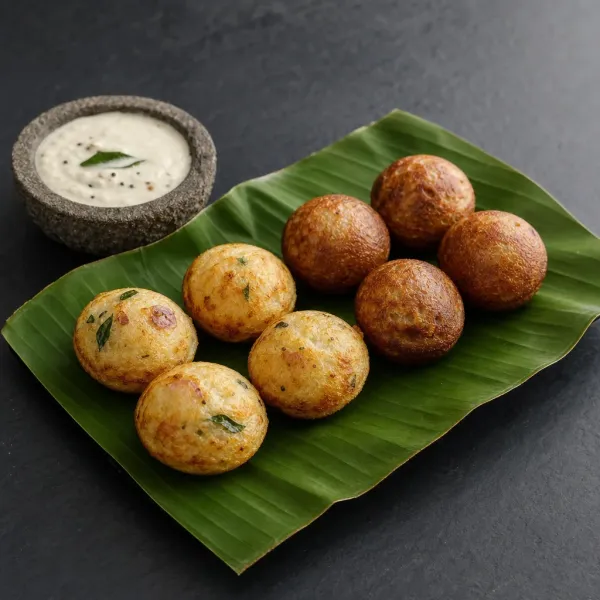
Kuzhi Paniyaram
Authentic Chettinad kuzhi paniyaram recipe with fermented rice-urad batter, savoury tempering and sweet jaggery version. Cooked in gingelly oil.
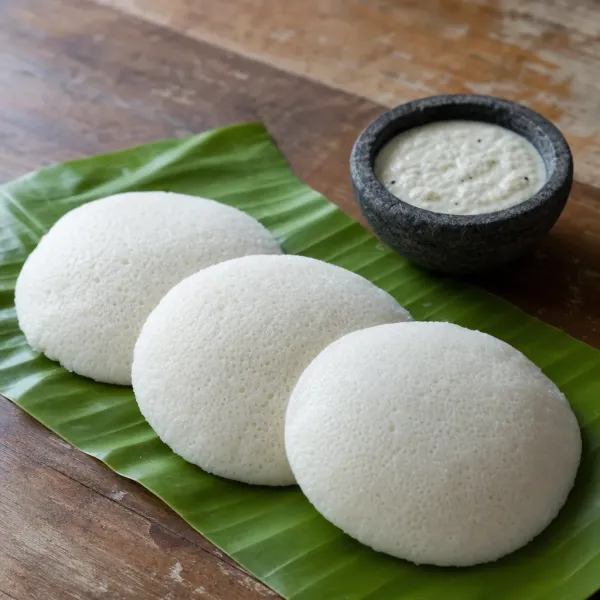
Ramassery Idli
Traditional Ramassery idli from Palakkad: raw rice batter, no urad dal, steamed on damp muslin. Soft, pale, and delicate. Step-by-step home recipe.