

Beetroot Rice (Beetroot Sadam) Recipe
Malayalam ബീറ്റ്റൂട്ട് ചോറ്Tamil பீட்ரூட் சாதம்Kannada ಬೀಟ್ರೂಟ್ ಅನ್ನTelugu బీట్రూట్ అన్నం
- Prep20 min
- Cook30 min
- Serves4
- DifficultyEasy
- DietVegetarian
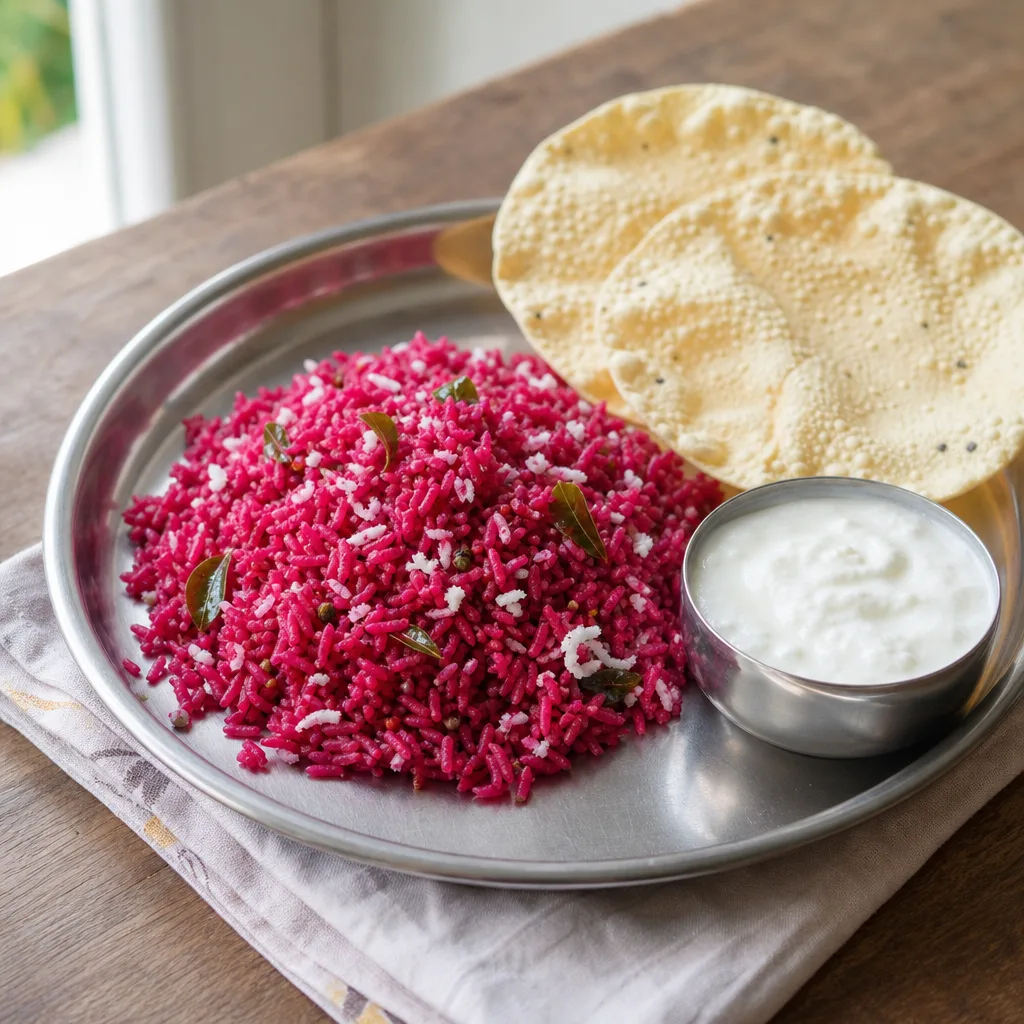
This is a weekday lunch dish, the kind that uses up a beetroot sitting in the vegetable basket and turns cold cooked rice into something worth eating. In Tamil Brahmin homes it is made without onion, the tempering built from mustard, dried red chilli, chana dal and curry leaves in gingelly oil, with freshly grated coconut stirred through at the end to cool the heat and bind everything together.
The colour is the first thing children notice: the rice turns a deep magenta-pink, and the shade deepens as it sits. Some cooks grate the beetroot fine so it almost melts into the rice; others cut it into small cubes for more texture. Both are right. What matters is that the beetroot is cooked through in the pan before the rice goes in, so there is no raw, earthy taste left.
It is eaten at room temperature as often as hot, packed into steel lunch boxes, and it travels well. A small bowl of plain curd on the side is the usual companion. Some households add a pinch of lemon juice at the end to brighten the colour and add a gentle sourness; others leave it out entirely.
Ingredients (serves 4)
For the rice
For the tempering
To finish
Method
Prepare the rice
Spread the cooked rice on a wide plate or tray and break up any clumps with your fingers. The grains should be separate and dry to the touch. If the rice is freshly cooked, let it cool for at least 30 minutes at room temperature before you begin. Wet, clumped rice will turn mushy when you mix it with the beetroot.
Grate the beetroot
Peel the beetroot and grate it on the fine side of a box grater directly into a bowl. It will release juice immediately; keep that juice, it colours the rice. Set aside.
Heat the oil and bloom the mustard
Set a wide, heavy kadai over medium heat. Pour in the gingelly oil and let it warm for about 30 seconds; it should shimmer but not smoke. Add the mustard seeds and keep the lid nearby. When they begin to pop and sputter, about 20 to 30 seconds, move to the next step immediately.
Fry the dals and chillies
Add the chana dal and urad dal to the popping mustard. Stir constantly on medium heat for about 45 seconds until the dals turn a pale gold. Add the torn dried red chillies and the slit green chilli. Stir for another 15 seconds; the chillies will darken and the oil will smell toasty. Do not let the dals go brown or they will taste bitter.
Add curry leaves and asafoetida
Drop in the curry leaves and stand back; they will splutter in the hot oil. Add the asafoetida immediately after. Stir once and let the leaves crisp for about 10 seconds.
Cook the beetroot
Add the grated beetroot with all its juice to the kadai. Add salt now. Stir well to coat the beetroot in the tempered oil. Cook on medium heat, stirring every minute or so, for 8 to 10 minutes. The beetroot is ready when it is completely tender, the raw smell is gone, and the mixture looks dry rather than wet and loose. If you taste a strand, there should be no crunch left.
Mix in the rice
Lower the heat to the lowest setting. Add the cooled rice to the kadai in two or three additions, folding gently with each addition rather than stirring vigorously. You want every grain coated in the deep pink beetroot without breaking the grains. Take your time here; rushing and pressing hard is what turns it to paste. The rice will turn an even magenta-pink within a minute of folding.
Check the salt and heat through
Taste and adjust salt. Keep the heat on low and let the rice warm through for 2 to 3 minutes, folding once more. Do not cover the pan or the steam will make the rice wet.
Finish with coconut and lemon
Take the kadai off the heat. Scatter the grated fresh coconut over the rice and fold it in gently; it should stay visible in small white flecks rather than disappearing entirely. If you are using lemon juice, add it now, off the heat, and fold once more. Taste again. The finished rice should be fragrant, a deep pink, and each grain separate.
How to serve
Plain curd (thayir) in a small steel katori; or a simple mor kuzhambu on the side. Appalam (papad) is often served alongside for crunch. In school lunch boxes it is usually packed on its own.
Served with: Plain curd (thayir) in a small steel katori; or a simple mor kuzhambu on the side. Appalam (papad) is often served alongside for crunch. In school lunch boxes it is usually packed on its own.
Cook's tips
Day-old rice is better
Freshly cooked rice, even when cooled, holds more moisture and breaks more easily. Rice cooked the previous evening and refrigerated overnight separates cleanly and absorbs the beetroot colour without turning mushy.
Grating versus cubing the beetroot
Fine-grated beetroot almost dissolves into the rice, giving an even colour and a softer texture. Small cubes (about 1 cm) give you pockets of beetroot flavour and a more textured bite. Both are traditional; choose by preference.
The colour deepens as it sits
The rice will be a bright magenta when freshly made and will deepen to a darker, almost wine-red after an hour. This is normal. The lemon juice, if used, keeps the colour brighter for longer.
Households that use onion
Many non-Brahmin Tamil households add one small shallot or half a medium onion, sliced thin, to the tempering after the dals. Fry until translucent before adding the beetroot. This is equally traditional; it is simply a different kitchen.
Do not use desiccated coconut
Desiccated coconut is dry and sweet in a different way; it does not give the fresh, milky contrast that balances the earthiness of the beetroot. If fresh coconut is not available, leave the coconut out rather than substitute.
Regional variations
Karnataka home cooks make a similar dish with onion, green chilli and sometimes a pinch of rasam powder; Andhra households add a small amount of tamarind pulp and urad dal to the tempering.
Glossary
- Nallennai நல்லெண்ணெய்
- Cold-pressed gingelly (sesame) oil; the cooking fat used in Tamil Nadu for rice dishes, kuzhambu and pickles. Has a distinctive nutty aroma.
- Kadalai paruppu கடலை பருப்பு
- Split and husked chana dal (Bengal gram); used in small quantities in tempering to add a nutty crunch.
- Ulutham paruppu உளுத்தம் பருப்பு
- Split and husked urad dal; turns golden and crisp in hot oil and adds a mild, slightly bitter nuttiness to the tempering.
- Perungayam பெருங்காயம்
- Asafoetida (hing); used in a very small quantity in Tamil Brahmin cooking to add a savoury depth in the absence of onion and garlic.
- Thayir தயிர்
- Plain soured curd (yoghurt); the standard accompaniment to rice dishes in Tamil households.
Two things decide whether this works: the rice must be completely dry and grain-separate before it meets the beetroot, and the beetroot must be cooked until every trace of rawness is gone before the rice goes in. Get those two right and the rest follows.
More Rice Dishes recipes
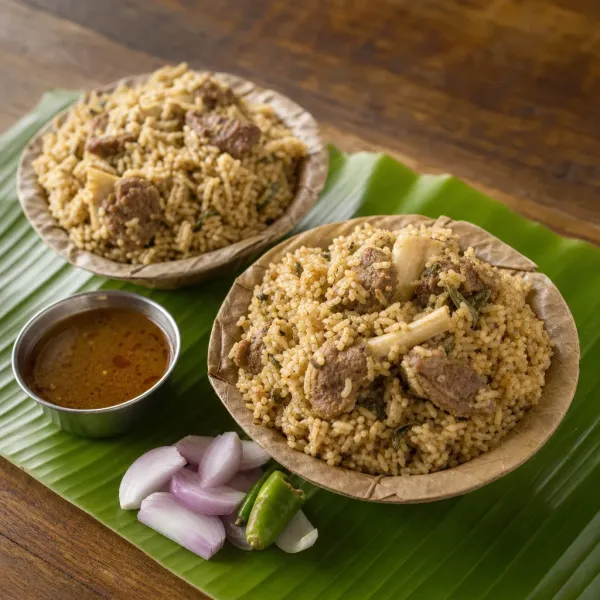
Donne Biryani
Authentic Bangalore donne biryani with mutton and seeraga samba rice, cooked in bone stock with ghee and whole spices, the military hotel way.
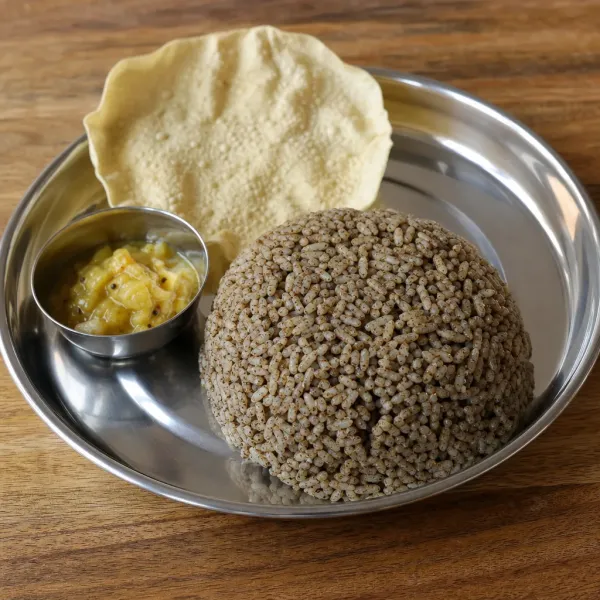
Milagu Sadam
Traditional Iyer-style milagu sadam: cooked rice mixed with freshly roasted pepper-cumin paste and ghee tempering. A simple, warming Tamil Brahmin ri…
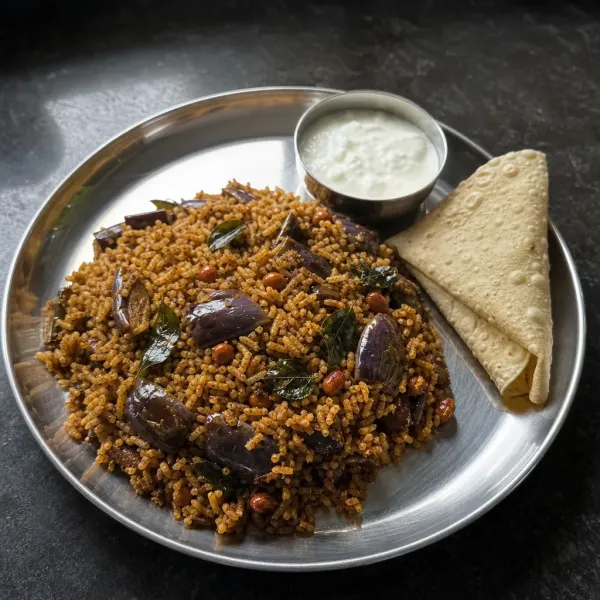
Vangi Bath
Authentic Karnataka vangi bath with freshly ground dry masala of kopra, dagad phool and byadagi chilli. Step-by-step traditional household recipe.
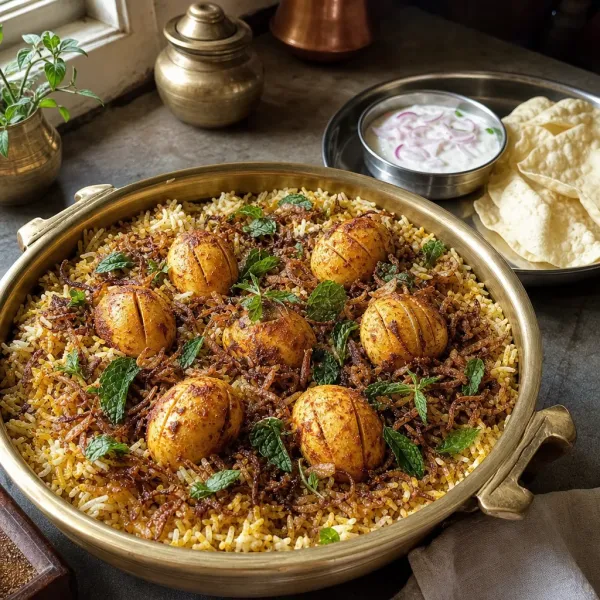
Malabar Egg Biryani
Traditional Mappila egg biryani from Malabar with kaima rice, fried shallots, and a slow dum finish. Step-by-step household recipe.
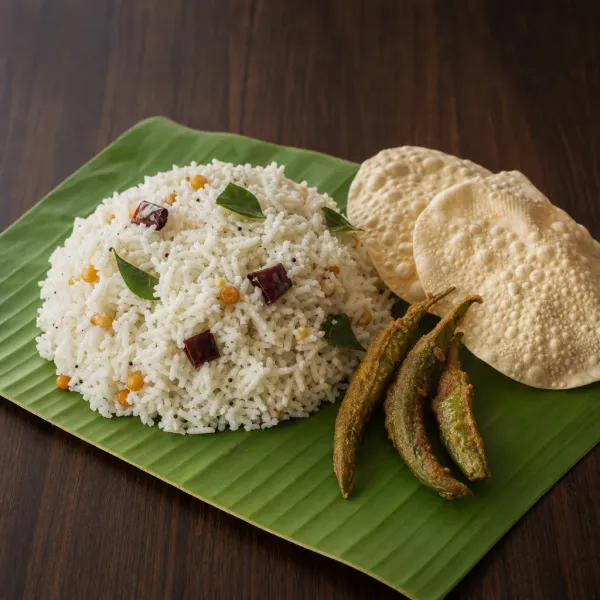
Thengai Sadam (Tamil Brahmin Coconut Rice)
Traditional Tamil Brahmin thengai sadam with fresh grated coconut, gingelly oil tempering, and dry-cooked sona masoori rice. Festival and lunchbox st…
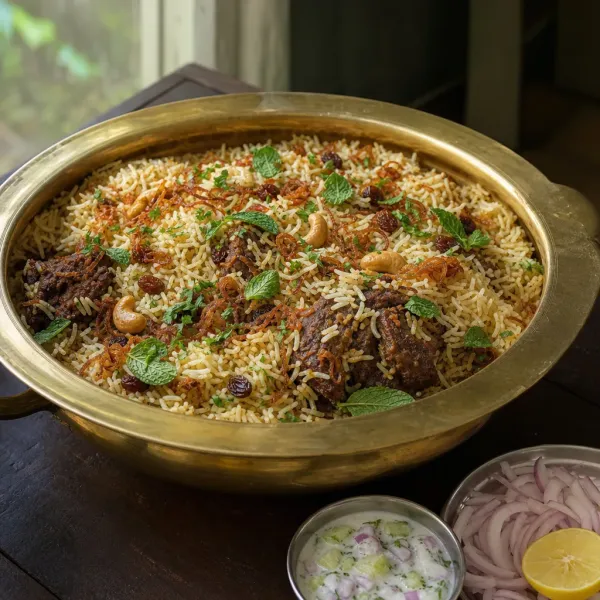
Malabar Mutton Dum Biryani
Traditional Malabar Mappila mutton dum biryani with Kaima rice, whole spices, and a sealed dum finish. Household recipe from northern Kerala.