

Vangi Bath Recipe
Malayalam വാംഗി ബാത്Tamil வாங்கி பாத்Kannada ವಾಂಗಿ ಬಾತ್Telugu వాంగి బాత్
- Prep20 min
- Cook40 min
- Serves4
- DifficultyMedium
- DietVegetarian
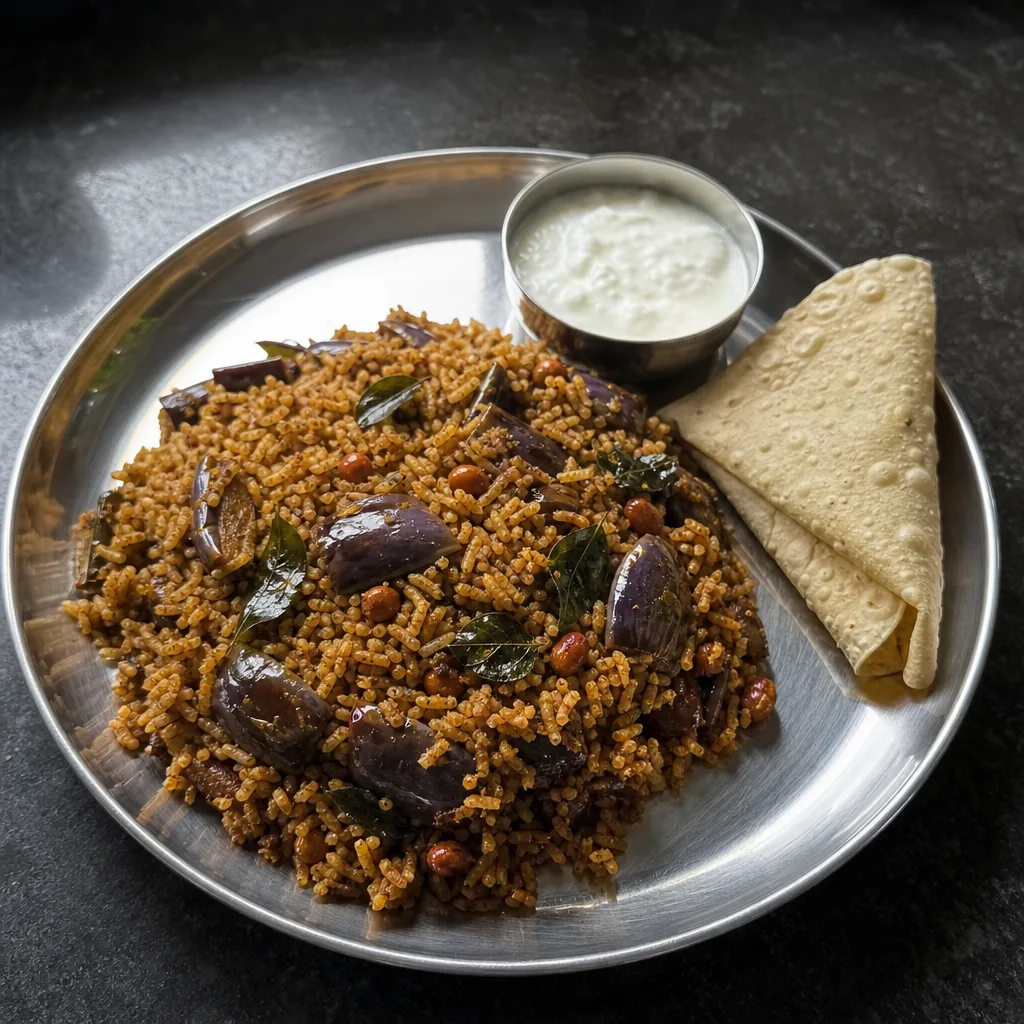
Vangi bath is a Karnataka household staple, cooked in nearly every community from Dharwad to Mysuru. The name is Kannada: vangi is brinjal, bath is a cooked rice dish. What makes it distinctly Kannadiga is the freshly ground dry masala — roasted chana dal, dried coconut, cinnamon, cloves, stone flower (dagad phool), marathi mokku — a combination that has no close equivalent in Tamil or Kerala cooking.
The brinjal should be the small, firm, purple-green variety sold across Karnataka markets. It holds its shape during cooking and does not turn to mush. The rice is cooked separately and kept slightly firm; mushy rice ruins the texture. The two are brought together at the end, so the grains stay separate and each piece of brinjal keeps its identity.
Households differ mainly in the masala. Some families add a little fresh coconut to the grinding; others keep it entirely dry. The quantity of red chilli varies considerably. What does not vary is the gingelly oil — coconut oil does not belong here — and the final tempering of mustard, curry leaves and peanuts that gives the dish its characteristic aroma.
Ingredients (serves 4)
For the rice
For the vangi bath masala (dry-roast and grind)
For the brinjal and assembly
Method
Cook the rice
Bring 540 ml water to a boil in a heavy pot. Add the washed sona masoori rice and salt, stir once, and cook covered on low heat for 12 to 14 minutes until the water is absorbed and the grains are just cooked through but still slightly firm. Spread the rice out on a wide plate or tray and let it cool completely. Cooling prevents it from turning sticky when you mix in the brinjal later.
Dry-roast the masala ingredients
Heat a dry iron kadai on medium-low flame. Add the chana dal and urad dal first and roast, stirring constantly, until they turn light golden, about 2 minutes. Add the coriander seeds, black pepper, cinnamon, cloves, stone flower and marathi mokku and roast for another minute until fragrant. Finally add the dried red chillies and the kopra and roast for 30 to 40 seconds — the kopra catches quickly, so do not walk away. Tip everything onto a plate and cool completely before grinding.
Grind the masala
Grind the cooled roasted ingredients to a moderately fine powder in a dry mixer jar. It should not be a paste; you want a dry, aromatic powder with a little texture still visible from the dal. Set aside.
Prepare the tamarind water
Soak the tamarind in 100 ml warm water for 10 minutes, squeeze well and strain to get a thick, dark pulp. Discard the fibre and seeds.
Drain and pat the brinjal
Lift the quartered brinjal out of the salted water and pat dry with a cloth. Wet brinjal will sputter badly in hot oil and will not brown properly.
Fry the peanuts and temper
Heat the gingelly oil in a wide, heavy kadai on medium flame. Add the raw peanuts and fry, stirring, until they are golden and the skin begins to blister, about 3 minutes. Remove the peanuts with a slotted spoon and keep aside. In the same oil, add the mustard seeds and wait for them to pop. Add the chana dal and urad dal for tempering and fry until pale gold. Add the broken dried red chillies and curry leaves — stand back as the leaves will splutter.
Cook the shallots
Add the sliced shallots to the kadai and cook on medium heat, stirring now and then, until they are soft and just beginning to colour at the edges, about 5 minutes. Do not rush this; undercooked shallots leave a raw flavour in the finished dish.
Add brinjal and turmeric
Add the dried brinjal pieces and turmeric. Stir to coat in the oil and shallots. Cook on medium heat, turning gently every couple of minutes, until the brinjal is tender and has taken on a little colour on its cut sides, about 8 to 10 minutes. It should be cooked through but still holding its shape.
Add tamarind, jaggery and masala
Pour in the tamarind pulp and add the grated jaggery and salt. Stir and cook for 3 to 4 minutes until the raw tamarind smell is gone and the liquid thickens and coats the brinjal. Add 3 to 4 tablespoons of the ground masala powder and stir well to combine. Taste — the balance should be sour from tamarind, faintly sweet from jaggery, and warmly spiced. Add more masala if you want a stronger flavour; the remainder keeps in an airtight jar for two weeks.
Combine with rice
Add the cooled rice to the kadai in two or three additions, folding it gently into the brinjal mixture with a wide spatula or your fingers. Do not stir vigorously or the rice will break. Every grain should be coated in the dark, fragrant masala. Check salt.
Finish and rest
Scatter the fried peanuts over the top and fold in lightly. Cover the kadai and leave on the lowest possible heat for 3 to 4 minutes so the flavours settle and the rice absorbs the last of the moisture. Serve warm.
How to serve
Plain yoghurt or a small bowl of raita; papad; a wedge of lime on the side. Often packed for lunch boxes as it travels well.
Served with: Plain yoghurt or a small bowl of raita; papad; a wedge of lime on the side. Often packed for lunch boxes as it travels well.
Cook's tips
Brinjal variety matters
The small, firm, purple-green brinjal sold in Karnataka markets (sometimes called gulla or udupi brinjal in some areas) holds its shape. Large, spongy brinjal turns to a mush and disappears into the rice. If you cannot find the small variety, use any firm, thin-skinned brinjal and cut it into larger chunks so it does not overcook.
Kopra, not desiccated coconut
Dried kopra (the hard, white, dried coconut kernel sold in blocks or slices) is what gives the masala its particular depth. Desiccated coconut is too fine and too sweet; it burns before the other spices are done. If kopra is unavailable, dry-roast fresh coconut scrapings very slowly until completely dry and lightly browned — it is a longer process but the flavour is closer.
Dagad phool and marathi mokku
These two spices are essential to the Karnataka vangi bath masala. Dagad phool (stone flower, kalpasi) is a lichen with a smoky, earthy note. Marathi mokku (dried kapok buds) adds a faint bitterness that balances the tamarind. Both are sold in Karnataka spice shops and online. Do not substitute; simply omit if unavailable rather than replacing with something else.
Rice temperature
Mixing hot, freshly cooked rice into the brinjal makes it clump and break. The rice must be at room temperature or cooler. If you are in a hurry, spread it on a tray under a fan.
Leftover masala powder
The masala recipe makes more than you need for one batch. Store the remainder in a dry, airtight glass jar away from light. It keeps well for two weeks and is useful for a quick weeknight vangi bath.
Regional variations
A Tamil Brahmin (Iyer/Iyengar) version exists using a slightly different spice blend and sometimes omitting onion entirely; a Maharashtrian vangi bhaat shares the name but uses a distinct masala with fewer dry red chillies and more goda masala.
Glossary
- Vangi ವಾಂಗಿ
- Brinjal (aubergine) in Kannada.
- Bath ಬಾತ್
- A cooked rice dish in Kannada; the word covers a family of seasoned rice preparations.
- Kopra ಕೊಪ್ರ
- Dried coconut kernel, harder and less sweet than fresh coconut; used in dry masala grinding across Karnataka.
- Dagad phool दगड फूल
- Stone flower, a dried lichen (kalpasi in Tamil) used in Karnataka and Chettinad masalas for a smoky, earthy base note.
- Marathi mokku ಮರಾಠಿ ಮೊಕ್ಕು
- Dried flower buds of the kapok tree; used in small quantities in Karnataka masalas for a faint bitter depth.
- Byadagi chilli ಬ್ಯಾಡಗಿ ಮೆಣಸಿನಕಾಯಿ
- A Karnataka variety of dried red chilli known for deep colour and moderate heat rather than sharp pungency.
Two things decide whether this works: the masala and the rice texture. The freshly ground dry masala — roasted kopra, dagad phool, marathi mokku and byadagi chillies — is what makes this distinctly Kannadiga rather than a generic spiced rice. And the rice must be fully cooled and just firm before it meets the brinjal, or you will end up with a paste instead of a dish where every grain and every piece of brinjal is distinct.
More Rice Dishes recipes
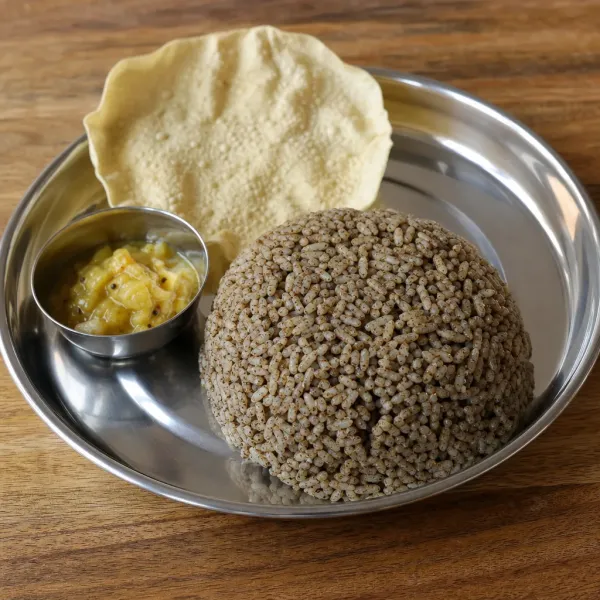
Milagu Sadam
Traditional Iyer-style milagu sadam: cooked rice mixed with freshly roasted pepper-cumin paste and ghee tempering. A simple, warming Tamil Brahmin ri…
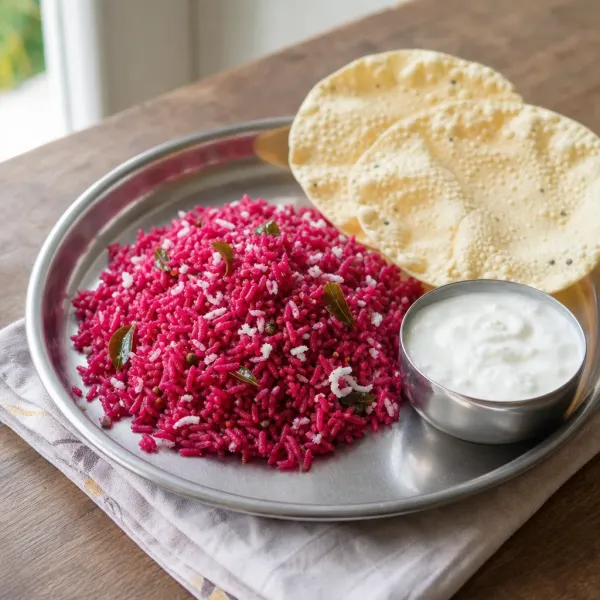
Beetroot Rice (Beetroot Sadam)
Traditional Tamil Brahmin beetroot sadam made with gingelly oil, mustard tempering and fresh coconut. A weekday lunch recipe with exact quantities an…
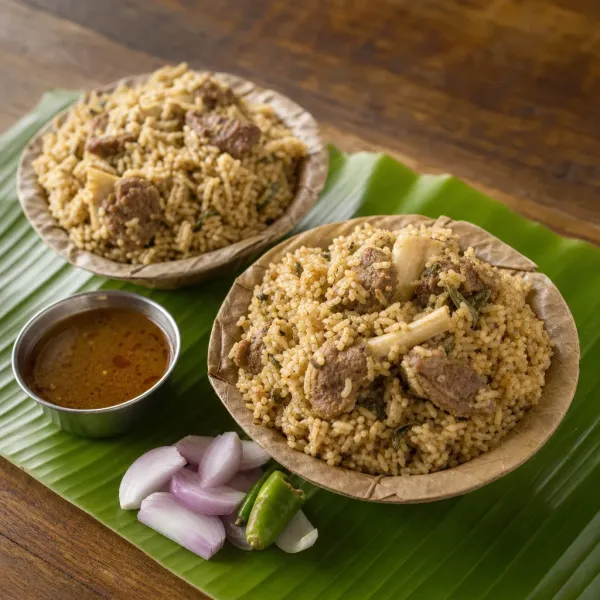
Donne Biryani
Authentic Bangalore donne biryani with mutton and seeraga samba rice, cooked in bone stock with ghee and whole spices, the military hotel way.
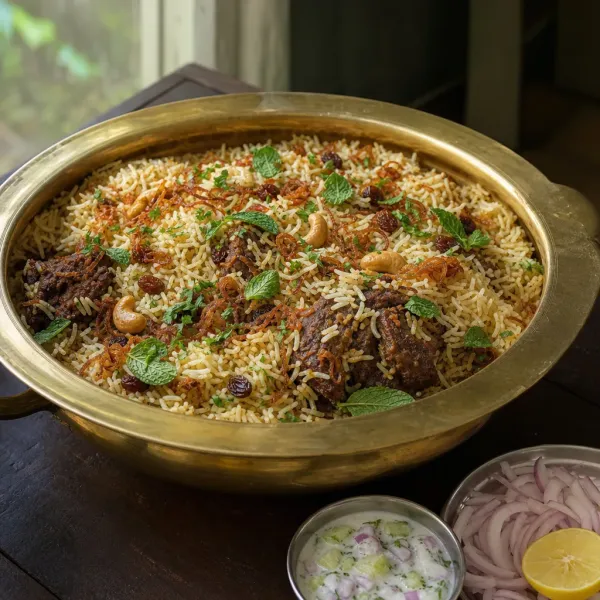
Malabar Mutton Dum Biryani
Traditional Malabar Mappila mutton dum biryani with Kaima rice, whole spices, and a sealed dum finish. Household recipe from northern Kerala.
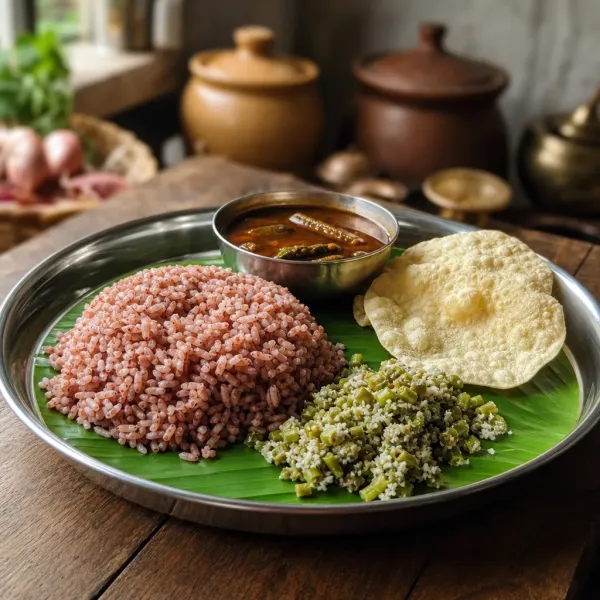
Kuthari Choru
Traditional Kerala matta rice cooked by the open-boil-and-drain method with a second steam sitting. Step-by-step household recipe for kuthari choru.
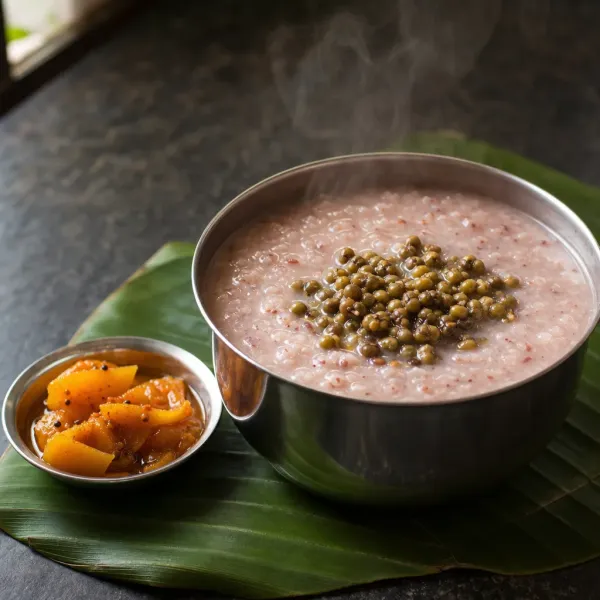
Kanji with Cherupayar
Traditional Kerala kanji made with matta rice cooked to a silky gruel, served with whole green moong. Simple, nourishing, and made the household way.