

Milagu Sadam Recipe
Malayalam മിളക് സാദംTamil மிளகு சாதம்Kannada ಮೆಣಸು ಅನ್ನTelugu మిరియాల అన్నం
- Prep10 min
- Cook20 min
- Serves3
- DifficultyEasy
- DietVegan
Milagu sadam is one of the oldest rice dishes in Tamil Brahmin cooking. It belongs to the category of mixed rices made without onion or garlic, and it has always been the food of travel, fasting days, and the afternoon after a temple visit. The pepper does the work of both heat and fragrance here, and the dish is understood to be warming and digestive.
In Iyer homes it is made with cooked rice, a freshly ground or freshly pounded pepper-cumin paste, and a tempering of ghee. The ghee is not optional and not swappable for oil; it carries the pepper's heat through the rice in a way that oil does not. The rice should be cooked so each grain is separate, not soft or sticky, because milagu sadam that clumps is considered a failure.
Households differ mainly in the pepper-to-cumin ratio. Some grandmothers use equal parts; others go two parts pepper to one part cumin for a sharper result. A small piece of dried ginger is traditional in some families and absent in others. The quantity of ghee is a matter of generosity.
Ingredients (serves 3)
For the rice
For the pepper-cumin paste
For the tempering
Method
Cook the rice
Wash the sona masoori rice twice and cook it with about 375 ml water. The grains should be fully cooked but still hold their shape, not mushy. Spread the cooked rice on a wide plate or thali immediately so the grains separate as they cool slightly. If the rice sits in the pot it will clump and the final dish will be uneven.
Mix ghee into the warm rice
While the rice is still warm, add 2 tablespoons of ghee and mix it through gently with a spoon or your hand. Every grain should be lightly coated. This prevents the rice from sticking together later when you add the spice paste.
Dry-roast the spices
Place a small dry pan over low heat. Add the black pepper and cumin together and roast, stirring constantly, for about 2 minutes until the pepper smells sharp and the cumin is a shade darker. Do not let them burn; burnt pepper turns bitter and ruins the dish. Remove from heat immediately and let them cool on the plate.
Grind the paste
Once cool, grind the roasted pepper and cumin with the dry ginger (if using) to a coarse powder in a small stone mortar or a dry spice grinder. It should not be a fine powder; a slightly coarse grind gives better texture in the finished rice. Set aside.
Make the tempering
Heat 1½ tablespoons of ghee in a small kadai or tempering pan over medium heat. Add the mustard seeds and wait for them to splutter fully. Add the urad dal and chana dal and stir continuously; they brown quickly, in about 30 seconds. Add the curry leaves carefully as they will spit, then add the asafoetida and remove from heat.
Add the spice paste to the tempering
Return the pan to the lowest heat. Add the ground pepper-cumin powder to the ghee and tempered spices and stir for 20 to 30 seconds only, just until the powder smells fragrant and loses its raw edge. Do not let it sit on heat any longer or it will darken and become acrid.
Combine and mix
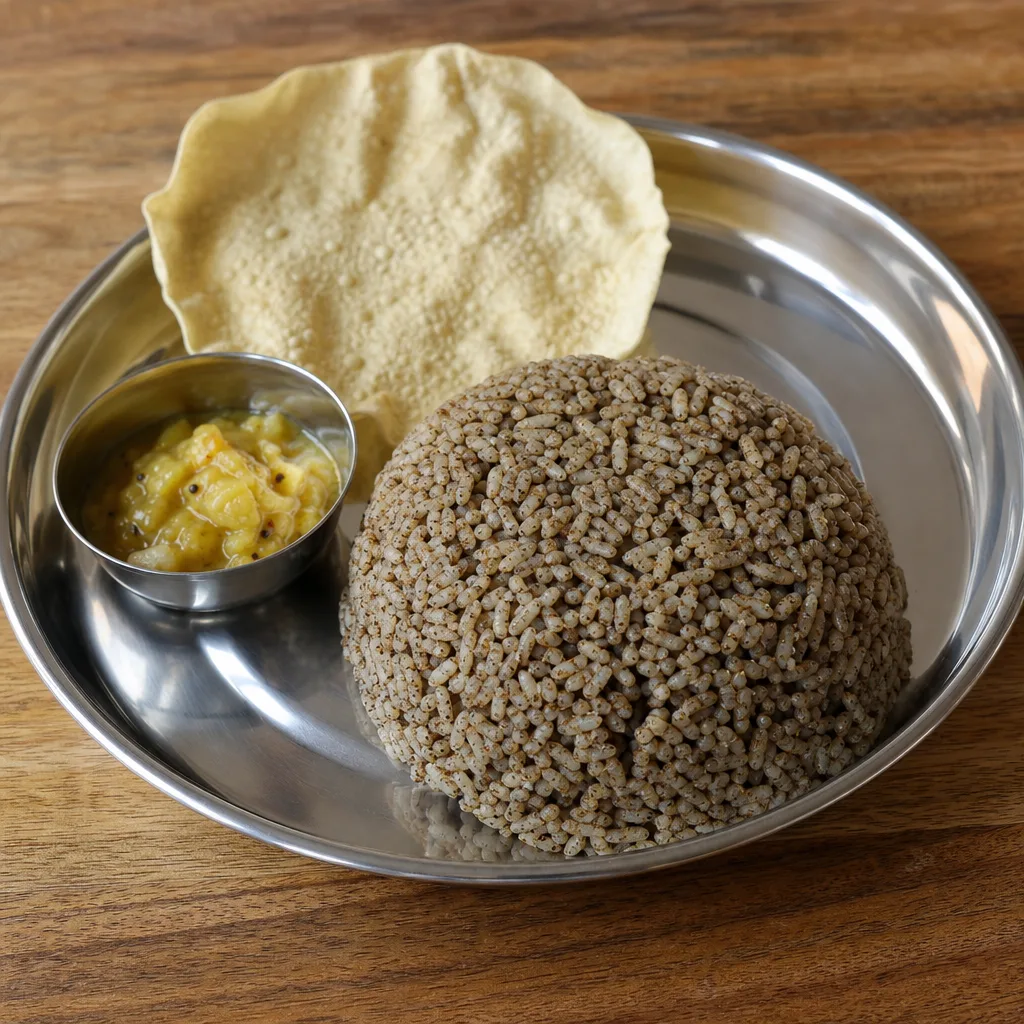
Pour the entire tempering and spice paste over the ghee-coated rice. Add salt. Mix thoroughly but gently so every grain is evenly coated with the dark spice paste. Taste and adjust salt. The rice should be uniformly speckled dark grey-brown with no white patches of uncoated rice.
Rest and serve
Let the rice sit covered for 3 to 4 minutes before serving. This short rest lets the pepper fragrance settle into the rice rather than just sitting on the surface. Serve hot.
How to serve
Plain papad (appalam), mor (thin buttermilk), or a small portion of pickle (urugai). On travel days it is often packed alone in a banana leaf.
Served with: Plain papad (appalam), mor (thin buttermilk), or a small portion of pickle (urugai). On travel days it is often packed alone in a banana leaf.
Cook's tips
Rice variety matters
Sona masoori is the standard choice for this dish in Tamil Brahmin homes because it cooks firm. Basmati is not traditional here. If you use raw ponni rice, reduce the water slightly so the grains stay separate.
Ghee is not negotiable
This is one of the dishes where ghee is structurally part of the recipe, not a garnish. It coats the grains and carries the fat-soluble compounds in pepper through the rice. Substituting oil changes the dish entirely.
The danger of over-roasting
Pepper goes from fragrant to bitter very quickly in a dry pan. Keep the heat low and pull the pan off the moment you smell the sharpness rise. If you see any smoke, it is already too far.
Dry ginger
Chukku (dry ginger) is traditional in many families and is believed to balance the heat of the pepper. If you cannot find it, leave it out rather than substituting fresh ginger, which has too much moisture and a different flavour profile.
Scaling the pepper
Two teaspoons of whole black pepper for one cup of raw rice is a moderate quantity that most households can eat comfortably. If you are making this for children or for someone unused to pepper heat, reduce to 1 tsp and increase cumin to compensate.
Regional variations
Iyengar households make a similar dish with a slightly different spice ratio and sometimes add dried red chillies to the tempering; Kongunad homes may use more cumin and less pepper.
Glossary
- Milagu மிளகு
- Black pepper in Tamil.
- Sadam சாதம்
- Cooked rice in Tamil.
- Jeeragam ஜீரகம்
- Cumin seeds in Tamil.
- Chukku சுக்கு
- Dried ginger in Tamil; considered warming and digestive.
- Perungayam பெருங்காயம்
- Asafoetida in Tamil; used in Tamil Brahmin cooking as a substitute for onion and garlic.
- Ulutham paruppu உளுத்தம் பருப்பு
- Split black gram (urad dal) used in tempering.
- Kadalai paruppu கடலை பருப்பு
- Split Bengal gram (chana dal) used in tempering for texture and a slight nuttiness.
The two things that decide whether milagu sadam works are the texture of the rice and the moment you pull the pepper off the heat. Grain-separate rice absorbs the spice paste evenly; sticky rice clumps and tastes uneven. And pepper roasted one minute too long turns the whole dish bitter, no matter how good the ghee is.
More Rice Dishes recipes
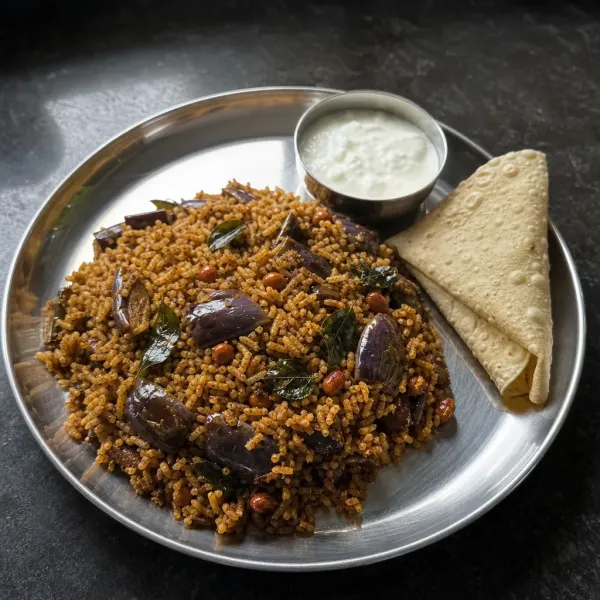
Vangi Bath
Authentic Karnataka vangi bath with freshly ground dry masala of kopra, dagad phool and byadagi chilli. Step-by-step traditional household recipe.
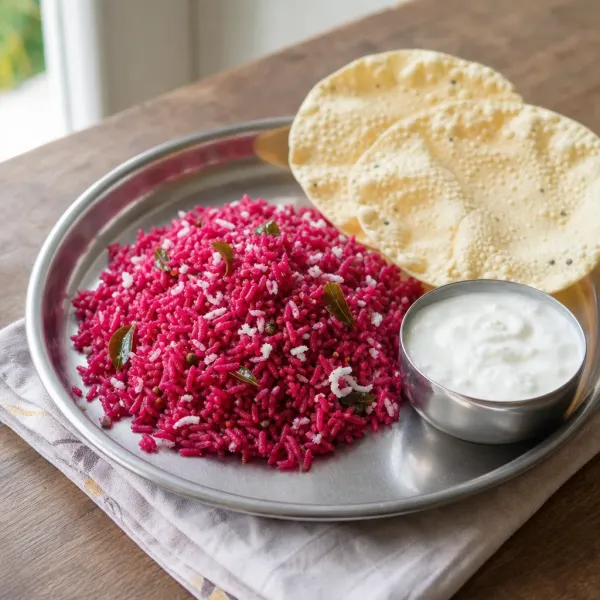
Beetroot Rice (Beetroot Sadam)
Traditional Tamil Brahmin beetroot sadam made with gingelly oil, mustard tempering and fresh coconut. A weekday lunch recipe with exact quantities an…
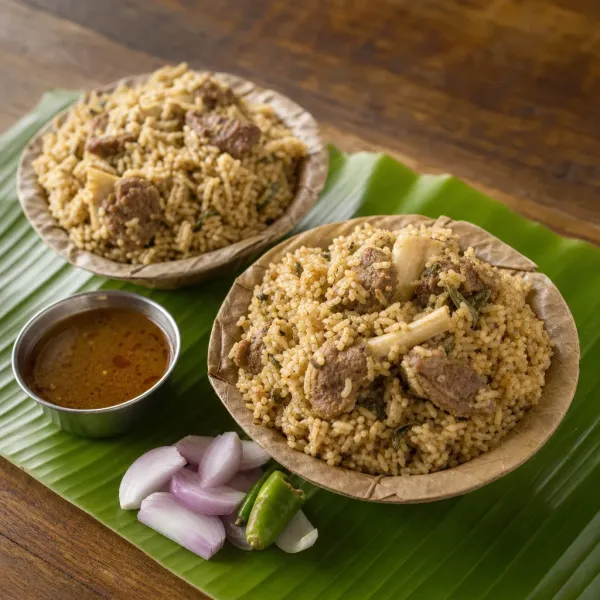
Donne Biryani
Authentic Bangalore donne biryani with mutton and seeraga samba rice, cooked in bone stock with ghee and whole spices, the military hotel way.
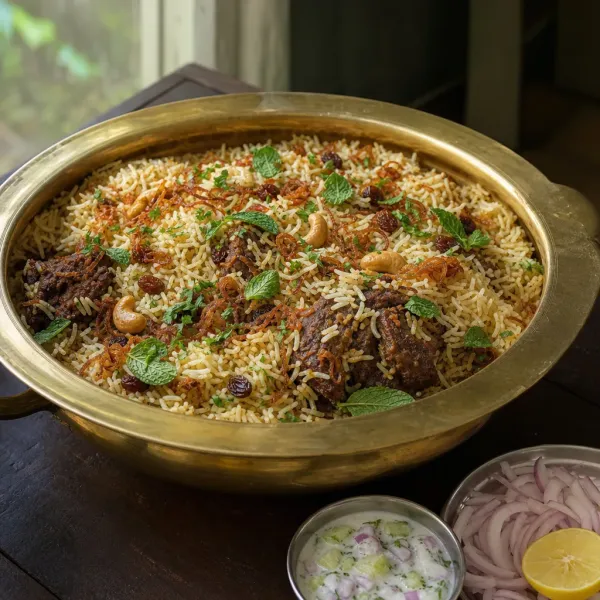
Malabar Mutton Dum Biryani
Traditional Malabar Mappila mutton dum biryani with Kaima rice, whole spices, and a sealed dum finish. Household recipe from northern Kerala.
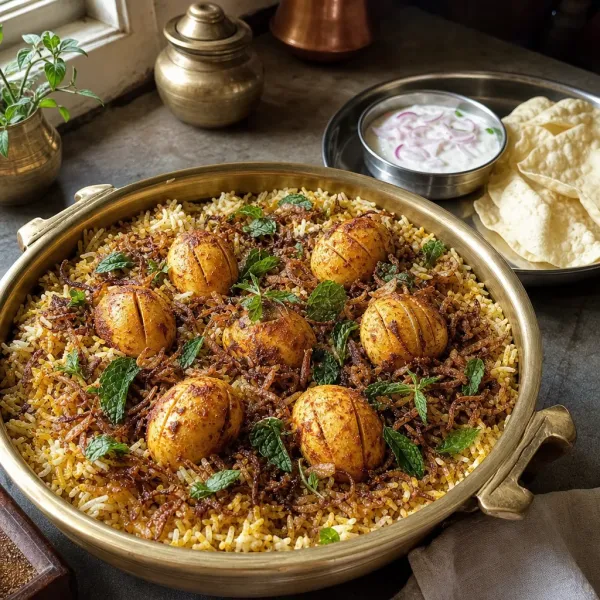
Malabar Egg Biryani
Traditional Mappila egg biryani from Malabar with kaima rice, fried shallots, and a slow dum finish. Step-by-step household recipe.
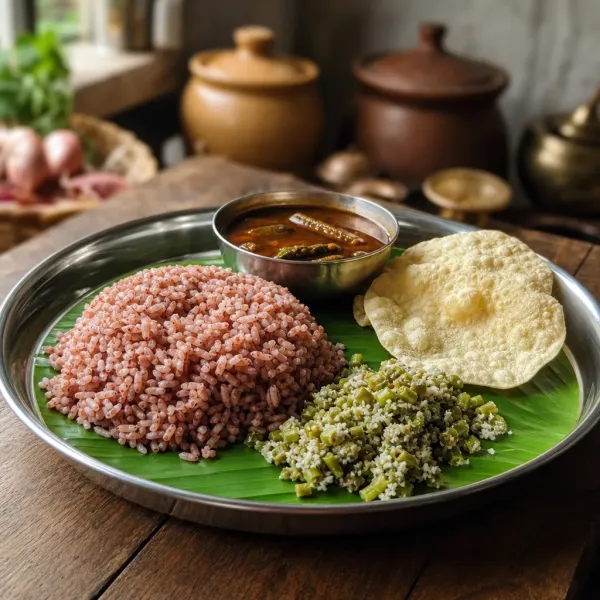
Kuthari Choru
Traditional Kerala matta rice cooked by the open-boil-and-drain method with a second steam sitting. Step-by-step household recipe for kuthari choru.