

Donne Biryani Recipe
Malayalam ഡോണ്ണെ ബിരിയാണിTamil டோன்னே பிரியாணிKannada ದೊನ್ನೆ ಬಿರಿಯಾನಿTelugu డొన్నె బిర్యానీ
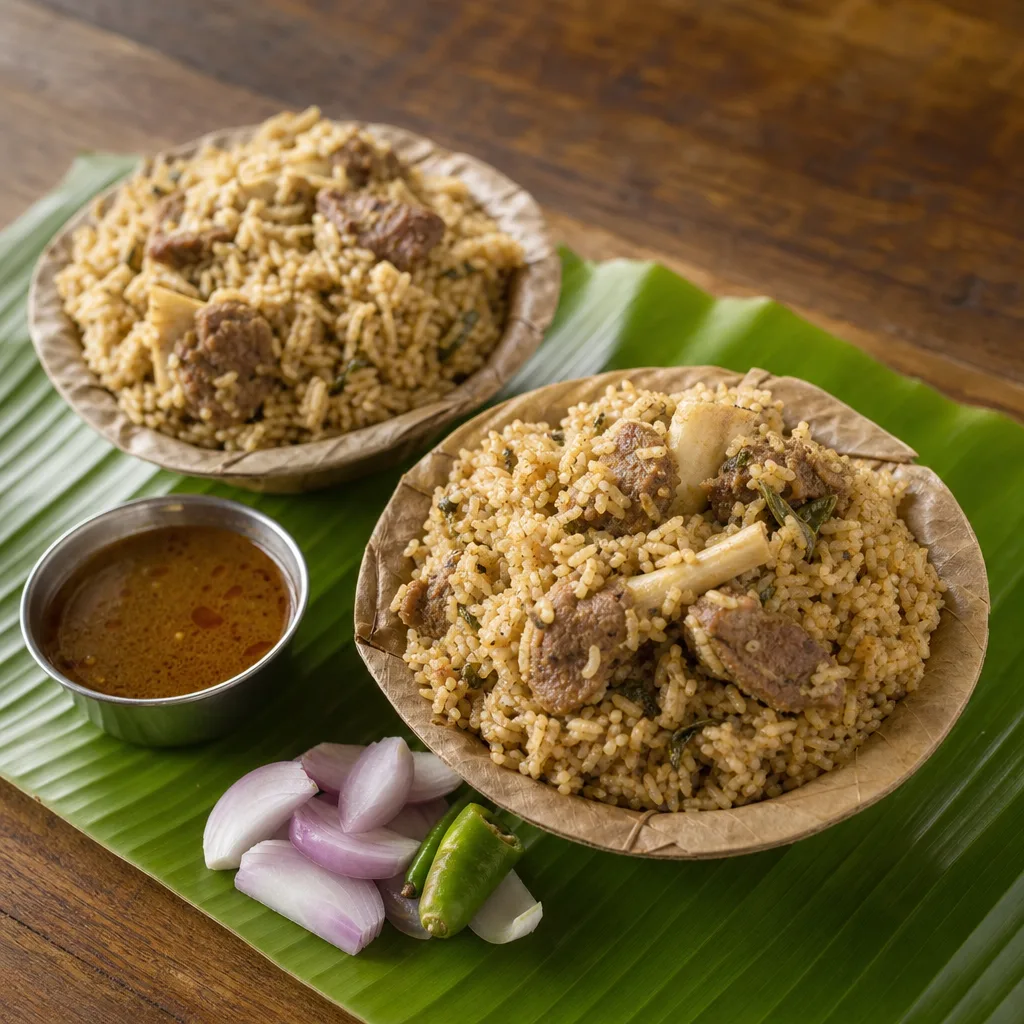
- Prep30 min
- Cook1 hr
- Serves4
- DifficultyMedium
- DietNon-vegetarian
Donne Biryani comes from the military hotels of Bangalore, the no-frills eating houses that have fed the city's working population since at least the early twentieth century. It is served in a donne, a cup or bowl made from dried areca palm leaves, and that vessel is part of the experience. The rice is shorter-grained and more absorbent than basmati, the colour is a gentle khaki from the stock and whole spices, and the whole thing is oilier and simpler than a Mughal-style dum biryani. There is no saffron, no kewra, no fried onion garnish, no layered drama.
The method is essentially a one-pot cook: mutton is simmered until the stock is flavourful, the rice goes in and drinks up that stock, and the pot is sealed briefly at the end. The spicing is restrained by biryani standards, which is part of why it tastes so distinctly like itself. Cinnamon, cardamom, cloves, a little mint, green chillies, and a good amount of ghee are the flavour pillars.
Households in Bangalore that cook this at home tend to do it for Sunday lunch. The donne is not always available at home, so it is served in a steel plate or a banana leaf. The accompaniments are a thin, sharp salna or a raita of shallots and green chilli, and the combination of rich rice and acidic side is what makes the meal.
Ingredients (serves 4)
For cooking the mutton
For the rice and final cook
Method
Simmer the mutton for stock
Put the mutton, water, shallots, ginger, garlic, green chillies, cinnamon, cardamom, cloves, star anise, bay leaves and salt in a heavy pot. Bring to a boil, skim off the grey foam that rises in the first five minutes, then reduce to a steady simmer. Cook uncovered for 35 to 45 minutes until the mutton is just tender but not falling apart. Lift the mutton pieces out and set aside. Strain the stock and measure it: you need 700 ml. If you have more, boil it down; if less, add hot water.
Rinse the rice
Rinse the seeraga samba rice in several changes of cold water until the water runs clear. Drain it in a colander and leave it for five minutes. Do not soak it: this rice is small and will break if soaked and then cooked in stock.
Fry the whole spices and shallots in ghee
In a wide, heavy-bottomed pot with a tight-fitting lid, heat the ghee over medium flame. Add the cinnamon, cardamom, cloves and peppercorns. Let them sizzle for thirty seconds until fragrant. Add the sliced shallots and fry, stirring often, for eight to ten minutes until they are golden at the edges and soft through. Do not rush this step; undercooked shallots will taste raw in the finished rice.
Add ginger-garlic paste and chillies
Add the ginger-garlic paste and slit green chillies to the pot. Stir and fry for three to four minutes on medium heat until the raw smell of the paste is completely gone and the mixture looks dry and slightly separated from the ghee.
Add curd and herbs
Lower the flame. Add the curd and stir it in quickly so it does not split. Cook for two minutes. Add the mint and coriander, stir once, and cook for another minute. The herbs will wilt and the mixture will smell very good at this point.
Return the mutton to the pot
Add the cooked mutton pieces to the pot and turn them to coat in the masala. Cook on medium heat for three minutes so the mutton picks up the flavour of the base. Taste the masala and adjust salt now, keeping in mind the stock will add more.
Add the rice and hot stock
Add the drained rice and stir gently to mix it through the mutton and masala. Pour in the 700 ml of hot strained stock. Stir once, bring to a boil, then taste the liquid: it should be slightly saltier than you want the finished rice, because the rice will absorb and mellow it.
Cook the rice open until almost dry
Cook on medium-high heat, uncovered, stirring once or twice gently from the bottom, until almost all the liquid is absorbed and you can see small steam holes forming on the surface of the rice. This takes about ten to twelve minutes. The rice should be about three-quarters cooked at this stage.
Seal and finish on low heat (dum)
Reduce the flame to the lowest setting. Cover the pot with a tight lid. If your lid does not seal well, place a piece of foil under it and press down. Cook for fifteen minutes. Do not lift the lid during this time. The steam trapped inside will finish the rice.
Rest and serve
Turn off the flame and let the pot rest, still sealed, for ten minutes. Then open it and gently fluff the rice with a large spoon or fork, turning from the bottom without breaking the grains. The rice should be fully cooked, each grain separate, and the mutton pieces should be sitting through it. Serve immediately in donne cups or on a banana leaf or steel plate.
How to serve
Thin mutton salna (a peppery, tomato-forward gravy) or a simple raita of sliced shallots, slit green chilli and salt; a wedge of lime on the side.
Served with: Thin mutton salna (a peppery, tomato-forward gravy) or a simple raita of sliced shallots, slit green chilli and salt; a wedge of lime on the side.
Cook's tips
Rice variety matters
Seeraga samba (also called jeera samba) is the correct rice for this dish. Its short, slender grains absorb stock beautifully and stay separate. Basmati will give you a different dish altogether. If you cannot find seeraga samba, jeerakasala (the Kerala equivalent) is close, but basmati is not an acceptable substitute here.
Stock quantity is critical
The ratio of stock to seeraga samba is approximately 1.75:1 by volume. Too much liquid makes the rice mushy; too little leaves it undercooked and grainy. Measure the stock carefully after straining.
Pressure cooker shortcut
Many Bangalore households cook the mutton in a pressure cooker (3 whistles on medium) to save time. If you do this, the stock will be more concentrated; dilute it with water to reach 700 ml and taste for salt before adding the rice. The open-pot method in the main recipe gives you more control over the stock flavour.
The donne at home
Areca palm leaf donne cups are sold at shops near temples and markets in Bangalore. If you are serving at home without them, a banana leaf works well and keeps the spirit of the dish. The leaf imparts a faint green fragrance that is pleasant.
Do not use sour curd
The curd should be fresh and mild. Sour curd will make the rice taste sharp in a way that does not belong here. If your curd is very thick, thin it with a tablespoon of water before adding.
Regional variations
Chicken donne biryani is now more common at many stalls; some cooks add a small amount of coconut milk in the final dum, which is not universal.
Glossary
- Donne ದೊನ್ನೆ
- A cup or bowl made from dried areca palm leaves, stitched with a thin stick; the traditional serving vessel for this biryani.
- Seeraga samba சீரக சம்பா
- A short, slender, aromatic rice variety grown in Tamil Nadu and used widely in South Indian biryanis; sometimes called jeera samba for its faint cumin-like fragrance.
- Military hotel ಮಿಲಿಟರಿ ಹೋಟೆಲ್
- A category of no-frills non-vegetarian eating house found across Karnataka and Tamil Nadu, historically associated with feeding working-class and military populations; the origin of the name is debated.
- Dum ದಮ್
- The technique of sealing a pot and cooking on very low heat so the food finishes in its own trapped steam.
- Salna சால்னா
- A thin, spiced gravy, often mutton or chicken based, served alongside biryani or parotta in Tamil Nadu and parts of Karnataka.
Two things decide this dish. First, the stock: it must be well-seasoned and genuinely flavourful from the mutton bones, because the rice has nothing else to drink. Second, the rice variety: seeraga samba cooked in that stock, with the right amount of liquid, gives you the characteristic soft-but-separate texture that makes this different from every other biryani. Get those two right and the rest follows.
More Rice Dishes recipes
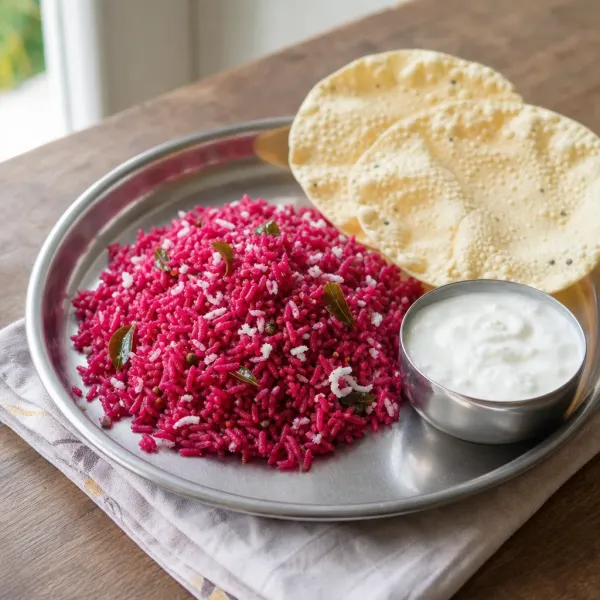
Beetroot Rice (Beetroot Sadam)
Traditional Tamil Brahmin beetroot sadam made with gingelly oil, mustard tempering and fresh coconut. A weekday lunch recipe with exact quantities an…
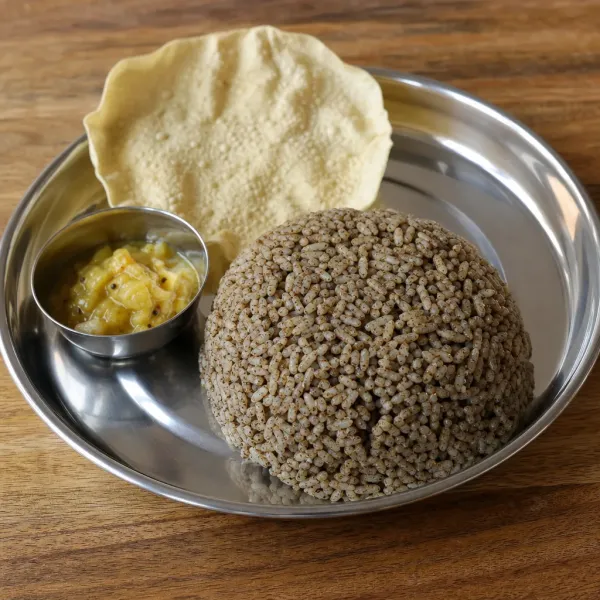
Milagu Sadam
Traditional Iyer-style milagu sadam: cooked rice mixed with freshly roasted pepper-cumin paste and ghee tempering. A simple, warming Tamil Brahmin ri…
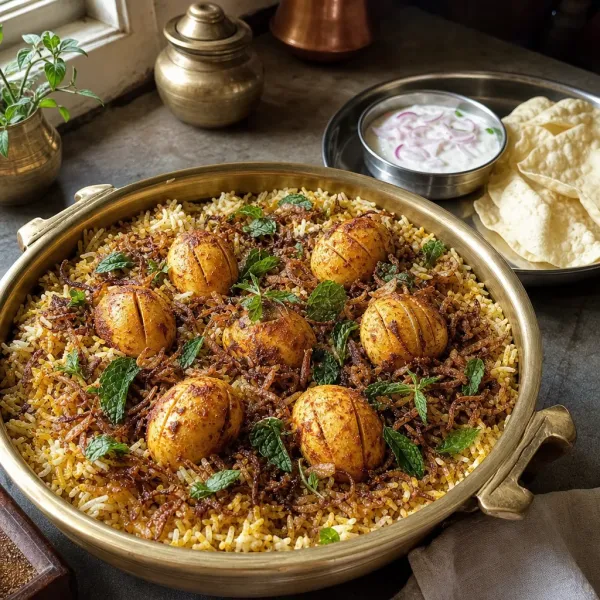
Malabar Egg Biryani
Traditional Mappila egg biryani from Malabar with kaima rice, fried shallots, and a slow dum finish. Step-by-step household recipe.
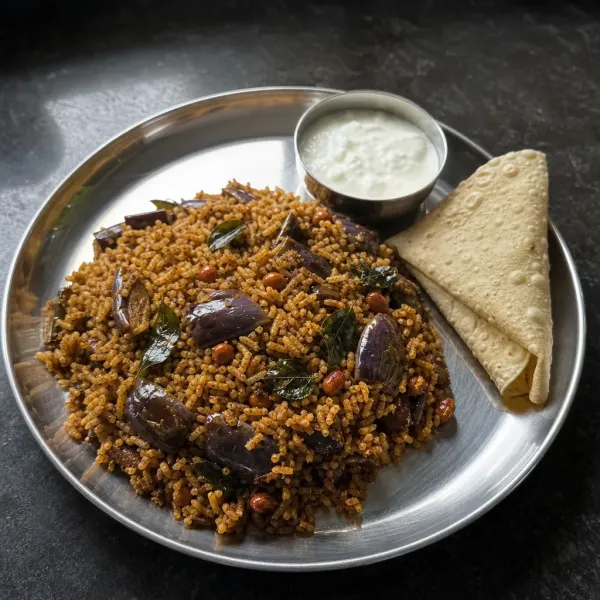
Vangi Bath
Authentic Karnataka vangi bath with freshly ground dry masala of kopra, dagad phool and byadagi chilli. Step-by-step traditional household recipe.
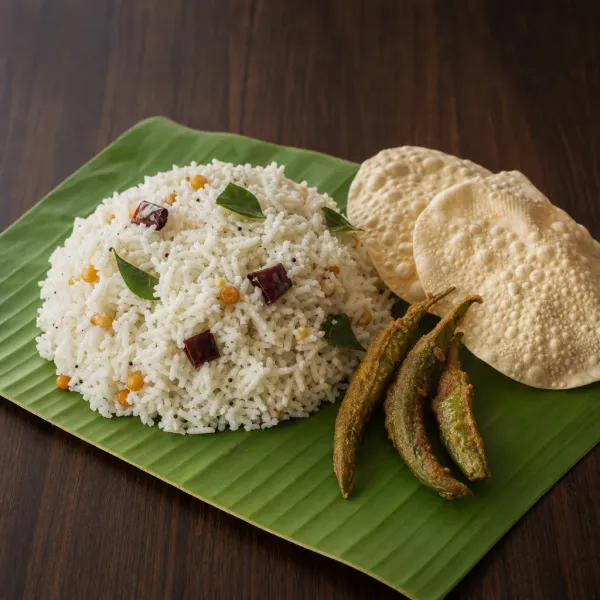
Thengai Sadam (Tamil Brahmin Coconut Rice)
Traditional Tamil Brahmin thengai sadam with fresh grated coconut, gingelly oil tempering, and dry-cooked sona masoori rice. Festival and lunchbox st…
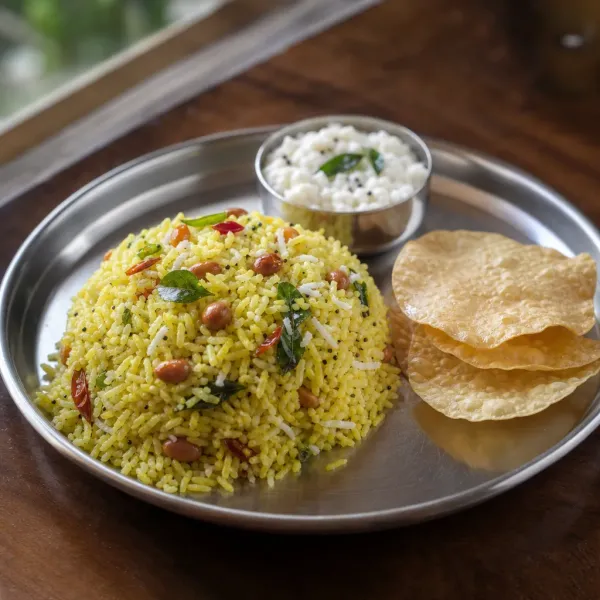
Chitranna
Authentic Karnataka Brahmin chitranna with groundnut oil tempering, fresh lemon juice, peanuts and coconut. Step-by-step traditional method.